
Technical Specifications
| Parameter Name | Parameter Value |
|---|---|
| Product Model | 1007-0034-3 (ASSYP N A040-0002) |
| Manufacturer | MEI (Likely Metrum/ MetraByte or related) |
| Product Type | 5-Channel I/O Control Board / Interface Card |
| Primary Function | Multi-channel Analog & Digital Input/Output Interface |
| I/O Channel Count | 5 Channels (configurable as input or output, per channel specs) |
| Signal Types | Likely supports Analog (Voltage/Current) and Digital (TTL/Contact) I/O |
| Interface/Bus | Proprietary or legacy bus (e.g., parallel port, custom backplane) |
| Isolation | Channel-to-channel and/or channel-to-system isolation (typical for era) |
| Connector Type | Screw terminal block or header connector for field wiring |
| Power Requirement | Likely +5VDC and ±12/15VDC from backplane or external supply |
| Form Factor | Proprietary card format for specific MEI chassis/card cage |
| Operating Temperature | Industrial temperature range (e.g., 0 to 60°C) |
| Status Indicators | LED indicators for power and channel activity (typical) |
| Compatibility | Designed for specific MEI data acquisition or control systems |
Main Features and Advantages
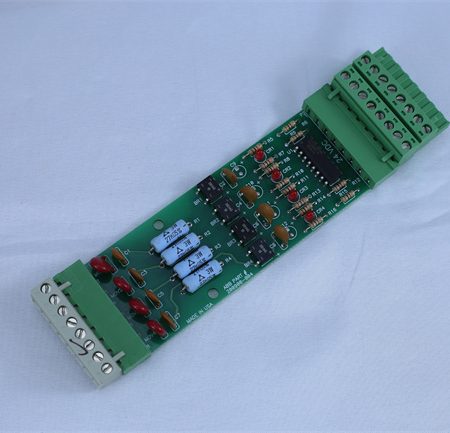
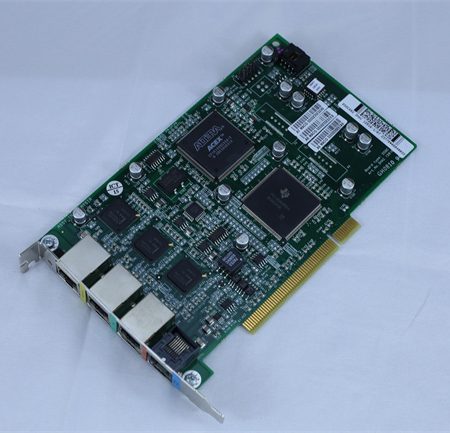
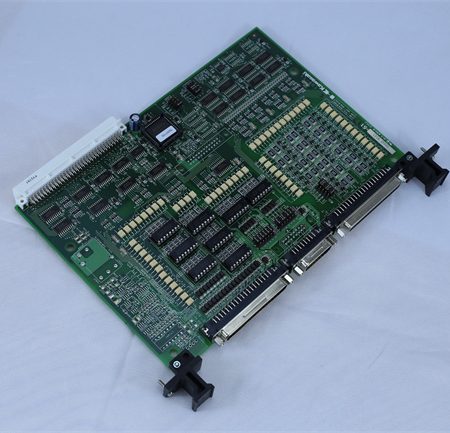
The 1007-0034-3 ASSYP N A040-0002 5I/O MEI Control Board is defined by its versatility and integration-focused design. A primary feature is its multi-channel, multi-function capability. The “5I/O” label suggests each of the five channels could be software-configured or hardwired for different functions—such as reading a 4-20 mA process variable, outputting a 0-10 VDC control signal, reading a dry contact, or driving a small relay. This flexibility allowed engineers to use a single, unified card type for various signal needs within a system, simplifying spares inventory and system design. The board almost certainly incorporates signal conditioning circuitry, providing filtering, scaling, and protection for sensitive measurement and control circuits, which was a hallmark of MEI’s product line aimed at industrial and laboratory environments.The core advantage of this module is its role as a dedicated, reliable interface within a well-defined system architecture. It was engineered for stability and precision in its era, offering deterministic performance for its assigned I/O tasks. For legacy systems still in operation, the MEI Control Board 1007-0034-3 provides an exact form, fit, and functional replacement, ensuring seamless compatibility without the need for software changes, wiring modifications, or system re-engineering. Its value is immense in lifecycle extension strategies. By sourcing a quality-assured 1007-0034-3 ASSYP N A040-0002 board, facilities can avoid the prohibitive cost and risk of replacing an entire, often bespoke, automation system. The board’s design likely emphasizes robust construction with through-hole components, which contributes to long-term reliability and repairability, characteristics highly valued in critical industrial and infrastructure applications where system familiarity and proven performance outweigh the benefits of newer, but untested-in-context, technology.
Application Field
The 1007-0034-3 ASSYP N A040-0002 5I/O MEI Control Board was deployed in a wide range of mid-to-late 20th century automated systems that required reliable, modular I/O expansion. Its most common historical applications were in industrial data acquisition and supervisory control systems. In manufacturing environments, it could be found in custom machine monitoring setups, collecting data from temperature sensors, pressure transducers (via analog inputs), and machine cycle counts (via digital inputs) for statistical process control (SPC) or simple HMI displays. It also served in process control skids for batch industries, handling limited-loop control or dedicated sequencing tasks.Furthermore, this type of module was prevalent in laboratory and test stand automation. It would be used to control stimuli (analog output to a power supply) and measure responses (analog input from a sensor) in product reliability testing, materials testing, or component calibration rigs. In infrastructure, similar boards were used for building automation, monitoring HVAC parameters, or in specialized research equipment. Today, the application field for the 1007-0034-3 ASSYP N A040-0002 is almost exclusively legacy system support and maintenance. It is a critical spare part for industries with long depreciation cycles, such as power generation (monitoring auxiliary systems), water treatment facilities, or specialized production lines that are still operational and too costly to replace outright. Finding this specific board allows these facilities to maintain operational continuity, preserve their investment in custom software and training, and execute controlled, planned migrations rather than facing forced, emergency upgrades due to a single component failure.

Reviews
There are no reviews yet.