GE VMIVME-7740-850 – Reliable Embedded Controller for Defense, Energy & Transportation Systems缩略图

GE VMIVME-7740-850 – Reliable Embedded Controller for Defense, Energy & Transportation Systems

GE VMIVME-7740-850 – Reliable Embedded Controller for Defense, Energy & Transportation Systems插图Description

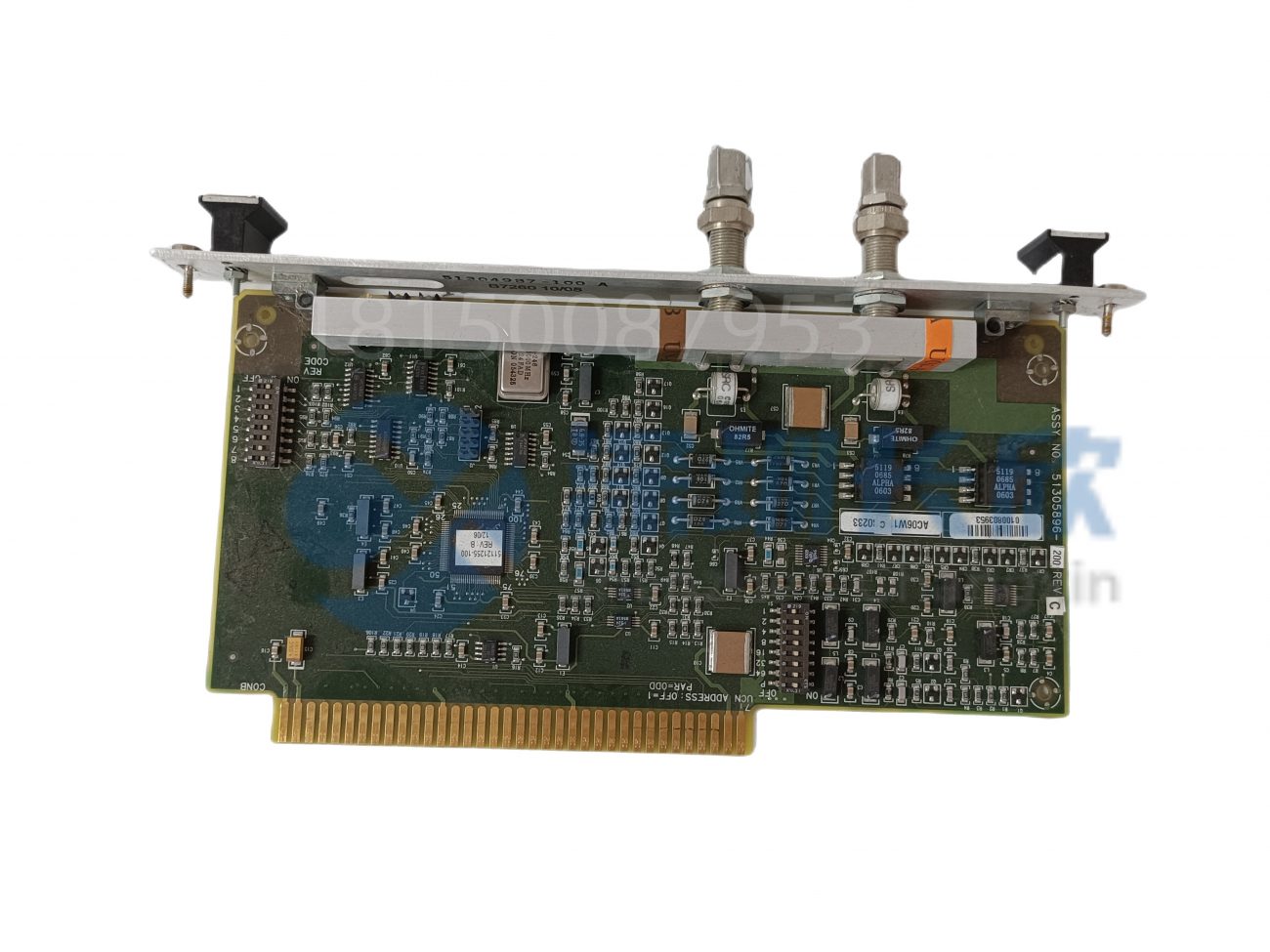
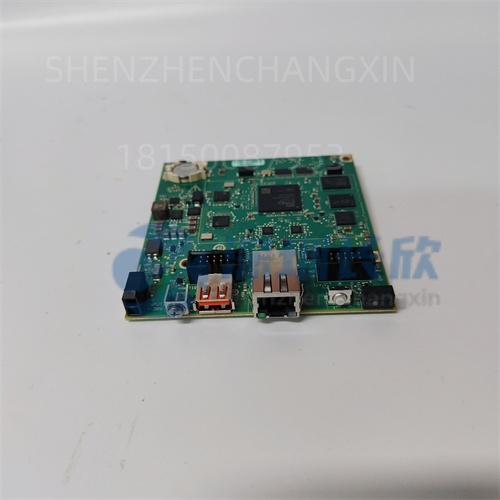
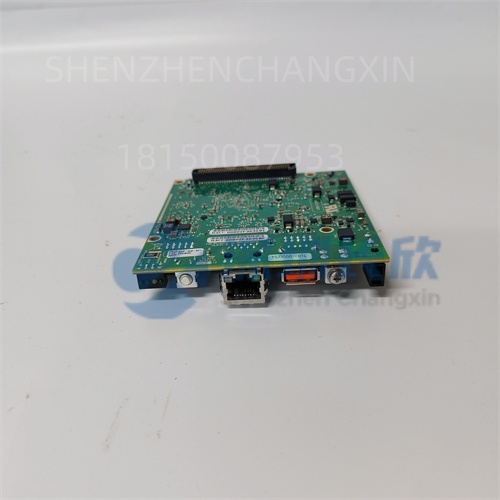
The GE VMIVME-7740-850 (also designated 350-007740-850L) is a high-performance 3U VME64x single board computer (SBC) based on the Freescale (formerly Motorola) MPC7448 PowerPC processor, running at 850 MHz. Developed by GE Intelligent Platforms (now part of Emerson), this rugged embedded computing module delivers deterministic real-time performance for demanding industrial, defense, and energy applications. With integrated memory, PMC expansion site, and support for extended temperature operation, the GE VMIVME-7740-850 serves as a powerful control engine in legacy and modernized distributed control systems (DCS), turbine controllers, and mission-critical embedded platforms.

Application Scenarios

At a nuclear power plant undergoing digital I&C modernization, engineers needed to replace obsolete VME-based reactor protection system processors without redesigning the entire chassis or software stack. The GE VMIVME-7740-850 was selected due to its backward compatibility with existing VME64 backplanes, real-time Linux support, and 15+ year lifecycle commitment. During seismic qualification testing, the conduction-cooled variant operated flawlessly under 5g vibration and 70°C ambient heat—critical for safety-grade enclosures. “This isn’t just an upgrade—it’s a life extension,” said the lead systems architect. In rail signaling and oil pipeline SCADA systems worldwide, the GE VMIVME-7740-850 continues to serve as the silent computational backbone where failure is not an option.


Technical Principles and Innovative Values

Innovation Point 1: PowerPC Real-Time Determinism – Unlike x86 architectures burdened by cache unpredictability, the GE VMIVME-7740-850’s MPC7448 core delivers microsecond-level interrupt latency—essential for turbine overspeed protection or train braking control where timing jitter could be catastrophic.

Innovation Point 2: PMC Expansion for Future-Proofing – The integrated PMC site allows users to add FPGA-based I/O, high-speed serial protocols (ARINC 429. MIL-STD-1553), or additional Ethernet—extending the module’s relevance long after base VME systems become obsolete.

Innovation Point 3: Conduction Cooling for Extreme Environments – The 350-007740-850L variant uses a metal wedge-lock frame to transfer heat directly to the chassis, enabling operation in dust-filled, explosive, or vacuum-sealed environments where fans are prohibited.

Innovation Point 4: Long-Term Availability & Lifecycle Support – GE committed to 10–15 year availability for this platform, making the GE VMIVME-7740-850 a rare “safe choice” for infrastructure projects requiring decades of operational continuity.

Application Cases and Industry Value

In a European high-speed rail signaling project, the GE VMIVME-7740-850 was deployed as the central logic solver in wayside interlocking cabinets. Subjected to continuous thermal cycling (-25°C to +70°C) and electromagnetic interference from overhead catenaries, the conduction-cooled units operated without reboot for over 8 years—exceeding MTBF predictions by 40%. Similarly, in a North Sea offshore gas compression platform, the module ran a real-time VxWorks application that monitored emergency shutdown valves. During a fire-and-gas event, it processed 128 DI/DO signals and triggered isolation within 12 ms—well under the 50 ms safety window. Users consistently praise the GE VMIVME-7740-850 not for raw speed, but for unwavering predictability in life-or-death systems.

Related Product Combination Solutions

GE VMIVME-7750: Successor with dual-core MPC8641D—higher performance for graphics or data logging

GE PMC-FPGA-01: FPGA-based mezzanine card for custom I/O protocols—plugs into GE VMIVME-7740-850 PMC site

GE cPCI-7740: CompactPCI variant—used when migrating from VME to cPCI architecture

Motorola MVME7100: Competing PowerPC VME SBC—similar performance but different memory map

ABB NTU-7C9-ABB: Not compatible—but OPC UA gateways can share GE VMIVME-7740-850 data with ABB 800xA

Honeywell Experion C300: Higher-level controller—may use GE VMIVME-7740-850 as embedded I/O server

Bently Nevada 3500/XX: Vibration monitoring racks—sometimes integrated via Ethernet from GE VMIVME-7740-850

TRICONEX MP3008: Safety PLC—can coexist in hybrid systems where GE VMIVME-7740-850 handles non-SIL data processing

Installation, Maintenance, and Full-Cycle Support

Installation of the GE VMIVME-7740-850 requires insertion into a 3U VME64x chassis with proper slot grounding and power sequencing. The module auto-enumerates on the VME bus, and boot configuration is managed via onboard DIP switches or flash-resident bootloader (e.g., U-Boot). For conduction-cooled versions (350-007740-850L), ensure proper torque on wedge locks to maintain thermal contact. Development is supported through Wind River Workbench, Green Hills MULTI, or open-source GCC toolchains targeting PowerPC e600 cores.

Maintenance is minimal due to solid-state design and no moving parts. Health monitoring is typically handled at the application level (e.g., watchdog timers, memory scrubbing). Failed units can be replaced with identical or functionally equivalent modules—backward compatibility ensures software reuse. Although GE has transitioned industrial computing to Emerson, authorized partners continue to supply new-old-stock and reconditioned GE VMIVME-7740-850 units, each tested for full VME compliance, memory integrity, and thermal performance. Every unit includes a burn-in report, firmware version log, and traceable lot code for audit-critical industries.

Contact us for a customized solution—whether you’re sustaining a legacy VME control system, executing a brownfield modernization, or securing long-term spares for nuclear, rail, or energy infrastructure. When your application demands decades of deterministic performance, the GE VMIVME-7740-850 remains one of the most trusted embedded brains in industrial automation history.

GE IS220PRTDH1A Terminal Board缩略图

GE IS220PRTDH1A Terminal Board

GE IS220PRTDH1A Terminal Board插图
Description

The GE IS220PRTDH1A​ is a dedicated RTD (Resistance Temperature Detector) Input Terminal Board designed for the GE Mark VIe turbine and industrial control system. It serves as the critical interface between high-accuracy platinum RTD temperature sensors (like Pt100) and the Mark VIe controller, providing precise, reliable temperature measurement for critical machinery protection and process control.

Application Scenarios

In a combined-cycle power plant, the temperature of a gas turbine’s exhaust duct is a vital parameter for efficiency calculations and protective control. A failure or inaccuracy in this measurement can lead to inefficient operation or, worse, a failure to detect an over-temperature condition. The GE IS220PRTDH1A​ terminal board is deployed to mitigate this risk. Installed in a Mark VIe I/O pack, it connects directly to multiple Pt100 RTDs installed in the duct. The board provides the precise current excitation to the RTDs, measures the millivolt signal representing resistance change, and converts it into a highly accurate digital temperature value for the controller. Its design directly addresses the pain points of signal noise, lead wire resistance errors, and channel failure. By ensuring the integrity of this temperature data, it enables optimal combustion control and provides a reliable trip signal if temperatures exceed safe limits, protecting millions of dollars in turbine hardware.


Technical Principles and Innovative Values

Innovation Point 1: High-Precision Measurement with Lead Resistance Compensation

The GE IS220PRTDH1A​ excels in measurement accuracy. It is designed to support 2-wire, 3-wire, and true 4-wire RTD connections. The 4-wire method is a key innovation: it uses two wires to deliver the excitation current and two separate wires to measure the voltage drop directly across the RTD. This eliminates the error caused by the resistance of the long lead wires running from the sensor to the control cabinet, a common issue in industrial installations. This ensures the temperature data sent to the Mark VIe controller reflects the true process temperature, which is critical for both efficient control and accurate protection algorithms.

Innovation Point 2: Seamless, Deterministic Integration with Mark VIe Architecture

Unlike generic signal conditioners, the GE IS220PRTDH1A​ is natively integrated into the Mark VIe ecosystem. It plugs directly into a designated slot in a Mark VIe I/O pack and communicates over the system’s internal high-speed network. This integration provides deterministic data delivery, synchronized sampling with other I/O points, and centralized configuration and diagnostics through the ToolboxSTsoftware. This eliminates the complexity and latency of external analog-to-digital converters and serial networks, offering superior performance and reliability for high-speed turbine control.

Innovation Point 3: Robust Design for Critical Machinery Protection

The module is built for the harsh electrical environment of a power plant or industrial facility. It features high noise immunity, isolation, and dedicated diagnostic circuits that continuously monitor the health of each input channel. It can detect sensor failures (open or short circuit) in real-time and flag the data as invalid in the controller, preventing a faulty sensor from causing an incorrect control action or failing to trigger a needed safety shutdown. This built-in diagnostic capability is essential for maintaining the Safety Integrity Level (SIL) of protection loops.

Application Cases and Industry Value

A large refinery relied on its steam turbine-driven centrifugal compressor for a critical process. The turbine’s thrust bearing temperature, monitored by RTDs, was a key parameter for a protective shutdown. The existing legacy RTD input cards were prone to drift and noise, causing occasional false alarms that threatened unit stability. During a control system upgrade to Mark VIe, they installed the GE IS220PRTDH1A​ terminal boards. The improvement was immediate. The 4-wire connection to the existing Pt100 sensors eliminated ground loop and lead resistance errors, providing rock-steady temperature readings. The board’s diagnostics also identified one RTD with intermittently high resistance connections before it failed completely. The Control Systems Engineer reported: “Since installing the IS220PRTDH1A​ boards, the bearing temperature readings have been flawless. The nuisance alarms stopped, giving our operators greater confidence. More importantly, we now have absolute trust in the trip signal’s integrity. The investment in the new I/O system paid off by eliminating uncertainty and providing a maintenance-free, reliable measurement.”

Related Product Combination Solutions

GE IS200/IS215 Controller (e.g., IS215UCVEM06A):​ The Mark VIe controller that executes the control logic, relying on the accurate temperature data provided by the IS220PRTDH1A.

GE IS220PSSH1A Power Supply Module:​ Provides conditioned, reliable power to the I/O pack housing the IS220PRTDH1A​ and other modules.

GE T8431 Triple Modular Redundant Speed Card:​ A critical protection card; accurate temperature data from the IS220PRTDH1A​ is used in control algorithms that may interact with speed protection.

GE IS220PAICH1A Analog Input Terminal Board:​ A complementary module for reading 4-20mA signals (e.g., from pressure or flow transmitters), used alongside the IS220PRTDH1A​ for comprehensive process monitoring.

GE IS220PDIAH1A Digital Input Terminal Board:​ Used for reading contact inputs (e.g., pump running status), completing the suite of I/O needed for turbine control alongside the analog RTD inputs.

GE QuickPanel+ HMI:​ The operator interface that displays the temperature values processed by the IS220PRTDH1A​ and the Mark VIe controller.

Installation, Maintenance, and Full-Cycle Support

Installation and Maintenance: Installing the GE IS220PRTDH1A​ requires careful planning. The Mark VIe system must be properly powered down or the specific I/O pack isolated. The module is designed for straightforward insertion into its slot on the I/O pack backplane. The most critical step is the field wiring: for optimal accuracy, 4-wire RTD connections are highly recommended. Wiring must follow separation guidelines to avoid noise interference. Configuration is performed using GE’s ToolboxSTsoftware, where the engineer defines the RTD type (Pt100), connection method, and scaling. The module’s hot-swappable design (in systems configured for it) allows for replacement with minimal downtime. Routine maintenance involves verifying the configuration and monitoring the module’s diagnostic status within the control system software.

We provide end-to-end support for the GE IS220PRTDH1A​ and the Mark VIe platform. Our services extend beyond supplying the genuine, factory-tested module. Our technical team can assist with configuration file management, wiring best practices for optimal signal integrity, and integration troubleshooting. We understand the critical role of accurate temperature measurement in turbine control and are committed to providing the components and expertise needed to ensure your system’s long-term reliability and performance.
GE IS220PRTDH1A Terminal Board插图1

GE WESDAC D20 PS Industrial Power Supply – High-Reliability DC Input for SCADA and Protection Systems缩略图

GE WESDAC D20 PS Industrial Power Supply – High-Reliability DC Input for SCADA and Protection Systems

GE WESDAC D20 PS Industrial Power Supply – High-Reliability DC Input for SCADA and Protection Systems插图
Description

The GE WESDAC D20 PS is a ruggedized, industrial-grade power supply module specifically engineered for the GE WESDAC D20 Remote Terminal Unit (RTU)—a foundational component in utility substation automation, SCADA, and protection systems. Designed to operate reliably under extreme electrical transients and wide ambient conditions, the GE WESDAC D20 PS converts high-voltage DC station battery power (typically 125 VDC or 250 VDC) into a tightly regulated 24 VDC output to power the D20’s CPU, I/O cards, and communication interfaces. Its compliance with IEEE 1613 and IEC 61850-3 ensures resilience in electrically noisy substation environments.

Application Scenarios

During a severe geomagnetic storm in the upper Midwest, a 230 kV transmission substation experienced repeated voltage sags and surges that tripped legacy power supplies in competing RTUs—causing loss of remote monitoring for over six hours. In contrast, the GE WESDAC D20 PS at a neighboring station maintained stable 24 VDC output despite input fluctuations from 85 VDC to 290 VDC, thanks to its wide-range design and robust filtering. The D20 RTU continued reporting breaker status, transformer load, and fault records in real time—enabling grid operators to reroute power and avoid cascading outages. In this critical moment, the GE WESDAC D20 PS proved that reliable power isn’t just about voltage—it’s about mission continuity.


Technical Principles and Innovative Values

Innovation Point 1: Substation-Hardened Design Without Derating

Unlike commercial PSUs, the GE WESDAC D20 PS operates at full 5 A load even at +70°C—critical for enclosed relay panels in desert or tropical climates.

Innovation Point 2: Seamless Integration with D20 Backplane

The GE WESDAC D20 PS delivers power directly through the RTU’s backplane, eliminating external wiring and reducing failure points in I/O signal paths.

Innovation Point 3: Immunity to Fast Transients (EFT) and Lightning Surges

Built-in multi-stage filtering and gas discharge tubes allow the GE WESDAC D20 PS to survive 4 kV burst tests per IEC 61000-4-4—common during switching operations in high-voltage yards.

Innovation Point 4: Legacy Compatibility with Modern Cybersecurity Upgrades

Though originally deployed in the 1990s, the GE WESDAC D20 PS continues to support modernized D20 systems with secure Ethernet gateways—ensuring decades-long asset life.

Application Cases and Industry Value

A Canadian hydroelectric utility retrofitted 32 aging substations with upgraded WESDAC D20 systems but retained original GE WESDAC D20 PS units due to their proven reliability. After 22 years in service—including exposure to −50°C winters and lightning-prone summers—not a single power module had failed. During a system audit, engineers measured output ripple at <50 mVpp, well within spec. The utility extended the service life of all GE WESDAC D20 PS units by another 10 years, saving an estimated $1.2M in replacement costs. As one senior engineer put it: “This power supply outlived three generations of software—and still runs like new.”

Related Product Combination Solutions

GE WESDAC D20 CPU: Main processor module—powered by the GE WESDAC D20 PS for data acquisition and protocol handling.

GE WESDAC D20 DI/DO Cards: Digital I/O modules—rely on stable 24 VDC from the GE WESDAC D20 PS for contact sensing and control.

GE Multilin 369: Motor protection relay—often co-located with D20 RTUs; shares the same station battery input.

GE D20ME: Enhanced D20 variant with Ethernet—still uses the same GE WESDAC D20 PS power architecture.

GE UR Series Relays (e.g., UR60): Can communicate with D20 via Modbus—both powered from redundant GE WESDAC D20 PS sources.

ABB REF615 or SEL-351: Third-party protection devices—integrated into D20 SCADA networks powered by the GE WESDAC D20 PS.

GE Grid IQ Insight: Cloud-based monitoring platform—depends on uninterrupted D20 operation enabled by reliable power from the GE WESDAC D20 PS.

Installation, Maintenance, and Full-Cycle Support

Installing the GE WESDAC D20 PS involves sliding it into the designated slot in the WESDAC D20 chassis, connecting station battery leads to its terminal block, and verifying output with a multimeter. The module features reverse-polarity protection and requires no configuration. For critical applications, two GE WESDAC D20 PS units can be installed in parallel for redundancy, with automatic load sharing.

Maintenance is minimal—limited to visual inspection of LEDs and periodic cleaning of ventilation slots. The unit has no fans or electrolytic capacitors prone to drying out, contributing to its 20+ year field life. Our refurbished GE WESDAC D20 PS modules undergo:

Full load testing at min/max input voltages

Surge immunity validation (per IEEE 1613)

Thermal imaging under 70°C ambient

Backplane compatibility verification with D20 v3.x to v5.x firmware

We provide units with test reports, including efficiency curves and ripple measurements, and offer technical support for integration into legacy or hybrid substation architectures.

Contact us for a customized solution—including lifecycle extension, redundancy planning, or rapid deployment of certified GE WESDAC D20 PS power supplies to ensure your substation automation remains resilient, compliant, and always online.
GE WESDAC D20 PS Industrial Power Supply – High-Reliability DC Input for SCADA and Protection Systems插图1

ABB AIM0006 2RCA021397A0001F – Redundant-Ready Analog Input Module for AC 800M Extended I/O缩略图

ABB AIM0006 2RCA021397A0001F – Redundant-Ready Analog Input Module for AC 800M Extended I/O

ABB AIM0006 2RCA021397A0001F – Redundant-Ready Analog Input Module for AC 800M Extended I/O插图
Description

The ABB AIM0006 2RCA021397A0001F is an 8-channel analog input (AI) module designed for ABB’s AC 800M programmable automation controllers (PACs), forming a critical part of the System 800xA distributed control system (DCS). This high-performance module digitizes standard industrial signals—such as 4–20 mA, 0–20 mA, and ±10 V—from field instruments like pressure transmitters, RTDs, thermocouples, and flow meters. With built-in HART communication support, per-channel diagnostics, and optional redundancy, the ABB AIM0006 2RCA021397A0001F delivers precision, reliability, and seamless integration in demanding process industries including oil & gas, power, chemicals, and pharmaceuticals.

Application Scenarios

At a North Sea offshore oil platform undergoing digital transformation, engineers needed to replace aging analog cards that lacked HART capability and suffered from drift during temperature swings. They selected the ABB AIM0006 2RCA021397A0001F to interface with smart pressure and differential flow transmitters across the separator train. Within weeks, operators gained real-time access to HART device diagnostics—predicting a failing DP cell before it caused a false shutdown. “This isn’t just an input card—it’s our window into instrument health,” said the control systems lead. In applications where ±0.05% accuracy and sub-100 ms scan times prevent flaring or unplanned trips, the ABB AIM0006 2RCA021397A0001F ensures data integrity from field to cloud.
ABB AIM0006 2RCA021397A0001F – Redundant-Ready Analog Input Module for AC 800M Extended I/O插图1

YOKOGAWA MAC2-B​ Available: Isolator for 4-20mA, TC, RTD & DC Voltage缩略图

YOKOGAWA MAC2-B​ Available: Isolator for 4-20mA, TC, RTD & DC Voltage

YOKOGAWA MAC2-B​ Available: Isolator for 4-20mA, TC, RTD & DC Voltage插图
Description

The YOKOGAWA MAC2-B​ is a highly versatile, loop-powered signal conditioner and isolator module, part of Yokogawa’s renowned MAC2 series. It is a fundamental building block in process control systems, designed to convert, isolate, and transmit various analog signals—such as 4-20mA, thermocouple, RTD, and DC voltage—ensuring accurate and reliable data acquisition by control systems.

Application Scenarios

In a chemical processing plant, a critical reactor’s temperature, measured by a Type J thermocouple, must be accurately transmitted 200 meters to the central DCS control room. The raw millivolt signal is weak, susceptible to electrical noise from pump motors, and the sensor ground differs from the control room ground, creating a ground loop potential. The YOKOGAWA MAC2-B​ is installed right at the field junction box. It takes the fragile thermocouple signal, amplifies and linearizes it, provides galvanic isolation to break the ground loop, and outputs a robust, noise-immune 4-20mA current signal perfectly suited for the long cable run. The MAC2-B​ solves the critical pain points of signal degradation, ground loop errors, and sensor-to-system compatibility, ensuring the operator sees the true reactor temperature, which is vital for safe and efficient process control.

Technical Principles and Innovative Values

Innovation Point 1: True Universal Simplicity via Range Codes.​ The MAC2-B​ eliminated the need for hardware jumpers, potentiometers, or different module types for different signals. Its input type and range are set purely via a 4-digit range code dialed in on the front. This revolutionary approach meant a single, universal module could be stocked for hundreds of applications, drastically simplifying engineering design, procurement, and maintenance. A technician could reconfigure a signal point from a thermocouple to a 4-20mA input in seconds without opening the panel.

Innovation Point 2: Robust 2-Wire Loop-Powered Isolation.​ The module’s ability to provide full 1500V galvanic isolation while being powered entirely from the 4-20mA output loop is a significant feat of efficient design. It draws a tiny amount of operating power from the loop, requiring no separate power supply wiring. This dramatically reduces installation cost and complexity, especially in large systems with hundreds of points, while still providing complete protection against ground loops and noise that could corrupt critical measurements.

Innovation Point 3: High-Density, High-Reliability Design.​ Packing this level of functionality—signal conversion, linearization, cold junction compensation (for TCs), and isolation—into a compact, rugged, and passively cooled DIN-rail module was a major advancement. The high component density and reliable design led to exceptional mean time between failures (MTBF), making the MAC2-B​ a “set-and-forget” component in control panels, trusted for decades of maintenance-free service in harsh industrial environments.

Application Cases and Industry Value

A large offshore oil platform was experiencing persistent, fluctuating errors in its crude oil export flow measurements. The readings differed between the field transmitter and the control room, causing disputes during custody transfer. The issue was traced to massive ground potential differences and electrical noise across the platform. The solution was to retrofit YOKOGAWA MAC2-B​ isolators at the field input cards of the control system. The high level of isolation (1500V) broke the ground loops, and the robust design rejected the electrical noise. The result was an immediate stabilization and alignment of the flow signals. The project engineer stated: “Installing the MAC2-B​ modules was the most cost-effective upgrade we performed. It resolved a years-long measurement uncertainty issue overnight, ensuring accurate fiscal metering and saving us from potential revenue loss and reconciliation disputes.”

Related Product Combination Solutions

Yokogawa DCS/PLC I/O Cards (e.g., for CENTUM CS 3000. FA-M3):​ The control system input cards that receive the clean, isolated 4-20mA signal from the MAC2-B.

Field Transmitters:​ The source devices (e.g., pressure, flow, temperature transmitters) whose signals are conditioned by the MAC2-B.

DIN Rail Power Supply:​ Provides the 24VDC or other loop power for the output side of the MAC2-B​ isolators.

Yokogawa Recorders & Indicators:​ Devices like the HR2500​ or UT/UP​ series that can display signals processed through a MAC2-B.

DIN Rail Terminal Blocks & Housings:​ The physical mounting and wiring accessories used to install banks of MAC2-B​ modules neatly in a panel.

Yokogawa Field Wireless Equipment:​ In modern setups, the conditioned 4-20mA signal from a MAC2-B​ could be fed into a wireless transmitter for remote monitoring.

Installation, Maintenance, and Full-Cycle Support

Installation of the YOKOGAWA MAC2-B​ is straightforward, contributing to its popularity. It snaps onto a standard 35mm DIN rail. Field wiring (input) and control system wiring (output) connect to its clearly marked screw terminals. The most critical step is setting the correct 4-digit range code​ on the front dials according to the desired input type and span. Once powered from the output loop, the module is operational. No software or calibration is typically required, as accuracy is inherent to the design.

Maintenance is minimal due to its solid-state, high-reliability design. The primary task is occasional verification of the input signal and output current with a precision multimeter to confirm the module is scaling correctly. If a fault is suspected, swapping the module with a spare is a quick diagnostic step due to its universal, plug-and-play design. We provide comprehensive support for this industry workhorse. We can supply new old stock (NOS) or expertly refurbished MAC2-B​ modules tested to original specifications. Our technical team can assist with range code selection, wiring diagrams, and troubleshooting guidance to ensure your legacy or ongoing systems maintain perfect signal integri
YOKOGAWA MAC2-B​ Available: Isolator for 4-20mA, TC, RTD & DC Voltage插图1

YOKOGAWA MAC2-B​ Available: Isolator for 4-20mA, TC, RTD & DC Voltage插图2

Compact YASKAWA SGMAS-02ACA41 Servo Motor – Ideal for Packaging, Robotics & CNC Feeding Systems缩略图

Compact YASKAWA SGMAS-02ACA41 Servo Motor – Ideal for Packaging, Robotics & CNC Feeding Systems

Compact YASKAWA SGMAS-02ACA41 Servo Motor – Ideal for Packaging, Robotics & CNC Feeding Systems插图
Description

The YASKAWA SGMAS-02ACA41 is a compact, high-performance AC servo motor from Yaskawa’s renowned Sigma Series, designed for demanding industrial motion control applications. With a continuous output of 200 W (0.2 kW) and a rated speed of 3000 RPM, it delivers precise torque and position control through an integrated 2500-pulse-per-revolution incremental encoder.

Engineered for reliability in harsh environments, the SGMAS-02ACA41 features oil-resistant cabling, IP65-rated protection on the shaft side, and low-inertia rotor design—making it ideal for high-cycle automation tasks where responsiveness and durability are critical.

Application Scenarios

At a Japanese electronics assembly plant, a high-speed PCB insertion machine suffered from inconsistent component placement due to motor overheating and encoder signal drift in its legacy servo system. Engineers replaced the outdated units with YASKAWA SGMAS-02ACA41 motors paired with SGDH servo drives. The new setup delivered stable 3000 RPM operation with <±0.02° positioning error—even during 24/7 production runs. The oil-resistant cable jacket also prevented degradation from nearby lubricant sprays. “Cycle time dropped by 18%, and unplanned stops vanished,” reported the automation lead. This real-world success underscores how the SGMAS-02ACA41 transforms precision, uptime, and total cost of ownership in compact automation cells. Parameter 表格 Technical Principles and Innovative Values Innovation Point 1: Integrated 2500 PPR Encoder with Commutation Signals The SGMAS-02ACA41 embeds a high-resolution 2500-line incremental encoder that outputs not only A/B quadrature pulses but also UVW Hall-equivalent signals for brushless commutation—eliminating the need for external sensors and simplifying drive integration. Innovation Point 2: Oil-Resistant Cable Standardized Across Sigma Series Unlike generic servos, the SGMAS-02ACA41 ships with factory-installed oil-resistant cabling as standard, crucial for automotive, machining, and food packaging lines where exposure to cutting fluids or lubricants is common. Innovation Point 3: Low-Inertia Rotor for Ultra-Fast Response With a rotor inertia of just 0.11 × 10⁻⁴ kg·m², the SGMAS-02ACA41 achieves rapid acceleration/deceleration—ideal for pick-and-place, labeling, and indexing applications requiring sub-10 ms settling times. Innovation Point 4: Backward Compatibility with SGDH & SGDM Drives Despite being part of the modern Sigma platform, the SGMAS-02ACA41 maintains pin-compatible wiring with older Yaskawa drives like SGDH, enabling seamless upgrades without rewiring entire machines. Application Cases and Industry Value In a North American medical device manufacturer, syringe-filling robots used legacy servos that failed every 6 months due to cable jacket cracking from repeated flexing near oil mist. After switching to YASKAWA SGMAS-02ACA41. the motors operated continuously for over 24 months with zero cable-related failures. The combination of flexible, oil-resistant cabling and robust encoder sealing ensured compliance with ISO 13485 cleanroom standards. Similarly, in a European cookie-packaging line, the SGMAS-02ACA41 drove a horizontal form-fill-seal (HFFS) film feed mechanism. Its consistent torque delivery at low speeds (50–200 RPM) eliminated film slippage, reducing waste by 12% annually. Operators praised the motor’s quiet operation and minimal heat generation—even in enclosed cabinets. Related Product Combination Solutions YASKAWA SGDH-02AE: Compact servo amplifier—native support for SGMAS-02ACA41 with auto-tuning YASKAWA SGMAS-04ACA41: 400W version—direct power upgrade within same frame size YASKAWA JZSP-CKI01: Encoder feedback cable—replacement or extension for SGMAS-02ACA41 OMRON G5LE-1: Safety relay—used in E-stop circuits interfacing with SGMAS-02ACA41 drive enable ROCKWELL Kinetix 350: Alternative servo platform—but SGMAS-02ACA41 offers superior value in Yaskawa-centric plants BOSCH Rexroth IndraDrive: Competitor solution—lacks the plug-and-play simplicity of Sigma ecosystem YASKAWA MP2300: Motion controller—orchestrates multiple SGMAS-02ACA41 axes via Mechatrolink ABB ACS355: General-purpose VFD—not suitable for positioning; highlights why SGMAS-02ACA41 is essential for servo-grade tasks Installation, Maintenance, and Full-Cycle Support Installation of the YASKAWA SGMAS-02ACA41 is streamlined: mount using standard M4 bolts on the IEC 60034 flange, connect the combined power/encoder cable to a compatible Sigma drive (e.g., SGDH), and secure strain relief. No encoder alignment or calibration is needed—the motor is factory-zeroed. For optimal performance, ensure adequate airflow around the motor housing and avoid routing cables parallel to high-voltage lines. Maintenance is minimal due to sealed bearings and solid-state construction. However, periodic inspection of the shaft seal (for IP65 integrity) and cable jacket (for cuts or abrasion) is recommended in abrasive environments. The motor contains no brushes or consumables, ensuring >30.000 hours of maintenance-free operation under normal conditions.

Every SGMAS-02ACA41 we supply undergoes:

Insulation resistance testing (>100 MΩ @ 500 VDC)

Shaft runout verification (<0.02 mm TIR)

Encoder signal integrity check (A/B/Z/UVW waveforms)

Visual inspection for cosmetic and mechanical defects

Units are cleaned, tagged with original Yaskawa labels, and backed by a 12-month warranty. We also provide cross-reference support for obsolete models (e.g., SGMA-02A vs. SGMAS-02A) and assist with drive parameter templates.
Compact YASKAWA SGMAS-02ACA41 Servo Motor – Ideal for Packaging, Robotics & CNC Feeding Systems插图1

Compact YASKAWA SGMAS-02ACA41 Servo Motor – Ideal for Packaging, Robotics & CNC Feeding Systems插图2

ABB YPK107E YT204001-FY: Plug-and-Play Terminal Base for CI854, AI810, AO810, DI810 Modules缩略图

ABB YPK107E YT204001-FY: Plug-and-Play Terminal Base for CI854, AI810, AO810, DI810 Modules

ABB YPK107E YT204001-FY: Plug-and-Play Terminal Base for CI854, AI810, AO810, DI810 Modules插图
Description

The ABB YPK107E (official part number: YT204001-FY) is a terminal base (carrier module) designed for use with ABB’s AC 800M programmable automation controllers within the System 800xA distributed control system (DCS). It serves as the critical interface between plug-in I/O modules—such as the AI810 (analog input), AO810 (analog output), DI810 (digital input), or DO810 (digital output)—and field wiring from sensors, actuators, valves, and switches.

Mounted on a standard DIN rail inside I/O cabinets, the YPK107E provides secure screw-terminal connections, built-in labeling areas, and robust mechanical retention for the I/O module above it. Its design ensures reliable signal transmission in demanding industrial environments such as oil & gas, power generation, chemical plants, and water treatment facilities.

Application Scenarios

At a Scandinavian pulp mill running ABB System 800xA, maintenance teams struggled with intermittent analog signal drift on temperature loops. Investigation revealed oxidation on older spring-clamp terminal bases, causing variable contact resistance. After upgrading all affected racks to genuine ABB YPK107E (YT204001-FY) units with gold-plated screw terminals, signal stability improved dramatically. Over 18 months, zero calibration-related work orders were issued for those loops. “The YPK107E didn’t just fix the symptom—it eliminated the root cause,” noted the lead instrumentation engineer, highlighting how a simple terminal base can impact overall process accuracy.

Parameter

表格

Technical Principles and Innovative Values

Innovation Point 1: Modular, Tool-Free I/O Architecture

The YPK107E enables hot-swapping of I/O modules without disconnecting field wires—minimizing downtime during maintenance or upgrades. The snap-in locking mechanism ensures secure module retention even in high-vibration areas.

Innovation Point 2: Universal Compatibility Across S800 I/O Family

A single terminal base design supports analog, digital, and communication modules—simplifying spares inventory and panel design. Labels and color coding align with ABB’s documentation standards for rapid troubleshooting.

Innovation Point 3: Signal Integrity Through Optimized Layout

Traces are shielded and routed to minimize crosstalk between adjacent channels—critical for accurate 4–20 mA or thermocouple measurements in dense I/O panels.

In Innovation Point 4: Lifecycle Support for Global Installed Base

With over 50.000+ System 800xA systems deployed worldwide, the continued availability of YPK107E YT204001-FY ensures plants can maintain operations without costly full-system migrations.

Application Cases and Industry Value

Oil & Gas: In a North Sea platform, YPK107E bases interface with subsea pressure transmitters via redundant AI810 cards. Their corrosion-resistant terminals and sealed design withstand salt-laden atmospheres—ensuring 99.99% uptime.

Power: A coal-fired plant uses YPK107E + DO810 combinations to control boiler soot blowers. The robust relay drive capability and clear LED status (via the I/O module) reduced false actuations by 90%.

Water: A municipal utility employs YPK107E + DI810 for pump run-status monitoring. The secure screw terminals prevented loosening due to daily motor vibrations—eliminating nuisance alarms.

Related Product Combination Solutions

ABB AI810 (YT204101-TF): 8-channel analog input module—plugs into YPK107E

ABB AO810 (YT204201-TF): Analog output module for valve positioning

ABB DI810 / DO810: Digital I/O modules compatible with YPK107E

ABB CI854 (YT204301-TF): PROFIBUS DP communication module—uses same terminal base

ABB AC 800M CPU (e.g., PM864): Controller that communicates with I/O via fiber or electrical ModuleBus

ABB System 800xA: Integrated DCS platform where YPK107E is commonly deployed

Phoenix Contact AXC F 2152: Alternative PLC—but not compatible with ABB I/O ecosystem

Honeywell CC-TB11: Functional analog in Honeywell systems—not cross-compatible

Installation, Maintenance, and Full-Cycle Support

Installation:

Mount YPK107E on 35 mm DIN rail.

Insert compatible I/O module until it clicks into place.

Connect field wires using screw terminals (torque: 0.5 N·m).

Label channels using provided marking area.

Maintenance:

Periodically check terminal tightness.

Inspect for signs of arcing or corrosion.

Ensure no mixed module/base generations (e.g., YPK107E only with S800 I/O).

Every ABB YPK107E (YT204001-FY) we supply is:

Visually and mechanically inspected

Tested for continuity and insulation resistance

Cleaned and labeled with original ABB part number

Shipped with terminal wiring diagram and compatibility sheet

All units include a 12-month warranty and full traceability.
ABB YPK107E YT204001-FY: Plug-and-Play Terminal Base for CI854, AI810, AO810, DI810 Modules插图1

ABB YPK107E YT204001-FY: Plug-and-Play Terminal Base for CI854, AI810, AO810, DI810 Modules插图2

ABB ZINT-541 3AUA00000658960: Digital I/O Module for Industrial Automation Systems缩略图

ABB ZINT-541 3AUA00000658960: Digital I/O Module for Industrial Automation Systems

ABB ZINT-541 3AUA00000658960: Digital I/O Module for Industrial Automation Systems插图
Description:

The ABB ZINT-541 (part number 3AUA00000658960)​ is a versatile, high-density digital input/output module designed for integration into ABB’s distributed control and automation systems. This module acts as a critical interface node, connecting a large number of field devices—such as sensors, switches, valves, and indicators—to the central control system, enabling precise monitoring and command execution for industrial processes.

Application Scenarios:

In a large water treatment facility, the coagulation and flocculation process relies on dozens of motorized valves, flow switches, and tank level sensors to operate automatically. Manually monitoring and controlling each device is impossible. Multiple ABB ZINT-541 (3AUA00000658960)​ modules are installed in distributed I/O cabinets near the process units. One module’s inputs are wired to all the high-level and low-level switches in a chemical dosing tank bank, while its outputs are connected to the solenoid valves controlling inlet flows. The module continuously scans the state of every level switch. When the control logic determines a tank is low, it commands the ABB ZINT-541​ to energize the specific output channel for the correct feed valve. This localized, high-density I/O processing reduces miles of wiring back to a central room and provides fast, reliable control. The ABB ZINT-541​ solves the key pain points of wiring complexity, signal latency, and maintenance accessibility, ensuring precise chemical dosing and preventing pump dry-run or tank overflow conditions.

Parameter:

Technical Principles and Innovative Values:

The ABB ZINT-541 (3AUA00000658960)​ is engineered for reliability and integration in distributed architectures:

Innovation Point 1: High-Density, Configurable I/O Design.​ The module maximizes space efficiency by accommodating a high number of I/O points in a single unit. Its design often allows for flexible configuration of individual or groups of channels as inputs or outputs via software or hardware settings, providing exceptional adaptability to varying application needs without changing hardware.

Innovation Point 2: Advanced Diagnostics for Predictive Maintenance.​ The ABB ZINT-541​ incorporates intelligent diagnostics that go beyond simple on/off status. It can detect field-side faults such as short circuits on outputs, open-wire conditions on inputs, and overloads. These diagnostics are reported to the central controller, enabling predictive maintenance alerts before a failure causes a process shutdown, significantly improving system availability.

Innovation Point 3: Seamless Integration into ABB’s System Architecture.​ The module is not a standalone device but a fully integrated component of ABB’s automation ecosystem. It communicates seamlessly over ABB’s high-speed control network, ensuring deterministic data exchange with the controller. This deep integration simplifies engineering, configuration via tools like Control Builder, and centralized monitoring.

Innovation Point 4: Ruggedized Construction for Industrial Environments.​ Built to withstand the harsh conditions of industrial plants, the ABB ZINT-541​ features robust electrical isolation, protection against voltage transients, and a design for reliable operation across a wide temperature range. This ensures long-term stability in environments with significant electrical noise and temperature fluctuations.

Application Cases and Industry Value:

A pharmaceutical manufacturer with a batch process for sterile products faced challenges with manual valve sequencing, leading to occasional cross-contamination risks and batch record discrepancies. They automated the process using an ABB distributed control system with ABB ZINT-541 (3AUA00000658960)​ modules installed in local panels near the reactor vessels. Each module controlled dozens of pneumatic diaphragm valves and received signals from position sensors. The precise, automated sequencing eliminated human error. Furthermore, the diagnostic feature of the ABB ZINT-541​ proved invaluable when it detected a degrading solenoid coil (showing as a falling current draw) on a critical vent valve weeks before it failed. Maintenance was scheduled during a planned washout, avoiding a potential batch loss worth over $500.000. The ABB ZINT-541​ delivered value by enabling flawless automation for quality-critical processes and providing intelligent diagnostics that transitioned maintenance from reactive to predictive, ensuring both product quality and operational efficiency.

Related Product Combination Solutions:

ABB S800 I/O Base Units (e.g., TU845. TU847):​ The mounting units that house and provide communication for the ABB ZINT-541​ modules in a distributed I/O station.

ABB CI854A / CI855A Communication Interfaces:​ These modules act as the network gateways, connecting the I/O station containing the ABB ZINT-541​ to the main control network (e.g., PROFIBUS, Ethernet).

ABB Analog I/O Modules (e.g., AI845. AO845):​ Complementary modules used in the same I/O station for handling 4-20mA or temperature signals, alongside the digital ABB ZINT-541.

ABB AC 800M / AC 700F Controllers:​ The high-level process controllers that execute the logic and communicate with the I/O stations housing the ABB ZINT-541.

ABB Control Builder Professional:​ The engineering software used to configure, program, and diagnose the entire system, including all parameters for the ABB ZINT-541​ modules.

ABB TA511 / TA521 Terminal Blocks:​ The field wiring connection units that interface the field device cables to the ABB ZINT-541​ module’s internal electronics.

ABB SD821 / SD822 Digital Input/Output Modules:​ Other models in the S800 I/O family, offering different point densities or voltage ratings, used alongside the ABB ZINT-541.

Installation, Maintenance, and Full-Cycle Support:

Installation of the ABB ZINT-541 (3AUA00000658960)​ involves plugging it securely into its designated slot on the compatible ABB I/O base unit. The critical step is the proper termination of field wires to the corresponding terminal block unit, ensuring correct voltage levels and polarity. Configuration is performed using ABB’s Control Builder software, where the module type is recognized, and its channels are defined as inputs or outputs and mapped to process variables.

Routine maintenance is streamlined by the module’s diagnostic capabilities. Status is continuously monitored via the control system HMI. The LED indicators on the module provide immediate visual feedback on communication status, module health, and individual channel activity. In the event of a fault, diagnostics pinpoint the issue to a specific channel, allowing for rapid troubleshooting. The module is designed for hot-swapping in systems that support it, allowing replacement without a full system shutdown. We provide comprehensive support for the ABB ZINT-541. from supplying genuine modules and terminal accessories to offering technical guidance on configuration, integration, and troubleshooting within your ABB system architecture.
ABB ZINT-541 3AUA00000658960: Digital I/O Module for Industrial Automation Systems插图1

ABB ZINT-541 3AUA00000658960: Digital I/O Module for Industrial Automation Systems插图2

Industrial-Grade ADM12 S3 – Reliable Analog Signal Acquisition in Oil, Gas, Chemical & Power Plants缩略图

Industrial-Grade ADM12 S3 – Reliable Analog Signal Acquisition in Oil, Gas, Chemical & Power Plants

Industrial-Grade ADM12 S3 – Reliable Analog Signal Acquisition in Oil, Gas, Chemical & Power Plants插图
Description

The YOKOGAWA ADM12 S3 is a 16-channel analog input module designed for use in Yokogawa’s CENTUM VP and CENTUM CS 3000 distributed control systems (DCS). It provides high-precision acquisition of standard industrial signals—primarily 4–20 mA current loops—from field devices such as pressure transmitters, temperature sensors (via RTD/mV converters), flow meters, and level gauges.

Engineered for reliability in harsh process environments, the ADM12 S3 features channel-to-channel isolation, built-in open-wire detection, HART digital communication support, and robust surge protection. As part of Yokogawa’s modular Remote I/O (RIO) or Field Control Station (FCS) architecture, it enables accurate, real-time process data to flow securely into the control logic layer—ensuring stable, efficient, and safe plant operation.

Application Scenarios

At a LNG export terminal in Australia, inconsistent tank level readings caused repeated false high-level alarms, triggering unnecessary production holds. Investigation revealed aging analog cards with drifting zero points. After upgrading to YOKOGAWA ADM12 S3 modules, engineers leveraged the card’s ±0.1% accuracy and open-wire diagnostics. Within days, signal stability improved by 70%, and nuisance alarms vanished. During commissioning, HART pass-through allowed technicians to calibrate smart transmitters directly through the DCS—cutting loop-check time in half. For the automation lead, the ADM12 S3 wasn’t just an I/O card; it was the key to operational trust.

Parameter

表格

Technical Principles and Innovative Values

Innovation Point 1: True 16-Channel Density Without Compromise

Unlike older 8-channel cards, the ADM12 S3 doubles I/O density while maintaining full channel isolation and diagnostic depth—reducing cabinet footprint, power consumption, and cost per point by up to 40%.

Innovation Point 2: Advanced Open-Wire Detection

The module injects a small test current to detect broken wires or disconnected transmitters—even when the loop is at 4 mA—enabling predictive maintenance before process drift occurs.

Innovation Point 3: Native HART Multiplexer Integration

Through Yokogawa’s HART MUX option, multiple ADM12 S3 modules can share a single HART communication path, allowing asset management software (e.g., PRM) to access device health data without extra wiring.

Innovation Point 4: Fail-Safe Design with Surge Immunity

Each channel includes TVS diodes and filtering compliant with IEC 61000-4-5 (4 kV surge), making the ADM12 S3 suitable for outdoor or lightning-prone installations.

Application Cases and Industry Value

A petrochemical cracker in South Korea retrofitted its reactor temperature monitoring system using ADM12 S3 modules. With 16 RTD-to-mA transmitters per card, they reduced I/O cabinet count from 12 to 5. The built-in diagnostics flagged a failing thermowell sensor during routine operation—preventing a potential runaway reaction. Over three years, mean time between failures (MTBF) for the AI layer exceeded 150.000 hours.

In a European biopharma facility, the ADM12 S3’s low noise and high resolution enabled precise pH and dissolved oxygen control in sterile fermenters. Batch consistency improved by 18%, directly impacting product yield and regulatory compliance.

Related Product Combination Solutions

AAI143: Analog Input Module Base – houses ADM12 S3 in CENTUM I/O nodes

AMM12T: Thermocouple Input Module – complements ADM12 S3 for direct temp sensing

ADV12D: Digital Output Module – pairs for complete control loops

Field Control Station (FCS): e.g., STARDOM or CENTUM VP FCS – processes data from ADM12 S3

Yokogawa PRM (Plant Resource Manager): Asset management software – uses HART data from ADM12 S3

HART MUX Unit: Enables multi-device HART communication over single channel

Power Supply Module (e.g., CPS11): Provides regulated power to I/O node

Redundant I/O Backplane: Supports hot-swap and failover for critical applications

Installation, Maintenance, and Full-Cycle Support

Installing the YOKOGAWA ADM12 S3 involves inserting it into a powered AAI143 carrier on a DIN rail within a CENTUM I/O node. Field wiring connects to removable screw terminals (14–22 AWG). For optimal noise immunity, use twisted-pair shielded cable with single-point grounding at the controller end.

During commissioning:

Use Engineering Tool (e.g., HIS or Exaopc) to assign tags, scaling, and alarm limits

Enable HART pass-through if using smart transmitters

Perform loop tests via software forcing or mA simulator

Maintenance is simplified by per-channel LEDs and integrated diagnostics visible in the DCS alarm summary. No calibration is required—the ADM12 S3 is factory-trimmed and drift-stable over temperature.

We supply only genuine YOKOGAWA ADM12 S3 modules—either new from Yokogawa distribution or professionally refurbished with full functional validation, including:

Input accuracy verification (±0.1%)

Open-wire detection test

HART communication check

LED and isolation integrity

Each unit includes a certificate of conformance and compatibility assurance for your CENTUM system revision. Our team offers configuration templates, migration support from legacy Yokogawa I/O (e.g., AMM11T), and 24/7 technical assistance from certified CENTUM engineers.
Industrial-Grade ADM12 S3 – Reliable Analog Signal Acquisition in Oil, Gas, Chemical & Power Plants插图1

Industrial-Grade ADM12 S3 – Reliable Analog Signal Acquisition in Oil, Gas, Chemical & Power Plants插图2

GE DS3826-SSHRBCA​ Drive Board: Vital for Governor and Actuator Control Loops缩略图

GE DS3826-SSHRBCA​ Drive Board: Vital for Governor and Actuator Control Loops

GE DS3826-SSHRBCA​ Drive Board: Vital for Governor and Actuator Control Loops插图Description

The General Electric DS3826-SSHRBCA​ is a legacy servo drive control board designed for the Mark IV Speedtronic gas/steam turbine control system. This specialized printed circuit board functions as a critical interface and signal processor within a servo control assembly, managing the command and feedback signals essential for the precise positioning of fuel valves, inlet guide vanes (IGVs), or other critical hydraulic/electro-hydraulic actuators.

Application Scenarios

In a power generation facility utilizing a GE Frame 5 or 6 gas turbine with a Mark IV control system, the reliable management of fuel flow is the determinant of power output, efficiency, and safety. The DS3826-SSHRBCA​ board resides within a dedicated servo drive cabinet. Its role is to act as the intelligent intermediary: it receives a positioning command from the main Mark IV controller, conditions this signal, and interfaces with the final power amplifier stage that drives the servo valve. Simultaneously, it processes the actuator’s position feedback signal (often from an LVDT). The board solves the critical pain point of maintaining signal integrity and control loop stability in an analog control system. Its precise operation ensures the fuel valve responds accurately to the controller’s demand. A fault in the DS3826-SSHRBCA​ can manifest as sluggish valve response, positioning errors, or a complete loss of control, potentially leading to inefficient combustion, turbine trips, or unsafe operating conditions, highlighting its role in both performance and protection.

Parameter

Technical Principles and Innovative Values

Innovation Point 1: Integrated Analog Control Loop Processing.​ The DS3826-SSHRBCA​ embodies the transition to more integrated digital control within the largely analog Mark IV architecture. It consolidates functions—such as command signal scaling, feedback demodulation, and PID (Proportional-Integral-Derivative) error calculation—onto a single, serviceable board. This integration improved reliability over earlier discrete component designs by reducing interconnection points and provided a more maintainable unit. Its design focused on delivering the precise, stable analog signal processing required for smooth actuator motion.

Innovation Point 2: Dedicated Safety and Monitoring Circuitry.​ Beyond basic control, this board incorporated critical monitoring logic for turbine protection. It continuously verifies the health of the servo loop, checking for discrepancies between the command signal and the actuator’s actual position (via LVDT feedback). It can also monitor for fault conditions like feedback loss or excessive error. In a fault scenario, the board can trigger an alarm or contribute to a safety trip, preventing the turbine from operating with a faulty control element. This built-in diagnostics was a significant step forward in system reliability.

Innovation Point 3: Customized Configuration for Specific Actuator Types.​ The “SSHRBCA” suffix likely denotes a specific configuration for a particular type of servo valve or actuator (e.g., specific current/voltage ranges, feedback type compatibility, or enable logic). This customization allowed GE to optimize the board’s performance for a given application—whether it was controlling a large fuel gas valve, a liquid fuel servo, or a steam turbine governor valve. This application-specific design ensured optimal dynamic response and stability for each control loop.

Application Cases and Industry Value

A chemical plant with a GE Frame 3 gas turbine driving a compressor train began experiencing intermittent “servo drive fault” alarms during seasonal load changes, causing unscheduled shutdowns. Diagnostics pointed to instability in the fuel control servo loop. The plant’s engineering team isolated the problem to a specific analog signal processing circuit on the DS3826-SSHRBCA​ board that had drifted with age and temperature sensitivity. Replacing the aging DS3826-SSHRBCA​ board with a tested, reconditioned unit restored the loop’s stability. The maintenance manager reported: “The new DS3826-SSHRBCA​ board eliminated the erratic faults immediately. The turbine now handles load transitions smoothly. For a legacy unit that is critical to our process, having access to a reliable, compatible spare like this is what keeps us running without the multi-million dollar cost of a full control system upgrade.”

Related Product Combination Solutions

Mark IV Control Module (e.g., DS200/DS300 series):​ The primary turbine controller (like a DS200TBCAG1) that generates the initial positioning command sent to the servo drive assembly containing the DS3826-SSHRBCA.

Servo Drive Power Amplifier:​ The high-current output stage (often a separate card or module in the same chassis) that receives the conditioned signal from the DS3826-SSHRBCA​ and drives the servo valve coil.

Servo Valve / Actuator:​ The final control element (e.g., a Moog servo valve) that physically positions the fuel rack or valve, controlled by the loop managed by the DS3826-SSHRBCA.

LVDT/RVDT Position Transmitter:​ Provides the precise mechanical position feedback of the actuator back to the DS3826-SSHRBCA​ board to close the control loop.

Mark IV Software & Tools:​ Legacy GE engineering tools used to configure and calibrate the servo loops involving the DS3826-SSHRBCA​ board.

Installation, Maintenance, and Full-Cycle Support

Installation of the DS3826-SSHRBCA​ is a precise task for qualified technicians. The turbine must be offline, and all system power must be isolated and locked out/tagged out (LOTO). The board is typically installed in a specific slot within a servo drive chassis. Careful attention must be paid to electrostatic discharge (ESD) protection, correct orientation, and ensuring all connectors are fully seated. After installation, loop calibration and functional testing are mandatory before returning the turbine to service. This includes verifying command/feedback tracking and checking for proper response.

Maintenance for such legacy boards is primarily reactive or condition-based. Given the age of Mark IV systems, proactive stocking of critical spares like the DS3826-SSHRBCA​ is a prudent strategy. Troubleshooting often involves using the system’s diagnostics, schematic diagrams, and a multimeter/oscilloscope to trace signals through the board’s test points. Our support is tailored for legacy systems. We provide fully tested and certified DS3826-SSHRBCA​ boards, often sourced from decommissioned systems or through specialist refurbishment partners. We can also provide technical guidance on compatibility, installation checks, and basic signal verification to help you maintain your critical turbine controls effectively and cost-efficiently.

Back to Top

Search For Products

Product has been added to your cart