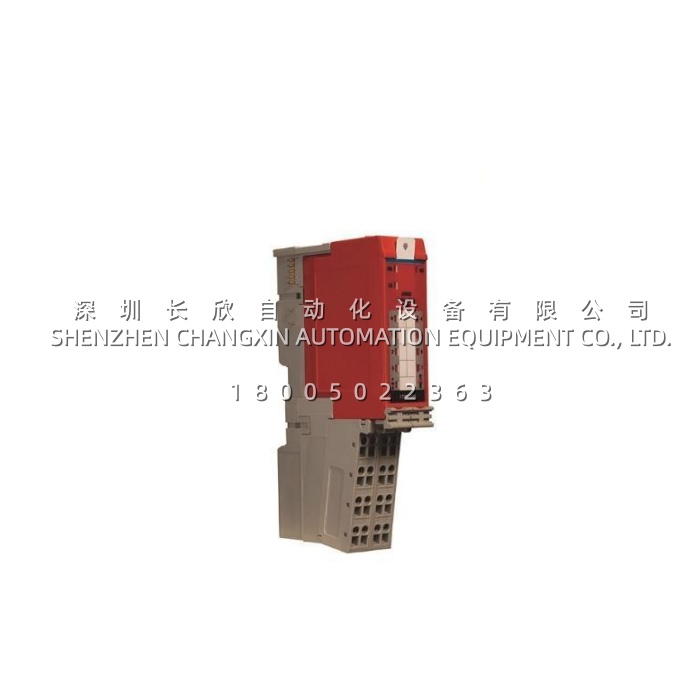
Siemens 6ES5267-8MA11 SIMATIC S5 Spare: Stock Tested Units with COM267 FB251/FB252 Check缩略图

Siemens 6ES5267-8MA11 SIMATIC S5 Spare: Stock Tested Units with COM267 FB251/FB252 Check

Siemens 6ES5267-8MA11 SIMATIC S5 Spare: Stock Tested Units with COM267 FB251/FB252 Check插图


Application Scenarios:

A 1995 vintage hardwood moulder in Southern Germany still runs its infeed-roller indexing and cross-cut carriage on an S5-100U (CPU 941) with a Siemens 6ES5267-8MA11​ on the carriage axis — external Siemens 6SN1145 stepper power stage + 1.8°/step motor, 5 mm pitch ball-screw, 1000-step/rev including microstepping. After 27 years, the operator noticed the carriage was landing ~0.6 mm short on a 1.2 m index during third-shift runs — enough to throw the profile off the saw line and scrap a 6 m board. The I&C tech initially blamed the ball-screw (lash) and re-cut the backlash comp in FB252 from 12 pulses → 18 — no fix. Then he scoped the Siemens 6ES5267-8MA11‘s D-sub pins at the power-stage end: TN signal was clean at idle but started ringing at 180 kHz during rapid-traverse (the carriage was being driven at ~1900 mm/min, edging the 204 kHz ceiling on a 5 mm pitch / 1000-step rev). Root cause: aged output-stage buffers on the 27-year-old Siemens 6ES5267-8MA11​ were softening the rise time at the top end, and the external power stage was occasionally missing a clock edge — 1 missed pulse per 2000 at 1900 mm/min = 0.005 mm per occurrence, but accumulated over a 40-board batch it landed 0.6 mm short. Swap took 20 minutes (slot 0–7, 9 V BUS, re-seat the D-sub, reload PB1 parameter block from PG backup). First test cut: ±0.08 mm repeatability back to 1995 spec. For any plant still running S5-100U on feeder carriages, bobbin-winders, textile creels, small-press index tables — the Siemens 6ES5267-8MA11​ is why those machines haven’t needed a €20k S7-1200 + V90 servo retrofit. The module doesn’t drive the motor — it just counts perfectly and clocks the external power stage — and that’s exactly what a 1990s open-loop feeder needs.


Parameter:

Main Parameters Value/Description
Product Model Siemens 6ES5267-8MA11
Manufacturer Siemens AG (SIMATIC S5, IP family)
Product Category Stepper Motor Control Module (IP 267), open-loop, 1-axis
Compatible Racks S5-90U / 95U / 100U / ET100U (Slot 0–7 analog-address area); electrically compatible with S5-135U/155U but address mapping must be verified
Backplane Supply 9 V BUS, ~150 mA (drawn from S5 rack)
Special Voltage V_S 5–30 V selectable via front DIP (sets output level for external power stage signaling)
Digital Inputs 24 V DC, non-isolated, “0” = –33…+5 V / “1” = 13…33 V, typ. 8.5 mA; 22–30 V supply for 2-wire BERO
Pulse Output 9-pin D-sub female: Clock (TN/TN_N) + Direction (RP/RP_N), 20 mA short-circuit protected
Output Level (5 V mode) “0” ≤ 0.4 V / “1” ≥ 4.5 V
Output Level (V_S mode) “0” ≤ 0.4 V / “1” ≥ V_S − 0.4 V
Max Output Frequency 204 kHz (independent of V_S selection)
Max Steps per Job 2²⁰ − 1 = 1,048,575 pulses
Max Cable Length 50 m @ 50 kHz (twisted pair)
Slot Occupancy Single slot, 0–7 only (analog-address area: 8 bytes/slot, first 4 bytes = CPU↔IP267 exchange)
Configuration Blocks FB251 (job control), FB252 (parameter/reference), PB1 (parameter block stored on module)
Status LEDs RDY (configured), ACT (pulse active), ABT (abort/interrupt, e.g. emergency PD)
Weight ~0.65 kg
Lifecycle SIMATIC S5 discontinued, no factory replacement


Technical Principles and Innovative Values:

  • Innovation Point 1: Pulse generator, not power stage — deliberate architectural split.​ The Siemens 6ES5267-8MA11​ generates clean clock + direction on a 9-pin D-sub and expects an external stepper power stage (e.g., 6SN1145, 3rd-party Gecko/leadshine class) to actually push current into the motor windings. This keeps the S5 rack’s 9 V BUS draw at ~150 mA and lets the user pick whatever power-stage ampacity the axis needs — 2 A for a small feeder, 10 A for a bobbin winder — without changing the S5 BOM. Misunderstanding this (“why won’t my motor turn, I plugged it into the IP267” — answer: you need a power stage) is the #1 new-to-S5-support mistake.
  • Innovation Point 2: Slot 0–7 only — analog-address area architecture.​ The Siemens 6ES5267-8MA11​ cannot go in slots 8+ on an S5-100U because those slots map to digital I/O address space; IP267 needs the 8-byte analog-area per slot (first 4 bytes CPU↔module, last 4 idle). Put it in slot 8 and STEP 5 will compile but the CPU can’t exchange PIQ/PII with the module — it’ll sit there with RDY dark. For S5-90U/95U/100U panel builders, this dictates rack layout: IP modules eat the first 8 slots, digital SMs eat the rest.
  • Innovation Point 3: 204 kHz on a 1990s S5 IP module was premium spec.​ The Siemens 6ES5267-8MA11​ hitting 204 kHz meant 5 mm pitch / 1000-step rev = 1 m/sec carriage speed before you hit the ceiling — enough for most feeder and indexing duties of the era. Compare with the IP246 (200 kHz, DC closed-loop ±10 V) — the 267 is open-loop stepper sibling, and the 204 kHz ceiling is why long-travel high-speed carriages eventually outgrow it and migrate to S7-1500 TO.
  • Innovation Point 4: FB251 + FB252 + PB1 toolchain.​ The Siemens 6ES5267-8MA11​ is configured via PB1 (parameter block, stored in the module’s onboard memory, downloadable from PG via COM267), called from the S5 CPU’s OB1 through FB251 (job control: “move N steps at speed F”) and FB252 (reference/parameter). Built-in backlash compensation, reference-point search, and job queuing live in the IP267’s own ASIC — the S5 CPU only says “go,” the Siemens 6ES5267-8MA11​ does the ramp, the step-count, and the backlash bump.

Siemens 6ES5267-8MA11 SIMATIC S5 Spare: Stock Tested Units with COM267 FB251/FB252 Check插图1

Siemens 6ES5265-8MA01 IP265 High-Speed Sub-Control Module for S5 Systems缩略图

Siemens 6ES5265-8MA01 IP265 High-Speed Sub-Control Module for S5 Systems

Siemens 6ES5265-8MA01 IP265 High-Speed Sub-Control Module for S5 Systems插图


Technical Specifications

Parameter Name Value
Product Model 6ES5265-8MA01
Manufacturer Siemens
Product Type IP265 High-Speed Sub-Control / Counter Module
Series SIMATIC S5
Compatible Systems S5-90U, S5-95U, S5-100U, S5-115U, S5-135U, ET 200U
Digital Inputs 8 x 24V DC
Digital Outputs 8 x 24V DC, 0.5A per channel
Differential Inputs 3 x 5V RS-422 (A/B/Z for incremental encoder)
Maximum Counting Frequency ≤500 kHz (quadrature decoding)
Counting Range 32-bit up/down reversible
Input Frequency (24V DI) Max. 10 kHz
Cable Length Up to 32m (shielded)
Load Voltage 24V DC (auxiliary, via front connector)
Current Consumption <175 mA (from 9V for CPU) + 24V load current
Configuration Software COM265
Memory Requirement EPROM/EEPROM submodule (e.g., 6ES5375-0LA11)
Weight Approx. 0.3-0.45 kg
Operating Temperature 0°C to +60°C


Main Features and Advantages

The Siemens 6ES5265-8MA01 offers unparalleled performance for high-speed counting and positioning applications through its intelligent FPGA-based architecture. Unlike standard I/O modules, the 6ES5265-8MA01 Siemens is equipped with a field-programmable gate array that enables parallel processing of up to 8 digital inputs, 3 differential encoder signals, and 8 digital outputs simultaneously. This design allows the module to execute user-defined logic and counting functions independently of the CPU’s scan cycle, ensuring deterministic response times for critical processes.

A key advantage of the Siemens 6ES5265-8MA01 is its programmable nature. Using the COM265 software package, users can configure complex logic operations, counters, and comparators directly on the module. The 6ES5265-8MA01 features two standard function counters with hardware comparison capabilities, enabling immediate interrupt generation or local output activation when preset values are reached. This hardware-level comparison ensures response times measured in milliseconds rather than scan-cycle-dependent delays, making the Siemens 6ES5265-8MA01 ideal for applications like flying shears, wrap length measurement, and position window detection.

The module’s flexible I/O configuration provides connectivity options for both 24V DC sensors/actuators and 5V differential incremental encoders. The 6ES5265-8MA01 supports 32-bit up/down counting with quadrature decoding, providing the resolution required for precise position feedback in demanding applications. Unlike the simpler IP262 hardware counter or the IP263 positioning module, the Siemens 6ES5265-8MA01 combines programmability with high-speed hardware processing, offering a unique solution for S5 systems requiring intelligent sub-control functions.

Siemens 6ES5265-8MA01 IP265 High-Speed Sub-Control Module for S5 Systems插图1

Siemens 6ES5263-8MA12 IP 263 — 2-Channel Positioning Module for S5-90U/95U/100U & ET 200U, Rapid/Creep, Incremental + SSI缩略图

Siemens 6ES5263-8MA12 IP 263 — 2-Channel Positioning Module for S5-90U/95U/100U & ET 200U, Rapid/Creep, Incremental + SSI

Siemens 6ES5263-8MA12 IP 263 — 2-Channel Positioning Module for S5-90U/95U/100U & ET 200U, Rapid/Creep, Incremental + SSI插图


Technical Specifications

Parameter Value
Product Model 6ES5263-8MA12
Manufacturer Siemens
Product Type SIMATIC S5 IP 263 Positioning Module (2-channel)
Compatible System S5-90U, S5-95U, S5-100U; ET 200U (2 slots, via IM 318-B)
Microprocessor 80C52 / 80C32, 16 MHz
On-Board Memory EPROM 64 KB / RAM 32 KB / EEPROM 1 Kbit
Positioning Channels 2 independent axes
Digital Outputs per Ch. 4 (Rapid Traverse / Creep Speed / CCW / CW)
Encoder Support Incremental: 5 V RS422 differential, 24 V (asymmetrical); SSI absolute
Traversing Range 8192 inc/rev × 2048 revolutions
Sensor Supply 5 V DC / 300 mA + 24 V DC / 300 mA (on-board, short-circuit proof)
Positioning Modes Rapid → Creep → Target approach; software limit switches; zero-speed monitor
Interpolation Linear interpolation between two points
ET 200U Requirement 2 slots on station, IM 318-B interface
Weight ~0.5 kg
Operating Temperature –25 … +60 °C (S5 compact family rating)
Mounting S5-90U/95U/100U expansion bus / ET 200U rack


Main Features and Advantages

Two independent axes with 4 DO per channel.​ The defining architecture of the Siemens 6ES5263-8MA12​ is that each of its two channels manages a complete drive-interface quad: Rapid Traverse (full-speed approach), Creep Speed (fine-position window), Counter-Clockwise, and Clockwise rotation signals—logic-level outputs meant to drive interposing relays, contactor coils, or a drive’s enable inputs, not to carry motor current directly. For a rotary-index table, Channel 0 might drive the table’s servo or gear-motor through a relay bank: Rapid to spin to the next pocket, Creep to settle into the cam-detent, CW/CCW for direction. Channel 1 could simultaneously position a feeder slide on the same machine. Both run autonomously after the CPU writes PSET + VSET and issues START—the Siemens 6ES5263-8MA12​ executes the ramp profile, watches the encoder, switches from Rapid→Creep at the configurable switchover point, and fires the “position reached” telegram when the axis lands in the target window. The CPU’s main scan is free for everything else.Triple encoder support: 5 V RS422, 24 V incremental, SSI absolute.​ The Siemens 6ES5263-8MA12​ doesn’t lock you into one encoder tier. For precision axes (rotary-table with a 2048 P/R encoder, slide with a glass scale), the 5 V RS422 differential inputs reject noise on long cable runs—classic RS422, 5 V supplied from the module’s own 300 mA rail so you don’t need a separate encoder PSU. For rugged environments where a 5 V glass scale won’t survive (washdown, wood-chip conveyor, metal-chip slide), the 24 V incremental mode accepts rugged 24 V PNP/NPN encoder outputs, also drawing from the on-board 24 V / 300 mA rail. And for axes where “power-up, know where I am” matters—turret tool-post, index table with absolute homing requirement—the SSI (Synchronous Serial Interface) absolute-encoder path reads a 13-bit (or higher, depending on encoder) position word on every scan without needing a home run. The traversing range of 8192 × 2048 = ~16.8 M counts means multi-turn absolute encoders are fully exploited.Rapid → Creep → Target profile with software limit switches.​ The Siemens 6ES5263-8MA12​ implements the classic machining-profile state machine: after START, the axis accelerates to Rapid traverse toward the target; when it crosses the switchover/cutoff difference (configurable in the DB), it drops to Creep speed; it then monitors approach and, when the encoder count lands within the target window, asserts the “position reached” status and sends the telegram to the CPU (via backplane on S5-100U, or via IM 318-B on ET 200U). Software limit switches are programmable per channel so the axis won’t overshoot past a mechanical stop even if the CPU ladder mis-addresses. Zero-speed monitoring is built in—the module can hold Creep until the encoder delta falls below a threshold, preventing “coast-past” on high-inertia loads. For plants whose original EPC tuned these DB values in the late 1990s, the Siemens 6ES5263-8MA12​ preserves that tuning byte-for-byte across a replacement—no re-commissioning the ramp if the spare is pre-loaded from the live DB.Linear interpolation between two points.​ Beyond single-axis point-to-point, the Siemens 6ES5263-8MA12​ supports linear interpolation—useful on small XY gantry heads, twin-slide feeders, and diagonal traverse on a cut-to-length shear where the carriage and the hold-down need to coordinate. It’s not 3-axis CNC—this is S5 compact, not Sinumerik—but for a packaging-machine registration knife that needs the film-feed slide and the cross-cut carriage to hit a diagonal registration mark, the IP 263’s interpolation is enough. The STEP 5 FB set (PSET/VSET/START/MONITOR) abstracts this cleanly—the CPU ladder just says “move Axis 0 and 1 together to X,Y” and the Siemens 6ES5263-8MA12​ handles the coordinated ramp.On-board sensor supplies eliminate encoder PSU.​ A detail small on paper but big in a cramped S5-100U panel: the Siemens 6ES5263-8MA12​ carries 5 V / 300 mA and 24 V / 300 mA short-circuit-protected (but not overload-protected externally—don’t hang extra load) sensor rails right on the module, sourced from the S5-100U expansion bus 5 V / 24 V distribution. A typical incremental encoder draws 60–150 mA; an SSI absolute draws 50–100 mA; so one IP 263 can feed both its channel encoders from its own supplies in most small-machine builds. This collapses what would otherwise be a small DIN-rail encoder PSU (another SITOP bite, another terminal row) out of the BOM. For skid OEMs standardizing on S5-100U + IP 263, this integration is why the combo shows up in packaging-machine local panels and converter-aux slides.MA12 firmware and the MA13 trap.​ A storeroom note worth calling out: the Siemens 6ES5263-8MA12​ (and the earlier -8MA11) run the “original” IP 263 FB/DB map where the “PEH” (Position Erreicht = position reached) status bit lives in byte 1 of the interface DB. The later -8MA13 revision moved PEH to “REG 25” (a different status-register mapping) and changed the toggle-bit protocol. Siemens’ own FAQ states: the MA11/MA12 example program does not run on MA13; conversely, MA11/MA12 can run on the MA13 example program (backward-compatible on the SW side, but not forward). Practically: if your plant’s S5-100U project was written for -8MA12 (most were, through the 2000s), swapping in an -8MA13 requires updating the FB/DB calls in STEP 5—not a drop-in. Swapping MA12 ↔ MA11 is a drop-in. When buying a Siemens 6ES5263-8MA12​ as spare against an MA11 live unit, you’re safe; buying MA13 to replace a failed MA12 requires a project tweak. This is the #1 “why did the new positioning module break the ladder” root cause in the aftermarket.

Siemens 6ES5263-8MA12 IP 263 — 2-Channel Positioning Module for S5-90U/95U/100U & ET 200U, Rapid/Creep, Incremental + SSI插图1

Siemens 6ES5262-8MB13 IP262 Closed-Loop Control Module for SIMATIC S5 Systems缩略图

Siemens 6ES5262-8MB13 IP262 Closed-Loop Control Module for SIMATIC S5 Systems

Siemens 6ES5262-8MB13 IP262 Closed-Loop Control Module for SIMATIC S5 Systems插图


Product Overview

The Siemens 6ES5262-8MB13, designated as the IP262 Intelligent Closed-Loop Control Module, is a sophisticated peripheral processor designed for the SIMATIC S5 family of programmable logic controllers, specifically tailored for the S5-90U, S5-95U, and S5-100U compact PLC systems . Unlike standard I/O modules that rely entirely on the CPU for processing, the Siemens 6ES5262-8MB13 incorporates its own dedicated 16-bit microprocessor, enabling it to execute complex PID control algorithms independently of the S5 CPU’s scan cycle . This intelligent architecture allows the Siemens 6ES5262-8MB13 to perform high-speed closed-loop control tasks such as temperature regulation, pressure control, flow management, and speed control without burdening the main processor, significantly improving system response times and overall performance .

The Siemens 6ES5262-8MB13 is the most feature-rich variant in the IP262 family, representing a significant upgrade over earlier models like the 8MA12 (which lacked PDM outputs) and the 8MB12 (which did not include self-tuning functionality) . This module integrates four independent continuous-action controllers with advanced pulse-duration modulation (PDM) outputs and stepper controller support, making it suitable for a wide range of actuator types . The Siemens 6ES5262-8MB13 also features four high-interference-suppression analog inputs capable of accepting voltage, current, thermocouple, or RTD (Pt100) signals, a dedicated reference temperature input for thermocouple cold-junction compensation, and eight binary outputs . With support for both DDC (Direct Digital Control) and SPC (SetPoint Control) operating modes, the Siemens 6ES5262-8MB13 can continue closed-loop operation even if the main CPU fails—a critical capability for fail-safe process control applications .


Technical Specifications

Parameter Name Parameter Value
Product Model Siemens 6ES5262-8MB13
Manufacturer Siemens AG
Product Type IP262 Closed-Loop Control Module
Series SIMATIC S5 (Intelligent Peripheral IP Series)
Compatible PLCs S5-90U / S5-95U / S5-100U (slots 0–7)
Number of Controllers 4 independent continuous-action controllers
Analog Inputs 4 channels (voltage, current, thermocouple, Pt100) + 1 reference temperature input
Analog Input Resolution 12 bits + sign (unipolar 11 bits)
Integration Time 20 ms (50 Hz) / 16.7 ms (60 Hz) / 55 ms (50 Hz extended) / 45.8 ms (60 Hz extended)
Binary Outputs 8 × PDM pulse-width modulation outputs (100 mA max, short-circuit proof)
Binary Inputs 4 digital inputs (for control/mode switching)
Stepper Controller Supported (integrated in 8MB13 variant)
Self-Tuning (Auto-Tuning) Supported (automatic parameter adaptation)
Operating Modes DDC (CPU-executed) / SPC (IP-autonomous with backup setpoint)
Supply Voltage 24 V DC (18–34 V permissible)
5V Backplane Current Approx. 20 mA
24V External Current (no load) Approx. 180 mA
Operating Temperature 0°C to +55°C
Storage Temperature -40°C to +85°C
Protection Class IP20
Connections 2 × 20-pin terminal block + 25-pin D-sub (PG/OP)
Dimensions (W×H×D) Approx. 120 × 40 × 105 mm (Eurocard, DIN 41494)
Weight Approx. 0.3 – 0.5 kg

Siemens 6ES5262-8MB13 IP262 Closed-Loop Control Module for SIMATIC S5 Systems插图1

Siemens 6ES5262-8MB11 IP 262 S-Regler – 4-Loop PID Closed-Loop Module for SIMATIC S5-90U/95U/100U缩略图

Siemens 6ES5262-8MB11 IP 262 S-Regler – 4-Loop PID Closed-Loop Module for SIMATIC S5-90U/95U/100U

Siemens 6ES5262-8MB11 IP 262 S-Regler – 4-Loop PID Closed-Loop Module for SIMATIC S5-90U/95U/100U插图


Product Overview

The 6ES5262-8MB11​ is a Siemens SIMATIC S5 IP 262 “S-Regler” (S-Controller) closed-loop control module, belonging to the S5 “IP 26x” family of intelligent peripheral processors that execute control algorithms autonomously on-board, offloading the S5-90U/95U/100U rack CPU and preserving scan determinism for the rest of the application logic. Within the IP 262 sub-family, Siemens offered two controller personalities: the “K-Regler” (K-Controller, 6ES5262-8MA12) with three continuous-action control loops, and the “S-Regler” (S-Controller, 6ES5262-8MB11 / -8MB12 / -8MB13) with four independent PID loops plus PDM (pulse-duty-modulation) signal generation and stepping-controller capability. The 6ES5262-8MB11​ represents the earlier hardware revision of the S-Regler line (superseded by -8MB12, then -8MB13), but remains electrically and mechanically interchangeable within the same S5-90U/95U/100U host envelope and is the canonical spare for plants that standardized on the -8MB11 during original build.Architecturally, the 6ES5262-8MB11​ integrates four analog input channels (12-bit, configurable 0–10 V / ±10 V / 0–20 mA) for process-variable acquisition, four analog output channels (12-bit, 0–10 V / 0–20 mA) for manipulated-variable drive, plus four digital inputs and eight digital outputs for enable, alarm, and status signaling. The on-board microcontroller executes four fully independent PID algorithms (P / PI / PD / PID selectable per loop) with built-in self-tuning (auto-tuning) and PDM pulse-generation for driving stepping motors or pulsed actuators directly from the module without external PDM hardware. Control cycle is configurable per loop, typically 5–10 ms per channel for fast process loops. The 6ES5262-8MB11​ draws 5 V DC from the S5 rack backplane and requires an external 24 V DC supply for the I/O and PDM stages, with typical current around 250 mA at 24 V DC. Siemens declared the 6ES5262-8MB11​ End of Sales effective December 1, 1999, placing it deep in the legacy-spare bracket, but the S5-90U/95U/100U installed base—packaging machines, small process skids, textile winders, building-plant aux—still runs plenty of -8MB11 units where migration to S7-1200 + TM 2x has not yet been justified.


Technical Specifications

Parameter Name Parameter Value
Product Model 6ES5262-8MB11
Manufacturer Siemens (SIMATIC S5, IP 262 series)
Product Type Closed-Loop Control Module (S-Regler / S-Controller)
Compatible Hosts SIMATIC S5-90U, S5-95U, S5-100U rack CPUs
Control Loops 4 independent PID loops (P / PI / PD / PID configurable)
Analog Inputs (AI) 4 channels, 12-bit, 0–10 V / ±10 V / 0–20 mA configurable
Analog Outputs (AO) 4 channels, 12-bit, 0–10 V / 0–20 mA configurable
Digital Inputs (DI) 4 channels, 24 V DC
Digital Outputs (DO) 8 channels, semiconductor (transistor), 24 V DC
Special Functions PDM (pulse-duty-modulation) signal generation, stepping-controller support
Self-Tuning Yes, auto-tuning per loop
Control Cycle Configurable, typ. 5–10 ms per channel
Backplane Power 5 V DC from S5 rack
External Supply 24 V DC (–20 % / +25 %), typ. 250 mA
Electrical Isolation Channel↔logic, 500 V AC (AI/AO isolated from logic)
Programming STEP 5, parameterization via DB / X-PUT
Operating Temperature 0 °C to +60 °C
Storage Temperature –40 °C to +70 °C
Mounting S5-90U/95U/100U rack slot (Euro-card format)
Dimensions (approx.) 125 × 75 × 125 mm
Weight (approx.) 0.32–0.4 kg
Protection Class IP20
Lifecycle Status EOSR Dec 1, 1999; spare-part supply only

Siemens 6ES5262-8MB11 IP 262 S-Regler – 4-Loop PID Closed-Loop Module for SIMATIC S5-90U/95U/100U插图1

Siemens 6ES5255-3AC11 MONA-C Display Module for SIMATIC S5 Systems缩略图

Siemens 6ES5255-3AC11 MONA-C Display Module for SIMATIC S5 Systems

Siemens 6ES5255-3AC11 MONA-C Display Module for SIMATIC S5 Systems插图


Product Overview

The Siemens 6ES5255-3AC11, also known as the MONA-C (Monitoring and Control) or IP255 display module, is a specialized operator interface and display unit designed for the Siemens SIMATIC S5 series of programmable logic controllers. This module functions as a local HMI (Human-Machine Interface) that provides real-time process monitoring, parameter adjustment, and diagnostic capabilities directly at the machine or control rack, eliminating the need for external programming devices or central SCADA workstations for routine operations . The Siemens 6ES5255-3AC11 is engineered for seamless integration into the S5 backplane bus architecture, enabling it to communicate directly with the CPU through the rack’s backplane without additional cabling or external power supplies .

The Siemens 6ES5255-3AC11 features a clear alphanumeric LCD display—commonly supporting 2 lines of 16 characters or up to 4 lines of 80 characters depending on configuration—alongside a membrane keypad with tactile feedback keys for scrolling through parameters, editing setpoints, and acknowledging alarms . This display module occupies a single slot in S5-100U, S5-95U, S5-135U, and S5-155U rack systems, making it a versatile solution for local monitoring across the SIMATIC S5 family . As the SIMATIC S5 series has been officially discontinued for many years, the Siemens 6ES5255-3AC11 is now exclusively available through legacy spare parts channels, representing a critical resource for facilities continuing to operate S5-based equipment where full system migration is not yet economically or logistically feasible .


Technical Specifications

Parameter Name Parameter Value
Product Model 6ES5255-3AC11
Manufacturer Siemens AG
Product Type MONA-C / IP255 Display Module / Operator Interface
Series SIMATIC S5
Compatible Systems S5-100U, S5-95U, S5-135U, S5-155U
Display Type LCD alphanumeric (some variants: 5.7″ graphical, see note)
Display Capacity Up to 4 lines × 80 characters (depends on firmware/version)
Display Backlight EL or LED backlight (typical lifespan 50,000 hours)
Keypad 6 membrane keys with tactile feedback
Interface S5 backplane bus (direct rack communication)
Power Supply 24 V DC via backplane (range 20.4–28.8 V DC)
Power Consumption Approx. 5 W (typical)
Operating Temperature 0°C to +60°C
Storage Temperature -25°C to +70°C
Protection Rating IP20 (module body) / IP54 (panel-mounted front)
Memory Non-volatile EEPROM for parameter storage
Mounting S5 rack slot installation
Dimensions (approx.) 25 mm × 120 mm × 116.4 mm (single slot width)
Weight (approx.) 0.3 kg to 0.6 kg
Certifications CE, UL (as per original production)
Status Discontinued (EoL) — Legacy spare parts only
6ES5252-3AA13​ Review: Hardware-Level Closed-Loop for Tension, Speed & Position in S5 Racks缩略图

6ES5252-3AA13​ Review: Hardware-Level Closed-Loop for Tension, Speed & Position in S5 Racks

6ES5252-3AA13​ Review: Hardware-Level Closed-Loop for Tension, Speed & Position in S5 Racks插图


Application Scenarios

In a tandem cold-rolling mill still running S5-155U for its strip-handling line, the original software PID for inter-stand tension control lived inside the CPU 948’s OB1 — and at ~150 ms scan under full I/O load, the tension loop couldn’t catch nip-speed mismatches during acceleration, leaving coil ends with visible “snake” marks. The fix wasn’t a full S7 retrofit; it was slotting a Siemens 6ES5252-3AA13​ into the same UR2 rack (the dry chassis we covered in the prior article), landing the load-cell amplifier’s ±10 V differential onto X6, and mapping the stand-drive tach (via an IP240 counter module on X4) as the speed feed-forward. The 6ES5252-3AA13​ ran the tension PID at 5 ms sampling — completely decoupled from the CPU scan — and wrote the corrected torque bias back to the drive’s ±10 V summing node via X6 analog out. During a 1200 m/min acceleration test, the tension ripple dropped from ±12 % (software PID) to ±3.5 % (IP252 hardware loop). More practically, the 6ES5252-3AA13‘s 3AA13 A04+ firmware enabled the X4 link to the IP240 tach counter — so the IP240 counted encoder pulses while the 6ES5252-3AA13​ consumed the speed word for feed-forward, splitting “count” from “control” across two submodules on the same backplane. For this mill, the 6ES5252-3AA13​ turned a scan-limited PID into a deterministic 5 ms loop — no S7 migration required.


Parameter

Main Parameters Value/Description
Product Model 6ES5252-3AA13
Manufacturer Siemens (SIMATIC S5)
Product Category IP 252 Closed-Loop Control Module (Technology Submodule)
Compatible Hosts S5-135U / S5-155U (central rack or EU expansion); S5-115U possible per config
Control Loops 1 × independent closed-loop algorithm kernel
Control Algorithms PID / PD / P (parametrizable); DRS controller structure stored in EPROM
Sampling Time 1 ms – 250 ms (parametrized)
Setpoint Resolution 12-bit + sign
Actual-Value Resolution 12-bit + sign
Analog I/O (X6) Diff. ±10 V, ±20 mA, 0–20 mA (config via submodule); AO ±10 V / 0–20 / 4–20 mA
Encoder I/F (X4) Links to IP240 counter module for speed/position feed (3AA13 A04+ required for IP240 coupling)
Memory Submodule (X3) 48-pin DIN 41612; accepts 32K EPROM (DRS structure) + 8K EEPROM (params)
Programming STEP 5 + COM REG IP 252 or COM REG GRAPHIC IP 252 software package
Supply 5 V DC from backplane + 24 V DC (M24V) for I/O
Mounting 1 S5 rack slot
Operating Temp. 0 °C to +60 °C
Discontinuation Apr 2012 (spare-market only)

Note: The “3AA13” suffix denotes version A04+ firmware on the submodule bus. Earlier IP252 batches (3AA11/3AA12) may lack X4→IP240 coupling — verify firmware label if your loop needs encoder speed feed-forward from an IP240.


Technical Principles and Innovative Values

  • Innovation Point 1 – Hardware PID Decoupled from CPU Scan.​ The 6ES5252-3AA13​ isn’t a “function block on a card” — it’s a microprocessor submodule that executes the closed-loop algorithm autonomously. The S5 CPU (948/945) writes setpoint + structure switches via the backplane once per OB1, but the 6ES5252-3AA13​ integrates the error, updates output, and handles windup/limit every sampling tick (as fast as 1 ms) regardless of how loaded the CPU scan is. For tension, web, spindle, or hydraulic loops where 100+ ms OB1 kills stability, this is the architectural fix.
  • Innovation Point 2 – DRS Controller Structure in 32K EPROM (X3 Submodule).​ Unlike transistor-output or AI modules where “configuration” is a few DIPs, the 6ES5252-3AA13​ requires a memory submodule on X3: 32K EPROM holds the DRS (controller structure) — basically the firmware-level definition of which algorithm variants (PID with/without feed-forward, cascade, ratio, limiter topology) are available — while 8K EEPROM stores your tuned Kp, Tn, Tv, deadband, output clamp values. Swapping the EPROM changes the algorithm library without touching STEP 5 code. This submodule architecture is what separates IP252 from simpler analog-loop cards.
  • Innovation Point 3 – X4 Encoder Link to IP240 for Speed Feed-Forward.​ The 6ES5252-3AA13​ has a dedicated X4 37-pin interface that can couple to an IP240 counter/encoder module (the 3AA13 A04+ firmware enables this). In practice: IP240 counts the incremental encoder on a drive shaft; 6ES5252-3AA13​ reads the speed word over X4 and uses it as feed-forward into the PID (e.g., tension loop on a unwind stand — you want the line speed in the numerator). One submodule counts, the other controls — both sit on the same S5 backplane, <1 µs handshake.
  • Innovation Point 4 – 12-bit + Sign with Differential Analog I/O.​ The X6 25-pin analog interface delivers ±10 V / ±20 mA diff on the actual-value input and ±10 V / 4–20 mA on the output — 12-bit + sign both sides. “Diff” matters: in a rolling-mill pulpit 30 m from the stand, the ±10 V from a load-cell amp picks up VFD common-mode noise; differential reception on the 6ES5252-3AA13​ rejects it. The 12+sign gives ~5 mV/LSB at ±10 V span — adequate for tension (where the 4–20 mA torque-bias output to the drive is the real actuator, not the ±10 V setpoint resolution).
SIEMENS 6ES5247-4UA31 S5 Positioning Module – FB164/FB165 Standard Function Block Support缩略图

SIEMENS 6ES5247-4UA31 S5 Positioning Module – FB164/FB165 Standard Function Block Support

SIEMENS 6ES5247-4UA31 S5 Positioning Module – FB164/FB165 Standard Function Block Support插图


Application Scenarios

In a high-speed packaging machine at a European food processing plant, the SIEMENS 6ES5247-4UA31 was deployed to control three independent stepper-driven positioning axes for film feeding, sealing head positioning, and cut-off knife synchronization. The plant had previously struggled with mechanical cam-based systems that required lengthy changeover times between product runs. By leveraging the IP247’s three-axis capability, engineers programmed precise positioning profiles for each axis, with the module’s incremental encoder feedback ensuring accurate registration. The plant’s automation lead noted: “The SIEMENS 6ES5247-4UA31 transformed our changeover process from 45 minutes to under 5. We simply load a new machining program through the COM247 software, and the module handles the rest.”

The SIEMENS 6ES5247-4UA31 also excels in cut-to-length applications, such as paper or film processing where material must be fed and cut at precise lengths. In a paper converting plant, the SIEMENS 6ES5247-4UA31 controls the feed roller stepper motor while monitoring the incremental encoder to ensure accurate length measurement and cut positioning . The module’s backlash compensation and zero offset capabilities enable precise compensation for mechanical wear, extending the operational life of the machinery and reducing scrap rates.


Parameters

Main Parameters Value/Description
Product Model 6ES5247-4UA31 (IP247)
Manufacturer Siemens (Germany) – SIMATIC S5 Series
Product Category Positioning Module for Stepper Motors / Daughter Module
Controlled Axes 3 independent axes
Drive Interface Step motor power stages (clock, direction, reset signals)
Encoder Input Incremental encoder (24V HTL or 5V TTL/RS-422 differential), A/B/Z signals
Digital Inputs 4 per axis (24V DC)
Digital Outputs Digital I/O for all axes via 25-pin front connector
I/O Isolation Encoder and setpoint circuits isolated from S5 backplane bus
Position Resolution 32-bit position register
Programming Interface TTY interface (15-pin connector) for COM247 software
Status LEDs RUN (green) / ERR (red)
Power Supply 24V DC via backplane and front-panel flat connector
Installation Double-height Euro format, ES902 system
Compatible CPUs S5-115U (CPU 922/928), S5-135U, S5-155U
Lifecycle Status Obsolete / discontinued (SIMATIC S5 series discontinued)

SIEMENS 6ES5247-4UA31 S5 Positioning Module – FB164/FB165 Standard Function Block Support插图1

Siemens 6ES5246-4UA41 SIMATIC S5 IP 246 I — Incremental Positioning Module for S5-115U, Non-Ventilated缩略图

Siemens 6ES5246-4UA41 SIMATIC S5 IP 246 I — Incremental Positioning Module for S5-115U, Non-Ventilated

Siemens 6ES5246-4UA41 SIMATIC S5 IP 246 I — Incremental Positioning Module for S5-115U, Non-Ventilated插图


Application Scenarios:

A 1996 vintage circular-saw line in a Central European hardwood mill still runs its infeed carriage and cross-cut index on an S5-115U (CPU 943) with a Siemens 6ES5246-4UA41​ on the feed axis — 5 V differential incremental encoder on the ball-screw, ±10 V analog output driving a 1.5 kW DC drive amp’s speed input, crawl-speed engagement for the last 3 mm before the stops. The original Siemens 6ES5246-4UA41​ began throwing sporadic “encoder count drift” faults during the third shift, traced to aged input-stage buffers on the 27-year-old module — the PID was still computing fine, but the 200 kHz count path was dropping pulses on rapid-traverse (12 m/min). The integrator had a tested spare on the shelf (wise — the saw line runs 20 m³/h of beech, every hour down is €800 in lost throughput). Swap took 18 minutes: power down the S5-115U rack, extract the Siemens 6ES5246-4UA41, seat the replacement, reload the machining program via COM246, verify FB164 “running monitor” on the PG. First test cut: ±0.12 mm repeatability on a 2.4 m index — back to spec. For any plant still running S5-115U on bandsaws, roll-grinders, rewind slitters, woodworking CNC add-ons, or small-press feed carriages, the Siemens 6ES5246-4UA41​ is the reason those machines haven’t needed a €25k S7-1500 + drive retrofit — the module handles the messy axis math while the S5-115U CPU tends to the sequence.


Parameter:

Main Parameters Value/Description
Product Model Siemens 6ES5246-4UA41
Manufacturer Siemens AG (SIMATIC S5, IP family)
Product Category Intelligent Positioning Module (IP 246 I, incremental)
Compatible Racks S5-115U (native, non-ventilated), electrically compatible with S5-135U/155U (but 4UA31 ventilated variant preferred there)
Control Axes 1 axis (single-width slot); 2-axis = double-width 4UA21 sibling
Encoder Interface Incremental encoder (5 V differential typical; 24 V configurable on some firmware)
Max Counting Frequency 200 kHz
Drive Output ±10 V analog (to DC drive speed input) OR pulse/direction (to stepper/servo) — configurable per application
Onboard Processing Independent CPU running PID + ramp/crawl; S5 main CPU only sends “target position + go”
Configuration Software COM246 (includes machining program editor, FB164 operating monitor, FB165 parameter assignment)
Supply Voltage 24 V DC from S5 backplane (5 V backplane ~1.5 A, 24 V external ~0.15 A)
Power Dissipation ~10 W
Ventilation Non-ventilated (designed for S5-115U rack; S5-115U cabinet typically has rack-level fan)
Dimensions (L×W×H) ~213 × 262 × 35 mm
Weight ~0.62 kg
Operating Temperature 0 °C to +60 °C
Ingress Protection IP20 (cabinet)
Lifecycle SIMATIC S5全系 discontinued, 4UA41 deleted without replacement


Technical Principles and Innovative Values:

  • Innovation Point 1: Onboard PID offloads the S5 main CPU.​ The Siemens 6ES5246-4UA41​ carries its own processor that executes ramp generation, crawl-speed engagement, encoder-feedback correction, and ±10 V output loop — the S5-115U’s CPU 941/943 only sends “move to X” and “read position Y” via FB164/FB165. In an era when S5-115U scanned at 10–30 ms, this kept three-axis feed systems from choking the main OB1 — a design that still matters on 25-year-old programs you don’t want to touch.
  • Innovation Point 2: 200 kHz counting on incremental encoders with ±10 V or pulse/dir output.​ The Siemens 6ES5246-4UA41​ supports both analog ±10 V (classic DC drive speed-input topology) and pulse/direction (modern stepper/servo retrofits onto old S5 bays). 200 kHz at the encoder input means micron-level resolution on a 5 mm pitch ball-screw with a 1000-line encoder — plenty for saw-index, roll-feed, and tension-position loops on legacy machines.
  • Innovation Point 3: Non-ventilated for S5-115U, ventilated sibling for 135U/155U.​ The Siemens 6ES5246-4UA41​ is the 4UA31’s quieter cousin — same 1-axis incremental spec, same 200 kHz, same ±10 V — but the heatsink and slot design assume the S5-115U rack’s own ventilation envelope (115U cabinets typically have a rack fan pushing ~20 m³/h). If you accidentally put a 4UA41 in a crowded S5-155U center rack with no direct fan path, it’ll thermally throttle; the 4UA31 (ventilated) is the correct drop-in there. This distinction is the #1 misorder mistake on the secondary market.
  • Innovation Point 4: COM246 + FB164/FB165 toolchain is still usable on Windows XP–era PG laptops.​ The Siemens 6ES5246-4UA41​ configures through COM246 (catalog COM246R), which runs on STEP 5 v7.x hosts — meaning plants that kept a PG720 or PG740 with a working COM246 install can still edit machining programs, tweak ramp times, and monitor axis state without migrating anything. For a bandsaw where the “machining program” is 40 years of tribal knowledge in 200 lines of COM246 G-code-like blocks, that’s invaluable.


Application Cases and Industry Value:

A paper-tube rewind line in Northern France runs its unwind-tension + slit-position loops on an S5-115U (CPU 942) with a Siemens 6ES5246-4UA41​ on the unwind dancer position (incremental encoder on the swing-arm pivot, ±10 V to the 2.2 kW DC unwind motor drive). After 26 years, the module started showing “position deviation > limit” faults during acceleration from 50 m/min to 350 m/min — the 200 kHz counter path was fine, but the ±10 V output stage had drifted ~0.4 V off-zero at 40°C cabinet ambient, so the DC drive was seeing a false speed-demand offset and the dancer was hunting. The plant’s electromechanic spotted it via FB164’s “actual position vs. target” trend on the PG during a lunch-hour checkout. Swapped the Siemens 6ES5246-4UA41​ in 22 minutes (including COM246 download of the 40-block machining program), and the acceleration hunting disappeared — tension variance dropped from ±12 N to ±3 N across the 80–500 m/min range. Plant manager noted: “The IP246 is 1990s tech, but for a single DC unwind axis it’s still cleaner than bolting a Technology Object onto an S7-1500 just to avoid one spare-module hunt.”A small Alpine door-frame press (wood-composite) runs its carriage index and clamp-close on an S5-115U with two Siemens 6ES5246-4UA41​ modules — one per axis, since the 4UA41 is single-width 1-axis. The shop proactively replaced both during a 2023 holiday shutdown after the original 1997 units began showing “FB164 watchdog bit 3” intermittents (age-related, 10 W dissipation had cooked the onboard PID’s reference op-amps after 26 years). Both swaps + COM246 re-download took the electrician 90 minutes total. Post-replacement, carriage repeatability held at ±0.08 mm over a 1.8 m stroke — unchanged from 1998 commissioning spec. The OEM who built the press quoted €18k for an S7-1200 + V90 servo retrofit; the two Siemens 6ES5246-4UA41​ spares + a COM246 PG checkout cost €520. “If it ain’t broke don’t rewrite the machining program” was the foreman’s summary.

Siemens 6ES5246-4UA41 SIMATIC S5 IP 246 I — Incremental Positioning Module for S5-115U, Non-Ventilated插图1

Siemens 6ES5244-3AB31 IP244B – 4-Channel Temperature Controller for S5-115U/135U Systems缩略图

Siemens 6ES5244-3AB31 IP244B – 4-Channel Temperature Controller for S5-115U/135U Systems

Siemens 6ES5244-3AB31 IP244B – 4-Channel Temperature Controller for S5-115U/135U Systems插图


Application Scenarios

In a plastics manufacturing plant running a legacy injection molding machine, precise temperature control across multiple heating zones is critical to product quality. The machine’s S5-115U PLC relies on the Siemens 6ES5244-3AB31 to manage four independent barrel heating zones, each with its own thermocouple input and PID heating output. When the module’s autotune function optimizes each zone’s parameters, the machine achieves consistent melt temperatures, reducing scrap rates and ensuring uniform part quality . In another scenario, a chemical reactor in a specialty batch process depends on the 6ES5244-3AB31 for cascade temperature control, where the module’s 250ms sampling rate and 0.1°C resolution allow rapid response to exothermic reactions, maintaining safe and stable process conditions .


Parameters

Main Parameters Value / Description
Product Model 6ES5244-3AB31 (IP244B)
Manufacturer Siemens AG
Product Category Temperature Control / Closed-Loop Module for SIMATIC S5
System Compatibility S5-115U, S5-135U, S5-155U (EU/CR rack slots)
Temperature Input Channels Up to 4, independently configurable
Supported Input Types Thermocouples (J, K, T, L) with cold-junction compensation; Pt100 RTD (2/3/4-wire)
Analog Outputs 2 x 0–20 mA / 4–20 mA for proportional valve/heater control
Digital Outputs 2 x 24 V DC, 0.5 A (for on/off control of contactors or SSRs)
Control Algorithms PID with autotune, two-point, three-point, cascade support
Sampling Rate ~250 ms per channel (typical)
Resolution / Accuracy 16-bit; ±0.5°C accuracy (typical)
Power Supply 5 V DC via S5 backplane; optional 24 V DC auxiliary
Operating Temperature 0°C to +55°C


Technical Principles and Innovative Values

  • Innovation Point 1 – Decentralized PID Processing to Offload CPU: The Siemens 6ES5244-3AB31 performs PID calculations locally, without requiring the S5 CPU to execute complex floating-point or control algorithms. This offloads processing load and ensures deterministic temperature control independent of CPU scan time variations, a significant advantage over relying on standard analog input modules and CPU-based logic .
  • Innovation Point 2 – Flexible Input Configuration and Autotune: The Siemens 6ES5244-3AB31 supports mixed thermocouple and RTD inputs on the same module, configurable via internal DIP switches and parameter blocks . Its integrated autotune function automatically determines optimal PID parameters (P, I, D values) for each loop, reducing manual tuning time and improving control performance in dynamic processes .
  • Innovation Point 3 – Advanced Interference Suppression and Cold-Junction Compensation: The Siemens 6ES5244-3AB31 features high interference suppression for analog inputs, ensuring stable temperature readings in electrically noisy industrial environments . It also provides automatic internal cold-junction compensation for thermocouple measurements, eliminating the need for external reference junctions and simplifying wiring .
  • Innovation Point 4 – Pin-Compatible Firmware Upgrade from IP244A: The 6ES5244-3AB31 is a firmware-enhanced successor to the earlier IP244A (6ES5244-3AA22) variant, maintaining pin compatibility while offering improved functionality . This allows facilities to upgrade to more advanced temperature control capabilities without changing hardware racks or wiring, an essential benefit for legacy system maintenance.

Siemens 6ES5244-3AB31 IP244B – 4-Channel Temperature Controller for S5-115U/135U Systems插图1

Back to Top

Search For Products

Product has been added to your cart