
Technical Specifications
| Parameter Name | Parameter Value |
|---|---|
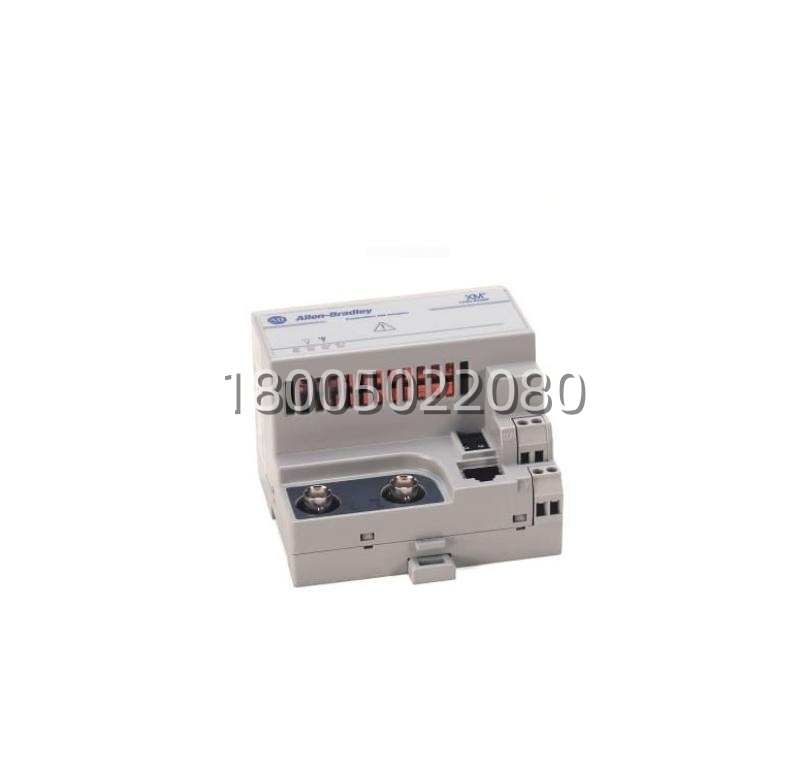
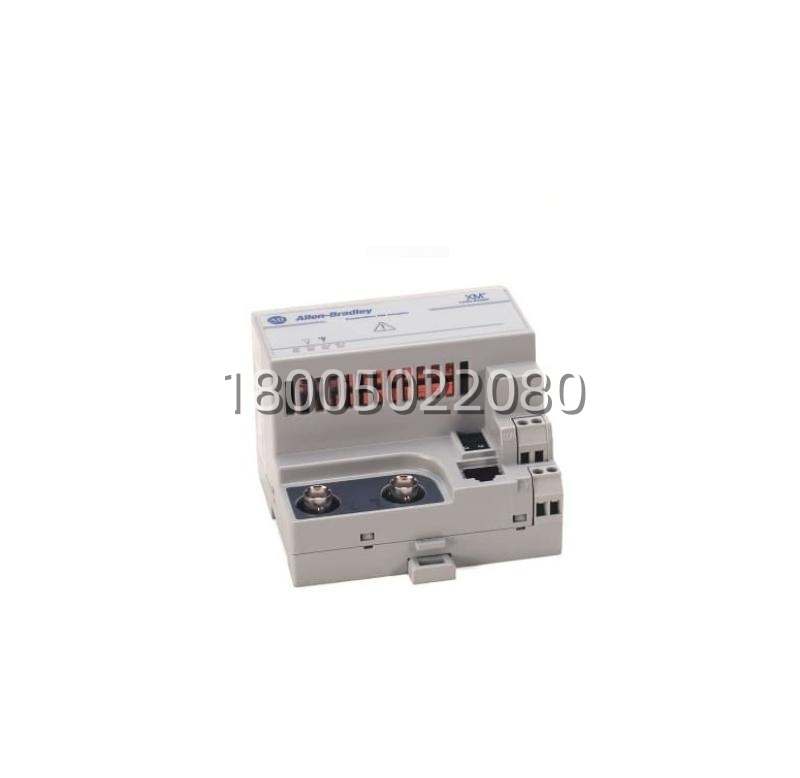
| Product Model | 1440-ACNR |
| Manufacturer | Allen-Bradley (ROCKWELL Automation) |
| Product Type | ControlNet Scanner/Communication Adapter Module |
| Network Protocol | ControlNet (CNet) |
| Primary Function | Scanner/Adapter for device integration onto ControlNet |
| Key Feature | Supports both scheduled (I/O) and unscheduled (explicit) messaging |
| Bus Interface | 50-pin SCSI-style connector for connecting to compatible drive chassis or devices |
| ControlNet Ports | Dual BNC ports for standard RG-6 coaxial cable, supporting bus/tree topology |
| Network Speed | Operates at the standard ControlNet data rate of 5 Mbps |
| Node Address | Set via rotary decimal switches on the module face (0-99) |
| LED Indicators | Provides comprehensive status LEDs for module health, network status, and I/O activity |
| Power Requirements | Typically powered from the device chassis or an external +24V DC supply |
| Certifications | Designed for compliance with industrial EMC and environmental standards |
Main Features and Advantages
Deterministic Network Integration: The core advantage of the 1440-ACNR is its ability to provide deterministic, real-time control over connected devices via the ControlNet network. It operates as a scanner, managing the exchange of time-critical I/O data according to a predefined schedule (NUT – Network Update Time). This ensures predictable, repeatable data delivery for closed-loop control applications, which is essential for coordinated multi-drive systems, synchronized motion, and other processes where timing is critical. The ROCKWELL 1440-ACNR ensures that control commands and status feedback are communicated with the high reliability and speed necessary for modern automation.Robust Connectivity and Simplified Configuration: The module features a rugged, industry-standard 50-pin connector for reliable integration with compatible drive chassis, such as those for 1336 FORCE, 1394 Motion, or other Allen-Bradley systems. Its dual BNC ControlNet ports allow for easy daisy-chaining of nodes, simplifying network cabling. Configuration is straightforward using Rockwell’s RSLogix 5000 programming software and the RSNetWorx for ControlNet configuration tool. Once configured, the 1440-ACNR operates transparently, making the connected drives or devices appear as native tags within the controller’s program, significantly easing programming and diagnostic efforts.Enhanced Diagnostics and System Reliability: The module is equipped with a comprehensive array of status LEDs that provide immediate visual feedback on module health, network activity, and link status. This aids in rapid troubleshooting of both the adapter itself and the network connection. By utilizing the 1440-ACNR, plants can implement predictive maintenance strategies, as detailed device status and performance data become accessible over the network. This capability transforms legacy equipment into smart, networked assets, improving overall system visibility, reducing downtime, and safeguarding productivity by enabling proactive, rather than reactive, maintenance interventions.
Application Field
The ROCKWELL 1440-ACNR ControlNet Adapter is predominantly deployed in industrial automation settings where there is a strategic need to integrate high-performance, non-networked drive systems or specialized controllers into a modern, unified control architecture. A primary application is in the retrofit and modernization of material handling systems, such as warehouse conveyor networks and airport baggage handling systems, where dozens of 1336 FORCE or similar AC drives need to be coordinated. The 1440-ACNR allows a central PLC to synchronize their speeds and control their starts/stops with millisecond precision over ControlNet, eliminating complex hardwired control circuits.In the automotive manufacturing industry, this adapter is critical for integrating large variable frequency drives that control paint booth fans, industrial oven circulators, and pump systems into the plant’s overarching control and monitoring system. Similarly, in the metals industry, for controlling rolling mill auxiliaries, and in the water/wastewater sector, for managing pump stations, the 1440-ACNR provides a reliable communication backbone. Its role is essential in any application seeking to leverage the benefits of networked I/O—such as reduced wiring costs, centralized diagnostics, and data collection—while preserving the investment in existing, robust drive hardware. It acts as the communication lifeline that brings standalone power platforms into the realm of Industry 4.0 connectivity.

Reviews
There are no reviews yet.