
Technical Specifications
| Parameter Name | Parameter Value |
|---|---|
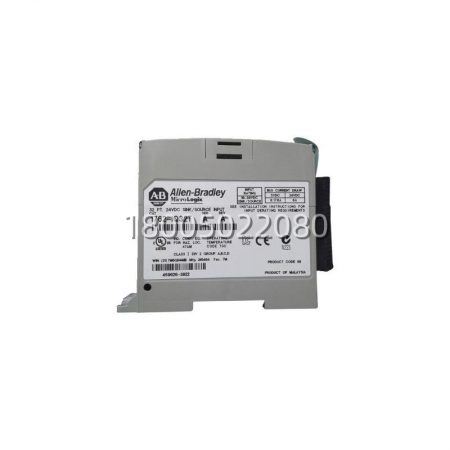
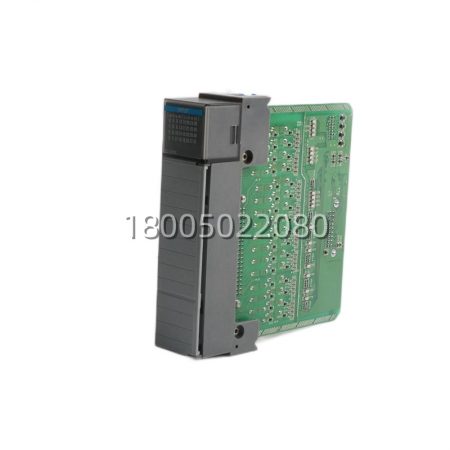
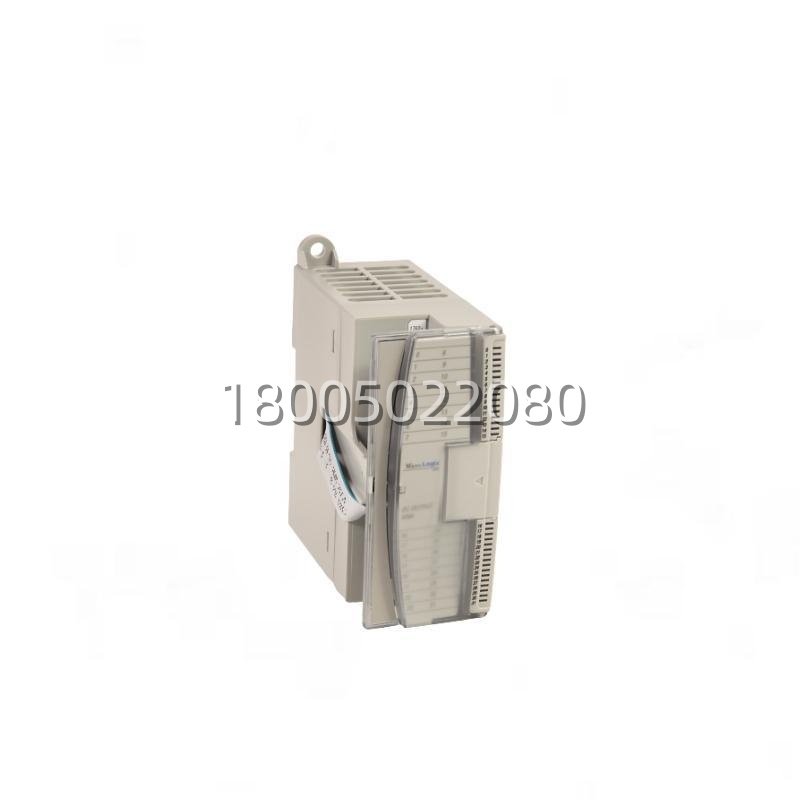
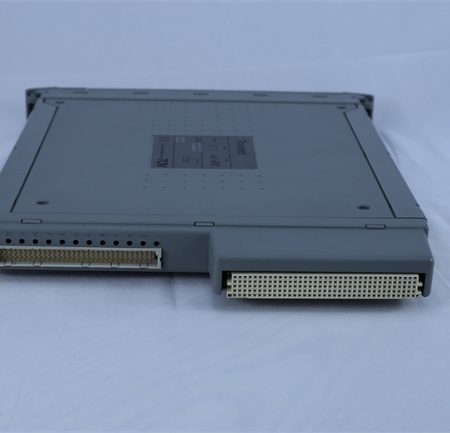
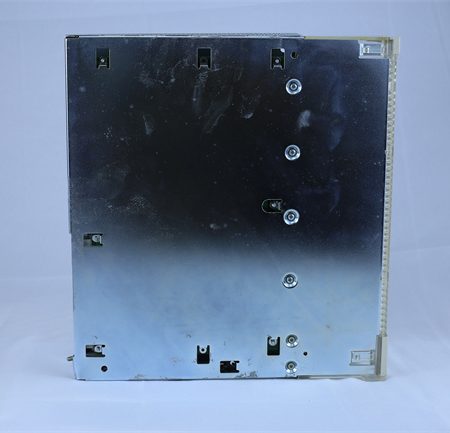
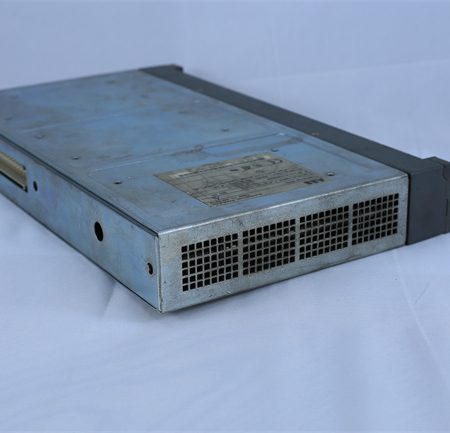
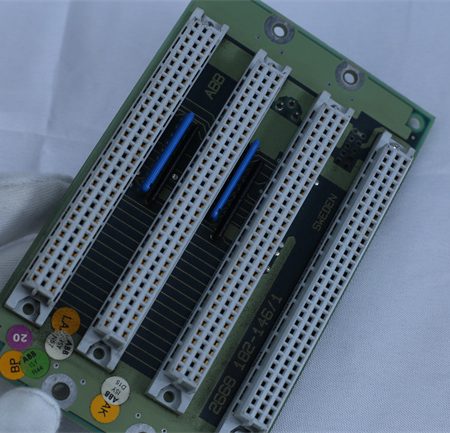
| Product Model | 1762-IT4 |
| Manufacturer | Rockwell Automation (Allen-Bradley) |
| Product Type | Thermocouple / Millivolt Analog Input Module |
| Compatible Platform | MicroLogix 1100, 1200, 1400 controllers |
| Number of Inputs | 4 differential thermocouple/mV channels + 1 CJC sensor |
| Supported Thermocouple Types | J, K, T, E, R, S, B, N |
| Millivolt Ranges | Configurable ±50 mV, ±100 mV |
| Resolution | 15 bits + sign (sigma-delta converter) |
| Input Filtering | Programmable notch filter, selectable 10 Hz / 60 Hz |
| Cold Junction Compensation | Integrated CJC thermistor, auto-compensated |
| Backplane Current Draw | 40 mA @ 5 V DC / 50 mA @ 24 V DC |
| Rated Working Voltage | 30 V AC (input group to bus isolation) |
| Power Supply Distance Rating | 6 modules |
| Heat Dissipation | 1.5 W |
| Operating Temperature | 0 … 55 °C (32 … 131 °F) |
| Dimensions (H × D × W) | Approx. 90 × 87 × 40 mm (3.54 × 3.43 × 1.58 in) |
| Certifications | EN 61131-2, EMC 89/336/EEC, Class I Div 2 Groups A/B/C/D |
Main Features and Advantages
High-resolution sigma-delta conversion with sign bit. The 1762-IT4 employs a sigma-delta A/D architecture that yields 15 bits plus sign per channel—meaning 32,768 distinct counts in the positive direction and an equivalent negative swing for bipolar mV ranges. In practical terms, a Type K thermocouple spanning 0–1000 °C delivers sub-0.1 °C discernibility at the data-table level, giving PID loops the granularity they need before any damping filter is applied.Integrated Cold Junction Compensation (CJC) with auto-calibration. Thermocouples measure deltatemperature between the sensor tip and the terminal block; without compensating the terminal temperature, cabinet heating alone can drift readings by several degrees. The 1762-IT4 houses a dedicated CJC thermistor right at the screw-terminal block and automatically calibrates at power-up, on every channel enable, and optionally every five minutes under user program control. This hands-off accuracy is a decisive edge over generic mV input cards that leave CJC to external hardware.Programmable notch filtering against line-frequency noise. Low-level TC signals are notoriously vulnerable to 50/60 Hz pickup from nearby contactors, VFDs, and switching power supplies. The 1762-IT4 lets the engineer select a 10 Hz or 60 Hz notch (region-dependent) via software, boosting normal-mode rejection to a minimum of 85 dB at 60 Hz. The result is a steadier data table and fewer false trips on over/under-range diagnostics.Per-channel diagnostics and fail-safe visibility. Every differential input on the 1762-IT4 independently flags open-circuit (burnt/broken TC wire), over-range, and under-range conditions straight into the controller status bits. From an operational-reliability standpoint, this means a maintenance technician can tell—without a multimeter—whether a high-temperature alarm came from a real process excursion or a broken thermocouple lead, shortening mean-time-to-repair on 24/7 lines.Bus-powered, compact, and cabinet-friendly. Drawing both 5 V and 24 V from the 1762 expansion backplane eliminates a separate field-power wiring run for the analog front end. At 1.5 W heat dissipation and a depth under 90 mm, the 1762-IT4 tucks into shallow enclosures alongside its MicroLogix host, and the six-module power-supply distance rating gives layout flexibility before a supplemental 1762 power supply is needed.
Application Field
The 1762-IT4 finds its strongest foothold wherever a MicroLogix-based machine or process cell needs credible temperature telemetry without stepping up to a ControlLogix or CompactLogix rack. In plastics injection molding, the module monitors barrel zone, nozzle, and mold temperatures across four TC channels, feeding PID loops that keep melt consistency tight across multi-cavity tools. In heat-treatment and batch-furnace applications, the 1762-IT4 reads Type R or S noble-metal thermocouples at high setpoints (up to the sensor’s physical limit) with CJC-auto-corrected accuracy, enabling soak-timer logic and audit-grade temperature logging for aerospace or automotive heat-code compliance.Food and beverage pasteurization skids routinely deploy the 1762-IT4 to track product temperature via Type T (copper-constantan) probes in CIP-tolerant assemblies, where the module’s 0–55 °C ambient rating and stainless-enclosure mounting pair cleanly with wash-down panels. In scientific and lab-automation OEM machines, the ±50 mV / ±100 mV raw mode lets the 1762-IT4 ingest signals from custom transducers—pressure strain gauges, photodiode amplifiers, or flow-sensor mV outputs—turning a thermocouple card into a general-purpose low-level analog input.The module is also a frequent retrofit choice in legacy MicroLogix 1200 panels that originally shipped with only discrete I/O. Swapping in a 1762-IT4 on the expansion bus adds four TC channels without touching the base-unit program structure beyond adding a few data-file mappings, which makes it attractive for machine builders modernizing older cells on a budget. In any environment where cabinet space is premium, thermocouple types may mix (e.g., J on one zone, K on another, B on a high-temp zone), and the engineer wants Rockwell-native diagnostics rather than a third-party analog card, the 1762-IT4 sits at the sweet spot of cost, capability, and ecosystem fit.

Reviews
There are no reviews yet.