
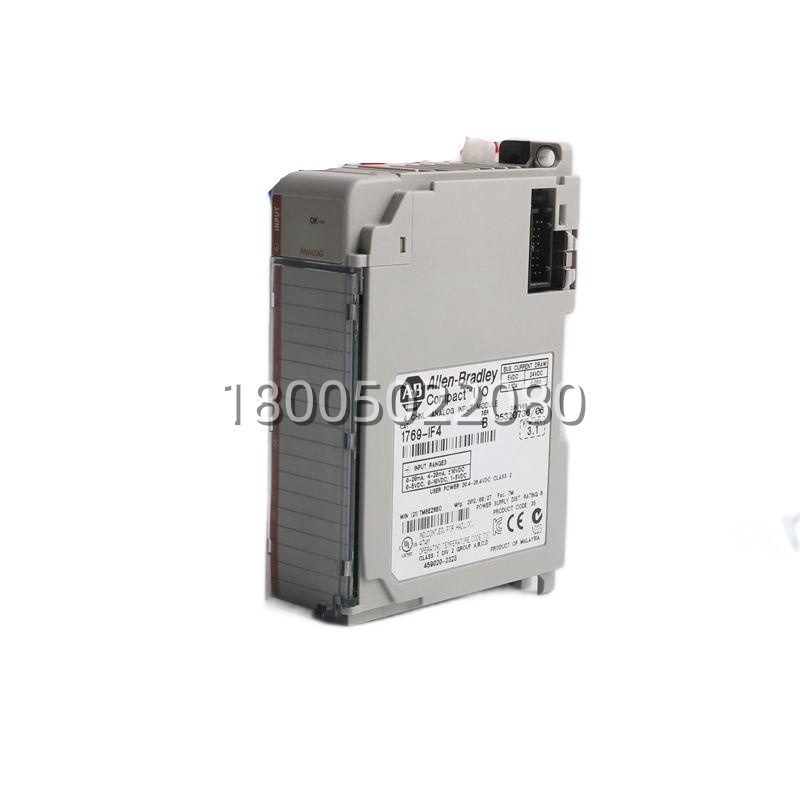
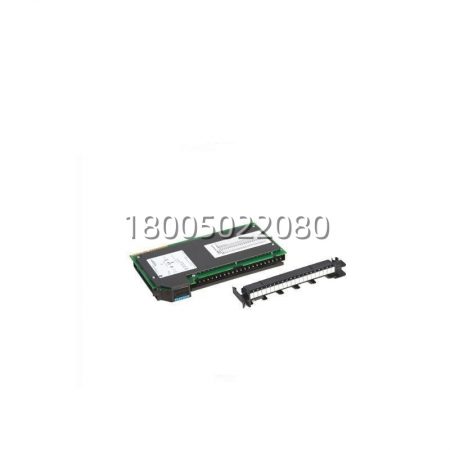
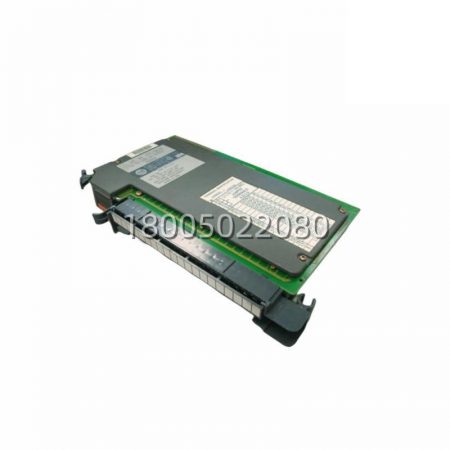
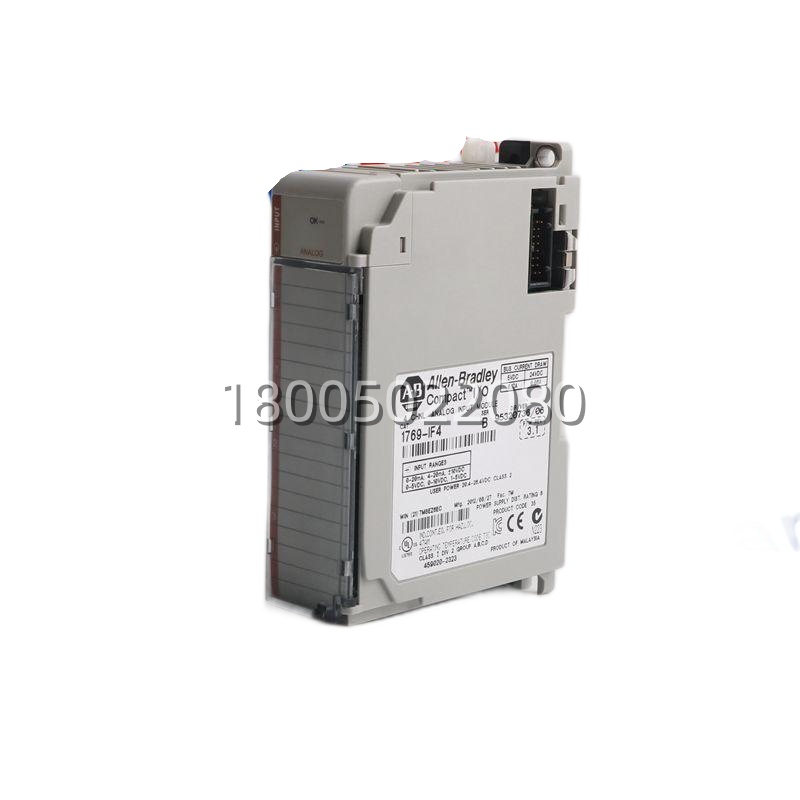
Application Scenarios
In a steel mill annealing furnace, operators faced chronic temperature measurement instability due to electrical noise from high‑power drives affecting thermocouple signals. This instability led to inconsistent product metallurgy and costly scrap rates. By deploying the Allen‑Bradley 1771‑IFM, engineers leveraged its true differential inputs with 100 dB common‑mode rejection (CMRR) to cancel out the noise induced in the long cable runs from the furnace . The result was a 95% reduction in signal fluctuation, enabling tighter temperature control that improved product consistency and reduced scrap by 12% within the first quarter.
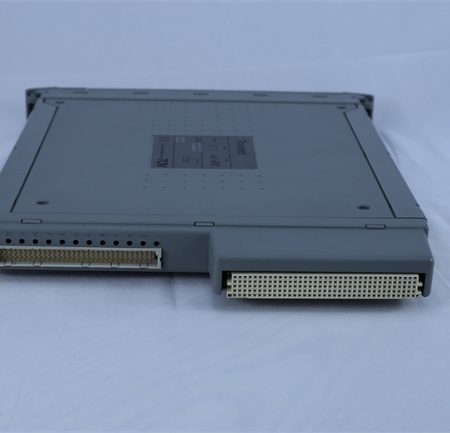
The 1771‑IFM excels in applications where precise low‑level signal measurement is critical—from metal processing and chemical reactor temperature monitoring to pharmaceutical manufacturing and laboratory test stands. Its ability to process eight differential channels simultaneously makes it an ideal choice for applications requiring multiple sensor inputs in a compact footprint.
Parameters
| Main Parameters | Value/Description |
|---|---|
| Product Model | 1771‑IFM |
| Manufacturer | Allen‑Bradley / Rockwell Automation |
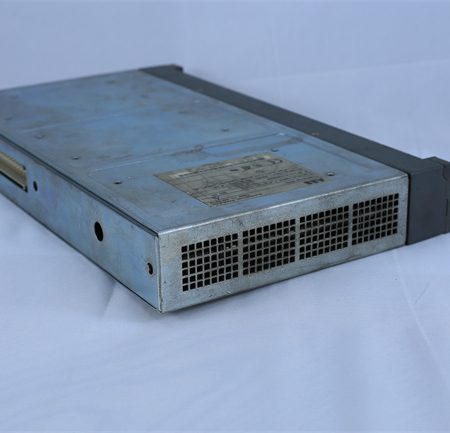
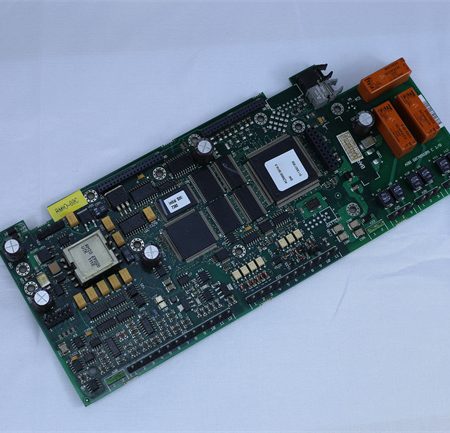
| Product Category | Fast Millivolt Analog Input Module |
| Number of Inputs | 8 differential low‑level channels |
| Input Voltage Range | 0 to 50 mV |
| Resolution | 12‑bit binary |
| Accuracy | 0.1% of range @ 25°C |
| Linearity | ±1 LSB; monotonic A/D converter with no missing codes |
| Input Impedance | 1 MΩ |
| Common Mode Rejection | 100 dB (DC‑60 Hz) – excellent noise cancellation |
| Backplane Current | 0.75A @ 5V DC |
| Isolation Voltage | 1500V (transient) channel‑to‑backplane |
| Module Location | 1771 I/O chassis, 1 slot (extreme left slot reserved for adapter) |
| Dimensions (H×W×D) | 11.5 × 3.3 × 16.6 cm (approx.) |
Technical Principles and Innovative Values
Innovation Point 1: True Differential Input Architecture for Noise Immunity
The 1771‑IFM employs eight true differential input channels, each capable of rejecting common‑mode noise up to the input range limits. With a common‑mode rejection ratio (CMRR) of 100 dB from DC to 60 Hz, the module effectively cancels electrical interference that typically corrupts millivolt‑level signals in industrial environments . This architecture enables reliable measurement even when sensors are located hundreds of feet from the control chassis.
Innovation Point 2: Intrinsically Safe Connection Support
The 1771‑IFM supports intrinsic safety connections, allowing it to interface with sensors located in potentially hazardous environments without requiring expensive explosion‑proof enclosures . This capability enables direct measurement from sensors in classified areas—a significant advantage in chemical, oil & gas, and mining applications where safety compliance is paramount.
Innovation Point 3: High‑Speed Data Acquisition
The module scans all eight channels in approximately 14.5 ms, with individual channel updates completing at a 12‑bit resolution . This fast response time makes the 1771‑IFM suitable for dynamic process control applications where rapid changes in temperature, pressure, or strain must be captured and acted upon without delay.
Innovation Point 4: Flexible Data Formatting with Conformal Coating
The 1771‑IFM supports both ±32,767 binary and ±9999 BCD data formats, providing compatibility with various programming and display requirements . Additionally, the module features a conformal coating that protects the circuit board from moisture, dust, and chemical contamination—extending service life in harsh industrial environments where competing modules might fail prematurely .
Application Cases and Industry Value
Case 1: Chemical Batch Reactor Temperature Monitoring
A specialty chemical manufacturer operating a PLC‑5/40 system integrated the 1771‑IFM to monitor eight J‑type thermocouples across multiple reactor vessels. The module’s high CMRR eliminated ground‑loop noise that had previously plagued temperature readings, reducing process variability by 40%. The 12‑bit resolution provided the precision needed for exothermic reaction control, enabling the facility to increase batch throughput by 15% while maintaining strict quality specifications.
Case 2: Aerospace Component Stress Testing
An aerospace test laboratory utilized the 1771‑IFM to acquire strain gauge data from composite material specimens undergoing structural testing. The module’s differential inputs and high input impedance (1 MΩ) ensured accurate measurement of the low‑level bridge outputs without loading the sensors. The 8‑channel capacity allowed simultaneous monitoring of multiple test points, streamlining data acquisition and reducing test setup time by 50% compared to previous single‑channel approaches.

Reviews
There are no reviews yet.