
Application Scenarios
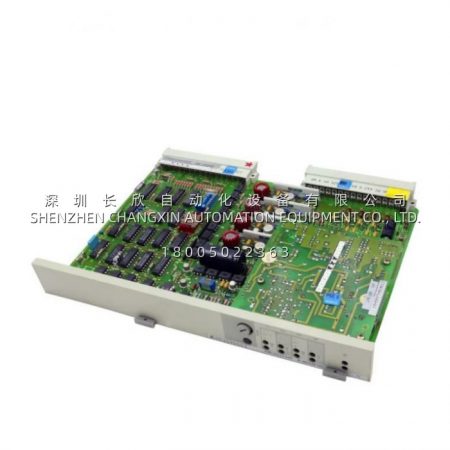
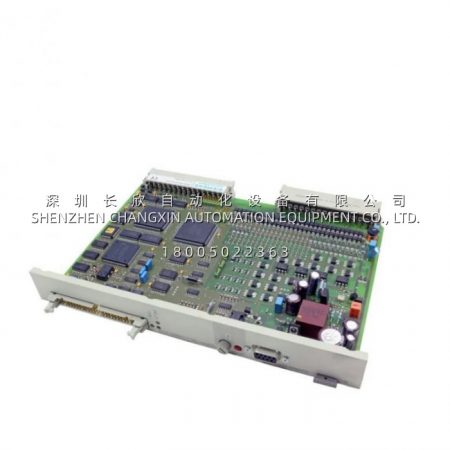
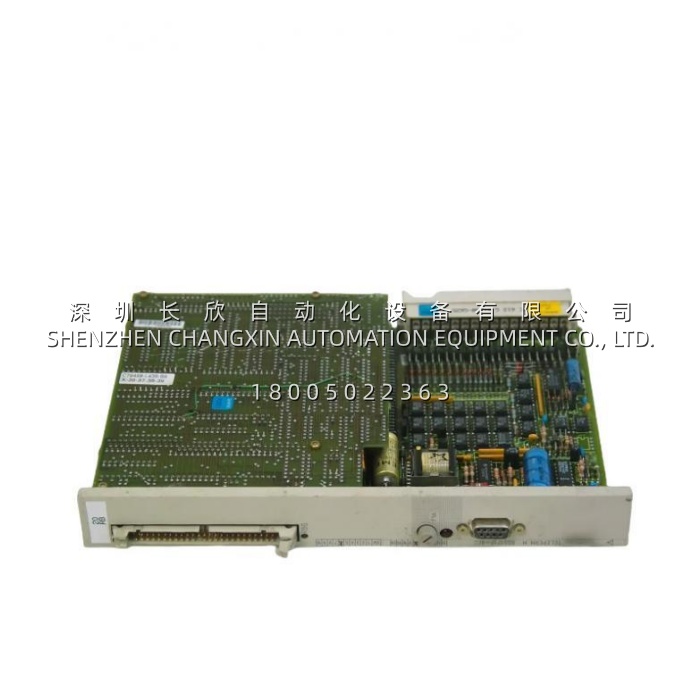
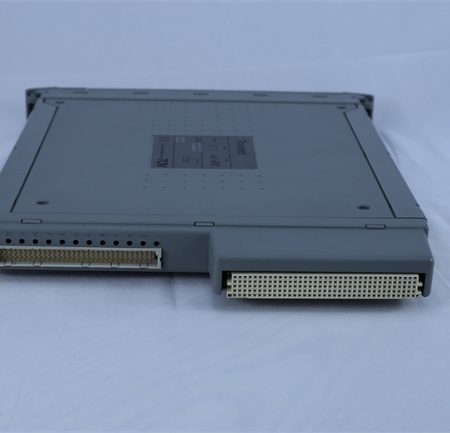
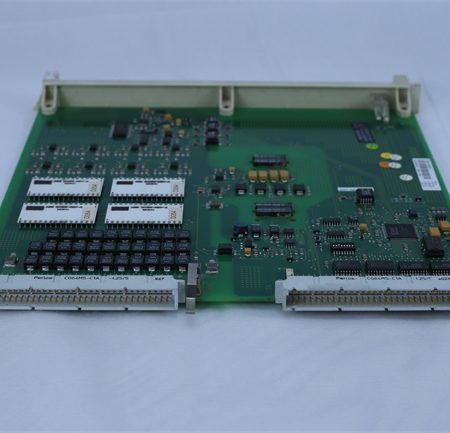
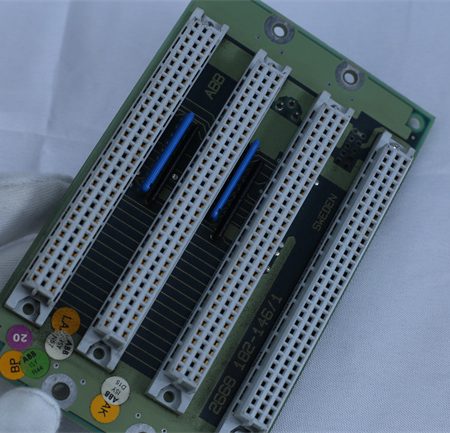
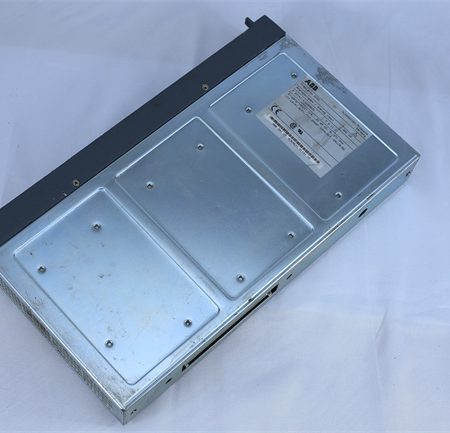
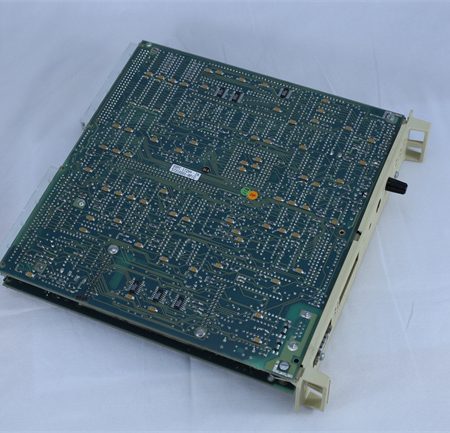
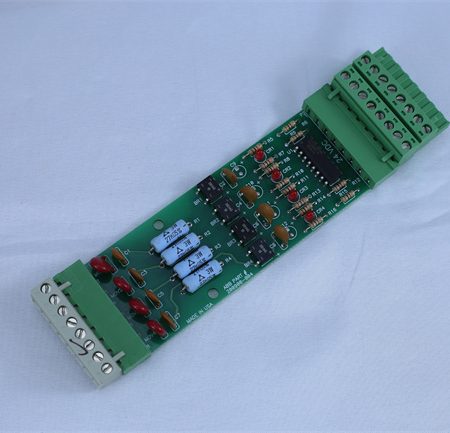
In a 600 MW subcritical coal unit undergoing a TELEPERM M rack-consolidation project, the turbine-protection engineer hit a ceiling: the AP (Automation Processor) was saturated with 1,800+ interlock conditions spread across boiler-follow, turbine-follow, and FCB (fast cut-back) logic. Every new protection rule added 2–3 scan cycles of latency, nudging the ESD response toward the SIL-3 time-budget limit. The fix wasn’t a full AP upgrade—it was slotting two 6DS1717-8CC modules into spare positions of the AS620 rack and offloading the pure Boolean layers (valve-position vote logic, breaker-status debounce, sequence-of-events pre-filtering) to the LPUs. During a forced-trip drill, the 6DS1717-8CC-offloaded chain executed the “triple-vote” breaker open command in <8 μs from sensor edge to output latch—well within the turbine OEM’s 15 ms mechanical-response window. More practically, when a field electrician miswired a limit-switch loop and created a continuous contact bounce, the 6DS1717-8CC‘s onboard timer/counter caught 47 transitions in 200 ms, flagged “pulse-overflow” to the OM, and let maintenance isolate the bad cable before the bounce propagated into a spurious trip. For this plant, the 6DS1717-8CC wasn’t a compute upgrade—it was a latency insurance policy for a DCS pushing its third decade.
Parameter
| Main Parameters | Value/Description |
|---|---|
| Product Model | 6DS1717-8CC |
| Manufacturer | Siemens (Energy Automation / A&D) |
| Product Category | Binary Calculation Module (Binaerrechenbaugruppe) |
| Compatible Platforms | TELEPERM M, TELEPERM ME, SIMADYN D |
| Supply Voltage | 24 V DC (19.2 – 30 V tolerance) |
| Current Consumption | Typ. ~150 mA (≤1.2 A peak per some vendor datasheets) |
| Logic Capacity | Up to ~2048 logic nodes (config-dependent) |
| Instruction Exec. Time | < 10 μs (basic Boolean), < 1 ms typical response |
| Digital I/O (via Bus) | 8 DI / 8 DO typical (some configs 16/16; bus-reflected, not local terminals) |
| Processing Features | Boolean algebra, bit ops, timers, counters, pulse evaluation |
| Data Path | 16-bit internal precision, backplane bus to AP/IM |
| Isolation & Diagnostics | Channel-to-channel isolation, wire-break, overflow, range fault |
| Operating Temp. | –25 °C to +60 °C |
| Mounting | Teleperm M/ME rack slot (backplane DIN, Eurocard form) |
| Protection / Weight | IP20 / ~0.3 kg |
Note: Some distributor listings quote 1.5 GHz / 256 MB memory or Profibus DP — these appear to be template errors from generic PLC catalogs. The 6DS1717-8CC is a late-1990s/2000s Teleperm M-era LPU card; bus interface is Siemens proprietary backplane, not Profibus termination. Verify firmware label (e.g., HW:14 SW:6) on your unit before integration.
Technical Principles and Innovative Values
- Innovation Point 1 – Offloaded Boolean Pipeline. The AP in a Teleperm M rack is a generalist—it handles analog scaling, PID, sequence blocks, and comms. The 6DS1717-8CC takes the “pure logic” layer (AND/OR/XOR vote trees, debounce timers, pulse-width discriminators) and runs them on a dedicated LPU. This split-architecture means adding protection rules no longer steals AP scan budget—a design philosophy Siemens later carried into T3000’s decentralized function blocks.
- Innovation Point 2 – Sub-10 μs Deterministic Execution. Basic Boolean instructions on the 6DS1717-8CC benchmark below 10 μs, with end-to-end interlock response (sensor-edge → output-latch, via backplane) comfortably under 1 ms. In turbine protection or compressor anti-surge, where “trip decision vs. mechanical lag” is measured in milliseconds, that headroom is what keeps the SIL 3 case defensible without upgrading the whole rack.
- Innovation Point 3 – Timer/Counter + Pulse-Quality Filtering. Beyond static logic, the 6DS1717-8CC embeds timing/counting resources and signal-filtering (debounce, minimum-pulse rejection). In practice this lets a single module implement: (breaker-aux-contact debounce 20 ms) AND (trip-coil-current-pulse width > 15 ms) → valid trip — replacing what would otherwise be three cascaded software blocks and a scan-cycle tax.
- Innovation Point 4 – Bus-Reflected I/O with Diagnostics. The 6DS1717-8CC doesn’t carry terminal blocks for field wiring; its “I/O” is bus-reflected—digital words arrive from remote FUM/DI/DO carriers via the IM bus, get processed, and the result writes back. Built-in diagnostics cover wire-break (on the originating DI/FUM side, echoed), range overflow, and LPU fault, pushed to the OM as structured alarms rather than “mystery scan hang.”
Reviews
There are no reviews yet.