
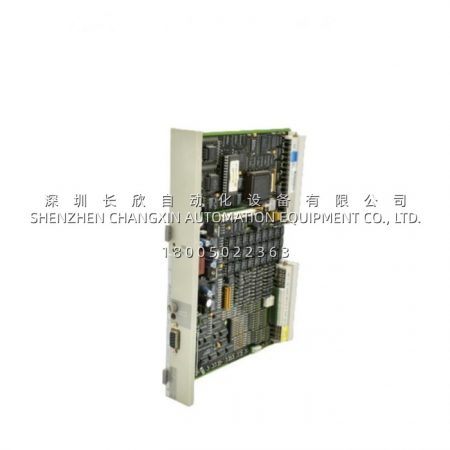
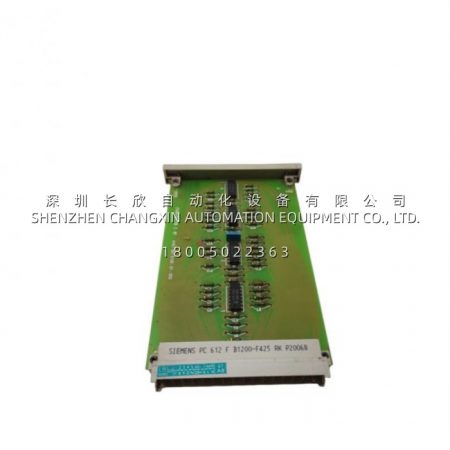
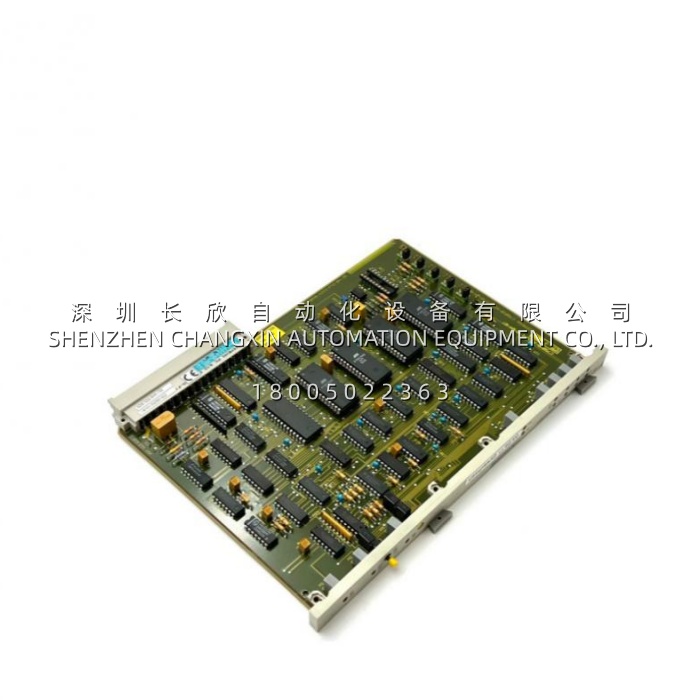
Technical Specifications
| Parameter | Value |
|---|---|
| Product Model | 6DS1832-8AA |
| Manufacturer | Siemens |
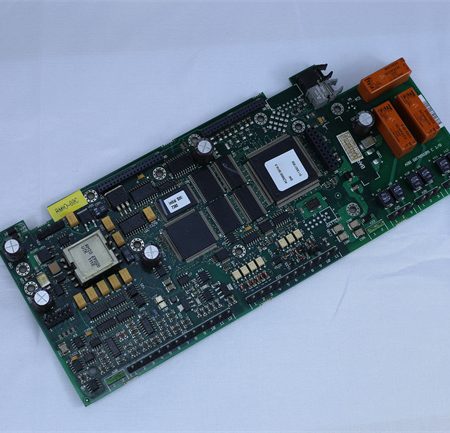
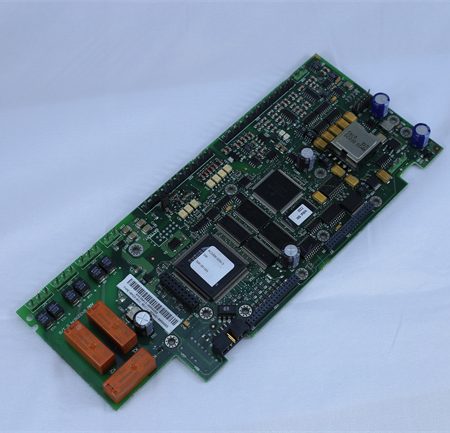
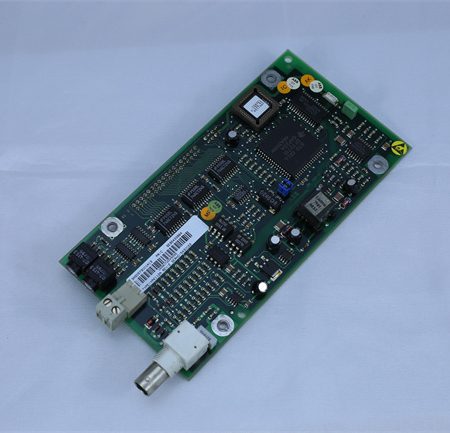
| Product Type | EEPROM Memory Submodule (for Teleperm M CPU) |
| Compatible CPU | Siemens Teleperm M AS 230 / AS 235 / 235K series |
| Storage Technology | EEPROM (Electrically Erasable Programmable ROM) |
| Capacity | 128 KB (user program, configuration, parameters) |
| Supply Voltage | 5 V DC (supplied from CPU module) |
| Data Retention | >10 years (within specified temperature range) |
| Erase / Write Cycles | >100 000 cycles |
| Interface | Parallel, CPU-board dedicated EEPROM slot |
| Mounting | Plugs into Teleperm M CPU module storage socket |
| Dimensions (approx.) | 25 × 203 × 2.5 mm (card-style submodule) |
| Net Weight | ~0.3 kg |
| Operating Temperature | 0 °C to +60 °C |
| Storage Temperature | –25 °C to +70 °C |
| Relative Humidity | 5 % to 95 % (non-condensing) |
| Protection | Parity-protected cell architecture |
Main Features and Advantages
Non-volatile program carry — no battery dependency. The defining trait of the Siemens 6DS1832-8AA is that it stores the Teleperm M user program, PID tuning blocks, and I/O mapping in EEPROM cells that hold state with zero standby power. Unlike RAM+supercap or NVRAM solutions that slowly drain a backup cell and then lose the lot, the 6DS1832-8AA will retain its contents for >10 years even if the CPU rack is de-energized for months during a long-term outage. For plants that periodically shut a unit for major turbine work and kill cabinet power, pulling the Siemens 6DS1832-8AA and storing it in a desk drawer is a legitimate preservation tactic—plug it back into the replacement CPU three months later and the program is exactly where it was.Golden-copy disaster recovery. Maintenance engineers routinely program one Siemens 6DS1832-8AA per CPU as the “live” carrier, then clone a second submodule from the DCS download image and seal it in anti-static with a date label. When a CPU board fails at 3 a.m.—and AS 235 boards do fail, usually capacitor or backplane-driver related after 20+ years—the night tech pulls the EEPROM from the dead CPU, seats it in the hot-spare processor, powers up, and the rack resumes scanning. No laptop, no PG programmer, no hunting for the latest download file that “someone last touched in 2014.” The Siemens 6DS1832-8AA turns a potential four-hour “find the program” event into a fifteen-minute hardware swap.Zero-latency read for deterministic scan. Teleperm M’s value proposition in power and chemical refining is deterministic logic execution—fixed scan cycles predictable to the millisecond. The Siemens 6DS1832-8AA is timed to the proprietary Siemens CPU bus so that program fetch during cold start and any on-line parameter table reads don’t inject jitter into the scan. This isn’t a generic EPROM plugged through an adapter; it’s a bus-tuned submodule where the access timing matches what the AS 235 microcode expects. Parity checking on the EEPROM array also means a degraded cell will flag through the CPU’s diagnostic telegram (“EPROM Error”) rather than silently corrupting a PID coefficient and sending a fuel ramp the wrong direction—a failure mode plants rightfully fear.Legacy-lifecycle economics. The broader argument for keeping the Siemens 6DS1832-8AA in the storeroom BOM is that a full Teleperm M → PCS 7 migration is a seven-to-nine-figure CAPEX event with a multi-week outage attached. Most asset managers choose to defer that by five to eight years, running the existing AS 230/235 racks until the turbine retrofit forces a co-located DCS rebuild. During that deferral window, the EEPROM submodule is a high-leverage spare: small, cheap, long-shelf, and single-points the CPU’s entire program image. Stocking three per control room row—live, cold, archival—costs rounding-error money compared to one unplanned reprogramming event.Parity-protected, vibration-tolerant construction. Control-room MCC volumes and turbine-deck cabinets are not quiet environments; 4160 V motor starts, diesel generator exercise cycles, and compressor VFD switching all couple mechanically and electrically into the rack. The Siemens 6DS1832-8AA uses parity-protected EEPROM architecture and industrial-grade PCB laminate, sized to the Teleperm M CPU submodule form factor so it sits flush in the socket without lever stress. The >100 k erase/write endurance also covers the normal Teleperm M practice of on-line parameter changes (PID re-tuning, limit adjustments) being written back to the EEPROM during a “store” operator action—those writes accumulate across years but stay well within the rated cycle budget for a typical plant’s change frequency.
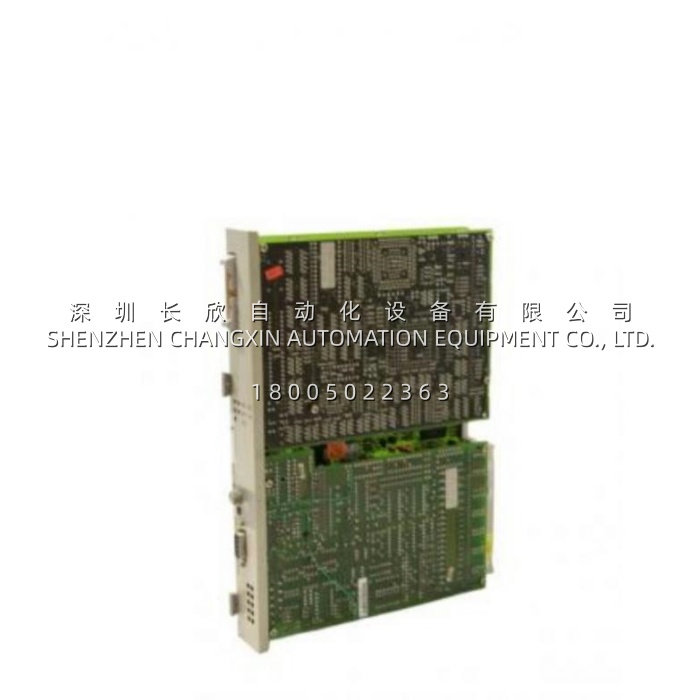

Reviews
There are no reviews yet.