
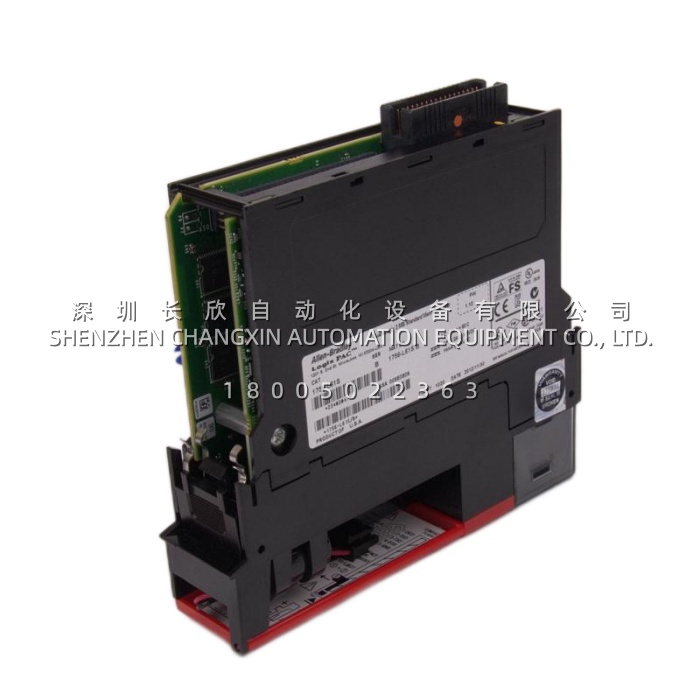
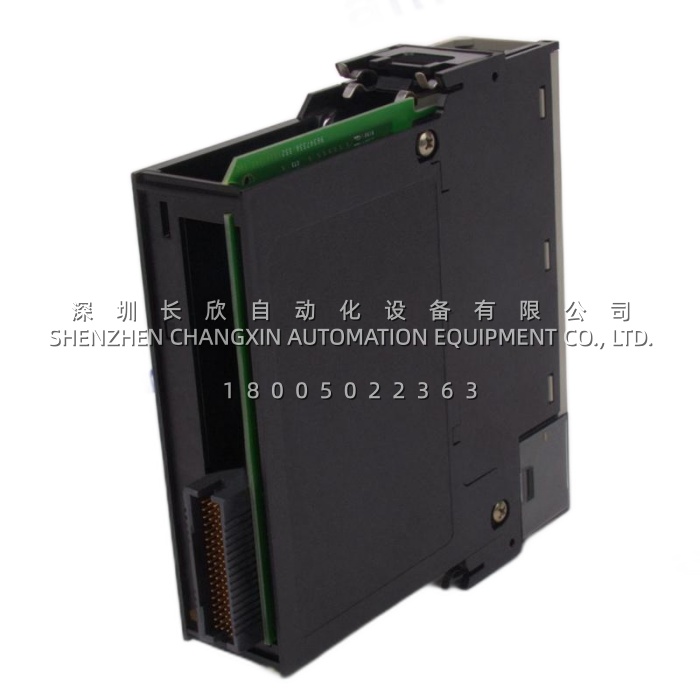
Technical Specifications
| Parameter | Value |
|---|---|
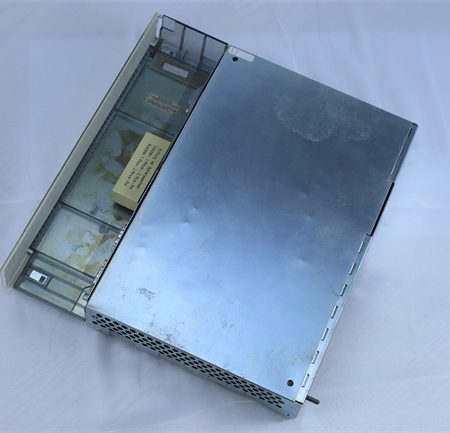
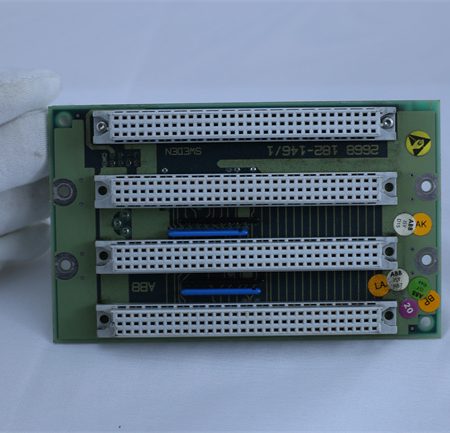
| Product Model | 1746-P2 |
| Manufacturer | Allen-Bradley / Rockwell Automation |
| Product Family | SLC 500, Bulletin 1746 |
| Product Type | Rack-mount AC power supply (left-end mount, does not consume a chassis slot) |
| Line Voltage | 85…132 V AC or 170…265 V AC, jumper-selected (120V / 240V nominal) |
| Input Frequency | 47…63 Hz |
| Typical Line Demand | 180 VA @ 240V AC (165 VA @ 120V AC) |
| Maximum Inrush Current | 20 A |
| Backplane Output (5V DC) | 5.0 A |
| Backplane Output (24V DC) | 0.96 A |
| Combined Output Limit | 70 W (5V backplane + 24V backplane + 24V user, combined) |
| 24V DC User Output | 200 mA, 18…30 V DC, isolated, non-fused at the terminal |
| Isolation Voltage | 1800 V AC RMS for 1 s, input terminals to backplane/chassis |
| Hold-Up Time | 20 ms at full load; up to 3000 ms at no load |
| Overcurrent Protection | Internal 1746-F2 or equivalent: 250V, 3A (SANO SOC SD4 or BUSSMANN AGC-3); external branch protection max 15A, time-delay |
| Status Indicator | Power LED (green, steady when outputs are in tolerance) |
| Ambient Temperature | 0…60 °C (32…140 °F); 5% current derating above 55 °C |
| Storage Temperature | -40…85 °C (-40…185 °F) |
| Relative Humidity | 5…95%, non-condensing |
| Wire Terminals | Two #14 AWG (2.5 mm²) per terminal, max |
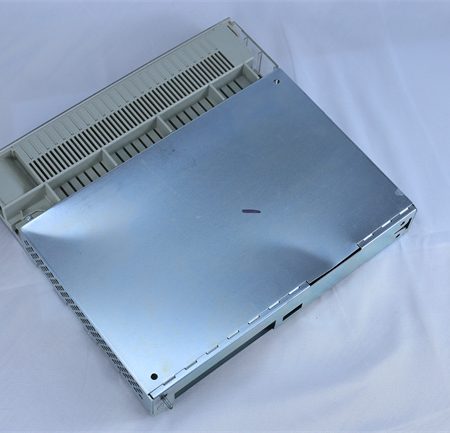
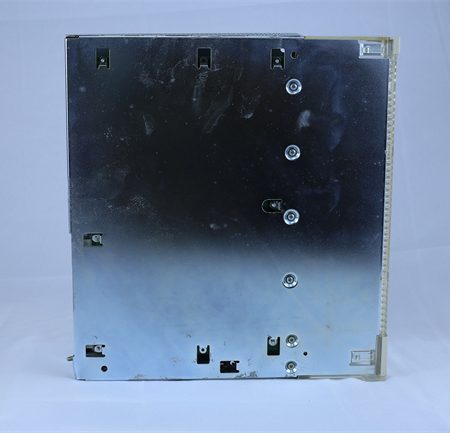
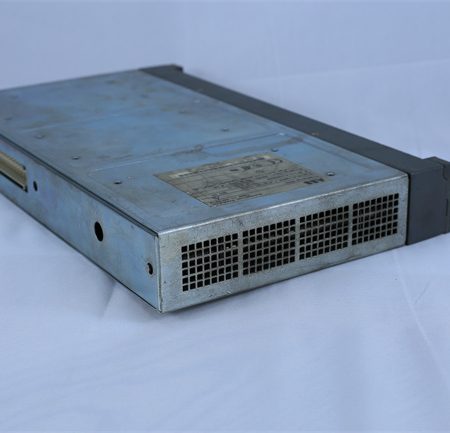
| Dimensions (H × W × D) | 140 × 74 × 145 mm (5.5 × 2.9 × 5.7 in.) |
| Weight | 1.1 kg (2.5 lb) |
| Agency Approvals | UL Listed, CSA Certified, CE; suitable for Class I, Division 2 per system installation requirements |
| Compatible Chassis | 1746-A4, 1746-A7, 1746-A10, 1746-A13 (one supply per chassis) |
| Programming / Diagnostic Tool | RSLogix 500 (processor-reported power/major faults) |
| Lifecycle Status | Discontinued by manufacturer (End-of-Sale 30 Sep 2024); available as new-surplus / refurbished spare |
Main Features and Advantages
A 5A logic rail that actually covers a real rack. The published weakness of the smaller 1746-P1 is its 2.0 A 5V budget, which forces a second chassis or a careful module diet. The 1746-P2 doubles that headroom to 5.0 A and pushes the 24V backplane rail to 0.96 A, which is why it is the default fit for a 1746-A7 or a medium-density 1746-A10. A processor, a DH+ or Ethernet module, several 16-point DC input cards and a pair of analog channels will usually sit comfortably inside the 70 W combined ceiling, provided you do the worksheet instead of guessing.Jumper-selected, not auto-sensing — and that is a safety feature. The line-voltage selector on the 1746-P2 must be matched to the applied mains with the supply powered down. There is no “universal input” ambiguity and no firmware setting to misread: what you set is what the magnetics expect. It also means a technician can verify the jumper position visually during a swap, which prevents the classic mistake of landing 230V onto a supply still set for 120V. The published 85…132 / 170…265 V AC windows give plenty of tolerance for brownouts and regional voltage drift.The 200 mA user tap is a panel-space saver, properly understood. That isolated 18…30V, 200 mA output on the 1746-P2 is there for small, trusted loads — a few 24V DC sensors on a 1746-IB16, a panel-mounted selector, a handheld terminal. It is current-limited and it is not fused at the terminal, so a dead short shows up as a dropped user rail rather than a tripped breaker. The disciplined rule is simple: anything above a couple of sensor loads moves to an external 24V DIN-rail supply, and the 1746-P2 user output stays a convenience, not an infrastructure item.Hold-up that rides through the bumps. Twenty milliseconds at full load is enough to survive a contactor drop or a genset transfer blip without the processor faulting, and the no-load figure rises to 3000 ms, which is why a chassis with light I/O often shrugs off a power flicker that would reset a less buffered controller. Couple that with 1800V AC RMS isolation between line and backplane, and the 1746-P2 earns its place in electrically noisy cells — welders, large contactors, VFD-heavy panels — where the AC common-mode junk would otherwise walk down the supply and into the logic rail.Series behaviour you should know before you blame the CPU. Earlier 1746-P2 series (A and B) treated a user-output overcurrent as a supply-wide fault: the CPU was forced into fault and the user program had to be reloaded after the condition was cleared. Series C changed that to a local user-rail shutdown while the 5V logic rail and the processor keep running, so clearing the short restores the 24V tap without a restart. If you are swapping into an old rack, the series letter on the nameplate matters — a new 1746-P2/C behaves better than the unit it replaces, but the rest of the rack will not notice the difference.

Reviews
There are no reviews yet.