
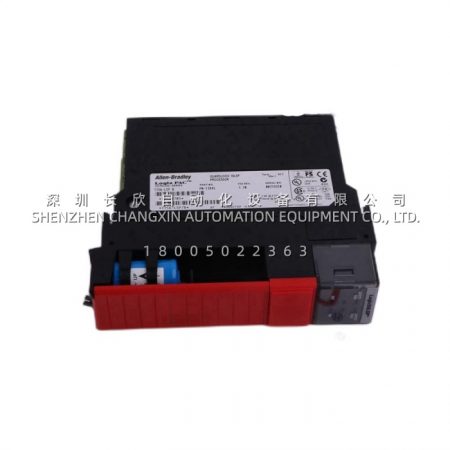
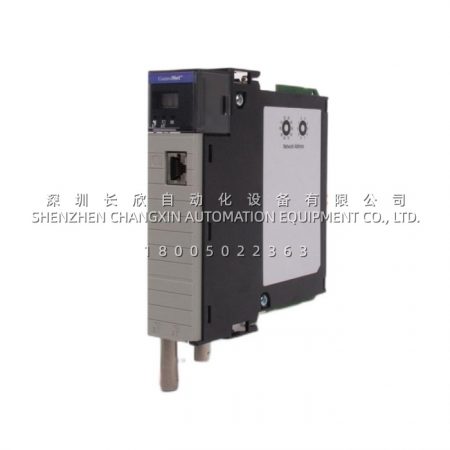
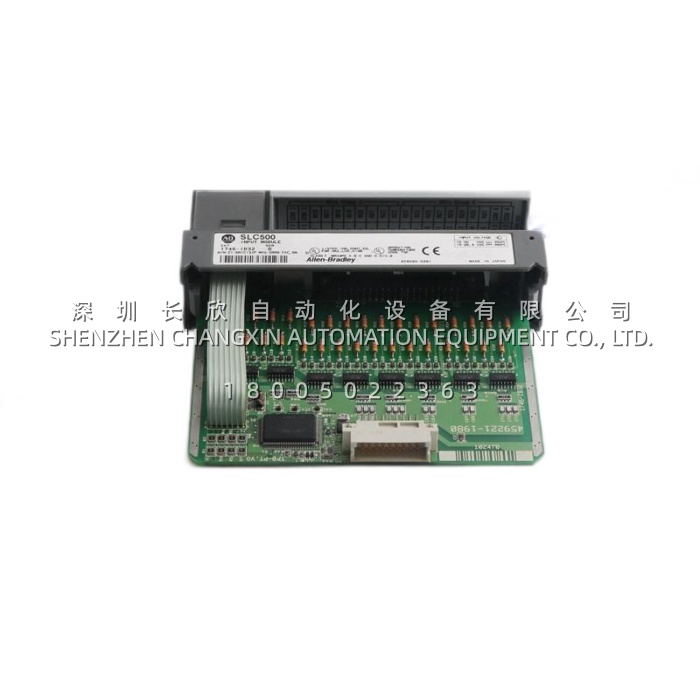
Application Scenarios
Think of a chemical reactor cell where the pressure transmitter on the catalyst line is powered from one 24 VDC supply, the magnetic flowmeter on the solvent feed hangs off a different panel 40 metres away, and the vessel-level radar sits on a skid with its own grounded chassis. On a shared-return analog card, those three signals fight each other through ground loops — the flow reading drifts when the pump starts, the level jumps when the agitator brakes. Drop a 1756-IF6I into the local ControlLogix rack: each channel gets its own isolated signal path and its own return, the 4–20 mA loops land on dedicated terminals, and the PID blocks in Studio 5000 finally see stable process variables. No isolation barriers in the marshalling cabinet, no shared RTN bus, no “mystery noise” ticket.That is the moment the module pays for itself — not in a datasheet, but at 2 a.m. when the operator stops chasing a phantom level swing and the DCS trend goes flat where it should be flat.
Parameter
| Main Parameters | Value / Description |
|---|---|
| Product Model | 1756-IF6I — 1756 = ControlLogix chassis family, IF = analog input, 6 = six channels, I = individually isolated |
| Manufacturer | Allen-Bradley / Rockwell Automation (Milwaukee, WI, USA) |
| Product Category | ControlLogix isolated analog input module (current/voltage, no outputs) |
| Input Channels | 6 channels, each channel-to-channel and channel-to-backplane isolated (250 V AC continuous, basic insulation, tested 1350 V AC / 2 s) |
| Signal Types | Current 0–21 mA (supports 4–20 mA, 0–20 mA); Voltage ±10.5 V, 0–10.5 V, 0–5.25 V; per-channel software selectable, mixed V/mA across the module allowed |
| Resolution | 16-bit sigma-delta; 343 µV/bit (±10.5 V), 171 µV/bit (0–10.5 V), 86 µV/bit (0–5.25 V), 0.34 µA/bit (0–21 mA) |
| Accuracy | Better than 0.1 % of range at 25 °C; module error 0.54 % of range; offset drift 2 µV/°C; gain drift 35–90 ppm/°C by range |
| Conversion / Update | Sigma-delta; min scan 10 ms integer, 25 ms floating point; RPI and Real-Time Sampling (RTS) configurable in the I/O connection |
| Bandwidth / Noise Rejection | 15 Hz channel bandwidth; CMRR 120 dB @ 60 Hz, 100 dB @ 50 Hz; normal-mode rejection 60 dB @ 60 Hz |
| Data Format | Integer (left-justified 2s complement) or IEEE 32-bit floating point with engineering-unit scaling |
| Input Impedance | >10 MΩ voltage; 249 Ω current sense (onboard resistor) |
| Protection | Overvoltage 120 V AC/DC voltage, 8 V AC/DC current; wire-off detection (current loop drives to positive full scale within 5 s) |
| Backplane Power | 250 mA @ 5.1 V, 100 mA @ 24 V; max dissipation 3.7 W (V) / 4.3 W (I) |
| Terminal Base | 20-pin RTB: 1756-TBNH (screw) or 1756-TBSH (spring) required, not included with module |
| Diagnostics | Underrange/overrange, process high/low, rate alarm, wire-off, module health and calibration status bits in the I/O tag |
| Environment | 0 to 60 °C operating, −40 °C storage, non-condensing; open-style module, lives inside the cabinet |
| Keying | Electronic, software-configurable keying in Studio 5000 / RSLogix 5000 |
| Lifecycle | Discontinued by Rockwell (end of sale 31 Mar 2017); functional-replacement category, repairable; sourced via verified surplus / refurb |
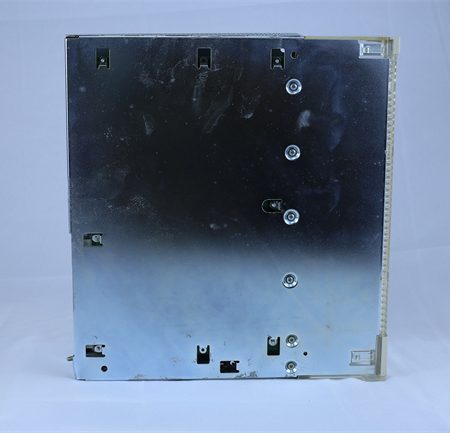
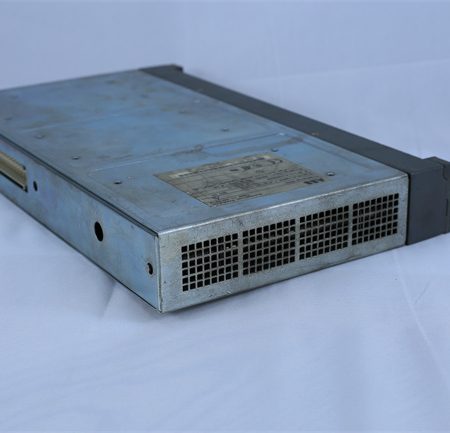
| Mechanical | 1756 chassis slot width, approx 5.41 × 18.0 × 22.2 cm, ~0.4 kg |
Technical Principles and Innovative Values
Innovation Point 1 — True per-channel galvanic isolation. Most analog input cards isolate the field side as a group. The 1756-IF6I isolates every channel from every other channel and from the backplane at 250 V continuous. That means six transmitters on six different grounds can share one module without a single shared return — the structural cure for ground loops, not a filter band-aid.Innovation Point 2 — Sigma-delta conversion with 16-bit effective resolution. The front end oversamples and noise-shapes the input, which is why the common-mode rejection hits 120 dB at 60 Hz. In a bay with VFDs, thyristor drives and welding plant, the 1756-IF6I keeps the least-significant bits meaningful instead of turning them into hash.Innovation Point 3 — Per-channel signal flexibility in software. One slot can carry a ±10 V position feedback, a 4–20 mA pressure loop, a 0–5 V level signal and a 0–20 mA flow totaliser — no DIP switches, no jumper field on the card face, just the I/O configuration tree. The hardware is identical; the personality is in the project.Innovation Point 4 — Diagnostics that land in the controller tag. Wire-off, underrange, overrange, process high/low and rate alarms are not hidden in a front-panel blink — they are bits in the module data structure. A broken 4–20 mA loop shows up as a positive-full-scale value plus a wire-off flag, so the operator gets an alarm, not a silently frozen PV that drifts the PID into saturation.Innovation Point 5 — Engineering-unit scaling on the module. With floating-point mode enabled, the 1756-IF6I can present scaled REAL values straight to the HMI and the control logic. The SCADA screen reads 3.42 bar; the programmer reads Local:1:I.Ch0Data as 3.42, not 14 823 counts — less math in the logic, fewer scaling bugs, faster commissioning.Innovation Point 6 — Wiring discipline as a feature. Because isolation removes the shared return, the module forces correct field practice: each transmitter gets its own IN and RTN pair. That discipline exposes bad marshalling during checkout instead of three months later, which is exactly when you want to find it.
Reviews
There are no reviews yet.