
Technical Specifications
| Parameter Name | Parameter Value |
|---|---|
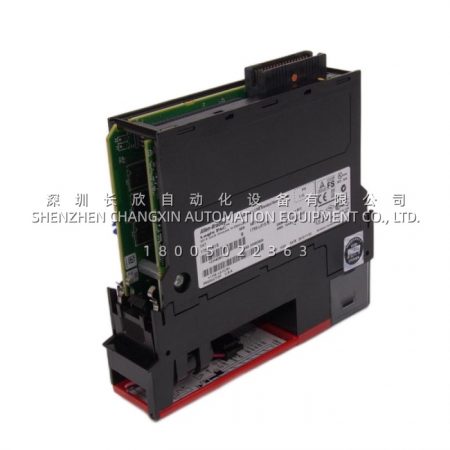
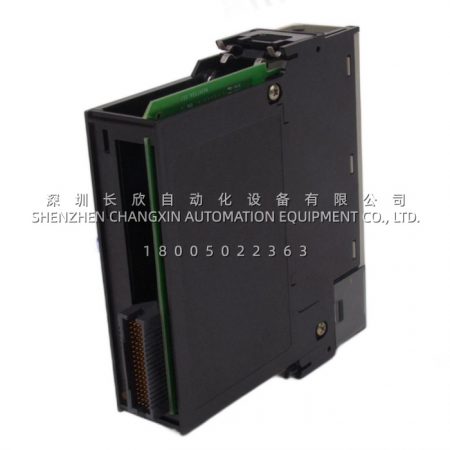
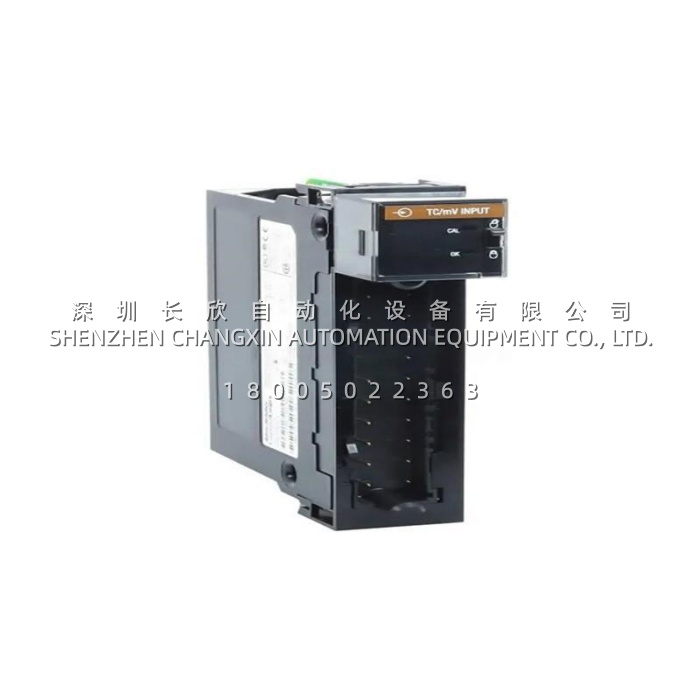
| Product Model | 1756-IT6I |
| Manufacturer | Allen-Bradley (Rockwell Automation) |
| Product Type | Analog Input Module (Thermocouple/Millivolt) |
| Platform | ControlLogix |
| Input Channels | 6 channels, individually isolated |
| Input Signal Range | -12 to 78 mV; -12 to 30 mV (high-resolution range) |
| Supported Thermocouple Types | B, C, E, J, K, N, R, S, T |
| Resolution | 16 bits (1.4 µV/bit typical at -12–78 mV; 0.7 µV/bit at -12–30 mV) |
| Isolation Voltage | 250 V continuous between inputs |
| Backplane Current (5.1V) | 250 mA |
| Backplane Current (24V) | 2 mA (some sources cite 125 mA) |
| Power Dissipation (Max) | 4.3 W |
| Data Format | Integer mode (left-justified, two’s complement), IEEE 32-bit floating point |
| Compatible Terminal Blocks | 1756-TBNH, 1756-TBSH |
| Operating Temperature | 0°C to 60°C |
| Lifecycle Status | Discontinued (March 31, 2017) |
Main Features and Advantages
Six-Channel Independent Isolation: Each input channel of the 1756-IT6I features 250 V continuous isolation, meaning no electrical path exists between different channels . In industrial environments, thermocouples at different measurement points may reside at different potential references. Without channel-to-channel isolation, common-mode voltage differences can introduce measurement errors or even damage the module. The isolation architecture of the 1756-IT6I eliminates this risk, allowing six channels to safely accept temperature signals from different equipment or grounding systems without requiring additional isolation barriers.
Dual Range and High-Resolution Mode: The module offers a standard -12 to 78 mV range and a high-resolution -12 to 30 mV range. In high-resolution mode, resolution reaches 0.7 µV/bit . For K-type thermocouple measurements (sensitivity approximately 41 µV/°C), this theoretically allows discrimination of signal changes as small as approximately 0.017°C. While actual accuracy is limited by cold junction compensation and sensor characteristics, this resolution level is more than sufficient for industrial temperature measurement, providing a reliable data foundation for subtle temperature trend variations.
Flexible Cold Junction Compensation: The 1756-IT6I supports both local rack cold junction compensation and remote cold junction compensation. In local mode, the cold junction sensor is mounted on the terminal block, measuring ambient temperature at the wiring terminals. In remote mode, a Remote Termination Block (RTB) can position the cold junction sensor closer to the actual wiring point, reducing temperature gradient errors between the terminal block and field wiring. Configuration software allows cold junction compensation to be enabled or disabled per module, with support for entering cold junction offset values to compensate for individual sensor variations .
Configurable Filtering and Sampling: The module provides two stages of signal conditioning: a digital first-order lag filter and a notch filter. The digital filter time constant is adjustable for smoothing rapid input signal transitions. The notch filter attenuates 50 Hz or 60 Hz line-frequency interference. The Real-Time Sample Period (RTS) is configurable from 25 ms to 10,000 ms, though if any channel is linearized (i.e., thermocouple temperature conversion is enabled), the minimum RTS becomes 50 ms . This design allows users to balance response speed against noise suppression according to actual control cycle requirements.
Application Fields
Process Industry Temperature Monitoring: In chemical, pharmaceutical, and food processing industries, reactor temperatures, pipeline fluid temperatures, and sterilization temperature profiles often require multi-point simultaneous monitoring. The six-channel isolation design of the 1756-IT6I enables thermocouples from different zones to be connected to a single module, saving rack space while avoiding interference issues caused by potential differences between channels in multi-module configurations. For pharmaceutical applications requiring FDA 21 CFR Part 11 compliance, the module’s 16-bit resolution provides adequate precision margin for data recording.
Energy and Power Auxiliary Systems: In power plant boilers, turbine auxiliary systems, and heat exchange stations, temperature measurement points are distributed across various locations with differing grounding conditions. The channel isolation characteristics of the 1756-IT6I allow direct connection of thermocouple signals referenced to different grounds without requiring individual signal isolators for each measurement point, reducing system complexity and wiring costs. The supported thermocouple types cover a broad range from low-temperature (Type T) to high-temperature (Types B, R, S), accommodating measurement requirements across boiler furnaces, steam piping, and flue gas paths.
Legacy System Maintenance and Replacement: Since the 1756-IT6I is discontinued, one of its primary current applications is fault replacement in existing ControlLogix systems. When a 1756-IT6I on a production line fails, maintenance teams need to source same-model new or surplus units from aftermarket channels to restore production. The architecture where configuration is stored in the controller proves advantageous in this scenario: after hardware replacement, the controller automatically downloads the original configuration, eliminating the need for engineers to re-enter channel parameters and ranges, thereby shortening downtime recovery time .
Reviews
There are no reviews yet.