



Application Field
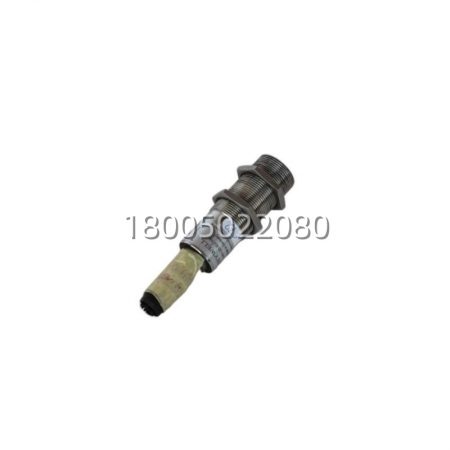
The MKS 902-1112 is a specialized tool deployed in research, development, and high-end industrial monitoring where understanding dynamic pressure is critical. In aerospace and propulsion testing, it is extensively used to measure combustion instability and high-frequency pressure oscillations (chugging, screech) in rocket engines, jet engine afterburners, and gas turbine combustors. The transducer’s high-temperature capability allows it to be mounted directly in or near the combustion zone to capture critical data for stabilizing combustion and preventing destructive vibrations. In automotive and engine research, the 902-1112 is the standard sensor for in-cylinder pressure measurement to analyze combustion performance, detect engine knock, and optimize fuel injection and ignition timing for efficiency and power.In the field of industrial process monitoring and safety, the transducer is used to detect potentially dangerous pressure pulsations and surges in compressor and pump systems, which can lead to fatigue failures. It is also employed for acoustic emission monitoring and blast overpressure measurement in explosive environments. In research laboratories, the MKS 902-1112 is a fundamental instrument for fluid dynamics studies, such as measuring turbulent flow fluctuations, shock wave propagation in wind tunnels, and aerodynamic noise (aeroacoustics). Furthermore, it finds application in medical research for studying physiological pressure waves in blood flow and in the development of pneumatic and hydraulic control systems where high-speed valve response creates dynamic pressure spikes. In every case, the 902-1112 is chosen for its ability to capture the “story” of pressure over time with extreme fidelity, turning transient events into quantifiable, analyzable data.
Related Products
- MKS PDR2000 Series Charge Amplifier: The dedicated signal conditioner required to convert the high-impedance charge output of the 902-1112 into a low-impedance voltage signal for data acquisition.
- MKS 690 Series Baratron Capacitance Manometers: These are absolute and differential pressure gauges for measuring staticpressure with high accuracy, used in conjunction with the dynamic 902-1112 for complete pressure analysis.
- MKS 925/926 Micro-Ion Vacuum Gauge: A vacuum measurement solution, representing a different sensing technology for low-pressure static environments, contrasting with the 902-1112‘s dynamic, higher-pressure role.
- PCB Piezotronics 112A Series: A competing line of piezoelectric pressure sensors with similar specifications and application areas.
- Kistler 601/605 Series Piezoelectric Pressure Sensors: Another major competitor’s product line for high-temperature, in-cylinder pressure measurement, a primary application for the 902-1112.
- MKS 902B/902C Series: Other model series within the MKS 902 family, which may offer different pressure ranges, sensitivities, or connector types.
- MKS Type PR4000 Pressure Readout: A portable readout/display unit that can be used with compatible signal conditioners to display measurements from sensors like the 902-1112.
- Cooling Adapters (e.g., MKS 902-1130): Accessory water-cooling jackets that allow the 902-1112 to be used in environments exceeding its standard temperature rating.
Installation and Maintenance
Pre-installation preparation: Successful use of the MKS 902-1112 requires careful planning. First, select the appropriate pressure range to ensure the expected dynamic pressure swings are within the transducer’s linear range without risking overpressure damage. Ensure you have a compatible charge amplifier (like an MKS PDR2000) and the correct low-noise coaxial cable to connect the transducer to the amplifier. The installation location must provide a direct, short, and clean path for the pressure pulse to reach the sensing diaphragm. Use a sealed, rigid mounting with the appropriate thread adapter if needed. For high-temperature applications, verify the specific model’s temperature rating and consider using a cooling adapter. Always handle the transducer with care to avoid dropping or subjecting it to mechanical shock, and protect the electrical connector from contamination.Maintenance recommendations: The MKS 902-1112 is a robust device with no moving parts, requiring minimal routine maintenance. The primary maintenance involves ensuring the integrity of the installation. Periodically check the tightness of the pressure port connection and inspect the coaxial cable and connector for physical damage or corrosion. The diaphragm should be kept clean; if clogging from combustion deposits or process media is suspected, the transducer can be carefully cleaned according to MKS guidelines, avoiding any abrasion of the sensitive diaphragm. The most common “maintenance” activity is periodic system calibration. The 902-1112 and its associated charge amplifier should be calibrated together as a system using a known dynamic pressure source (like a pistonphone or shock tube) to verify its sensitivity and frequency response. Store the transducer in a clean, dry environment when not in use. If performance degrades, it typically requires factory service, as user repair is not feasible.



Reviews
There are no reviews yet.