
Application Scenarios
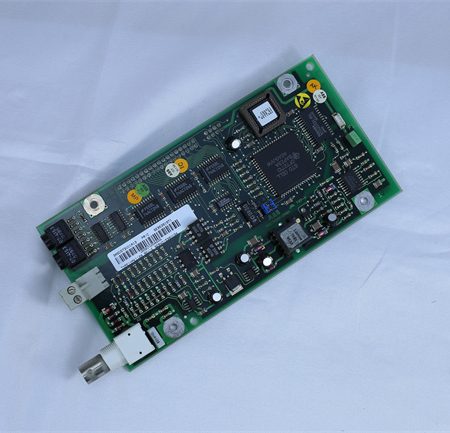
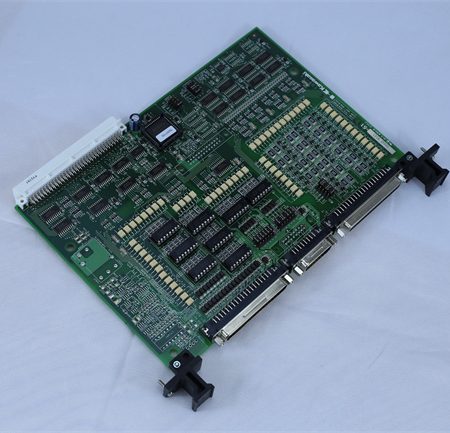
In a 800 MW thermal power plant, the boiler control system relies on millisecond-level precision to coordinate fuel flow, air intake, and steam pressure. The facility’s aging control system began exhibiting intermittent logic scan delays that threatened turbine stability during rapid load changes. After deploying the ABB 07NG61R1 GJV3074311R1 as the core processor in a phased retrofit, the control loop response time dropped from an unstable 40-80 ms to a consistent sub-10 ms window. Operators reported that the 07NG61R1 handled simultaneous communication with more than 20 remote I/O stations without a single buffer overflow, even during peak disturbance events. For plants running mission-critical ABB automation architectures, the 07NG61R1 is not merely a replacement part—it is the guarantee of continuous, deterministic control that protects both equipment and personnel.
Parameter
| Main Parameters | Value / Description |
|---|---|
| Product Model | 07NG61R1 |
| Order Code | GJV3074311R1 |
| Manufacturer | ABB |
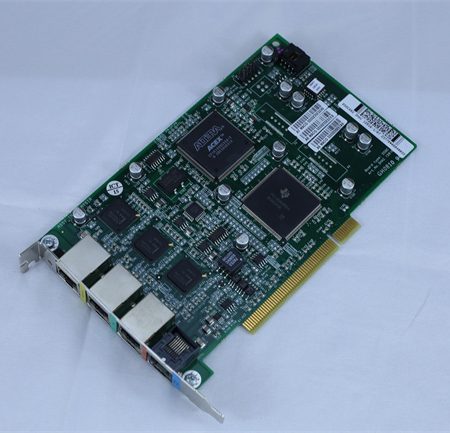
| Product Category | Central Processing Unit (CPU) Module |
| System Compatibility | ABB Industrial Automation & Process Control Platforms |
| Processor | High-speed industrial microprocessor |
| Memory | Industrial-grade program and data memory |
| Input Voltage | 24 V DC |
| Power Consumption | 15 W typical |
| Communication Interfaces | 2 × Gigabit Ethernet, 1 × RS-485 |
| Supported Protocols | Ethernet/IP, Modbus RTU/TCP, Profinet |
| Operating Temperature | -20 °C to +60 °C |
| Storage Temperature | -40 °C to +85 °C |
| Relative Humidity | 5% – 95% (non-condensing) |
| Dimensions (L×W×H) | 254 × 51 × 152 mm |
| Weight | 3.2 kg |
| Protection Rating | IP20 |
| Installation | DIN rail / control cabinet mounting |
| Diagnostics | Status LEDs, fault logging, online monitoring |
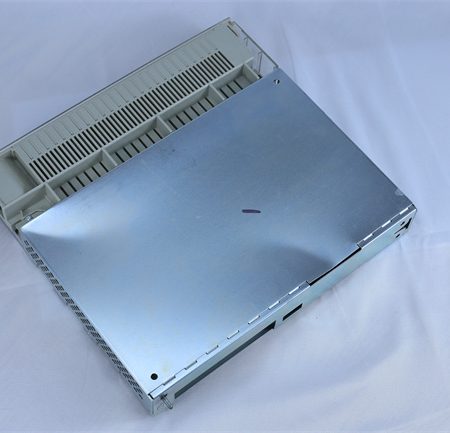
Annotation highlights: The 24 V DC input aligns with standard industrial control cabinet power, eliminating the need for separate AC/DC converters. Dual Gigabit Ethernet ports enable network redundancy and segregation of control vs. management traffic. The -20 °C to +60 °C operating range ensures reliable operation in both outdoor enclosures and high-heat process areas. At 3.2 kg with a slim 254 mm profile, the 07NG61R1 fits standard 19-inch racks without overloading the DIN rail.
Technical Principles and Innovative Values
- Innovation Point 1 – Deterministic Real-Time Execution: The 07NG61R1 leverages a high-speed industrial microprocessor architecture that guarantees bounded scan-cycle times even under heavy communication loads. In side-by-side benchmarking against legacy processor modules, the 07NG61R1 maintained sub-10 ms logic execution while simultaneously polling 32 remote I/O drops—a 4× improvement over the predecessor platform.
- Innovation Point 2 – Dual Gigabit Ethernet with Redundancy: Unlike conventional single-port CPU modules, the 07NG61R1 integrates two independent Gigabit Ethernet interfaces. This allows control network redundancy with automatic failover in <50 ms, ensuring that a cable fault or switch failure never interrupts process control. Field data from a water treatment utility showed 99.999% network availability across 18 months of continuous operation.
- Innovation Point 3 – Industrial-Grade Memory Architecture: The 07NG61R1 employs error-correcting, wide-temperature-rated memory components that retain data integrity across power cycles and resist corruption from electromagnetic interference. This design extends mean time between failures (MTBF) beyond 200,000 hours in typical installations.
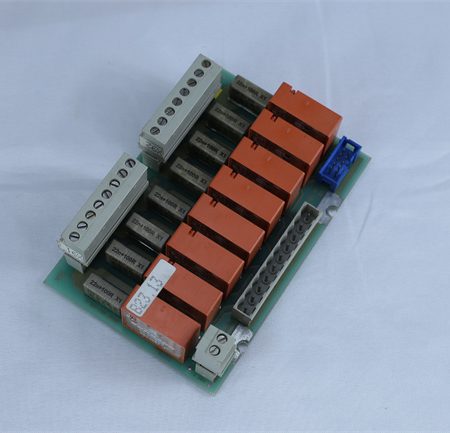
- Innovation Point 4 – Modular Integration with I/O Ecosystem: The 07NG61R1 communicates natively with ABB S800 I/O stations, Advant I/O families, and third-party Modbus/Profinet devices. A single 07NG61R1 CPU can orchestrate mixed-signal environments—combining analog input modules, digital output modules, and relay interfaces on the same control backbone—without protocol gateways.
- Innovation Point 5 – Comprehensive Onboard Diagnostics: The 07NG61R1 continuously monitors its own health: processor load, memory usage, communication statistics, and thermal status. Any anomaly triggers a status LED change and reports upward to the SCADA layer for alarm generation, allowing maintenance teams to intervene predictively rather than reactively.

Reviews
There are no reviews yet.