
Technical Specifications
| Parameter Name | Parameter Value |
|---|---|
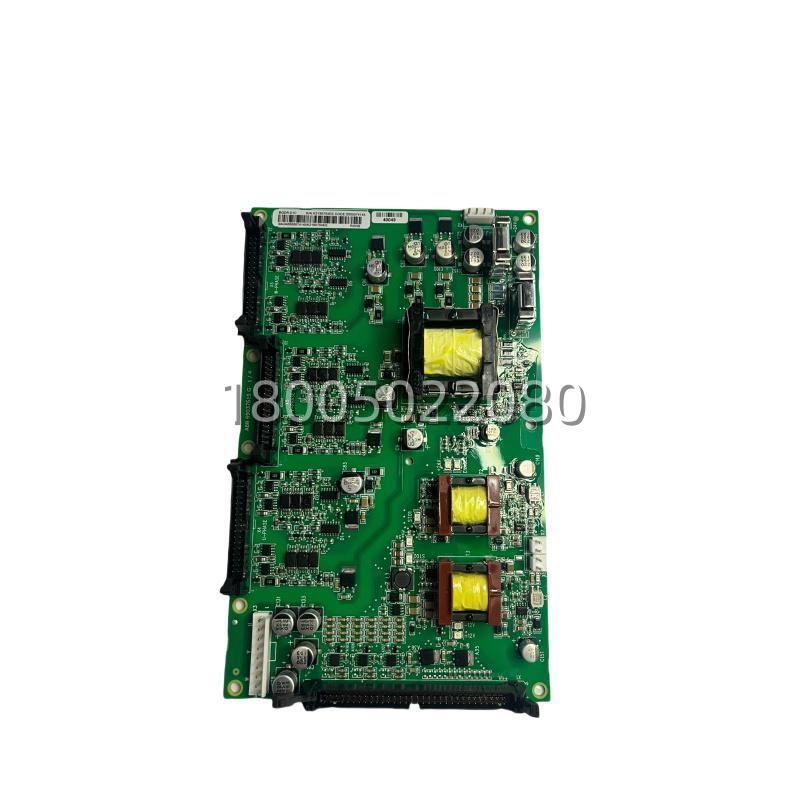
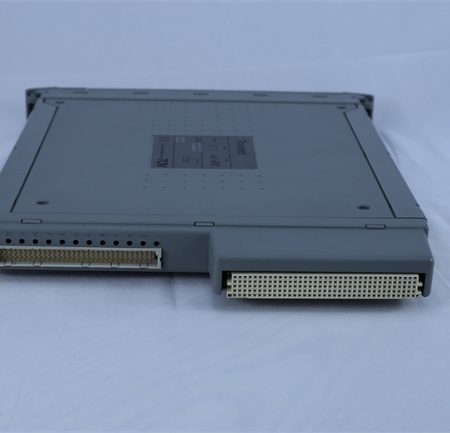
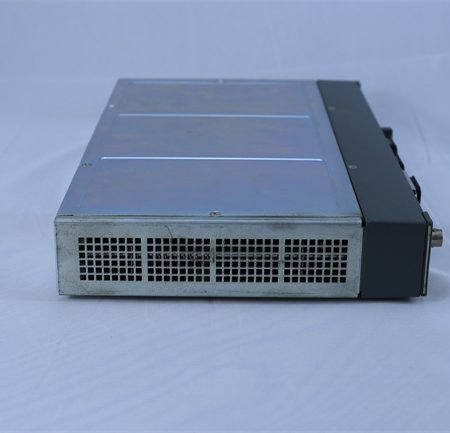
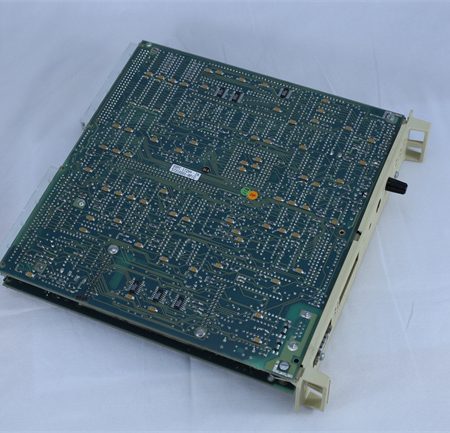
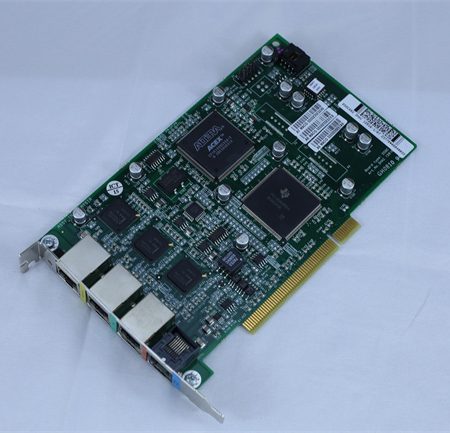
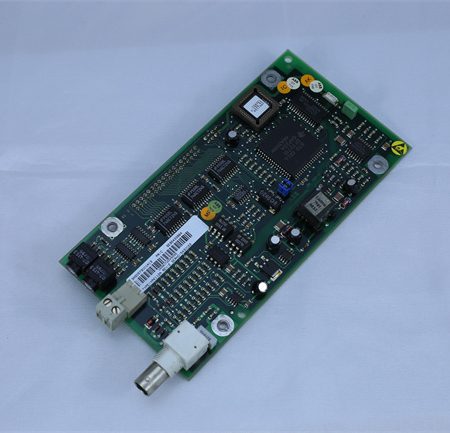
| Product Model | ABB BGDR-01C (Catalog Ref: 69037615F) |
| Manufacturer | ABB Ltd. |
| Product Type | Brake Chopper Control Module / Dynamic Braking Interface PCB (Drive-Internal Spare) |
| Compatible Drives | ABB ACS800, ACS850, ACS880 (with +D150 or equivalent brake-chopper option) |
| Core Function | DC-bus voltage monitoring, braking IGBT/chopper gate drive, external brake resistor control |
| Control Supply | 24 V DC (from drive internal control rail) |
| DC-Bus Monitoring Threshold | ~800 V DC (400 V drive class) / ~1050 V+ DC (690 V class), version-dependent |
| Braking Interface | Connects to external DCR-type brake resistor via drive power section |
| Communication / Feedback | Status reporting to drive controller (brake fault / overload signaling) |
| Mounting | Plugs into drive internal backplane / brake-chopper bracket (cabinet or wall-mount) |
| Operating Temperature | 0 °C to +55 °C (control-cabinet) |
| Storage Temperature | -40 °C to +70 °C |
| Humidity | 5 % – 95 % RH, non-condensing |
| Protection Class | IP20 (cabinet-internal) |
| Dimensions (approx.) | 120 mm × 80 mm |
| Weight (approx.) | 0.22 kg |
| Hardware Revision | 01C (denoted by “-01C” suffix) |
Main Features and Advantages
Regeneration clamping for high-inertia loads. The defining value of the ABB BGDR-01C is keeping the DC bus under control when the motor pushes energy back into the drive. On a 400 V-class ACS880 feeding a 50-ton crane hoist or a downhill belt conveyor, the regen spike on a rapid stop can push the DC link well past 760 V within seconds. The ABB BGDR-01C watches that bus and pulses the brake IGBT to bleed the excess into the external resistor, holding the bus inside the safe window without tripping the drive. For process lines where an overvoltage trip means a dropped load or a jammed conveyor, this clamp function is the difference between a smooth stop and a fault-clear restart cycle.Drive-integrated form factor. The ABB BGDR-01C isn’t a panel gadget — it’s shaped and connectorized for the brake-chopper slot inside ACS800/ACS850/ACS880 cubicles. The 24 V DC logic, the bus-sense divider network, and the gate-drive path to the braking IGBT all land on the same compact PCB that seats onto the drive backplane. For maintenance crews, replacement is “unplug — seat new — close up,” with no loose wiring or DIN-rail interposing relays to re-terminate.Closed-loop feedback to the drive controller. Beyond simply firing the chopper, the ABB BGDR-01C reports back — brake-fault, resistor-overload, or persistent chopper-active states can be read via the drive’s fault stack. This lets plant engineers distinguish “brake resistor cooked open” from “drive overvoltage” from “chopper PCB failed,” which matters when troubleshooting a trip-prone crane drive at 2 a.m.Revision C circuit maturity. The “-01C” tag marks the third notable hardware iteration of this board. Compared with earlier 01/01A/01B revisions, 01C incorporates improved snubbing on the gate-drive path, better creepage spacing around the DC-sense divider, and component-grade updates that age more gracefully in hot, vibrating drive rooms. The ABB BGDR-01C Rev C is generally backward-compatible with cabinets originally built on 01/01A, but mixed-rev validation against the drive’s hardware-compatibility note is still recommended on multi-drive fleets.Industrial durability in drive-room conditions. Conformal coating, industrial-grade opto-isolation on the sense path, and a mechanical envelope that tucks inside the drive’s protected compartment mean the ABB BGDR-01C survives the EMI, thermal cycling, and vibration profile of steel mills, ports, mine hoist houses, and marine engine rooms. For fleets running 10–20+ ABB drives with brake-chopper options, carrying two or three ABB BGDR-01C spares across the site is a trivial inventory cost against the downtime risk of a crane or conveyor line that can’t stop without tripping.
Application Field
The ABB BGDR-01C deploys wherever ABB ACS800 / ACS850 / ACS880 frequency converters are fitted with the brake-chopper option and face overhauling or fast-decel loads. Typical application baskets include:
- Cranes & hoists (portal cranes, overhead shop cranes, mining hoists, shipyard gantry): the motor regenerates heavily during load lowering; the ABB BGDR-01C keeps the DC bus clamped so the drive doesn’t trip mid-cycle.
- Downhill / declined conveyors (bulk-material handling, mining conveyors, port belt lines): belt runs away under load weight, driving the motor as a generator; the brake chopper path managed by the ABB BGDR-01C absorbs that energy continuously.
- Centrifuges & decanters (chemical, food, pharma): high-inertia spin-down creates sustained regen; the ABB BGDR-01C + external DCR resistor provides the dissipation path.
- Elevators & escalators: overhauling cabin weight on descent triggers regen; brake chopper management is mandatory for ride-quality and drive protection.
- Marine winches & deck machinery: ABB ACS800/ACS880 drives on winch mains use brake chopper extensively; the ABB BGDR-01C lives inside the drive cubicle on the winch controller skid.
- Dynamometer test rigs & renewable-energy test loads: motoring drives overhauled by the unit-under-test create sustained regen; brake chopper capacity sized via the ABB BGDR-01C+resistor combo.
Because the ABB BGDR-01C is a drive-infrastructure spare rather than a process-I/O item, its “application” binds to which drive and which load profile. Any plant running ACS800/ACS850/ACS880 with the +D150 brake-chopper option on a regenerative or high-inertia load should inventory at least one ABB BGDR-01C per drive family. During drive refurbishments (typically at the 12–15 year mark), the brake-chopper PCB is a common proactive swap alongside the control supply and the I/O communication card, refreshing the regen-management chain without replacing the entire inverter section. For ports, mines, and steel plants where a crane or conveyor trip cascades into a shift-loss, the ABB BGDR-01C earns its keep precisely by not failing when the load overhauls.

Reviews
There are no reviews yet.