
Technical Specifications
| Parameter Name | Parameter Value |
|---|---|
| Product Model | 900C52-0021 |
| Manufacturer | Honeywell |
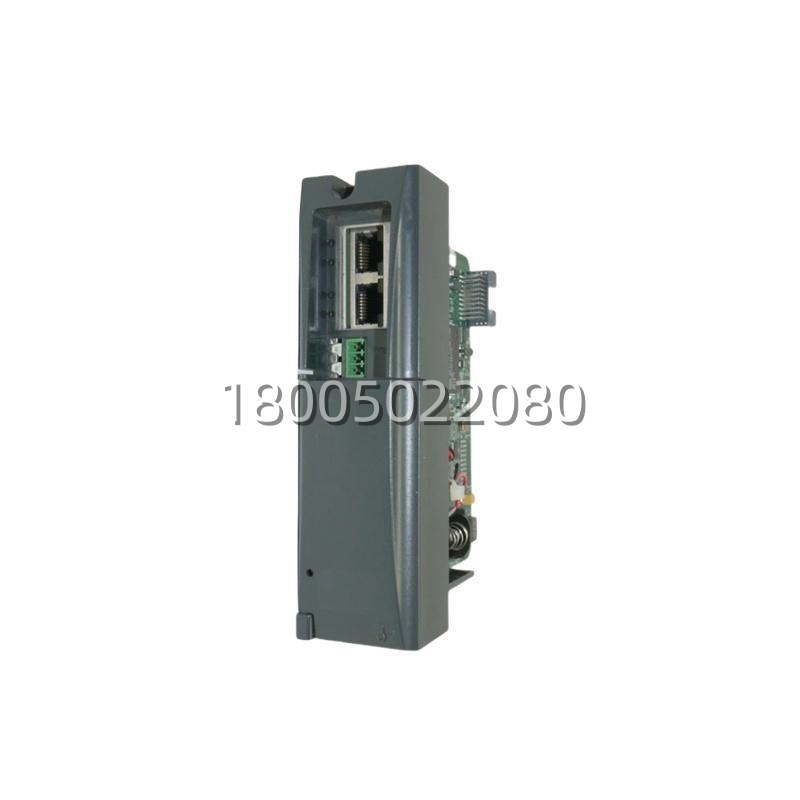
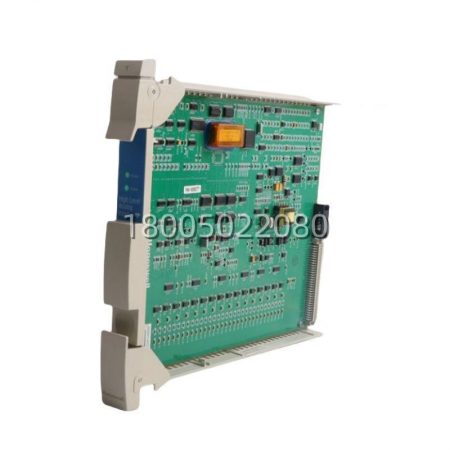
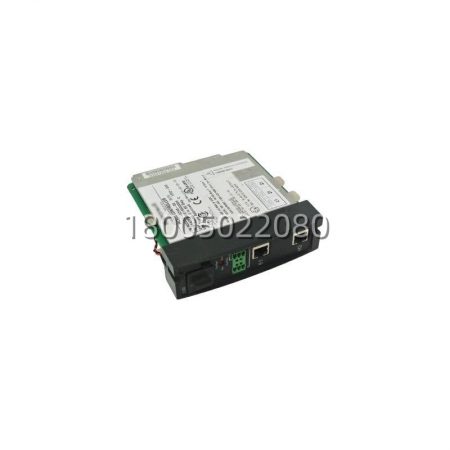
| Product Type | Digital Output Module (Safety) |
| Compatible System | Safety Manager (part of Experion PKS) |
| Number of Output Channels | Typically 8 channels (configurable) |
| Output Type | Digital, typically 24V DC (sourcing or sinking, configurable) |
| Rated Output Current | Typically 0.5A to 2A per channel (dependent on configuration and safety rating) |
| Isolation | Channel-to-channel and channel-to-system isolation |
| Diagnostics | Comprehensive onboard diagnostics (module health, field circuit monitoring) |
| Communication Interface | Backplane connection to Safety Manager controller |
| Safety Standards | Compliant with IEC 61508, suitable for use in SIL 2/SIL 3 loops |
| Operating Temperature | 0°C to 60°C (32°F to 140°F) |
| Relative Humidity | 5% to 95% non-condensing |
| Certifications | ATEX, IECEx, FM, CSA (specific certifications depend on build) |
Main Features and Advantages
The Honeywell 900C52-0021 module is distinguished by its design for functional safety, offering features that go beyond standard PLC output cards. A paramount advantage is its sophisticated diagnostic suite. The module performs continuous internal health checks, monitoring for faults such as open circuits, short circuits, and loss of load power on each output channel. This advanced diagnostics capability is not an optional extra but a core function, providing vital information to the safety controller and maintenance personnel, enabling predictive maintenance and reducing the rate of dangerous undetected failures. This directly supports lower PFD values and higher Safety Availability Factors (SAF).Furthermore, the Honeywell 900C52-0021 provides exceptional application flexibility. Outputs can be configured in various voting schemes to match the risk assessment of the Safety Instrumented Function (SIF). This allows for optimal balance between safety availability (preventing spurious trips) and fault tolerance. The module’s robust design ensures high noise immunity and stable operation in harsh industrial environments, preventing nuisance trips from electrical interference. Its hot-swappable capability (when used in a supported redundant configuration) allows for module replacement or addition without taking the safety system offline, a critical feature for maintaining continuous process protection and maximizing plant uptime. The seamless integration with the Experion PKS engineering station via the ControlEdge™ Developer software simplifies configuration, commissioning, and lifecycle management of the entire safety loop involving the 900C52-0021.
Application Field
The Honeywell 900C52-0021 is deployed in industries where process safety is legislated and paramount. In Oil & Gas, it is a workhorse for Emergency Shutdown Systems (ESD) on offshore platforms, onshore refineries, and pipelines. Here, it reliably executes commands to isolate sections, shut down pumps, or activate blowdown valves in the event of overpressure, gas detection, or fire, thereby preventing catastrophic events. Similarly, in Petrochemical and Chemical plants, the module is used in burner management systems (BMS) and process shutdown systems to safely manage high-temperature and high-pressure reactions, protecting personnel and preventing uncontrolled releases.The Honeywell 900C52-0021 also plays a critical role in Fire & Gas systems across all heavy industries, where it activates critical mitigation equipment like fire suppression deluge valves, HVAC shutdown dampers, and toxic gas scrubbers upon detection of a hazard. In the Power Generation sector, particularly in turbine control and boiler protection systems, the module ensures safe equipment shutdown to prevent mechanical damage. Its predictable performance and certification for safety loops make the Honeywell 900C52-0021 an ideal choice for any application requiring dependable final control element actuation as part of a certified Safety Instrumented System, bridging the gap between the safety controller’s decision and physical action in the plant.

Reviews
There are no reviews yet.