
Application Scenarios
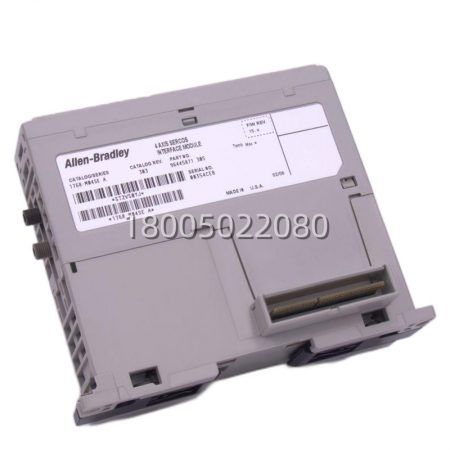
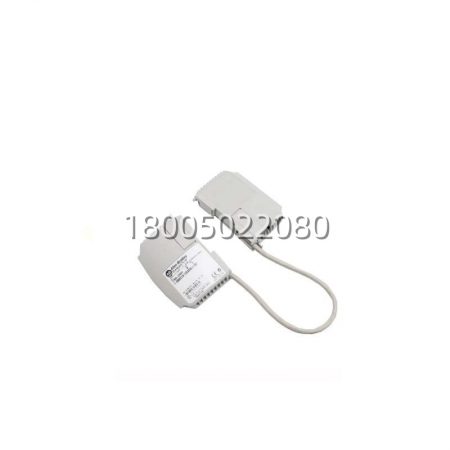
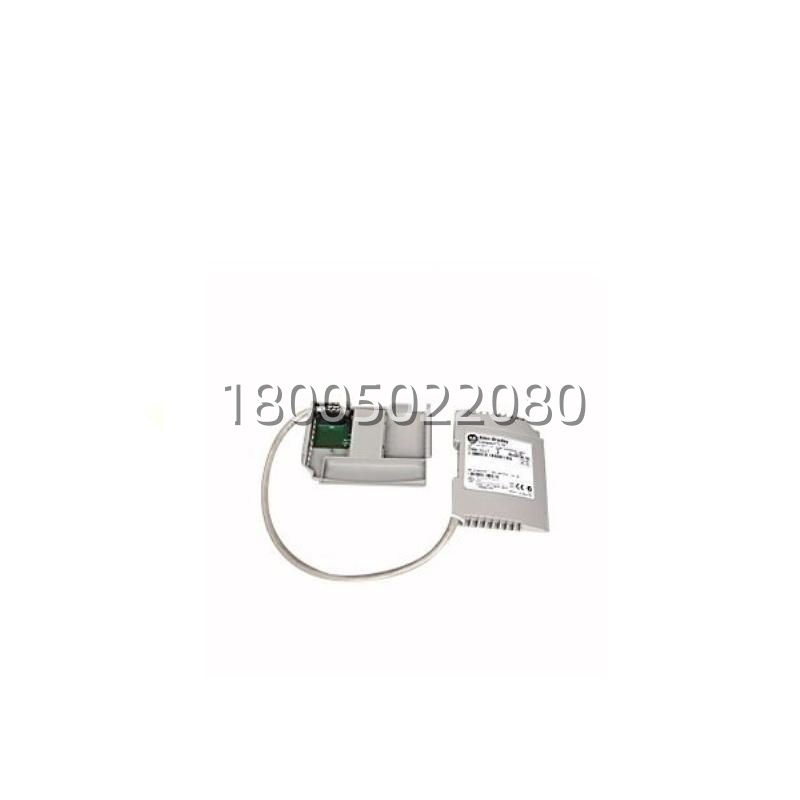
In a high-speed packaging machine, precise coordination between the film feed, product indexing, and sealing jaws is critical. The 1769‑CLL3 (e.g., 1769‑L33ER) acts as the unified control brain, executing the main logic sequence while simultaneously managing multiple servo drives via CIP Motion over EtherNet/IP. It directly reads digital sensors (e.g., photoeyes) and analog signals (e.g., temperature from the heat sealer) through its local 1769 I/O modules. This integrated approach eliminates the need for a separate motion controller, reducing hardware costs and complexity. By solving the pain point of synchronizing discrete I/O, analog processes, and multi-axis motion in a single platform, it ensures faster machine cycles and simplifies troubleshooting for OEMs and end-users.
Parameter
| Parameter | Specification |
|---|---|
| Product Model | 1769‑CLL3 (representative: 1769‑L33ER) |
| Manufacturer | Rockwell Automation (Allen‑Bradley) |
| Product Category | Programmable Automation Controller (PAC) |
| Controller Family | CompactLogix 5370 L3 Series |
| User Memory | 2 MB (typical for L33ER variant) |
| I/O Expansion Capacity | Up to 16 local 1769 I/O modules (max 3 banks) |
| Communication Ports | 2x Embedded EtherNet/IP (10/100 Mbps, DLR support), 1x USB |
| Integrated Motion | Supports CIP Motion (e.g., up to 16 axes on L33ER) |
| Power Supply | 24V DC (compatible with 1769‑PA2, 1769‑PB4, etc.) |
| Operating Temperature | 0 to 60 °C (32 to 140 °F) |
| Programming Software | Studio 5000 Logix Designer / RSLogix 5000 |
| Key Feature | SD card slot for project backup and firmware updates |
Technical Principles and Innovative Values
Innovation Point 1: Unified Control ArchitectureThe 1769‑CLL3 platform breaks down traditional silos by integrating discrete, process, and motion control within a single controller. Unlike systems requiring separate PLCs and motion cards, this PAC uses a common tag-based database in Studio 5000. This allows engineers to program logic and motion trajectories (e.g., electronic gearing, camming) in the same environment, drastically reducing development time and eliminating communication delays between separate devices.Innovation Point 2: Device-Level Ring (DLR) Network RedundancyThe embedded dual Ethernet ports support the DLR protocol, enabling the controller to form a redundant ring network with other devices. If a cable is cut or a switch fails, the network self-heals in milliseconds (<500 ms). This built-in network resilience is a significant innovation for machine-level control, ensuring continuous operation and diagnostics without the cost of additional communication modules.Innovation Point 3: Modular and Scalable I/O BackboneThe controller’s design leverages the 1769 Compact I/O bus for high-speed, deterministic communication with expansion modules. This architecture allows for a “right-sizing” approach—starting with a basic system and adding 1769‑IQ16 (digital input), 1769‑OF4 (analog output), or 1769‑IT6 (thermocouple) modules as needed. The bus provides direct data exchange, avoiding the latency of network-based remote I/O for critical local signals.
Reviews
There are no reviews yet.