
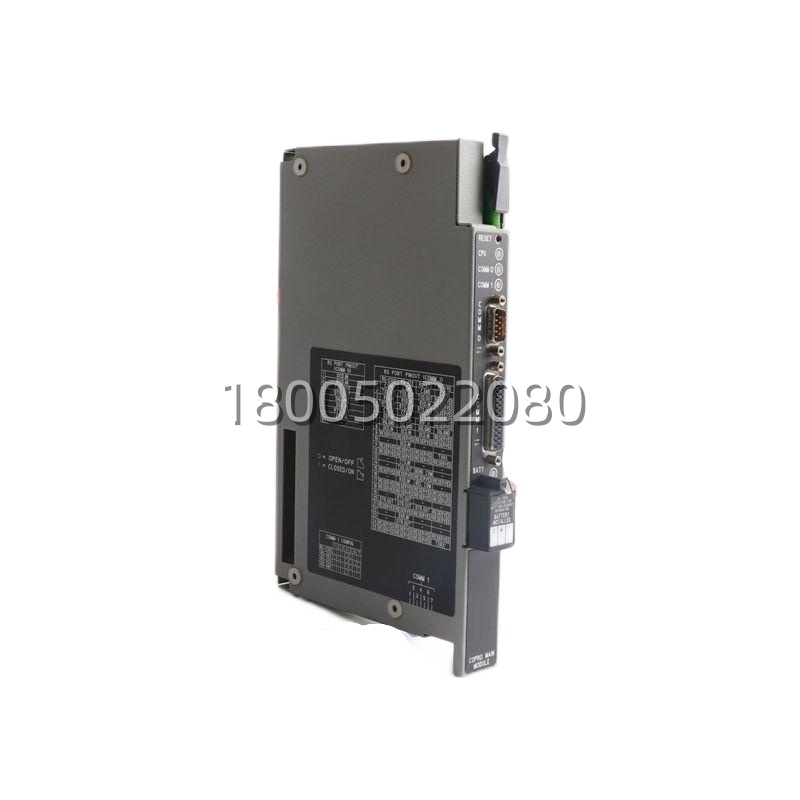
Technical Specifications
| Parameter | Value |
|---|---|
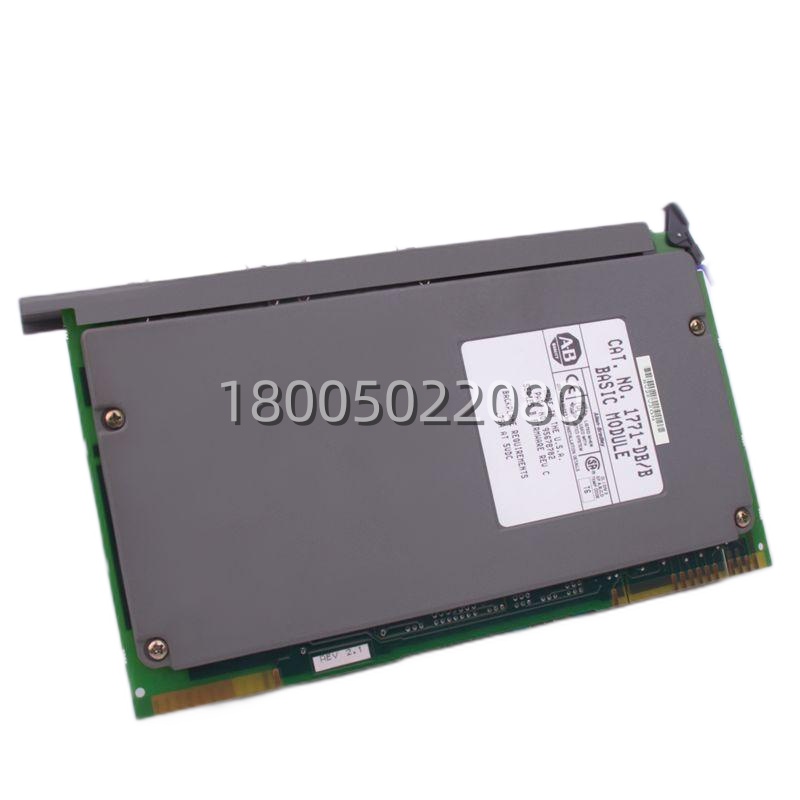
| Product Model | 1771-DB (Rev A) |
| Manufacturer | Allen-Bradley (Rockwell Automation) |
| Product Type | PLC-5 BASIC Coprocessor Module (1771 Chassis Slot) |
| BASIC Program Memory | 8 KB |
| Data Memory (RAM) | 4 KB |
| Communication to PLC-5 | Block Transfer (BTR/BTW) via backplane |
| Front-Port Interface | 1 × RS-232-C (DB-25), configurable baud/parity |
| Front Panel | 14-character alphanumeric LCD + debug/entry keys |
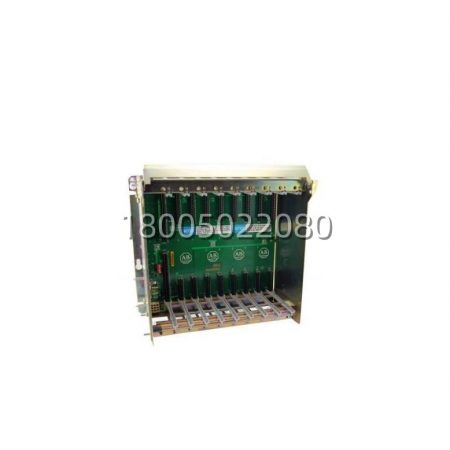
| Chassis Requirement | Standard 1771 I/O chassis (any A/B/C/E rack) under PLC-5 processor |
| Slot Width | Single-width 1771 module |
| Power | From 1771 chassis backplane (120/220V AC rack supply) |
| Typical Use | BASIC offload: math, strings, ASCII devices, report printing |
| Operating Temp | 0 °C to 60 °C |
| Certifications | UL, CE (per 1771 PLC-5 chassis system certification) |
| Lifecycle Status | Discontinued (PLC-5 platform obsolete; MRO/spare only) |
| Programming Tool | 1771-DB BASIC Development SW (DOS/Windows vintage; Rockwell legacy) |
Main Features and Advantages
BASIC Language Alongside Ladder — Best of Both WorldsThe core proposition of the 1771-DB is letting the PLC-5 do what it’s great at (discrete I/O scanning, deterministic logic, motion/process loops) while farming out what ladder is terrible at to the coprocessor. The 1771-DB runs interpreted BASIC — variable manipulation, FOR/NEXT loops, string concatenation, formatted PRINT statements, IF/THEN branching — and exchanges data with the PLC-5 via BTR (Block Transfer Read) and BTW (Block Transfer Write) instructions. A typical pattern: the PLC-5 ladder scans a batch-complete rung, BTWs a 20-word block containing batch-ID, tank-number, temperature-array, and operator-ID into the 1771-DB’s 4 KB data RAM; the BASIC program wakes (triggered by a flag word), formats a header + table into a string, and sends it out the RS-232-C port to a panel-mounted dot-matrix printer or dumps it to a terminal; then writes a “done” flag back via data RAM for the PLC-5 to BTW/BTR on the next scan. No PC, no Windows, no crash-surface — just a coprocessor doing report generation while the PLC-5 never leaves its scan.Front-Panel LCD + Keypad for Field DebugUnlike almost every other 1771 module, the 1771-DB has a 14-character alphanumeric LCD and a small key array on the fascia. This lets a floor technician LIST BASIC lines, inspect/edit variables, and force-test PRINT output without lugging a laptop and the vintage DOS/Windows BASIC dev tool. On a 1990s-vintage packaging line where the print-format for case labels occasionally needs a delimiter changed from comma to pipe, the 1771-DB lets the maintenance lead fix it at the rack in five minutes. That field-serviceability is a big part of why 1771-DB units are still clinging to life in MRO panels 30+ years later.RS-232-C DB-25 for ASCII PeripheralsThe front-port DB-25 on the 1771-DB is configurable for baud, parity, stop bits — typical 1771-DB installs run 9600–19200 bps talking to:
- Dot-matrix/batch printers (report, label-format header)
- Barcode scanners (parse scanned string into PLC-5 data RAM for routing)
- Weigh-scale indicators (ASCII weight string parsed in BASIC, validated, written back)
- Operator terminals / VT100-style displays
The 1771-DB handles the ASCII framing and parsing in BASIC, freeing the PLC-5 ladder from character-level state machines that would eat dozens of rungs.Deterministic Enough for Its EraThe 1771-DB is notreal-time in the modern sense — it’s an interpreted coprocessor sharing backplane bandwidth via block transfers, so worst-case latency is in the tens-of-milliseconds class, not microseconds. But for report printing, string formatting, and weight-scale averaging, that’s irrelevant. The PLC-5 ladder remains fully deterministic; the 1771-DB is the “background helper.” That architectural separation is why plants haven’t ripped them out — the risk of reintroducing bugs by rewriting 500 lines of BASIC report logic into ControlLogix ST is higher than the risk of the 1771-DB dying, and a spare on the shelf handles the latter.Legacy MRO ValueWith PLC-5 long out of active Rockwell catalog and the 1771-DB discontinued even within that legacy family, the remaining market is almost purely MRO: spare-for-spare replacement on sustained lines, refurb units pulled from decommissioned racks, and occasional “we lost the BASIC source, can you clone the EPROM from our dying unit” recovery requests. The 1771-DB/A (Rev A) is the earliest revision; functionally interchangeable with later revs in most 1771 chassis as long as the PLC-5 processor’s block-transfer size (standard 64-word max BTR/BTW) matches the BASIC program’s expectations. For MRO buyers, the 1771-DB is the classic “small SKU, big consequence” — if it dies and there’s no spare, the batch-report printer stops, QA flags the line, and the scramble begins.
Application Field
The 1771-DB earned its keep in PLC-5-era applications where ladder alone was too cumbersome for a sub-task, but a full PC/SCADA layer was overkill or unreliable in the environment. In food & beverage packaging — bottling lines, case packers, palletizers commissioned in the 1990s — the 1771-DB typically handled case-label and pallet-tag report formatting: the PLC-5 ladder captured filler-speed, capper-torque, date-code, and lot-number into a block-transfer write; the 1771-DB BASIC program formatted those fields into a label-printer escape-sequence string and spit it out the RS-232-C to a Zebra-like industrial printer (or dot-matrix in vintage installs). When QA audited a batch, the 1771-DB could also dump a human-readable summary to a panel-mounted Epson printer — no PC, no Windows patch Tuesday, just 1771 backplane and a printer that hadn’t jammed since 1998.In batch-process skids (pharma CIP, chemical blend, wastewater treatment), the 1771-DB parsed ASCII weight-scale strings: a tank farm might have three 4–20 mA load cells summed in the PLC-5, but the truck-scale or additive-scale indicator only spoke ASCII serial. The 1771-DB opened the RS-232-C port, captured the “ST,12345,kg” string, parsed the 12345 into an integer in the 4 KB data RAM, and flagged the PLC-5 via BTR that “scale ready.” Similarly, barcode routing on conveyor merges — a scanner over the belt reads a case SSCC, sends it ASCII to the 1771-DB, BASIC parses the check-digit, writes divert-zone ID back to PLC-5 ladder, and the case gets kicked left or right. Ladder alone would need a character-level state machine eating 60+ rungs; the 1771-DB does it in 15 lines of BASIC.OEM machinery in metals, converting, and automotive sub-assembly also used the 1771-DB for operator-message terminals: a VT100-style LCD terminal by the operator station talked RS-232-C to the 1771-DB, BASIC served a mini-menu (“1=Jog Fwd, 2=Jog Rev, 3=Home Axis”), keystrokes came in as ASCII, the 1771-DB validated and wrote command words into the PLC-5 data RAM. This predated today’s PanelView prevalence, and plenty of those machines are still running because “if it prints, don’t fix it.”Sustainment is the dominant use today: a 1996-vintage brewery line with three 1771-DB modules across filler, pasteurizer, and depalletizer — the OEM is gone, the original BASIC source lives on a floppy in the control room, and the plant engineer’s job is “keep it alive.” A spare 1771-DB/A on the shelf, plus a cloned BASIC program EPROM/transfer, is cheaper than a ControlLogix migration with FactoryTalk View rebuild. That’s the MRO story driving the secondary market for the 1771-DB even three decades post-launch.
Related Products
- 1771-DB (Rev B/C) – Later revisions of the same PLC-5 BASIC Module; firmware/component updates but mechanically/interchangeably slot-compatible with 1771-DB/A in a 1771 chassis — verify BASIC source compatibility on rare edge cases.
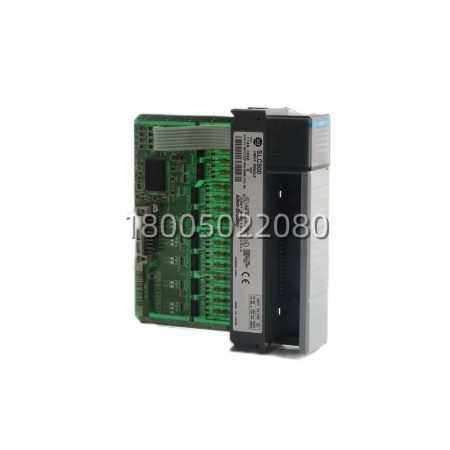
- 1771-OW – 1771-series relay output module; typical sibling in the same PLC-5 rack that the 1771-DB might trigger (e.g., “print-done” relay, alarm beacon) via PLC-5 ladder consuming 1771-DB data-RAM flags.
- 1771-IQ – 1771-series 24V DC input module; sibling in the same rack, scanning the pushbuttons/photoeyes whose data eventually gets block-transferred into the 1771-DB for report formatting.
- 1785-L80B/E/L – PLC-5 processors (various memory sizes) that host the 1771-DB in the same 1771 chassis; the 1771-DB is useless without a PLC-5 processor doing the BTR/BTW orchestration.
- 1771-AL – 1771 chassis adapter link (for remote I/O extension); sometimes the 1771-DB sits in a local 1771 rack under a PLC-5/40 whose remote racks hang off 1771-AL — the BASIC coprocessor only lives locally, not across RIO.
- 6181P / 6181 Industrial PC – The spiritual successor to “BASIC offload” thinking; by the 2000s Rockwell pushed soft-logic and VB/Studio on industrial PCs instead of coprocessor BASIC. Not a drop-in, but the conceptual replacement path when a 1771-DB application finally gets rewritten.
- ControlLogix 1756-L8xE – Rockwell’s modern large-processor path when a PLC-5 + 1771-DB rack is finally migrated; Structured Text (ST) in Logix replaces the BASIC offload, and Ethernet/IP replaces the RS-232-C printer port.
Reviews
There are no reviews yet.