
Application Scenarios:
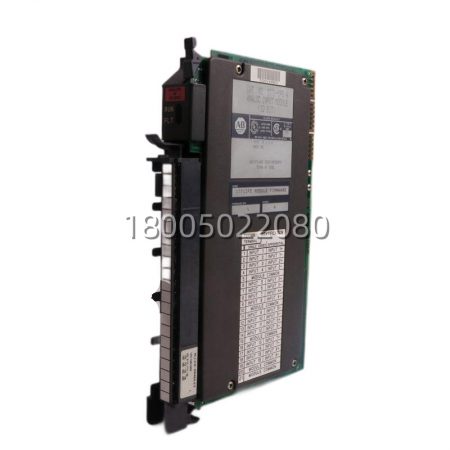
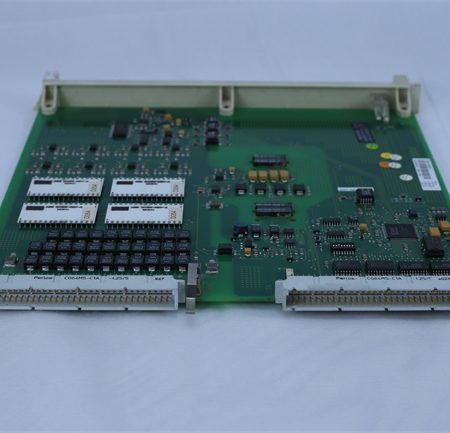
A chemical batch processing plant relied on a centralized PLC-5/40 system to monitor reactor temperatures (via J-type thermocouples) and pressure transmitter signals (4-20mA). Their existing generic analog modules suffered from signal drift and noise on the long cable runs from the vessel. By retrofitting 1771-IFM/A modules, the engineers leveraged the high-impedance differential inputs and configurable filtering. They set channels 0-3 for thermocouple (mV) mode and channels 4-7 for current loop (with internal 250Ω shunt), consolidating mixed signal types into a single module slot. This upgrade improved measurement stability by 30% and reduced spare part complexity by standardizing on a single, flexible module type across the facility.
Parameter:
| Main Parameters | Value/Description |
|---|---|
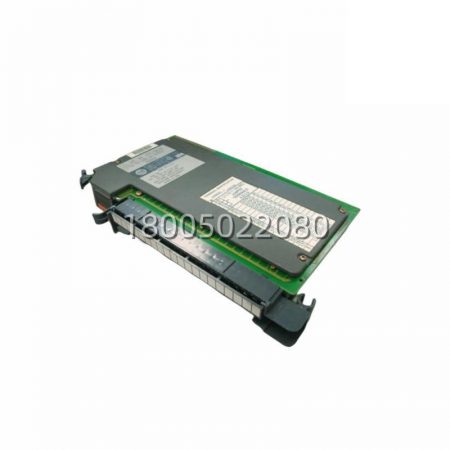
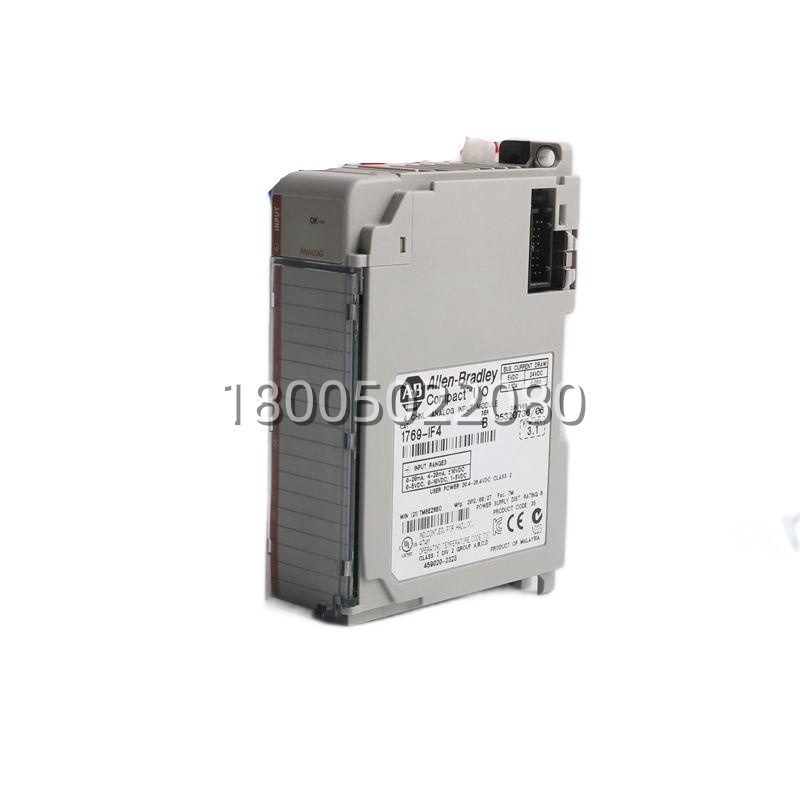
| Product Model | 1771-IFM/A (Series A) |
| Manufacturer | Rockwell Automation (Allen-Bradley) |
| Product Category | PLC-5 / 1771 I/O Analog Input Module |
| Channels | 8 differential (isolated in two groups of 4) |
| Input Types | Voltage (±50mV, ±1V, ±5V, ±10V), Current (0-20mA, 4-20mA), RTD, Thermocouple (B,E,J,K,R,S,T) |
| Resolution | 12-bit (including sign) |
| Accuracy | ±0.1% of full scale (typical @ 25°C) |
| Update Rate | ~50ms per channel (sequential scan) |
| Input Impedance | Voltage: ≥10 MΩ; Current: 250Ω (internal shunt) |
| CMRR | ≥90 dB @ 50/60 Hz |
| Configuration | Physical DIP switches on module (per channel) |
| Backplane Power | 5V DC & 24V DC (from 1771 chassis) |
| Isolation | 1500V transient (channel-to-backplane) |
| Operating Temp. | 0°C to 60°C (32°F to 140°F) |
Technical Principles and Innovative Values:
The 1771-IFM/A was a workhorse of its era, bridging the gap between discrete control and precise process measurement.
- Innovation Point 1: Universal Signal Acceptance. Unlike modern software-configured modules, the 1771-IFM/A uses hardware DIP switches to reconfigure each channel’s gain and signal conditioning. This allows a single module to interface directly with voltage, current, RTD, and thermocouple sensors without external signal conditioners, drastically simplifying the bill of materials for mixed-signal applications.
- Innovation Point 2: High-Immunity Differential Architecture. All 8 channels are true differential inputs with high common-mode rejection (CMRR). This design cancels out noise induced in long cable runs typical of millivolt-level thermocouple signals, making it exceptionally robust for harsh industrial environments like steel mills or chemical plants where ground loops are common.
- Innovation Point 3: Backward-Compatible Mechanical Design. The module utilizes the 1771-WA field wiring arm system. This allows technicians to wire the terminal block separately and then pivot the arm to engage with the module. This “hot-swap” style design (when used with proper procedures) enables module replacement without disconnecting field wiring, a critical feature for minimizing downtime in continuous process industries.

Reviews
There are no reviews yet.