
Technical Specifications
| Parameter Name | Parameter Value |
|---|---|
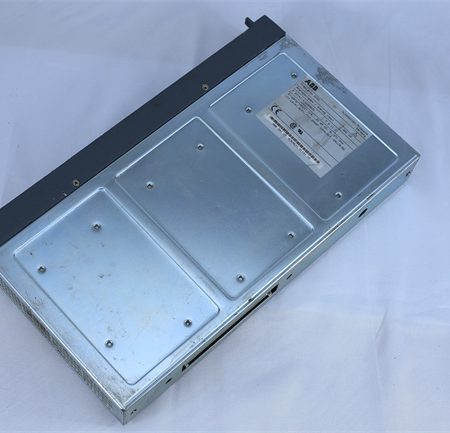
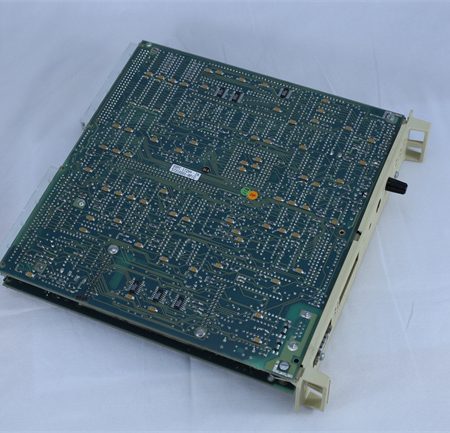
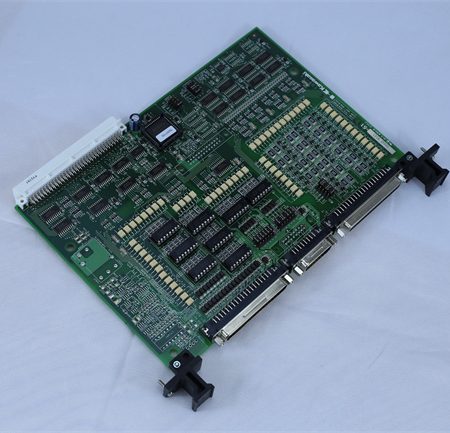
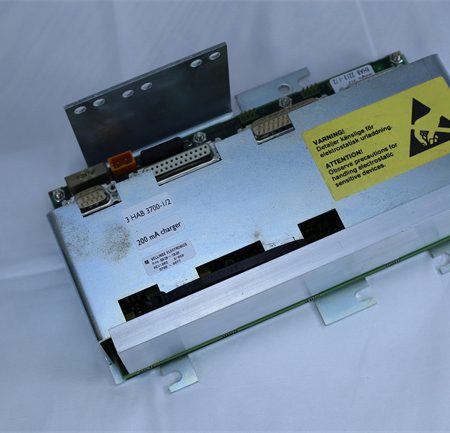
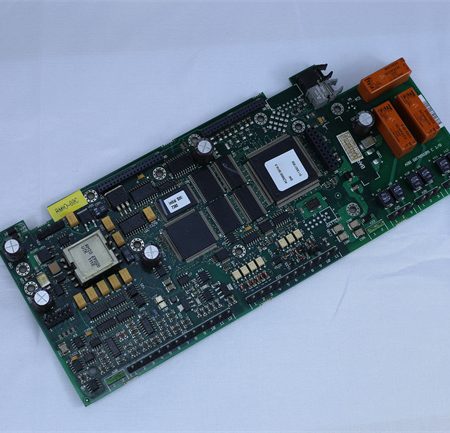
| Product Model | GE 151X1207BB31SA01 |
| Manufacturer | General Electric (GE Vernova / GE Energy) |
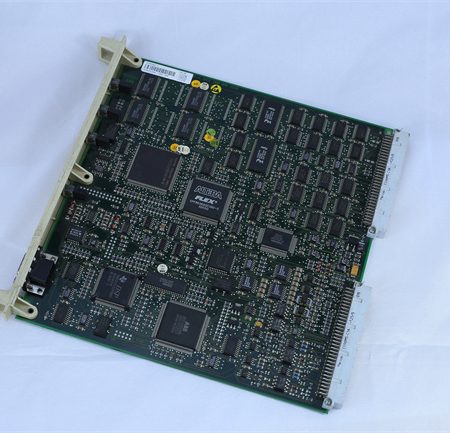
| Product Type | PCB Module — Control and Bus Interface Assembly |
| Functional Designation | EX2100 DSPX / EISB Assembly |
| Compatible System | GE EX2100 and EX2100e Digital Static Excitation Systems |
| Associated Turbine Control | GE Mark VI / Mark VIe platforms |
| Control Architecture | Triple modular redundant — M1, M2 and C control stations |
| Core Functions | Field current and voltage regulation, thyristor firing pulse generation, excitation start/stop, alarm and trip logic, generator parameter processing |
| Bus Interface | ISBus high-speed serial link between DSPX stations and I/O boards (EDCF, EGDM, EMIO family) |
| On-board Memory | Flash for boot programme, RAM for runtime data, NVRAM for historical data |
| System Communication | Ethernet / EGD, Modbus TCP/IP, Modbus RTU, PROFIBUS (system dependent) |
| Exciter Control Power | Nominal 125 V DC (range 80–140 V DC) or 120 V AC ±15%, per EX2100 ratings |
| Operating Temperature | 0 °C to +40 °C, derated at 50 °C (EX2100 control cabinet rating) |
| Storage Temperature | −40 °C to +85 °C (distributor reported) |
| Relative Humidity | 5–95%, non-condensing |
| Protection Class | IP20 — NEMA 1 cabinet, indoor installation |
| Mounting Method | Plug-in rack slot within the EX2100 control cabinet |
| Dimensions / Weight | Not published by GE; distributor figures vary widely |
| Lifecycle Status | Legacy / discontinued — available as new surplus or refurbished spare |
Note: GE does not publish a component-level datasheet for this board. Physical dimensions, weight and logic-level supply voltage quoted by resellers (12 V DC or 24 V DC, 85 × 55 × 10 mm up to 170 × 100 mm) are contradictory and unverified. Confirm against the unit label and the GEH-6632 EX2100 User’s Guide.
Main Features and Advantages
Control execution and redundancy in one assembly: The GE 151X1207BB31SA01 combines the DSPX processing function with the EISB inter-station bus interface, which is why it is central to how the EX2100 achieves fault tolerance. Three independent control stations run the same algorithms on the same data; the EISB link keeps them synchronised so that if the active master faults, the standby station assumes control through automatic tracking rather than a disruptive transfer. For a generating unit, this is the difference between a brief alarm and a turbine trip.Deterministic regulation performance: Excitation is a fast, high-consequence control loop. The GE 151X1207BB31SA01 executes the regulator algorithms and generates the thyristor firing pulses that set field current, which in turn governs generator terminal voltage, reactive power output and grid support during faults. Because the board carries flash memory for the boot programme, RAM for runtime execution and NVRAM for historical records, it also preserves the operating history that engineers need when reconstructing a trip event after the fact.High-speed, noise-immune communication: Excitation cabinets combine high-power switching devices, heavy DC currents and sensitive electronics in the same enclosure, which is an unusually hostile environment for signal transmission. The ISBus interface on the GE 151X1207BB31SA01 is engineered for exactly this, providing deterministic, synchronised data exchange between the control stations and the distributed I/O boards so that all three stations see identical process values at the same instant.Designed for maintainability: The EX2100 platform was built around modular, rack-mounted boards that can be replaced at board level rather than requiring whole-cabinet exchange, and online repair was an explicit design goal of the EX2100e programme. Keeping one tested GE 151X1207BB31SA01 on the shelf converts what would otherwise be a forced outage into a controlled maintenance task during a planned window.
Application Field
The GE 151X1207BB31SA01 is deployed wherever a synchronous generator is regulated by a GE EX2100 or EX2100e static excitation system. Its dominant application is power generation: coal, gas, nuclear and hydro units whose exciters must hold terminal voltage within tight limits, respond to grid disturbances in milliseconds, and supply the reactive support that keeps the network stable. GE has installed thousands of static excitation systems across more than seventy countries, and a large share of that installed base still relies on this control architecture.Within a generating unit, the GE 151X1207BB31SA01 supports the functions that determine whether the machine can synchronise, export power and ride through faults: automatic voltage regulation, field current regulation, power system stabiliser action, and the limiting functions that protect the generator from under-excitation, over-excitation and excessive volts per hertz. It also underpins the alarm and trip logic that removes excitation safely when a fault is detected.The board is equally relevant in industrial and cogeneration facilities using large synchronous machines, including compressor and pump drives, where excitation stability governs process continuity rather than grid export.In practice, most purchases of the GE 151X1207BB31SA01 are driven by three situations: a board that has failed and needs immediate replacement to return a unit to service, a planned outage where ageing control hardware is being proactively renewed, and a spares-holding programme for plants that cannot accept the lead time of a factory order on a discontinued part. In each case the objective is the same — extend the service life of an exciter that is otherwise performing well, without the capital cost and outage duration of a full excitation system replacement.
Related Products
GE 151X1207BB01SA01 — The base part number in the same 151X1207BB board family for the EX2100 excitation system; the closest numbering relative and the usual cross-reference when confirming variant compatibility.GE 151X1207BC02SA01 — Described in trade listings as the PS rack / redundant ground detect assembly; a companion board in the same EX2100 rack dealing with power supply and ground detection functions.GE 151X1207CK02SA02 — The 77 mm de-excitation module for the EX2100 system, responsible for safely dissipating field energy when the exciter is tripped; a functionally distinct power-side board in the same parts family.GE 151X1207DC22SA05 — The 77 mm phase snubber assembly, protecting the power conversion stage from switching transients; part of the power-side hardware set that the GE 151X1207BB31SA01 controls.GE 151X1207DC13SA21 — The EX2100e regulator Power Conversion Module (PCM), the IGBT-based inverter assembly that actually supplies field current under command from the control boards.GE 151X1207DG06SA01 — The EX2100 blower module assembly, providing forced-air cooling for the SCR power cabinet; essential thermal support hardware in the same system family.GE IS200EBKPG1BAA — The Mark VI exciter backplane board; frequently listed alongside 151X1207BB-series parts and the physical platform into which control boards plug.GE IS200EACFG1A — Exciter AC feedback board within the EX2100 I/O set, feeding measured excitation transformer quantities back to the control stations.GE 151X1207BB55SA01 — Another 151X1207BB variant, listed as a Mark VIe Series 90-70 high-speed serial communication module; illustrates why the BB suffix alone cannot identify a board’s function and the full part number must always be verified.

Reviews
There are no reviews yet.