
Application Scenarios
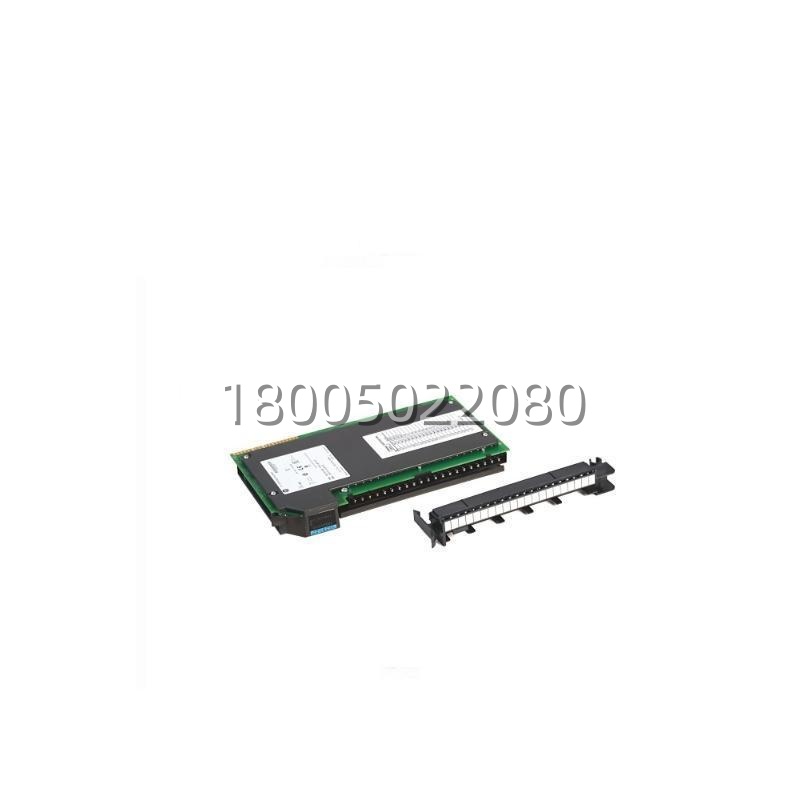
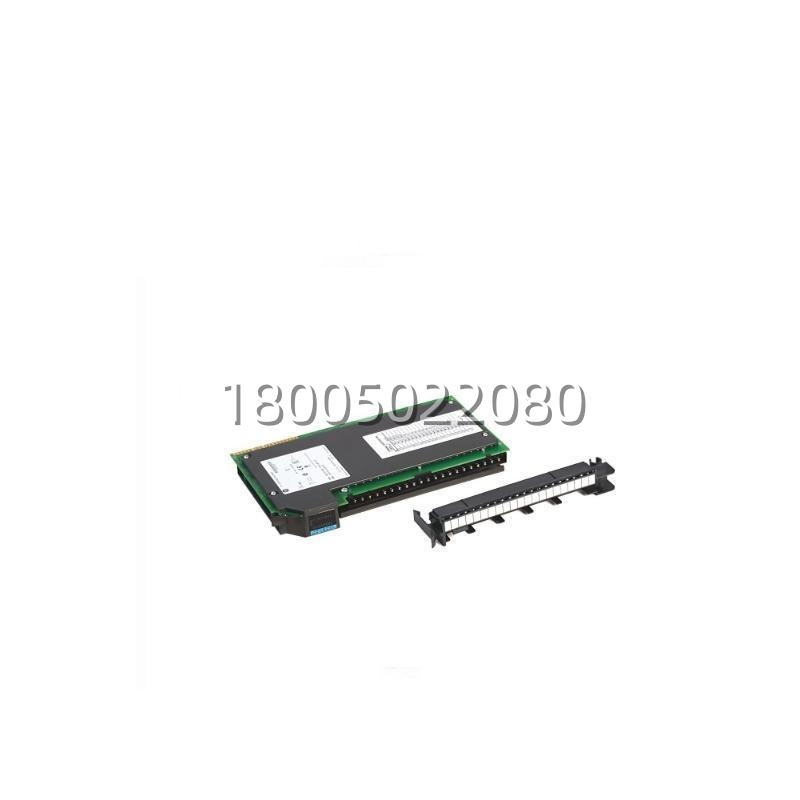
At a municipal wastewater lift-station complex that still runs a 1785-L40C15 PLC-5/40 on a 1771-A1B 12-slot chassis (installed 1999, never worth the CAPEX to rip-and-replace), the influent bar-screen controls rely on six 1771-IBDK modules across two remote 1771 racks hung on the wet-well catwalk. Each module handles 16 24V DC PNP proximity sensors: four on the rake-position cams, six on the wash-water solenoid feedback, and six on the pit-gate limit switches. The “D” feature—per-point LEDs—saved a Friday-night callout when a rake stalled: the operator walked the catwalk, saw input 07 dark while the sensor was physically made, and traced it to a chewed squirrel-cage lead from a rodent nest, all without a laptop or meter. The “K” keying prevented a junior tech three years back from accidentally sliding a 1771-IAD (120V AC input) into the same slot during a panic swap—the keying bands didn’t align, and the error was caught before backplane power-up. For a plant still budgeting MRO instead of migration, the 1771-IBDK is the difference between a 20-minute fix and a fried module.
Parameter
| Main Parameters | Value/Description |
|---|---|
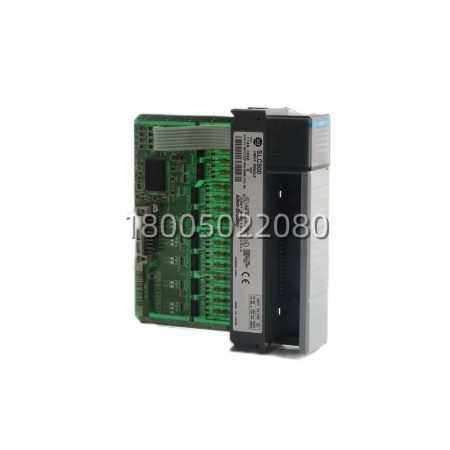
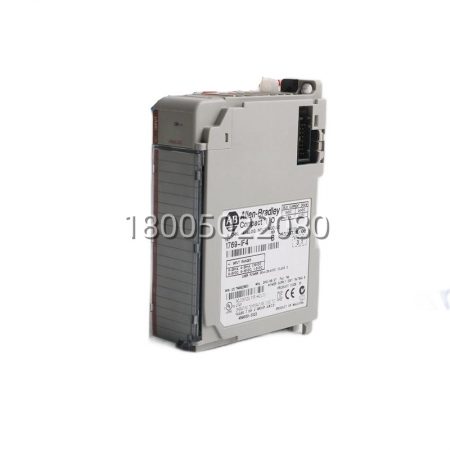
| Product Model | 1771-IBDK |
| Manufacturer | Allen-Bradley / Rockwell Automation |
| Product Category | PLC-5 DC Input Module (1771 B-Series) |
| Inputs | 16 × 10–30V DC, 2 groups × 8 pts, sinking or sourcing (common-user-defined) |
| Nominal Field Voltage | 24V DC (range 10–30V DC) |
| Input Current | ~7 mA @ 24V DC per point (typical) |
| Response Time | OFF → ON: 8 ms max; ON → OFF: 8 ms max |
| Backplane Current Draw | 280 mA @ 5V DC (module logic); 0 mA @ 24V backplane |
| Isolation | 1500V AC ch-to-backplane, 500V AC ch-to-ch (group) |
| Indicators | Per-point LED (D-feature) + module OK; backplane keying bands (K-feature) |
| Termination | Via 1771-WH wire handler or 1771-TA/TB/TC terminal cable (not direct screw term) |
| Operating Temp / Rating | 0–60 °C, IP20 (chassis dependent), cULus, CE |
Technical Principles and Innovative Values
- Innovation Point 1: User-Selectable Sinking or Sourcing per Group. The 1771-IBDK doesn’t lock you into one wiring polarity. Each 8-point group has its own common (CA1/CA2). Tie CA to +24V and the input sinks (PNP sensor); tie CA to 0V and it sources (NPN sensor). That flexibility means one spare SKU covers both PNP-dominant Euro panels and NPN-dominant Asian-sourced machine tools—critical for MRO inventories supporting mixed-vintage lines.
- Innovation Point 2: “D” + “K” Feature Set on a PLC-5 Brick. The base 1771-IB has no per-point LEDs and no keying. The 1771-IBDK adds both: per-point LEDs let technicians see “sensor made / not made” from the catwalk without RSLogix; the physical keying bands on the module edge engage with the 1771 chassis slot keys, preventing a 120V AC or analog module from being forced into a DC slot (which would backfeed 120V onto 24V field circuits). On a legacy site where multiple electricians rotate through, that “K” feature pays for itself the first time someone grabs the wrong spare.
- Innovation Point 3: Optical Isolation + 8 ms Debounce Tuned for Industrial Noise. Each input channel uses an optocoupler referenced to its group common, with 1500V AC isolation to backplane. The 8 ms ON/OFF response is deliberately slower than the raw opto could manage—this is a debounce filter baked into the front-end to reject contact bounce from mechanical float switches and EMI spikes from VFD-adjacent wiring. In a PLC-5 scan that’s typically 10–50 ms anyway, the 8 ms doesn’t hurt; in a noisy MCC room it saves ghost-input headaches.
Application Cases and Industry Value
Case 1 – Steel-Coil Slitter Line (Heavy Industrials). A service center running a 1785-L80B PLC-5/80 on a 1771-A4B 4-slot local + 1771-ACNR15 ControlNet remote arms used 1771-IBDK modules on the slitter carriage: 16 inputs per module reading 24V DC Inductive prox on the knife-gap screw, the coil-car turnstile, and the scrap-conveyor zero-speed. The mill environment has 480V VFDs 6 feet away; the optical isolation and 8 ms filter kept ghost triggers below 1 per shift. When Rockwell sunset PLC-5 (end-of-life 2020), the plant chose a “stay-and-maintain” path—they bought 20 1771-IBDK spares (tested, static-bagged) to carry the line another 8–10 years. Their maintenance superintendent’s rationale: “A ControlLogix migration is $180K with downtime. These 1771-IBDK spares are $180 each. Do the math.”Case 2 – Grain Elevator Override Panel (Ag). A 12-bin elevator used the 1771-IBDK in a NEMA 4X 1771 rack on the loader catwalk, 16 dry-contact inputs per module from bin-high/low reed switches (intrinsically safe barrier on the 24V side). The per-point LEDs let the operator confirm “bin 4 high” without climbing down to the MCC. The “K” keying mattered because the same rack also hosted 1771-OAD (120V AC output) for bin-auger contactors—mixing those up would have backfed 120V into the 24V reed loops. The integrator noted zero module-misinsertion errors across 14 years and two ownership changes.
Related Product Combination Solutions
- 1771-IB – Base 16-pt 10–30V DC input, no per-point LED, no keying; the stripped-down sibling of the 1771-IBDK, cheaper for non-diagnostic-critical slots.
- 1771-IBD – 16-pt 10–30V DC with per-point LEDs (“D”) but without the “K” keying bands; often stocked alongside 1771-IBDK where chassis keying isn’t configured.
- 1771-IAD – 16-pt 120V AC input, same 1771 footprint; commonly in the same rack as 1771-IBDK for mixed AC/DC panels.
- 1785-L40C15 / 1785-L80B – PLC-5 processors the 1771-IBDK was designed to serve; 1785-L40C15 = 4K I/O, 1785-L80B = 8K I/O.
- 1771-ACNR15 – ControlNet adapter allowing 1771-IBDK to live in a remote 1771 rack (up to 5 km from the Logix/CtrlNet head) instead of local to the PLC-5.
- 1771-ASB – Remote I/O (RIO) adapter for the same remote-1771 use case if the backbone is blue-hose RIO instead of ControlNet.
- 1771-WH – Wire handler (ribbon-to-screw terminal) that terminates the 1771-IBDK flat-cable header into field wiring; every 1771 install needs one per module.
Reviews
There are no reviews yet.