

Application Scenarios:
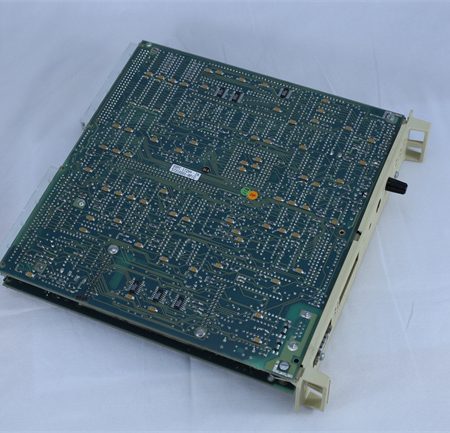
In a military mobile command post vehicle, the computing system must process real-time sensor data, handle communications, and run tactical displays, all while withstanding extreme shock, vibration, and temperature fluctuations. The Motorola VMIVME-7750 is deployed as the main system controller in a rugged VME chassis. Its 68040 CPU delivers the necessary processing power, while its on-board SCSI interface connects to high-speed storage for mission data logs. The Ethernet port links to tactical networks, and its robust VMEbus interface allows it to command a suite of specialized I/O cards for radio, GPS, and display control. The VMIVME-7750’s key value lies in its deterministic performance, extended temperature range capability, and proven reliability in harsh environments, ensuring the command system remains operational under conditions that would fail commercial-grade hardware.
Technical Principles and Innovative Values:
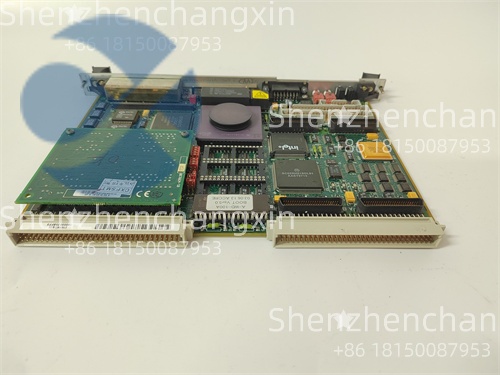
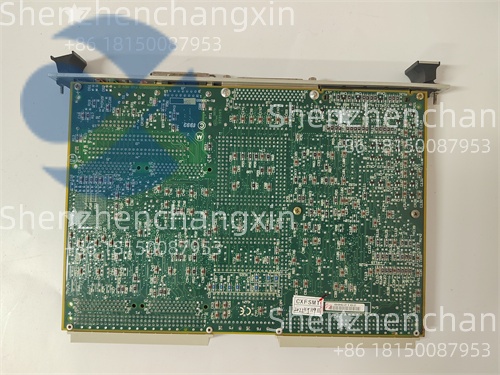
Innovation Point 1: Highly Integrated 68K Platform for Harsh Environments. The Motorola VMIVME-7750 consolidated the full capabilities of a workstation-class 68040 CPU, memory, and critical I/O onto a single, rugged 6U VME card. This integration was designed for reliability and simplicity in embedded systems, reducing the slot count and interconnection complexity compared to multi-board solutions, which is critical for size, weight, and power (SWaP) constrained mobile or airborne platforms.
Innovation Point 2: Robust VMEbus System Controller Functionality. The board was often deployed as the VME system controller, managing critical backplane functions like arbitration, clock generation, and system reset. This design allowed the VMIVME-7750 to be the central master in a multi-processor VME system, coordinating data flow between itself and various specialized I/O, communication, and DSP slave boards, forming a cohesive, high-performance compute cluster.
Innovation Point 3: Emphasis on Deterministic Performance and Reliability. Unlike commercial PCs, the VMIVME-7750 was engineered for deterministic real-time response and long-term availability in critical systems. Its architecture, component selection, and support for real-time operating systems (like VxWorks, pSOS, LynxOS) made it predictable and reliable. The inclusion of battery-backed SRAM for critical data and a robust mechanical design underscored its suitability for 24/7 mission-critical applications.
Application Cases and Industry Value:
A rail transit authority used a VME-based system for centralized train control and diagnostics across a subway line. The core computer, a Motorola VMIVME-7750. processed real-time track signaling data, managed communications with trains, and logged system events. After 15 years of continuous service, the original VMIVME-7750 boards remained operational, but the agency needed to perform lifecycle management. Sourcing compatible, tested VMIVME-7750 boards allowed for a like-for-like replacement during scheduled maintenance windows without requiring a costly and risky overhaul of the entire control system software. The direct replacement ensured system stability, preserved the massive investment in custom application software, and extended the system’s life for another decade. This case highlights the VMIVME-7750’s value in providing a stable, long-lifecycle hardware platform for infrastructure that cannot afford frequent technological obsolescence.
Related Product Combination Solutions:
VMIVME-7455: Another Motorola VME SBC, often based on the 68060 or ColdFire processor, serving as a potential performance upgrade or successor path from the VMIVME-7750.
VMIVME-5565: A reflective memory board (e.g., SCRAMNet). Used in conjunction with the VMIVME-7750 to create low-latency, shared-memory networks between multiple computers for real-time data sharing in simulator or distributed control applications.
VMIVME-4120 / VMIVME-4150: Popular Motorola VME I/O boards (digital and analog). These would be used in the same VME chassis as the VMIVME-7750 to interface with sensors, relays, and actuators in an industrial control system.
6U VME Card Cage/Chassis: The physical enclosure and backplane that houses the VMIVME-7750 and other VME cards, providing power, cooling, and the bus interconnect.
VME Power Supply: A specialized, high-reliability power supply unit designed for the VME card cage, providing the required voltages (+5V, +/-12V) to the VMIVME-7750 and other modules.
IndustryPack (IP) Modules: The VMIVME-7750 featured an IndustryPack site. IP mezzanine modules (like additional serial, analog, or digital I/O) could be added to customize the board’s I/O capabilities for specific applications.
Real-Time Operating System (RTOS): Software like VxWorks or QNX, which were commonly ported to the VMIVME-7750 to manage its resources and execute deterministic control algorithms.
Installation, Maintenance, and Full-Cycle Support:
Installation of the Motorola VMIVME-7750 requires expertise in VME systems. The board must be securely inserted into a free slot in a powered-down VME card cage, ensuring proper alignment with the J1 and P1 backplane connectors. Cables for Ethernet, SCSI, and serial ports are then connected. System configuration often involves setting DIP switches or jumpers on the board for parameters like the VME system controller role and base address, followed by loading the RTOS and application software via a diagnostic serial port or network connection.
Maintenance in operational systems is minimal due to the board’s high reliability. Common procedures include monitoring the system’s environmental logs and ensuring the battery for the SRAM and real-time clock is replaced proactively every 5-7 years to prevent data loss. Fault diagnosis typically relies on the board’s status LEDs, diagnostic software, and swap-out strategies with a known-good spare. Given the age of this platform, obtaining guaranteed functional and tested VMIVME-7750 boards is a critical aspect of lifecycle support. We specialize in providing such legacy components, along with technical guidance on integration, compatibility with newer VME cards, and firmware support to ensure the continued operation of your critical embedded system.
Secure the legacy components that keep your critical systems running. Contact us for guaranteed Motorola VME boards and expert lifecycle support.
Reviews
There are no reviews yet.