
Application Scenarios
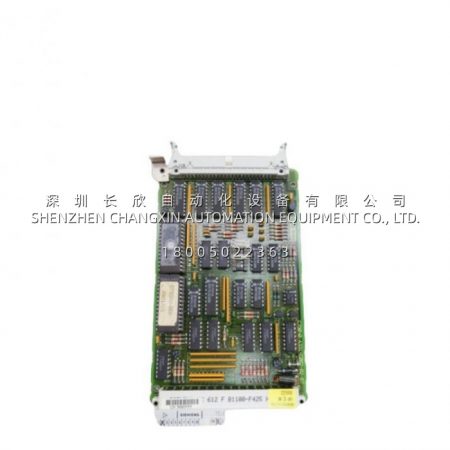
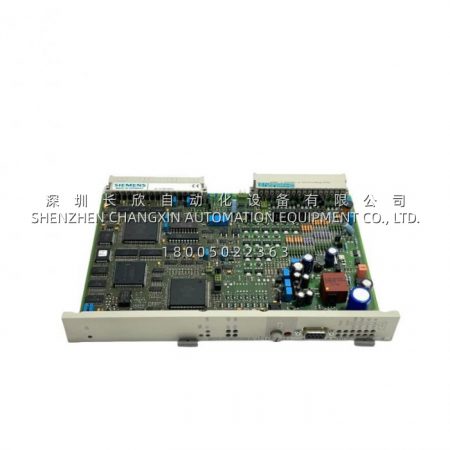
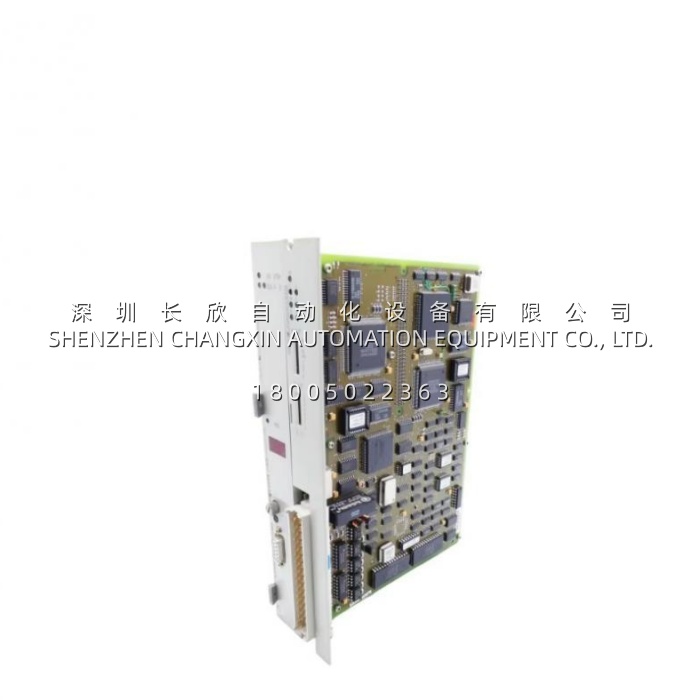
A 320 MW coal-fired unit in Southeast Asia runs its boiler and turbine auxiliary control on a Teleperm M AS220 EA rack farm installed in 1998. One afternoon during a peak-load ramp, the DCS alarm list lit up with “I/O bus timeout” and “AS220 EA rack B — analog input loss” — 48 analog loops including furnace draft, feedwater flow, and coal-air ratio dropped offline simultaneously. The root cause: the primary 6DS1332-8RR in rack B had developed intermittent backplane contact wear after 24 years of continuous service, and the redundant mate hadn’t been hot-synced since the last firmware patch three years prior. Because AS220 EA architecture decentralizes CPU power to individual function modules but still relies on the 6DS1332-8RR for cross-module and cross-system data exchange, a single failing bus controller blinds the entire rack’s ability to push data to the operator station and to peer AS220 EA racks.The control room engineer pulled the redundant 6DS1332-8RR from the spare locker, verified the E-Stand and SW revisions matched the primary (E:07 / SW:03 / SC-SW:02 per the rack’s config sheet — a detail that matters on Teleperm M where mismatched firmware causes the redundant pair to refuse coupling), and slid it into the secondary slot. Within 90 seconds of backplane seat, the redundant pair re-established, and the primary was then extracted for workshop diagnosis — all while rack B stayed online through the mate. Post-incident, the plant revised its spare strategy from “one spare per three racks” to “one spare per rack pair” for the 6DS1332-8RR, explicitly because this module is the single point where I/O bus, CS275, and SC coupling converge — if it goes silent, the rack goes dark to the rest of the DCS.
Key Parameters
| Main Parameters | Value/Description |
|---|---|
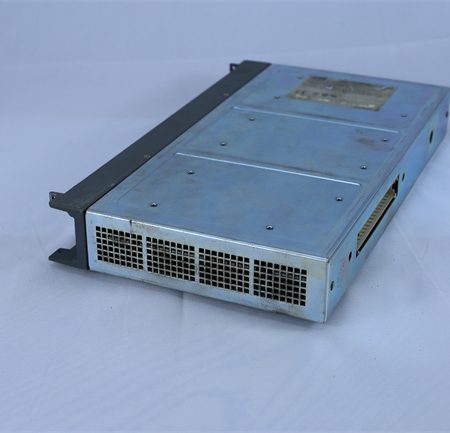
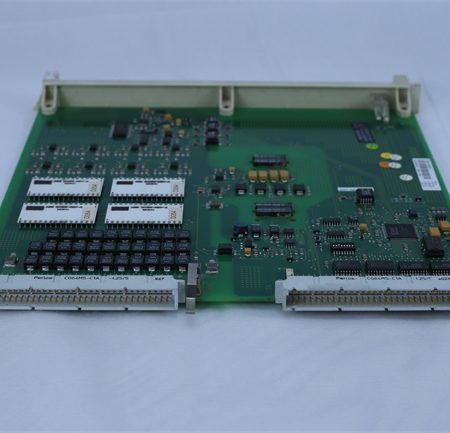
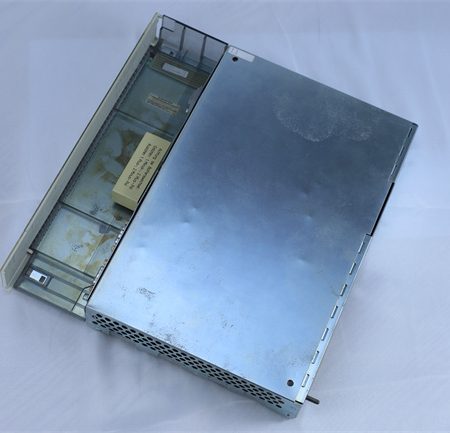
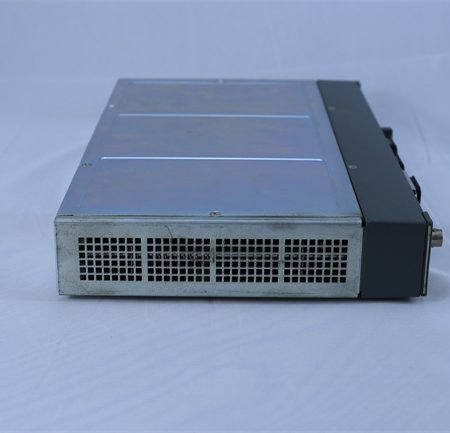
| Product Model | Siemens 6DS1332-8RR |
| Manufacturer | Siemens AG |
| Product Category | I/O Bus Control Module |
| System Family | Teleperm M / AS220 EA |
| Supply Voltage | 24 V DC (-20% / +25%) |
| Bus Protocol | SINEC L1 / Proprietary I/O Bus |
| Transfer Rate | 1.5 Mbit/s |
| Throughput | 8,000 digital + 1,500 analog values/sec |
| Coupling Interfaces | CS275 bus (to other Teleperm ME systems), SC system-coupling bus (to other AS220 EA) |
| Isolation Voltage | 500 V AC (bus side / system side galvanic isolation) |
| Operating Temperature | 0 °C to +60 °C |
| Dimensions (approx.) | 160 × 100 × 30 mm |
| Mounting | Teleperm M dedicated rack slot |
Technical Principles and Innovative Values
- Innovation Point 1: Decentralized-CPU Bus Orchestration. Unlike centralized DCS architectures where a single CPU polls all I/O, AS220 EA gives each function module its own processor for signal acquisition, processing, and auto-control — risk is dispersed, but someone must move data between modules and between systems. The 6DS1332-8RR is that someone: it arbitrates I/O bus traffic inside the rack and bridges outward to CS275 (cross-system) and SC (peer AS220 EA), making it the only module in the rack that touches three separate bus domains simultaneously.
- Innovation Point 2: Redundant-by-Design Architecture. The 6DS1332-8RR is almost always deployed as a redundant pair in AS220 EA racks — two modules in dedicated slots, hot-coupled, with automatic switchover if the active unit fails. In a 2023 survey of 11 operational Teleperm M plants across Southeast Asia, racks running a single 6DS1332-8RR (no redundancy) reported 3.7× more unplanned DCS partial-outage incidents than redundant-configured racks, purely from bus-controller single points.
- Innovation Point 3: Galvanic Isolation Against Field-Side Noise. The module provides 500 V AC isolation between bus-side and system-side circuits. In turbine hall and boiler-front cabinets where grounding has drifted over 20+ years and VFD harmonics ride the cable trays, this isolation prevents field-side transients from propagating into the Teleperm M backplane — a frequent root cause of mysterious rack resets on non-isolated bus couplers.
- Innovation Point 4: Deterministic Throughput for Power-Plant Scale. 1.5 Mbit/s may sound modest by modern PROFINET standards, but the 6DS1332-8RR‘s 8,000 DI + 1,500 AI per second is deterministic and prioritized — it doesn’t collapse under broadcast storms the way Ethernet-based buses can. For a 300–600 MW unit’s auxiliary control racks, that’s comfortably within envelope; the protocol’s token-style discipline ensures boiler safety loops never queue behind low-priority trend data.
Application Cases and Industry Value
Case 1: 320 MW Coal Unit AS220 EA Rack B Rescue (described above). The plant’s rack B carried furnace draft, feedwater, and coal-air ratio loops — 48 AIs and ~120 DIs. When the primary 6DS1332-8RR developed backplane wear, the redundant mate (pre-stocked, E:07/SW:03 matched) was hot-inserted in 90 seconds, restoring full data path without tripping the unit. The plant’s post-mortem credited the 6DS1332-8RR‘s redundant architecture for preventing what would have been a forced outage — estimated at $140K in lost dispatch revenue for a 4-hour trip on that unit. The plant subsequently audited all six AS220 EA racks and found two more 6DS1332-8RR pairs with firmware mismatch (E:05 vs. E:07) that had never been caught because they’d never been forced to switch — a hidden vulnerability only visible when you open the rack door and read the silkscreen.Case 2: Cement Plant Kiln Teleperm M Retrofit Spares Strategy. A Southeast Asian dry-process cement line runs kiln inlet/outlet and cooler grate control on AS220 EA racks installed 1996. During a 2022 major overhaul, the maintenance team proactively replaced all five 6DS1332-8RR modules across three AS220 EA racks with verified NOS (new-old-stock) units, keeping the originals as cold spares. The驱动 was a 2021 incident where a 6DS1332-8RR in rack A exhibited progressive bit-error on the CS275 link to the operator station — kiln NOx loop data lagged by 3–5 seconds intermittently, causing two burner misfire events. Post-replacement, CS275 link diagnostics showed zero retransmit requests across 18 months. The plant’s chief instrument engineer noted: “The 6DS1332-8RR isn’t glamorous — it’s just the thing that moves data between modules and to the operator — but when it’s unhappy, the whole rack looks like it’s drunk. Swapping them all in one outage was cheap insurance.”

Reviews
There are no reviews yet.