
Application Scenarios:
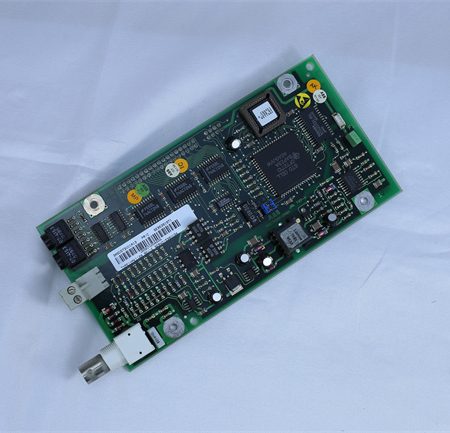
A 220 MW combined-cycle block in Southern Europe still runs its HRSG drum-level, superheater-attemperator temperature, and condenser-vacuum loops on three Teleperm M AS260 racks commissioned in 1996. Two years ago, the Siemens 6DS1701-8AA in Rack B Channel 3 began drifting +1.8 mA on the #2 superheat-temperature transmitter — the drift propagated silently into the attemperator spray PID, overspraying the superheater and dropping steam temperature 18°C before the operator caught it. Root cause: aged input-stage op-amps on a 27-year-old Siemens 6DS1701-8AA whose wire-break detection still fired correctly (loop stayed closed), so no alarm surfaced until the PID error stacked up. After that event, the plant instituted a “channel-pair swap” policy: whenever any AI channel on a Siemens 6DS1701-8AA shows >0.5 mA offset during quarterly calibration drift-checks, the entire module is replaced preemptively — a 20-minute job including terminal re-termination and loop checkout. For plants still running Teleperm M on boiler, turbine aux, or batch-reactor duties, the Siemens 6DS1701-8AA is the single I/O module most likely to mask a slow failure as “process upset” unless you’re watching calibration drift closely.
Parameter:
| Main Parameters | Value/Description |
|---|---|
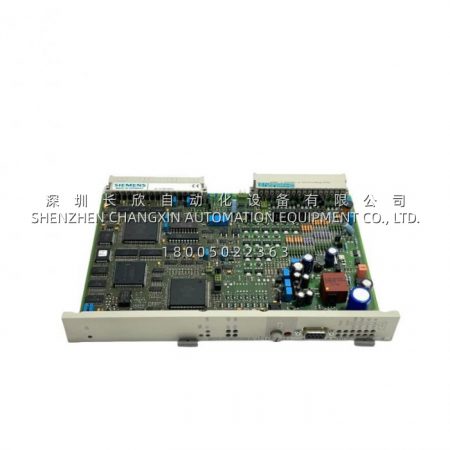
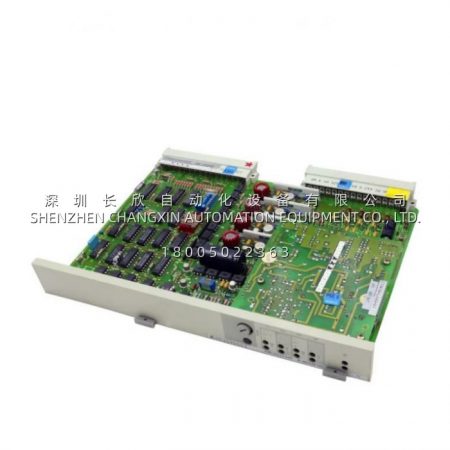
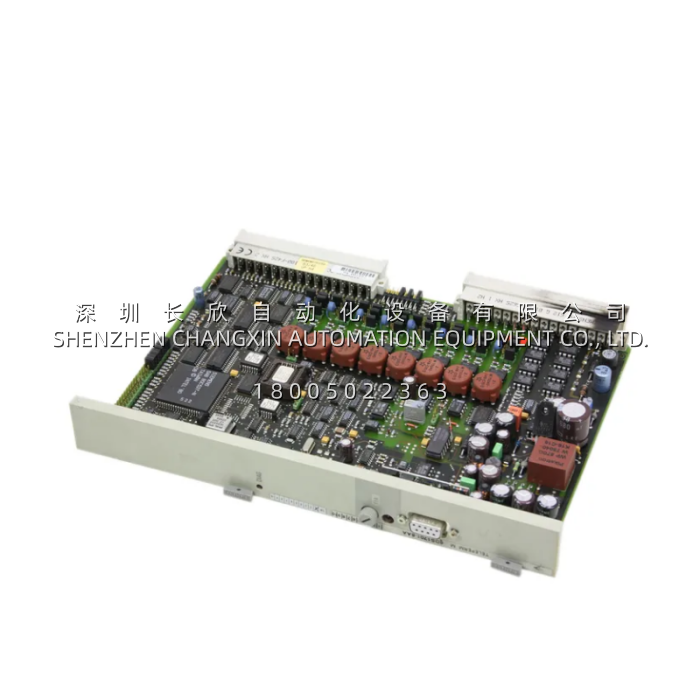
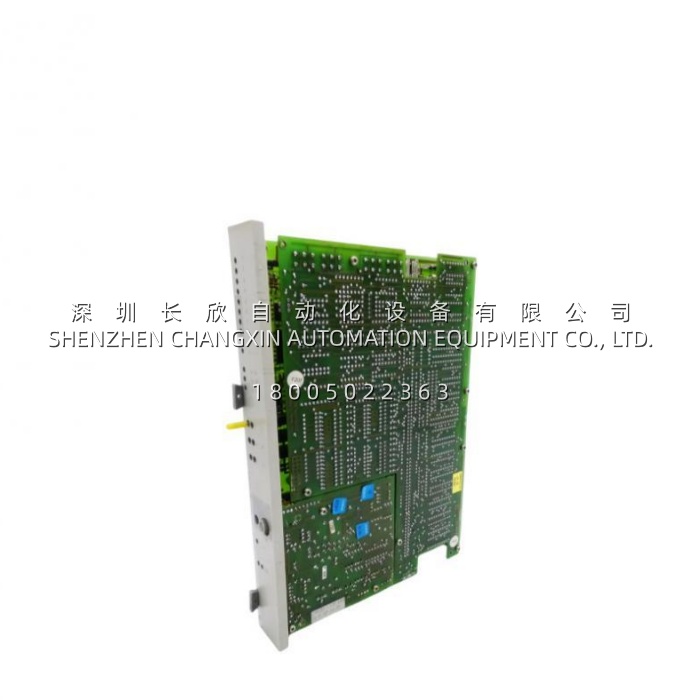
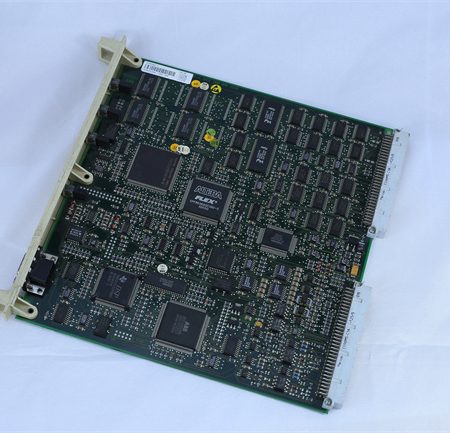
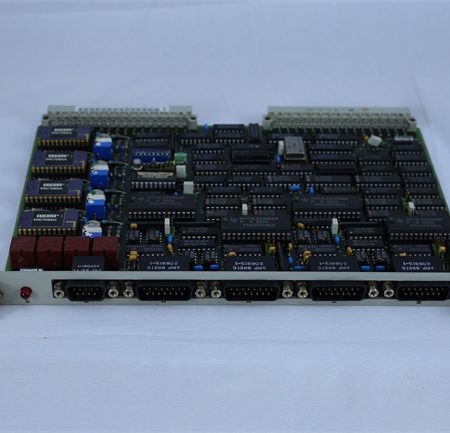
| Product Model | Siemens 6DS1701-8AA |
| Manufacturer | Siemens AG (Teleperm M family) |
| Product Category | Analog Input Module (8-channel, with transmitter supply) |
| Compatible Racks | Teleperm M AS220 / AS260 subracks |
| Number of Channels | 8 (independent, galvanically isolated) |
| Resolution | 12 bit + sign (~0.025% of span for 4–20 mA) |
| Input Signal | 4–20 mA (2-wire transmitter direct-connect; 0–20 mA configurable) |
| Transmitter Supply | 24 V DC per channel, integrated (no external conditioner needed) |
| HART Capability | HART transmitters connectable (passive bus coupling via module) |
| Isolation Rating | Channel/channel & channel/ground, 2.5 kV test voltage |
| Conversion Time | ~10–50 ms per channel (configurable scan) |
| Load / Loop Resistance | Up to ~600 Ω (typical 4–20 mA field loop) |
| Wire-Break & Short Detection | Supported (open-circuit monitor + electronic current limit) |
| System Bus | Teleperm M SINEC L1 (backplane) |
| Supply Voltage | 24 V DC from rack backplane (12–24 V operating window) |
| Operating Temperature | 0 °C to +60 °C |
| Storage Temperature | -25 °C to +70 °C |
| Mounting | Plug-in subrack (keyed Eurocard guides) |
| Ingress Protection | IP20 (cabinet) |
| Certifications | CE, UL, CSA |
Technical Principles and Innovative Values:
- Innovation Point 1: Integrated 24 V transmitter supply per channel. The Siemens 6DS1701-8AA eliminates the nest of external marshalling-barrier power supplies that most 1990s-era AI racks required — each of the 8 channels sources 24 V for its 2-wire 4–20 mA transmitter directly from the module, cutting cabinet footprint and wiring points by ~30% versus discrete-conditioner architectures.
- Innovation Point 2: Galvanic channel-to-channel isolation (2.5 kV). In power-plant ground-loop environments, the Siemens 6DS1701-8AA keeps a shorted or lightning-struck transmitter on Channel 5 from propagating onto Channels 1–4 or back into the SINEC L1 backplane — a design that has prevented countless “one-transmitter-takes-down-the-rack” cascades in 25+ year service histories.
- Innovation Point 3: HART-passive without extra hardware. The Siemens 6DS1701-8AA allows HART-enabled smart transmitters to be landed directly; the 4–20 mA analog path feeds the Teleperm M PID while the HART digital overlay can be tapped at the marshalling layer — letting plants keep analog control on legacy DCS while adding asset-management diagnostics through the same pair.
- Innovation Point 4: Wire-break + short detection baked into silicon. The Siemens 6DS1701-8AA monitors loop continuity and overcurrent per channel; on open-circuit it drives a diagnostic telegram to the AS/OS layer so operators see “wire break Ch3” instead of a frozen 3.8 mA that slowly drifts a PID — the exact failure mode that triggered the superheat overspray story above.
Application Cases and Industry Value:
A German municipal waste-incineration plant runs Teleperm M AS220 racks for grate-air differential, secondary-air damper position feedback, and furnace-pressure PID. The furnace-pressure loop lands on a Siemens 6DS1701-8AA Channel 7 (4–20 mA from a draft transmitter 80 m away across the boiler deck). During a 2022 turnaround, the I&C team found Channel 7 reading 2.1 mA low compared to a portable calibrator — traced to drift in the input-stage reference on a 26-year-old Siemens 6DS1701-8AA. Swap took 22 minutes: power down rack, extract module, reseat new Siemens 6DS1701-8AA, re-terminate the 8 pair screws, loop-check all 8 channels with a milliamp source. Post-swap, furnace-pressure PID variance dropped from ±18 Pa to ±6 Pa — the drift had been “invisible” for 11 months because the loop never opened (wire-break didn’t fire). Plant I&C lead noted: “On a 1990s AI module, the danger isn’t the dead channel — it’s the half-dead one that still looks plausible to the PID.”A Central European batch-pharma facility running Teleperm M for reactor-jacket temperature (PT100 multiplexed into 4–20 mA transmitters landed on Siemens 6DS1701-8AA channels) adopted a “5-year forced refresh” on all 6DS170x analog modules across six AS260 racks. Over two refresh cycles they replaced 14 Siemens 6DS1701-8AA units preemptively; post-teardown analysis on the pulled modules showed 9 had electrolytic drift on the 24 V transmitter-supply rails — exactly the fault that would have manifested as a slow temperature-offset excursion during a GMP batch. The €42k spent on preemptive Siemens 6DS1701-8AA spares vs. the €380k cost of a single scrapped batch + revalidation made the sparing case internally uncontroversial.

Reviews
There are no reviews yet.