
Technical Specifications
| Parameter Name | Parameter Value |
|---|---|
| Product Model | 900C51-0021 |
| Manufacturer | Honeywell |
| Product Type | CPU Controller Unit for Hybrid Process Controller |
| Controller Series | HC900 (C50/C70 Platform) |
| Processor | 32-bit RISC Processor |
| Non-Volatile Memory (for project storage) | 512 KB Flash |
| Volatile Memory (for runtime) | 512 KB SRAM |
| Integrated Display | Backlit 4-line x 20-character LCD |
| Integrated User Interface | 20-button tactile keypad |
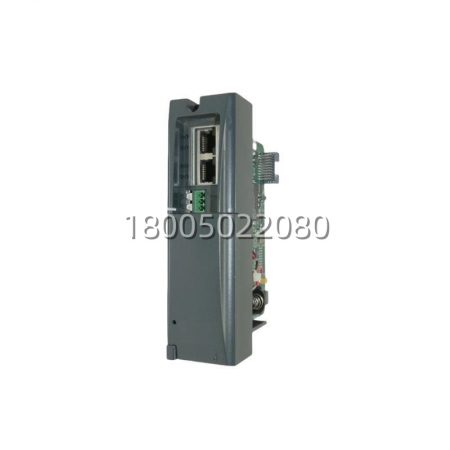
| Communication Ports | 1 x RS-232/485 configurable port (COM1), 1 x RS-485 port (COM2), 1 x Ethernet 10/100 Mbps port |
| Supported Protocols | Modbus RTU (slave/master), Modbus TCP/IP, Honeywell proprietary protocol |
| I/O Expansion Capability | Supports up to 31 I/O modules via the integrated C-Net (Controller Network) backplane |
| Operating Temperature | 0°C to 60°C (32°F to 140°F) |
| Power Supply Requirement | 24V DC (typically supplied via the system base or external source) |
| Relative Humidity | 5% to 95% non-condensing |
Main Features and Advantages
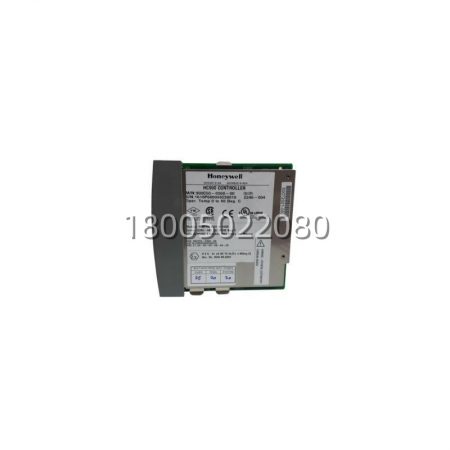
The Honeywell HC900 900C51-0021 distinguishes itself through a combination of power, simplicity, and connectivity. Its 32-bit RISC processor provides ample performance for executing complex control strategies involving dozens of loops and hundreds of function blocks with fast deterministic scan times. This ensures responsive and stable control of critical processes. A key advantage is its integrated local operator interface. The built-in LCD and keypad allow for on-the-spot configuration, real-time monitoring of process variables, tuning of PID loops, and alarm acknowledgment without needing an external HMI, which is invaluable for commissioning, troubleshooting, and standalone operation.Communication flexibility is a major strength. The controller comes standard with a tri-port communication suite: two serial ports for connecting to legacy devices, drives, or other controllers via Modbus, and a built-in Ethernet port for high-speed integration into modern plant networks and supervisory systems. This makes the 900C51-0021 a perfect data concentrator and gateway. Ease of configuration is paramount. It is programmed using Honeywell’s intuitive HC Designer software, which employs a familiar function block diagram (FBD) programming language. This graphical approach, combined with a vast library of pre-engineered control and math function blocks, dramatically reduces engineering time, lowers the skill barrier for implementation, and minimizes configuration errors compared to traditional text-based PLC coding.
Application Field
The Honeywell HC900 900C51-0021 finds widespread application across numerous industries that require reliable, mid-range process control. In the industrial heating sector, it is a mainstay for controlling furnaces, ovens, kilns, and heat treatment processes, managing temperature profiles, atmosphere composition, and sequential batch steps with precision. For HVAC and building automation in large facilities, the 900C51-0021 can manage complex chilled water plants, boiler sequencing, and air handling units, optimizing energy usage and maintaining environmental conditions. Its hybrid nature makes it equally suitable for water and wastewater treatment, where it controls chemical dosing, filtration backwash cycles, flow pacing, and pump lift stations, blending continuous loop control with discrete sequencing logic.The food and beverage industry leverages the controller for batch mixing, cooking, pasteurization, and clean-in-place (CIP) systems, where recipe management and repeatable process sequences are critical. In plastics and rubber manufacturing, it controls extruder temperatures, pressures, and line speeds. The Honeywell HC900 900C51-0021 is also a perfect fit for pilot plants, skid-mounted equipment, and OEM machinery, providing a self-contained, programmable control system that can be easily integrated into a larger plant network. Its ability to handle both analog process variables and digital events makes it ideal for applications that are too complex for a bank of single-loop controllers but do not justify the expense of a large PLC or DCS, offering an optimal balance of capability and cost.

Reviews
There are no reviews yet.