
Technical Specifications
| Parameter Name | Parameter Value |
|---|---|
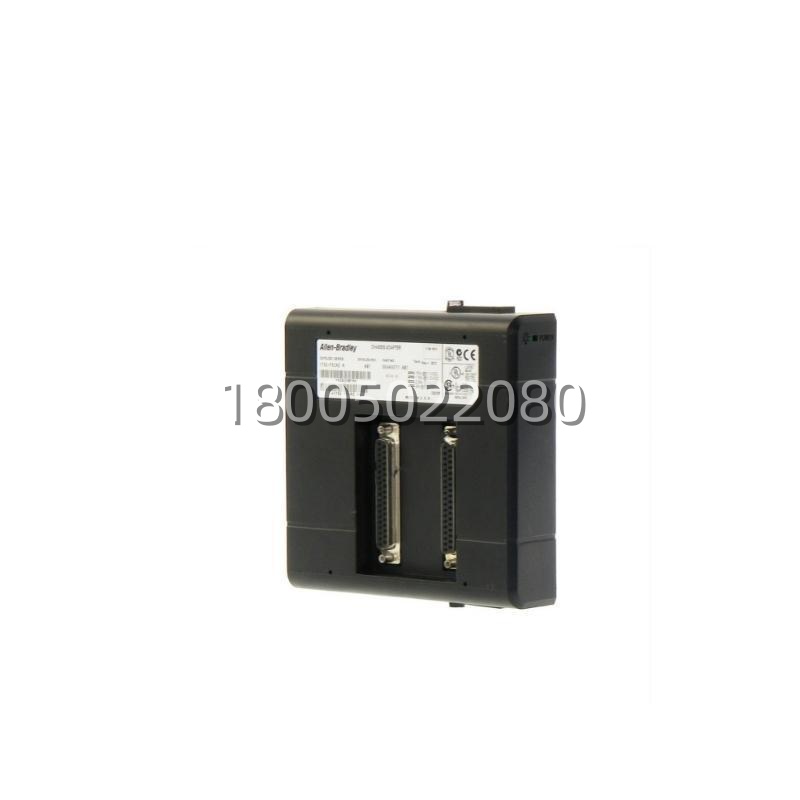
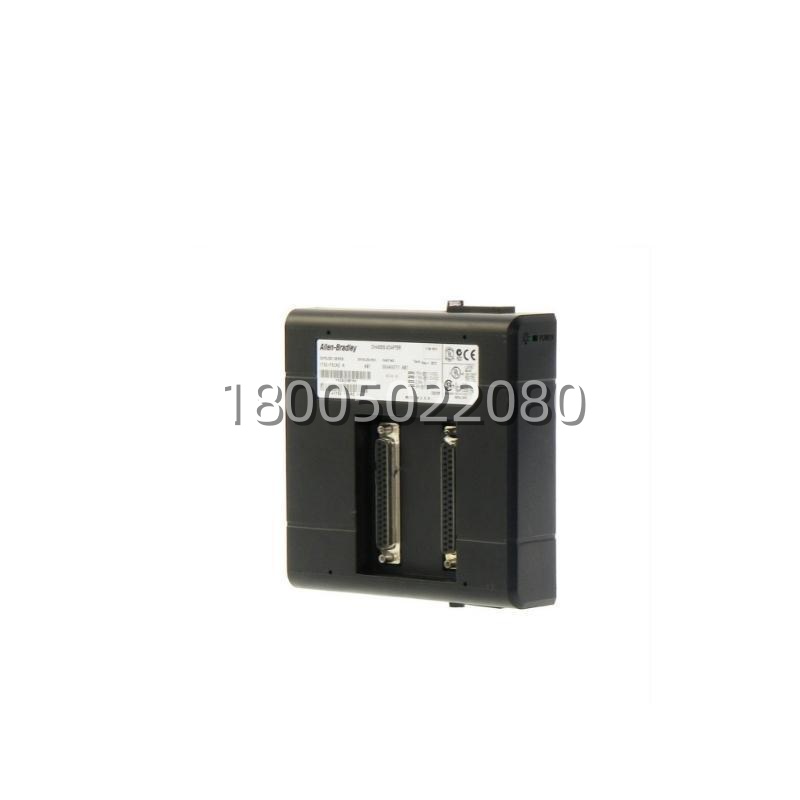
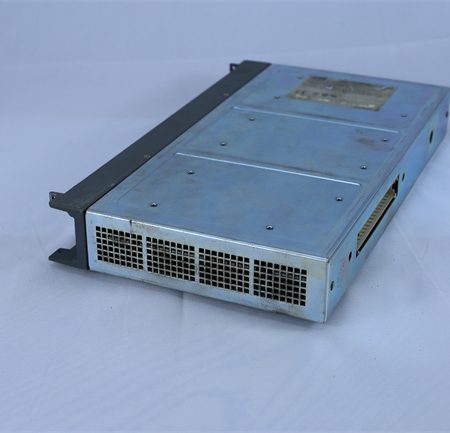
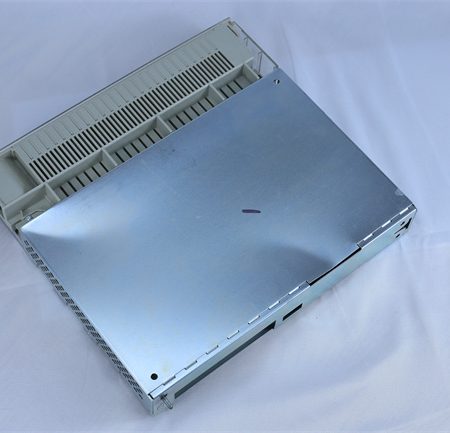
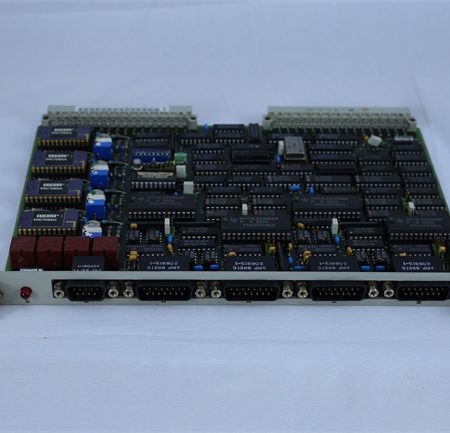
| Product Model | 1756-PSCA2 |
| Manufacturer | Rockwell Automation (Allen‑Bradley) |
| Product Type | Redundant Power Supply Chassis Adapter Module |
| Compatible Series | ControlLogix 1756 |
| Current Capacity (5.1V) | 15 A |
| Current Capacity (24V) | 2.8 A |
| Current Capacity (3.3V) | 4 A |
| Current Capacity (1.2V) | 1.5 A |
| Backplane Current (24V) | 125 mA |
| Power Dissipation (30°C) | 25.7 W |
| Operating Temperature | 0 °C to 60 °C (32 °F to 140 °F) |
| Relative Humidity | 5% to 95% (non‑condensing) |
| Dimensions (H×W×D) | 35 mm × 140 mm × 145 mm (approx.) |
| Weight | 0.228 kg (8.1 oz) |
| Connection Interface | 1756‑CPR2 Cable Port |
Main Features and Advantages
High‑Availability Power Combining: The core function of the 1756‑PSCA2 is to merge the outputs of two separate power supplies into a single, continuous power feed for the ControlLogix backplane. Its internal diode‑ORing circuitry provides electrical isolation between the primary and secondary supplies. This design prevents a fault (such as a short circuit or overvoltage) in one power module from propagating to the other, ensuring that the controller, I/O modules, and communication cards continue to operate seamlessly during a power supply failure or maintenance swap‑out.Passive and Deterministic Operation: Unlike an actively managed UPS or a software‑based redundancy system, the 1756‑PSCA2 operates entirely passively with zero control logic or firmware. This means there is no boot‑up time, no configuration required in Studio 5000, and no risk of a software glitch causing a power transfer failure. The transition from primary to secondary power occurs at the hardware level within milliseconds, making it ideal for applications requiring deterministic fault recovery, such as high‑speed continuous process control or safety interlock systems.Simplified System Integration: The adapter is designed for straightforward mechanical integration. It mounts directly onto the left side of the standard 1756 chassis, saving enclosure space and eliminating the need for complex external wiring harnesses. The use of standardized 1756‑CPR2 cables ensures reliable connections and carries both power and status signals, allowing the power supplies to communicate their health and fault status back to the chassis for diagnostic monitoring via the controller.
Application Field
The 1756‑PSCA2 is deployed in industrial environments where system uptime is critical and any unplanned shutdown would result in significant production loss, safety risks, or data corruption. In the oil & gas and petrochemical sectors, it is used in offshore platforms and refinery control systems (often paired with 1756‑PA75R supplies) to ensure that process shutdown (ESD) systems remain powered even during electrical disturbances. For chemical and pharmaceutical batch processes, the adapter protects against costly batch loss by maintaining control system integrity through power supply faults.In critical infrastructure such as water and wastewater treatment plants, the 1756‑PSCA2 provides the power redundancy needed for SCADA and PLC systems that manage filtration, pumping, and chemical dosing, preventing environmental incidents. It is also a standard component in high‑value discrete manufacturing, such as automotive assembly lines and semiconductor fabs, where a single power‑related stoppage could halt an entire production cell and cause massive throughput delays. In these applications, the 1756‑PSCA2 works in tandem with redundant controllers (1756‑L6x) to create a fully fault‑tolerant automation rack.
Reviews
There are no reviews yet.