
Application Scenarios
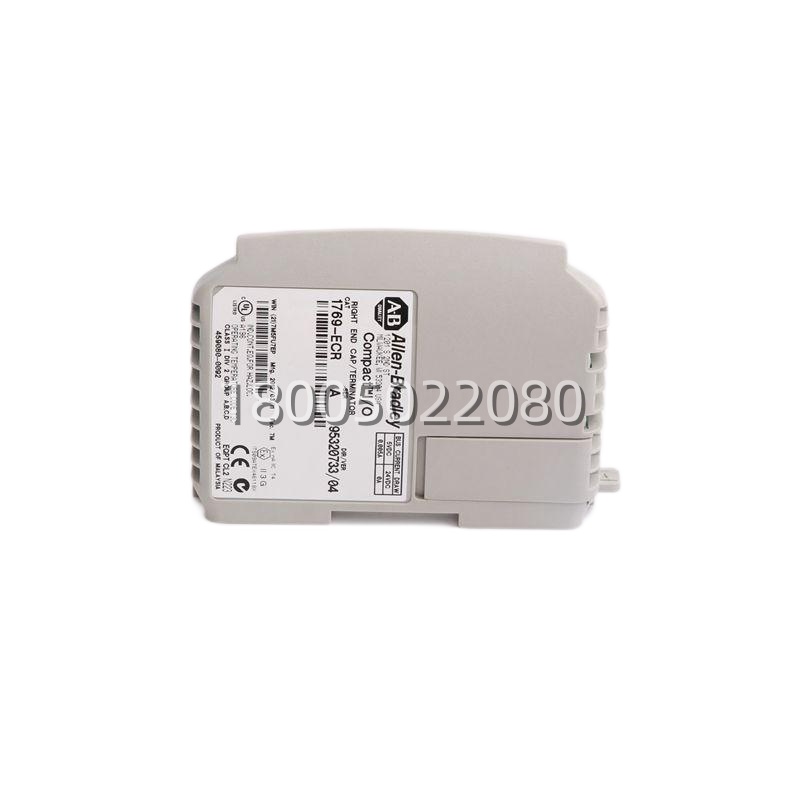
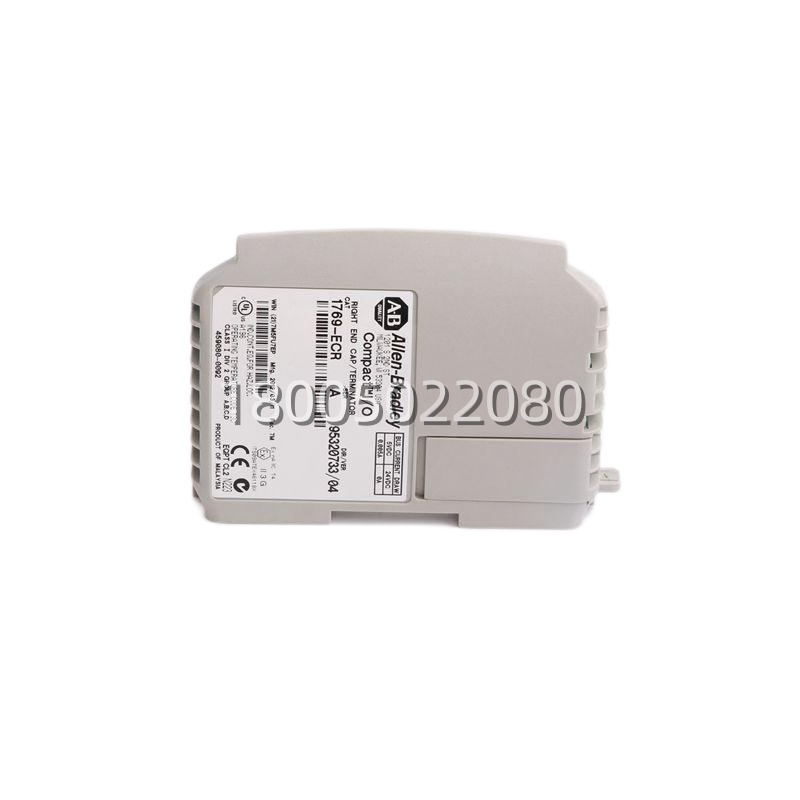
Consider a system integrator commissioning a new CompactLogix control panel with a 1769‑L32E controller and seven expansion I/O modules. After completing the wiring and powering up the system, they discover that the controller fails to recognize the last three modules in the bank. A senior technician quickly identifies the root cause: the integrator forgot to install the 1769‑ECR at the end of the assembly. This scenario is surprisingly common in field installations and new panel builds—the absence of the end cap creates an unterminated bus, causing unpredictable addressing, communication errors, and in some cases, complete I/O failure . The 1769‑ECR resolves this by providing the necessary electrical termination, signaling to the controller that the assembly is complete and all modules are correctly addressed.
Parameters
| Main Parameters | Value/Description |
|---|---|
| Product Model | 1769‑ECR |
| Manufacturer | Allen‑Bradley (Rockwell Automation) |
| Product Category | Bus Terminator / End Cap Module |
| Current Draw (5.1V DC) | 5 mA |
| Current Draw (24V DC) | 0 mA |
| Operating Temperature | 0…60 °C (32…140 °F) |
| Storage Temperature | -40…85 °C (-40…185 °F) |
| Operating Vibration | 5 g, 10…500 Hz |
| Operating Shock (DIN rail) | 20 g |
| Operating Shock (panel mount) | 30 g |
| Operating Altitude | 2000 m (6562 ft) |
| North American Temp Code | T3C |
| IEC/ATEX Temp Code | T4 |
| Weight | Approx. 130 g (0.286 lb) |
| Dimensions (approx.) | 118 mm x 85 mm x 18 mm |
| Removal/Insertion Under Power | Not supported |
Technical Principles and Innovative Values
Innovation Point 1: Passive FlexBus Termination Without Power Draw
The 1769‑ECR is a purely passive component that terminates the FlexBus without consuming 24V DC power, drawing only 5 mA at 5.1V DC . This design ensures that the end cap places zero additional load on the system’s 24V power budget, preserving capacity for powered I/O modules.
Innovation Point 2: Mechanical Bus Locking System
The end cap employs a robust bus lever mechanism that securely locks the termination into place . When properly engaged, the lever provides positive tactile feedback with a distinct “click,” confirming proper termination. This mechanical design ensures that the 1769‑ECR remains securely connected even under the vibration levels typical of industrial environments.
Innovation Point 3: Dual Mounting Capability
The 1769‑ECR supports both DIN‑rail and panel mounting, with different shock ratings optimized for each configuration . The module achieves 20 g shock tolerance on DIN rail and 30 g when panel-mounted, offering flexibility for various installation scenarios while maintaining system integrity.
Innovation Point 4: Hazardous Location Certification
Unlike many simple accessories, the 1769‑ECR carries both North American (T3C) and international (T4) temperature codes, qualifying it for use in Zone 2 potentially explosive atmospheres when installed in a suitably rated enclosure . This certification makes it suitable for deployment in oil and gas, chemical processing, and other hazardous-area applications.
Application Cases and Industry Value
Case Study: Power Generation Plant Control Panel Upgrade
A combined-cycle power plant upgrading its water treatment control system selected the CompactLogix platform with the 1769‑L32E processor and twelve expansion modules. During the FAT (Factory Acceptance Test), the integrator overlooked the 1769‑ECR, resulting in intermittent I/O faults and erratic communication . Installing the 1769‑ECR immediately resolved all communication issues, validating the I/O configuration and ensuring the system passed FAT on schedule. The plant has since adopted the 1769‑ECR as a mandatory checklist item for all new builds and expansion projects.
Case Study: Packaging Line Expansion for OEM
A packaging machinery OEM designed a modular conveyor system using CompactLogix controllers with expandable I/O banks. By standardizing on the 1769‑ECR as the termination component for each I/O cluster, the OEM simplified their bill of materials and ensured consistent system behavior across all installations. The presence of the 1769‑ECR enabled rapid field diagnostics—if the controller failed to recognize all modules, field technicians could immediately verify end cap installation before investigating more complex issues, reducing average troubleshooting time by over 40%.

Reviews
There are no reviews yet.