
Application Scenarios
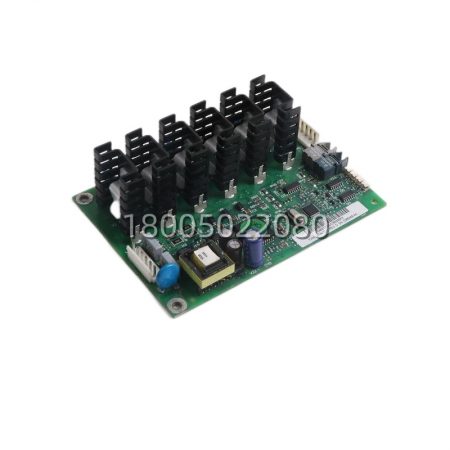
In a large-scale automotive manufacturing plant, production line engineers were plagued by intermittent position feedback errors on a robotic welding station. The sensors, mounted near high-current welding arcs, suffered from severe electromagnetic interference that caused erratic PLC readings and occasional production stoppages. After installing the ABB 086339-001 directly at the sensor mounting point, the module performed real-time signal filtering and amplification, converting noisy raw signals into clean 4-20mA outputs. The error rate dropped to zero, and the line achieved 99.8% uptime for the subsequent six months. This is precisely why the ABB 086339-001 matters—it solves the fundamental challenge of maintaining signal integrity in electrically noisy industrial environments, transforming what could be a recurring maintenance nightmare into a reliable, long-term solution.
Parameters
| Main Parameters | Value/Description |
|---|---|
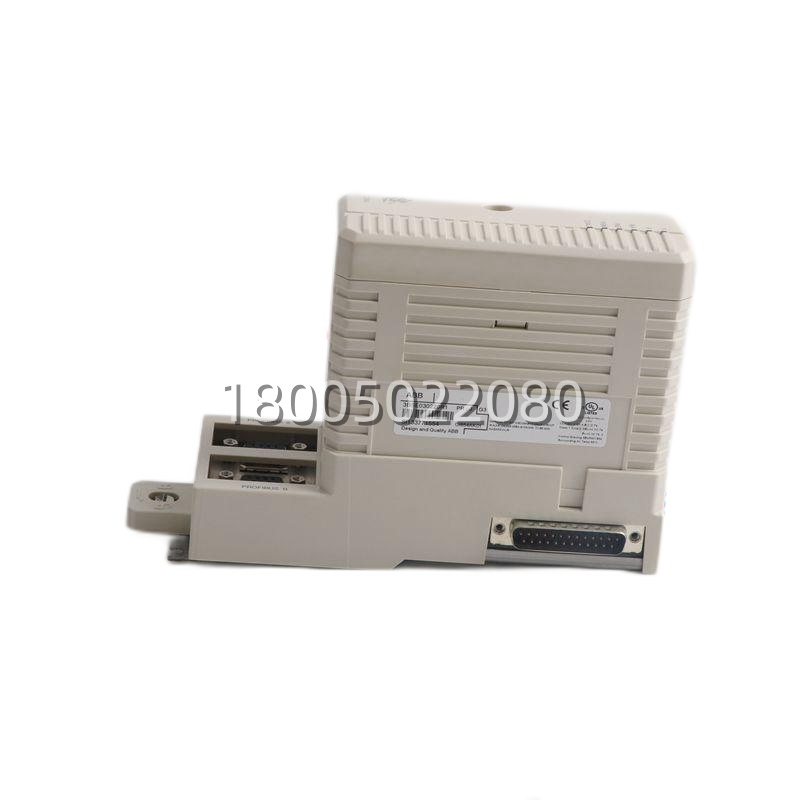
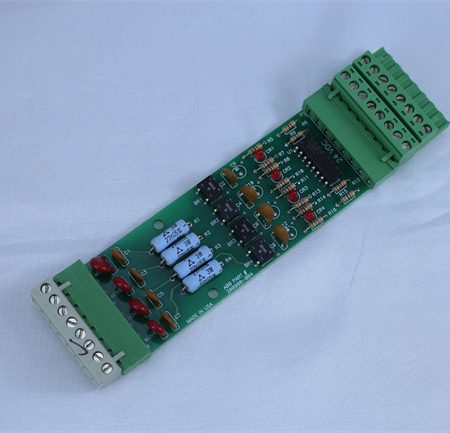
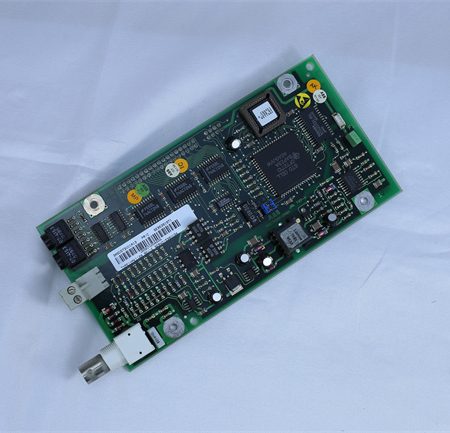
| Product Model | ABB 086339-001 (PWA, SENSOR MICRO-101) |
| Manufacturer | ABB (Switzerland) |
| Product Category | Sensor Interface / Signal Conditioning Module |
| Core Processor | 16 MHz Microcontroller (signal运算 and linearization) |
| Output Signal | 4-20 mA (2-wire transmitter) or 10-50 mV direct sensor output |
| Supply Voltage | 12-24V DC (typical 24V DC) |
| Measurement Accuracy | ±0.5% FS to ±1.0% FS (sensor dependent) |
| Operating Temperature | -20°C to +70°C |
| Protection Rating | IP67 (sealed versions) or IP20 (board level) |
| Dimensions | Approx. 15 x 100 x 110 mm (H x W x D) |
| Weight | Approx. 0.01 – 0.2 kg |
| Mounting Type | Thread mount / DIN rail compatible |
| Response Time | < 1 second (typical) |
Technical Principles and Innovative Values
Innovation Point 1: Source-Based Signal Conditioning
Unlike traditional signal transmission where raw sensor signals travel long distances to the controller before processing, the ABB 086339-001 performs its signal conditioning right at the sensor location. This “process-at-source” approach amplifies weak signals, filters electromagnetic noise, and converts analog readings to stable digital or standardized analog outputs before they traverse long cable runs. The result is dramatically improved signal-to-noise ratio and measurement stability, particularly in high-EMI environments like motor control centers and welding areas.
Innovation Point 2: Onboard Intelligent Processing
The module integrates a 16MHz microcontroller that handles linearization, scaling, and diagnostic functions onboard the ABB 086339-001. This eliminates the need for separate signal conditioning equipment in the control cabinet, reducing panel space requirements by approximately 30% compared to traditional architectures. The processor can apply non-linear correction curves specific to the connected sensor type, improving overall measurement accuracy.
Innovation Point 3: Wide Compatibility and Flexible Configuration
The ABB 086339-001 interfaces with a broad range of resistive (PT100), bridge-type (pressure transducers), and low-voltage sensors. Its configurable output options—either 4-20mA current loop or direct voltage output—make it adaptable to both modern PLC/DCS systems and legacy control infrastructure. Some versions also support digital output configurations, enabling direct integration with ABB’s proprietary bus systems.
Innovation Point 4: Rugged Environmental Design
With an IP67 rating available on encapsulated versions, the ABB 086339-001 withstands dust, moisture, and temperature extremes that would quickly disable conventional signal conditioning equipment. This allows direct installation in harsh field locations, eliminating the need for protective enclosures and reducing installation complexity.
Application Cases and Industry Value
Case Study: Steel Mill Continuous Casting Line
A major steel producer experienced persistent mold level measurement instability on their continuous casting line. The radar level sensors, mounted near 1500°C molten steel, generated signals that were heavily affected by electromagnetic interference from nearby induction stirrers. The mill installed the ABB 086339-001 directly on the sensor mounting flange, with the module performing real-time noise filtering and signal amplification. The 4-20mA output stabilized from ±8% fluctuation to ±0.5% accuracy, enabling precise mold level control that reduced breakout incidents by 75% and saved an estimated $500,000 annually in avoided downtime and product losses. The maintenance supervisor noted that the ABB 086339-001 has been operating continuously for three years with zero failures—a reliability record that exceeded all previous signal conditioning solutions.
Industry Value Impact
The ABB 086339-001 delivers measurable improvements across three key dimensions: First, it enhances measurement accuracy by processing signals at the source, improving control precision and product quality. Second, it reduces maintenance costs by eliminating signal-related troubleshooting and extending sensor lifespan through proper signal conditioning. Third, it ensures process reliability by maintaining stable data transmission even in challenging industrial environments, preventing unplanned shutdowns and safety incidents.

Reviews
There are no reviews yet.