
Technical Specifications
| Parameter Name | Parameter Value |
|---|---|
| Product Model | 1KHL015107R0001 (P4LR) |
| Manufacturer | ABB |
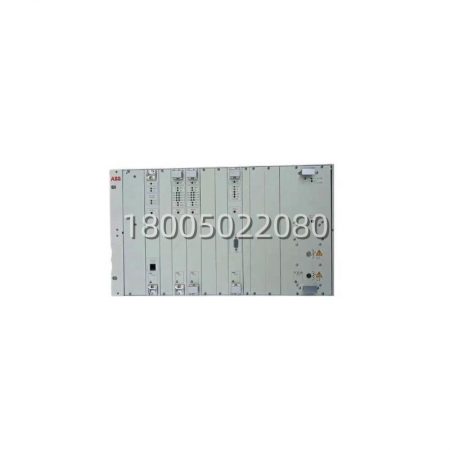
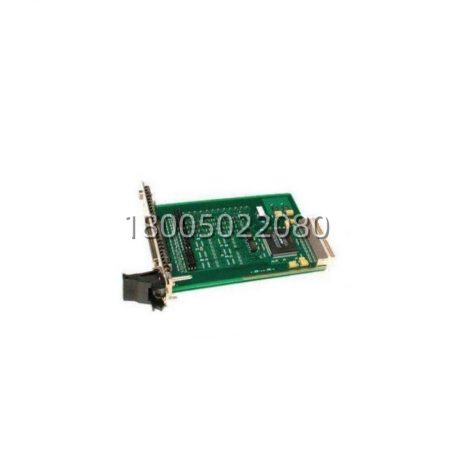
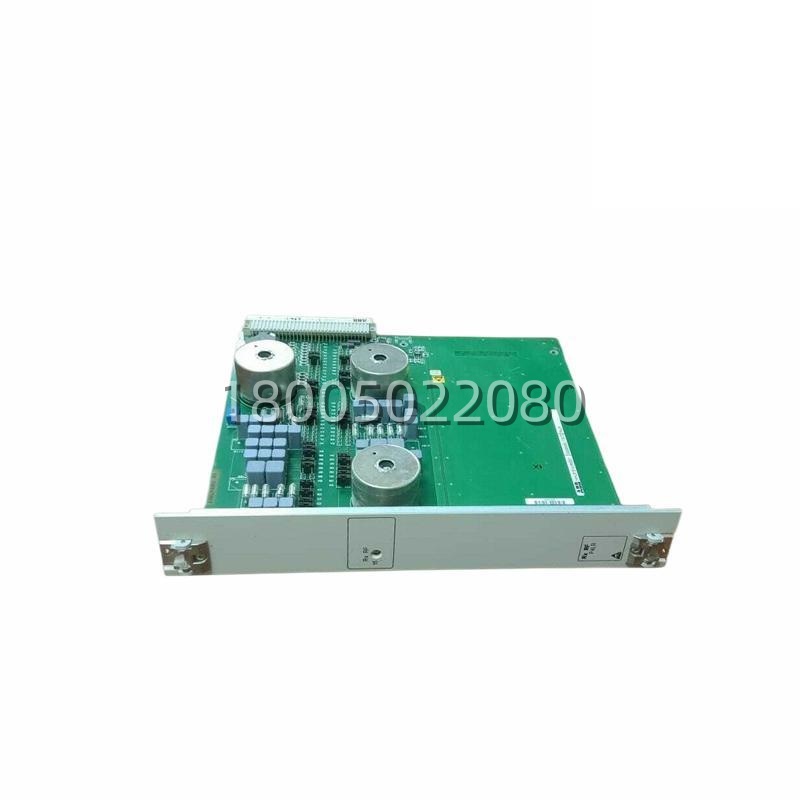
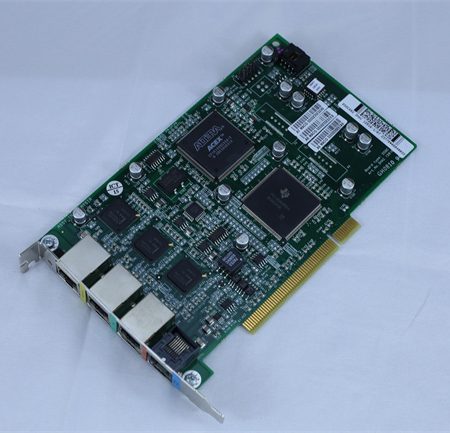
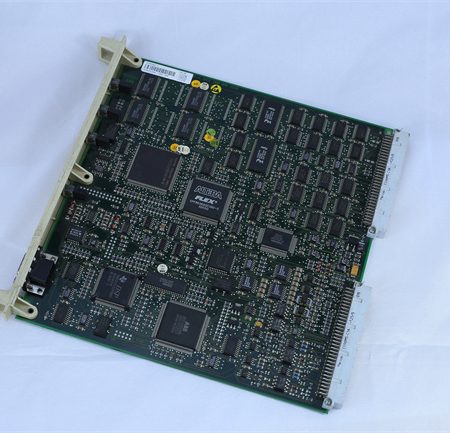
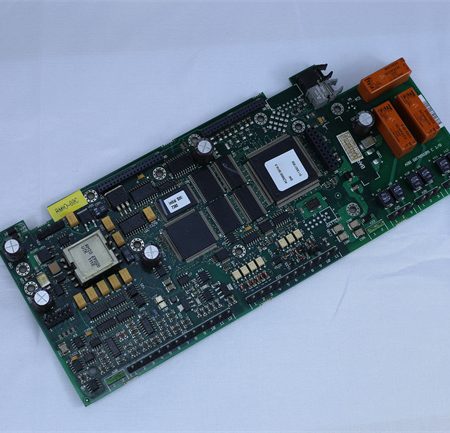
| Product Type | DCS Main Controller Board (Processor Module) |
| Series / Platform | ABB Symphony Plus, P4 series |
| Processor Architecture | PowerPC |
| Redundancy Mode | 1:1 Hot-Standby |
| Failover Time | < 200 ms (primary → standby) |
| Supply Voltage | 24 V DC (±10%), rack-supplied |
| Typical Power Consumption | ~25 W |
| Communication Interfaces | Redundant 100 Mbps Ethernet; High-speed backplane sync bus (to standby + I/O) |
| Engineering Suite | ABB Control Builder M compatible |
| Memory (typical) | 1 MB Flash / 256 KB RAM (per P4LR class; firmware-dependent) |
| Operating Temperature | 0 °C to +60 °C (control-room cabinet class) |
| Storage Temperature | -25 °C to +70 °C |
| Humidity | 5%–95% RH, non-condensing |
| Dimensions (L×W×H) | Approx. 146 × 102 × 45 mm (P4 rack form factor) |
| Weight | Approx. 0.45 kg |
| Mounting | Symphony Plus P4 dedicated control rack slot (not DIN-rail standalone) |
| Ingress Protection | IP20 (enclosed cabinet installation) |
| Compliance | IEC 61508 (functional safety context), CE |
| Indicators | RUN / FAULT / SYNC LEDs on front face |
Main Features and Advantages
Sub-200 ms hot-standby transparency: The headline spec on the ABB 1KHL015107R0001 is the <200 ms failover, but the real differentiator is what gets mirrored. The P4LR doesn’t just duplicate code—it mirrors the I/O image table, timer accumulators, step-sequencer state, and PID integral terms, so when the standby takes over there’s no “bump” on valve positions or setpoints. On a boiler-turbine CCS where the fuel master is holding 85% and a primary-CPU fault hits, the 1KHL015107R0001 standby picks up at the same 85% + same integral windup, and the furnace never sees a fuel-step disturbance. That’s the difference between a “redundant controller” and a hot-standby controller.PowerPC determinism for complex loops: The ABB 1KHL015107R0001 runs on PowerPC silicon rather than a commodity MCU, which matters when a single P4 rack is executing CCS (boiler-follow-turbine / turbine-follow-boiler modes), FSSS (burner light-off sequence, fuel-trip logic), and BMS concurrency across 30–50 control loops. The P4LR’s execution schedule is deterministic—loop scan, I/O refresh, and backplane sync all land in predictable windows—so the control engineer’s tuning holds even under peak load. Swapping in a lower-grade substitute (if one existed) would show up as jitter on fast loops like drum-level or steam-pressure.Dual-Ethernet + backplane sync: The 1KHL015107R0001 carries two 100 Mbps Ethernet ports for plant-network redundancy (typically mapped to A/B switches in the control room) plus a high-speed proprietary backplane for standby mirroring and I/O fetch. The Ethernet side lands in the Symphony Plus plant network (OPC-UA / Modbus TCP capable depending on config), while the backplane side is closed and deterministic. This split means a plant-network broadcast storm can’t stall the controller’s I/O scan—the 1KHL015107R0001 keeps executing while the Ethernet driver retries.Cybersecurity and lifecycle: Later firmware loads on the ABB 1KHL015107R0001 include ABB’s Symphony Plus cybersecurity hardening (role-based login, audit logs, firmware signature check on download), which matters for NERC-CIP and IEC 62443 compliance in utility and refinery contexts. The board also supports online firmware update with the standby taking the download first—so the active primary never pauses. For MRO planners, that means a 1KHL015107R0001 bought today can be flash-updated to next year’s security patch without pulling it from the rack.Form-factor discipline: At ~146×102×45 mm and 0.45 kg, the ABB 1KHL015107R0001 is a dense but not cramped P4 rack slot. The front-face LEDs (RUN / FAULT / SYNC) are visible through the rack’s extractor handle, so a cabinet walkdown can confirm “Primary=A, Standby=B, both synced” without opening the cubicle door. That small detail saves hours over a plant’s life.
Application Field
The ABB 1KHL015107R0001 deploys wherever Symphony Plus P4 racks are specified—which skews heavily toward continuous-process, high-consequence plants. In supercritical and ultra-supercritical coal/gas units (600 MW–1000 MW class), the P4LR typically owns the boiler-turbine coordinated control system (CCS), furnace safety supervisory system (FSSS), and bypass/attemperator loops; a single unit may carry 2–4 P4LR pairs (one per control train: boiler, turbine, aux boiler, maybe a shared FSSS/BMS train). In refineries—crude distillation, FCCU, hydrocracker, coker—the 1KHL015107R0001 drives the DCS logic for reactor/regenerator pressure, fractionator draw, and heater firebox control, often paired with ABB’s downstream SIS (AC 800M High Integrity) for ESD zoning. In LNG receiving terminals and ethylene crackers, the ABB 1KHL015107R0001 appears in BMS and compressor-antisurge loops where hot-standby isn’t optional—an unplanned controller switch on a propane compressor BMS is a trip-to-flare event.Nuclear auxiliary systems (non-safety-class DCS, e.g., balance-of-plant, radwaste, demineralizer trains) also standardize on Symphony Plus P4 in many regions, putting the 1KHL015107R0001 inside the BOP DCS racks. Desalination (SWRO trains) and large district-heating networks round out the list—anywhere the plant’s availability KPI ties directly to DCS uptime, the P4LR’s hot-standby story sells itself.For MRO, the ABB 1KHL015107R0001 is a “one-per-train” spare. A 2×50% redundancy config (one active, one standby, one cold spare per train) is typical; a 3-train plant therefore stocks 3× 1KHL015107R0001 (or 4 if they keep a global float). Since ABB still actively supports Symphony Plus but P4LR lead times can stretch during allocation peaks, proactive buy beats emergency air-freight—especially for units running merit-order where a forced outage costs six figures per day. Brownfield note: plants migrating toward AC 800M / S+ Operations may keep P4LR racks as the field-I/O and loop-execution layer for another decade while the supervision layer moves up—so the 1KHL015107R0001 has a longer tail than the “newer is better” narrative suggests.

Reviews
There are no reviews yet.