
Technical Specifications
| Parameter Name | Value |
|---|---|
| Product Model | 3HAC14549-3 (DSQC 618 R3) |
| Manufacturer | ABB Robotics |
| Product Type | Three-Phase Mains Rectifier / DC Bus Power Supply |
| Input Voltage | 3×400–480V AC, 50/60Hz (±10%) |
| Output Voltage | DC Link approx. 560–680V DC (proportional to input voltage) |
| Rated Power | 6–20kW+ (cabinet-dependent, matching servo axis total power) |
| Pre-Charge Circuit | Built-in pre-charge resistors and contactor timing control |
| Cooling Method | Forced air cooling (integral fan or cabinet shared airflow) |
| Protection Features | Input overcurrent/short circuit, DC overvoltage/undervoltage, overtemperature protection |
| Operating Temperature | 0°C to +45°C (cabinet internal with forced cooling) |
| Storage Temperature | -40°C to +70°C |
| Relative Humidity | 5%–95% RH, non-condensing |
| Mounting | IRC5 cabinet drive/power layer bracket, main bolt terminals + control harness |
| Ingress Protection | IP20 (cabinet internal) |
| Certifications | CE, cULus (batch-dependent) |
| Lifecycle Status | Legacy (End-of-Life), New Surplus limited |
| Weight | Approx. 1.74 kg (varies by suffix version) |
Main Features and Advantages
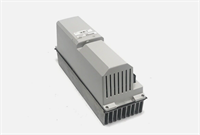
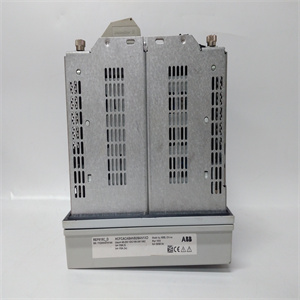
Critical DC Bus Foundation: The ABB 3HAC14549-3 serves as the essential power conversion heart of the IRC5 robot controller, transforming standard industrial three-phase AC input into the stable DC bus voltage required by the robot’s servo drive units. Without the ABB 3HAC14549-3 rectifier operating correctly, the controller cannot establish the necessary DC link voltage, resulting in fault conditions such as “DC link undervoltage” or “Mains Voltage Missing” that prevent the robot from performing any motion operations . This foundational role makes the ABB 3HAC14549-3 a mission-critical component for any IRC5-based robotic installation, as rectifier failure effectively immobilizes the entire robot cell.
Integrated Pre-Charge Circuitry: The ABB 3HAC14549-3 incorporates sophisticated inrush current limiting through its built-in pre-charge circuit, which controls the timing sequence of contactor engagement to safely charge the DC bus capacitors during power application. This pre-charge function is essential for protecting both the ABB 3HAC14549-3 itself and the downstream drive modules from destructive surge currents that could occur during rapid power cycling or initial startup. The pre-charge relays, resistors, and timing logic work together to ensure the ABB 3HAC14549-3 establishes the DC link voltage reliably before allowing full power delivery to the servo drives, a function that must be verified during troubleshooting when rectifier issues are suspected .
Multiple Suffix Versions for Varied Applications: The ABB 3HAC14549-3 is offered in multiple suffix configurations including /03, /09A, and /10A, each designed to support different current ratings and DC link parameters suitable for specific IRC5 cabinet configurations and robot payload capacities . This suffix-level differentiation allows the ABB 3HAC14549-3 to be precisely matched to the installed robot’s power requirements, ensuring optimal performance without oversizing or insufficient capacity. The availability of tested used units with 6-month warranties provides cost-effective replacement options for the ABB 3HAC14549-3 in legacy installations where new surplus stock is increasingly limited.
Hot-Swap Compatible Maintenance (with Verification): The ABB 3HAC14549-3 facilitates serviceability through its modular design, allowing replacement of faulty units without requiring complete controller replacement or extensive system rewiring . However, it is critical to note that the ABB 3HAC14549-3 drives high-voltage DC bus capacitors that retain significant charge even after power removal, requiring proper discharge procedures before any maintenance work. The ABB 3HAC14549-3 module features status indicators and diagnostic capabilities that enable rapid fault identification, with typical failure modes including blown fuses, damaged pre-charge resistors, or complete rectifier bridge failure .

Reviews
There are no reviews yet.