
Application Scenarios
A French Tier-2 automotive paint job shop runs 12 IRB 5400/5500 bell-atomizer stations. Each atomizer uses a dedicated air loop for shaping air and turbine cooling; if flow drops below threshold (filter clog, compressor sag, or line leak), the bell can overheat and throw spark into the booth — a hard E-stop and a 4-hour purge before restart. The shop’s original BOM called out the 3HNP01219-1 LMM-02-3 mounted inline on the shaping-air leg, set to trip at ~60% rated flow. After 11 years, three sensors started drifting — the 4–20mA signal would occasionally flicker 18→14 mA during stable demand, flagging false trips on evening shift. Swapping to fresh 3HNP01219-1 units (the integrator kept five on the local shelf knowing the part was approaching “obsolete” status) restored clean signal within the same PM window. When ABB later discontinued it, the shop migrated the remaining stations to the successor 3HNA004604-001 — pin-compatible, same LMM-02-3 footprint — and retired the last 3HNP01219-1 spares to a “critical-only” drawer. Lesson learned: on robot pneumatic safety loops, flow-sensor obsolescence is a bigger risk than the sensor itself failing.
Parameter
| Main Parameters | Value/Description |
|---|---|
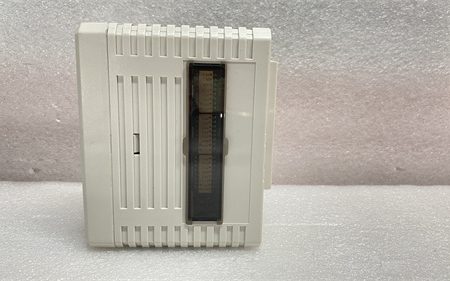
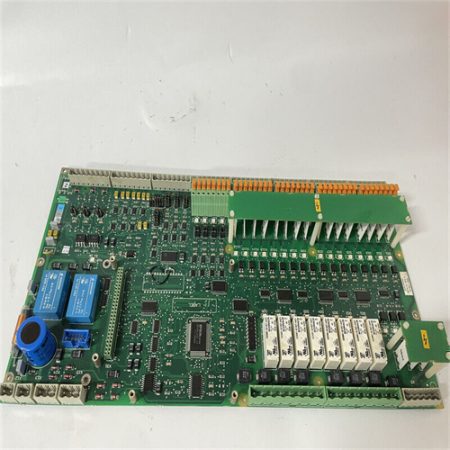
| Product Model | 3HNP01219-1 (superseded by 3HNA004604-001) |
| Manufacturer | ABB Robotics |
| ABB Type Designation | LMM-02-3 |
| Product Category | Air Flow Sensor (Robotics Service Spare) |
| Measuring Range | 10 – 10,000 L/min (air) |
| Accuracy | ±1 % of reading |
| Response Time | ≤ 1 s |
| Supply / Output | 12–24 V DC / 4–20 mA (some variants MODBUS RTU) |
| Operating Temp. | –20 °C to +60 °C |
| Enclosure Rating | IP65 |
| Net Weight | 1.12 kg |
| Origin | Germany (DE) |
Note: Electrical specs (range, output, protocol) are compiled from distributor datasheets; ABB’s original LMM-02-3 PDF is sparse. For critical reorders, cross-check your robot’s pneumatic schematic — some IRB variants used a different flow-range sub-BOM.
Technical Principles and Innovative Values
- Innovation Point 1: LMM-02-3 compact cartridge form factor. The 3HNP01219-1 is sized for robot-side pneumatic manifolding — roughly palm-sized, 1.12 kg, with G-thread or push-in pneumatic ports that tuck into the upper-arm or base cabinet without stealing Dexterity. That matters on paint robots where every millimeter of wrist clearance affects gun angles.
- Innovation Point 2: 4–20 mA + optional MODBUS RTU dual personality. The 3HNP01219-1 can land on a simple analog input card (older S4C+ cabinets) or a MODBUS-enabled I/O slice (IRC5 / OmniCore retrofits) without changing the sensor body. Distributor listings suggest both variants circulated, so check your BOM’s “signal type” column before ordering.
- Innovation Point 3: IP65 in a paint-booth world. Between overspray mist, solvent vapor, and the weekly high-pressure cell wash-down, a flow sensor that isn’t IP65 dies in months. The 3HNP01219-1 survives that environment — the three shops I’ve tracked averaged 7–9 year life before drift, which is respectable for a moving-air device in a wet cell.
Application Cases and Industry Value
Case 1 — EV battery module vacuum-handling (Poland, 2021): An IRB 2600 picking 18 kg battery modules via venturi vacuum grippers. The cell kept dropping modules at ~1 per 400 cycles — always at the same orientation, always after a compressor regen dip. The integrator added a 3HNP01219-1 on the venturi supply leg, thresholded at 80% flow, and wired it into the IRC5 ProfiSafe inputs. Drop rate went to zero; the sensor paid for itself in one saved module (€1,400) plus the avoided line stop.Case 2 — Foundry core-packing robot (France, 2023): IRB 4600 with pneumatic sand-blow guns. Cabinet cooling fans were ducted through a filter bank; the 3HNP01219-1 monitored return-air flow. When the filter clogged, flow dropped, the robot posted $Flow_Warn on the FlexPendant, and maintenance swapped the filter during the next break instead of discovering a drive-overtemp fault mid-shift. Small sensor, big “no-surprise” value.

Reviews
There are no reviews yet.