
Application Scenarios
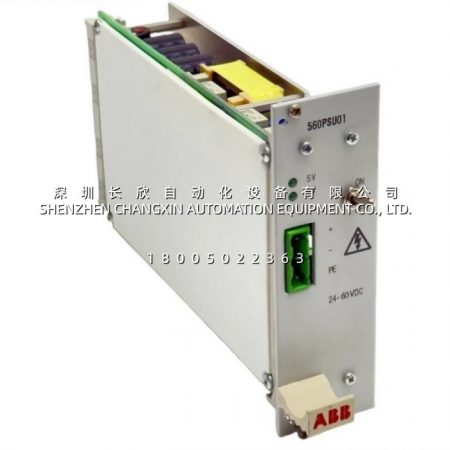
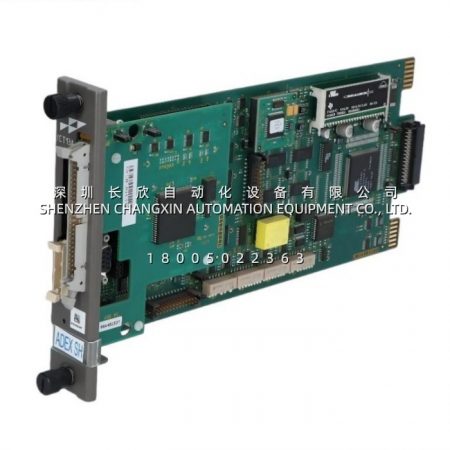
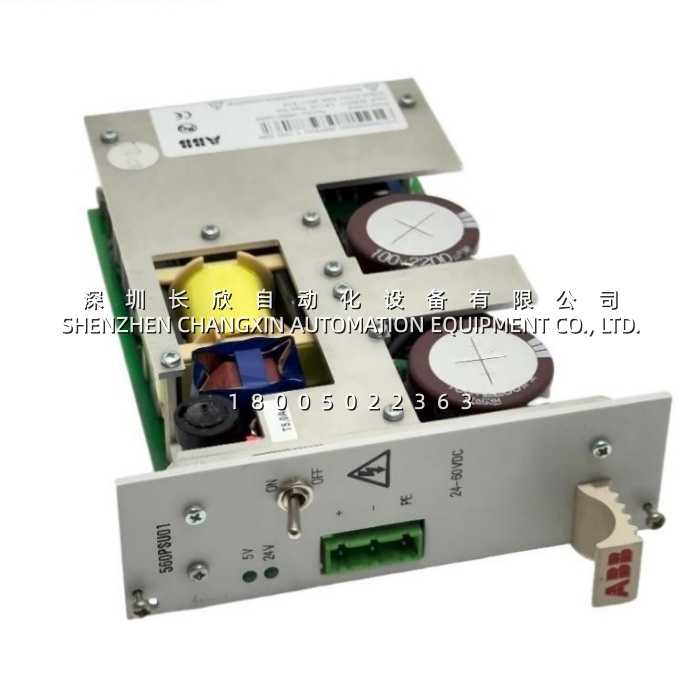
A 132 kV transmission substation in a mountain ring-main scheme is a typical stage for 560CMR01 R0001. The RTU560 rack sits in the relay house: a 560CMR01 R0001 in the central slot, a redundant 560PSR00 supply behind it, 560BIR01 binary inputs on breaker auxiliary and trip-circuit contacts, 560AIR01 analogues on the transformer tap and tank-temperature transducers, and a 560RTC01 feeding the station time. Upstairs, the utility’s SCADA master polls the station over IEC 60870-5-104 on one Ethernet port, while the second Ethernet faces the local maintenance LAN for the web server and a second outstation feed to the regional DMS.In a January cold snap, the web session becomes unreachable, one link LED stays dark, and the SCADA historian begins logging stale quality flags — yet the protection relays are still picked up and the breakers are fine. The station is “blind,” not unsafe, and the on-call engineer has four hours before the next dispatch window. Because the 560CMR01 R0001 is a single-slot, hot-serviceable CMU, the swap is mechanical: eject the suspect unit, seat a tested spare carrying the site configuration on its SD card, confirm the RTC holdover is within drift, and watch both Ethernet and the SPB activity LEDs come back. The SCADA gap closes inside the dispatch interval, event time stamps stay monotonic, and nobody has to explain a missed feeder reclosure alarm to the regulator.
Parameter
| Main Parameters | Value / Description |
|---|---|
| Product Model | 560CMR01 R0001 |
| Ordering Code | 1KGT036200R0001 |
| Manufacturer | ABB (Hitachi Energy Grid Automation, Mannheim, Germany) |
| Product Category | RTU560 Communication Unit (CMU) — controller-class communications & I/O management module |
| Processor | 32-bit ARM Cortex-A8, AM3352 @ 800 MHz with real-time operating system — the “factor 3–4” CMU platform over the earlier generation |
| Memory | 128 MB RAM + 8 MB boot Flash; configuration and function images live on a removable SD card, so the module is reusable across sites with a card swap |
| Serial Interfaces | CP1 & CP2, RJ45, independently software-selectable RS-232C or RS-485, 200 bit/s … 38.4 kbit/s — one port typically to the local HMI/console, the other to a sub-RTU, IED or meter chain |
| Ethernet Interfaces | E1 & E2, RJ45, IEEE 802.3, 10/100BaseT, Auto-MDI/MDI-X — two independent MAC paths, one to the SCADA master and one to the local/maintenance LAN |
| USB / Service Port | 1× Micro-USB 2.0 device port, up to 480 Mbit/s signalling — plug a laptop for webserver diagnostics, firmware load and event/log retrieval with no engineering station in the relay house |
| Internal Bus | SPB I/O bus (Serial Peripheral Bus) master via the rear backplane — the 560CMR01 R0001 is the bus master; every 560xx I/O module is a slave it scans, times and commands |
| Real-Time Clock | Battery-buffered RTC, CR2032 3 V lithium, quoted >10 year life at ambient; time resolution 1 s, 1 ms with external sync from 560RTC0x |
| Backplane Power Draw | 5 V DC @ 500 mA; 24 V DC @ 3 mA — a single 560PSR00 powers up to eight CMUs |
| Operating Temperature | −25 °C to +70 °C (startup −40 °C; +85 °C for 96 h maximum) |
| Dimensions / Weight | 206 × 40 × 143 mm (3HE Eurocard, 4R / 20 mm panel); net 0.158 kg, gross 0.215 kg |
| Supported Protocols | IEC 60870-5-101/103/104, DNP 3.0, Modbus — licenses ordered separately |
| Cybersecurity Variant | R0001 = standard network security; R0002 carries the advanced security chip |
| Replaced ID (Legacy) | 1KGT012600R0002 (earlier 560CMU02 generation) |
Technical Principles and Innovative Values
- Innovation Point 1 — Single-chip CMU platform, factor 3–4 performance step. The 800 MHz Cortex-A8 with 128 MB RAM and a real-time OS replaces the earlier 560CMU02-class architecture, giving the 560CMR01 R0001 deterministic headroom for protocol stacks, I/O scanning and event processing on one board instead of spreading the workload across a multi-board set.
- Innovation Point 2 — Dual independent Ethernet paths on one module. E1 and E2 are separate MAC interfaces, so a SCADA master feed and a local maintenance/HMI feed can be segregated by design rather than fought over a single port with VLAN workarounds. This is the differentiator most often missing on generic serial-to-Ethernet gateways.
- Innovation Point 3 — Configuration lives on the card, not the board. The push-push SD card (SD 2.0 Class 2, up to 4 GB) holds the system configuration non-volently. A replacement 560CMR01 R0001 becomes the site configuration the moment the card is seated — the reason a four-hour cold-snap swap can close inside a single dispatch window.
- Innovation Point 4 — RTC holdover preserves SOE integrity. The battery-backed clock keeps millisecond-scale event time stamps monotonic through supply interruptions. In a substation, that is the difference between an analyzable sequence of events and a regulator’s follow-up call.
- Innovation Point 5 — SPB bus master role offloads the control centre. The 560CMR01 R0001 polls inputs, dispatches outputs and maintains the process database and event records autonomously, so the RTU keeps working as a remote station even when the WAN to the master is down.

Reviews
There are no reviews yet.