
Application Scenarios
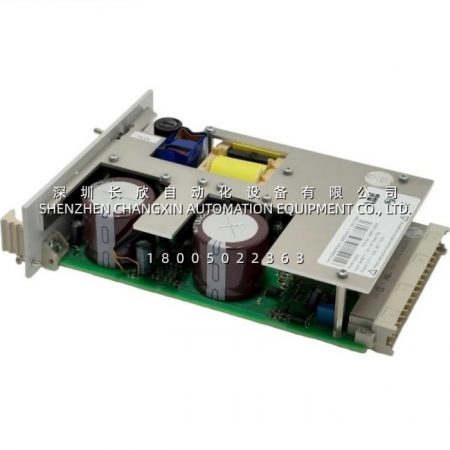
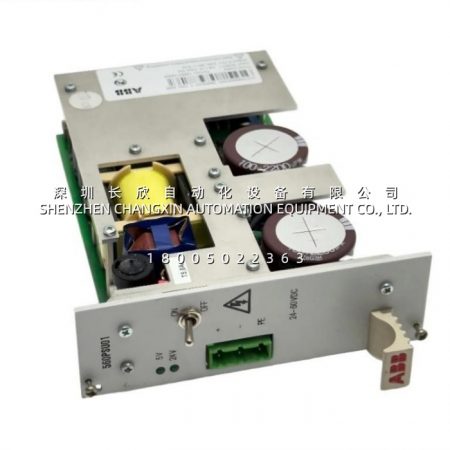
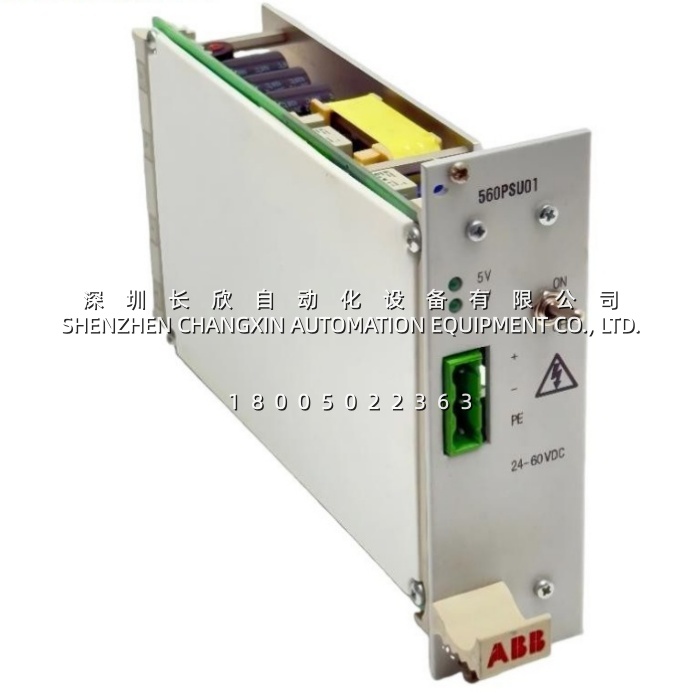
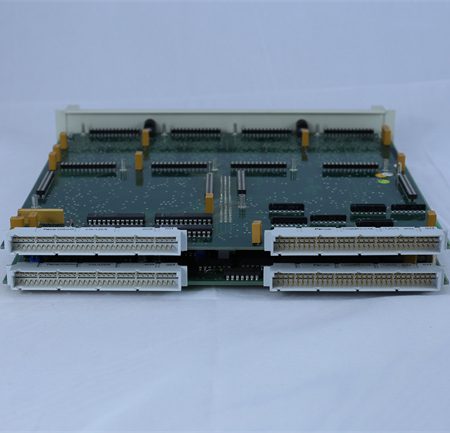
Picture a 132 kV transmission substation in a mountainous ring-main scheme. The RTU560 rack sits in the relay house: a 560CMR01 R0001 in the central slot, a redundant power supply behind it, binary input modules monitoring breaker auxiliary and trip-circuit contacts, analog input modules tracking transformer tap position and tank temperature, and a time source module feeding the station clock. Upstream, the utility’s SCADA master polls the station over IEC 60870-5-104 on Ethernet port E1, while E2 faces the local maintenance LAN and a second DNP3 outstation feed to the regional DMS.One January cold snap, the web session becomes unreachable, E1’s link LED goes dark, and the SCADA historian starts logging stale quality flags—but the protection relays are still picked up and the breakers are fine. The station is “blind,” not unsafe, and the on-call engineer has four hours before the next dispatch window. Because the 560CMR01 R0001 is a single-slot, hot-serviceable CMU, the recovery is purely mechanical: eject the suspect unit, seat a tested spare with the SD card carrying the site configuration, confirm the RTC holdover is within drift, and watch E1, E2, and the SPB activity LEDs come back. The SCADA gap closes inside the dispatch interval, the event timestamps stay monotonic, and nobody has to explain a missed feeder reclosure alarm to the regulator.
Parameter
| Main Parameters | Value/Description |
|---|---|
| Product Model | 560CMR01 (variant R0001) |
| Ordering / Article Code | 1KGT036200R0001 (legacy code: 1KGT012600R0002) |
| Manufacturer | ABB (ABB Power Grids Germany AG / Hitachi Energy) |
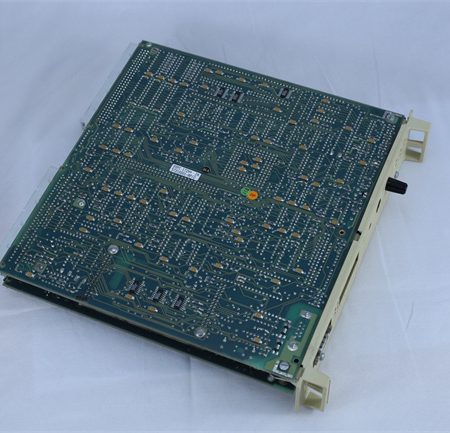
| Product Category | RTU560 Communication Unit (CMU) / central processor module |
| Processor | 32-bit ARM Cortex-A8, TI AM3352 @ 800 MHz, real-time OS |
| RAM / Boot Flash | 128 MB RAM / 8 MB boot flash |
| Configuration Storage | Removable SD card slot (SD 2.0, Class 2, up to 4 GB) |
| Ethernet Ports | 2 × 10/100BaseT (RJ45, IEEE 802.3, Auto-MDI/MDI-X) |
| Serial Ports | 2 × RS-232C / RS-485 configurable (RJ45), 200 bit/s – 38.4 kbit/s |
| USB Interface | 1 × Micro-USB 2.0 device port (up to 480 Mbit/s) for diagnostics & webserver |
| Internal Bus | SPB I/O bus (Serial Peripheral Bus) master via 48-pole backplane connector |
| Real-Time Clock | Battery-buffered RTC, CR2032 lithium 3 V DC, >10-year battery life, ±50 ppm |
| Supported Protocols | IEC 60870-5-101/103/104, DNP3, Modbus RTU/TCP |
| Backplane Current Draw | 500 mA @ 5 V DC; 3 mA @ 24 V DC |
| Operating Temperature | -25 °C to +70 °C (start-up down to -40 °C; short-term survival to +85 °C for 96 h) |
| Humidity Range | 5% to 95% RH, non-condensing |
| EMC Compliance | IEC 61000-4-x: ESD 8 kV air / 6 kV contact, radiated 10 V/m, EFT 4 kV, surge 2 kV |
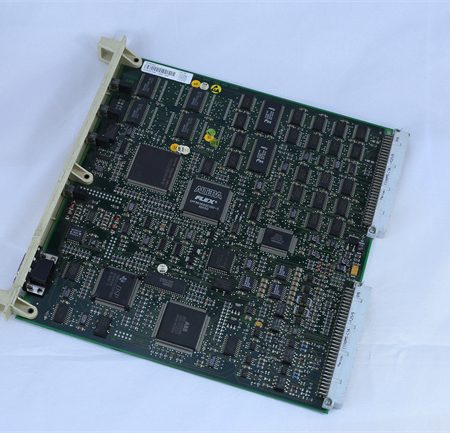
| Mounting Method | RTU560 subrack, 3HE Eurocard (3U), 4R (20 mm) panel width, plug-in hot-swappable |
| Dimensions (H×W×D) | 160 × 100 × 20 mm |
| Weight | Approx. 0.14 kg |
| Cybersecurity Variant | R0001 = standard network-security; R0002 = advanced security chip |
| Redundancy Support | Up to 16 CMUs per RTU560 system; redundant pairs hot-swappable |
Technical Principles and Innovative Values
- Innovation Point 1 — One Module Is the Whole Station, by Design: The 560CMR01 R0001 is not an adjunct to a CPU—it is the CPU of the RTU560. It masters the SPB I/O bus, owns the internal database, time-stamps every event, and drives all uplink protocols. This concentration is why a single compact rack can serve as a complete remote terminal station, and why one tested spare card can restore an entire site in under ten minutes.
- Innovation Point 2 — The Configuration Rides on the SD Card, Not in the Solder: At power-on reset, the module reads the station configuration from a removable SD card. Swap the card and you change the station personality; clone the card and you have a ready-to-run disaster-recovery image. For a fleet of identical RTUs, this means one master image, labelled cards, and no per-module commissioning marathon.
- Innovation Point 3 — Serial and Ethernet Are First-Class Equals: CP1 and CP2 are independently selectable as RS-232 or RS-485 at up to 38.4 kbit/s, while E1 and E2 provide two independent 10/100BaseT paths. A single 560CMR01 R0001 can therefore maintain a legacy RS-485 IED ring and a modern IEC 60870-5-104 uplink simultaneously—the exact capability that makes brownfield substation and pipeline projects solvable without adding a second gateway device.
- Innovation Point 4 — RTC Is Backed, but Accuracy Comes from the Backplane: The on-board CR2032 keeps the clock walking through a blackout, while the dedicated time module on the subrack backplane supplies the station time-base that the CMU distributes to every I/O module. The result is millisecond-class SOE alignment across every binary input in the rack—the difference between “something tripped around 14:22” and a sequence you can defend to a regulator.
- Innovation Point 5 — Security Is a Hardware Revision, Not a Software Checkbox: R0001 delivers the standard network-security posture, while R0002 adds a dedicated security chip and advanced feature set. This split lets utilities stage security upgrades without changing the port layout, the rack, or the wiring. It also means the spare on the shelf must match the security tier already deployed—mismatched revisions in a redundant pair are a configuration no auditor will accept.
- Innovation Point 6 — Substation-Hardened, Not Office-Tolerant: With industrial EMC compliance to IEC 61000-4-x, an operating range of -25 °C to +70 °C (and survival down to -40 °C start-up), fanless construction, and 5–95% non-condensing humidity tolerance, the 560CMR01 R0001 is engineered for the electromagnetic and climatic brutality of a transmission substation—not the comfort of a control room.

Reviews
There are no reviews yet.