
Application Scenarios
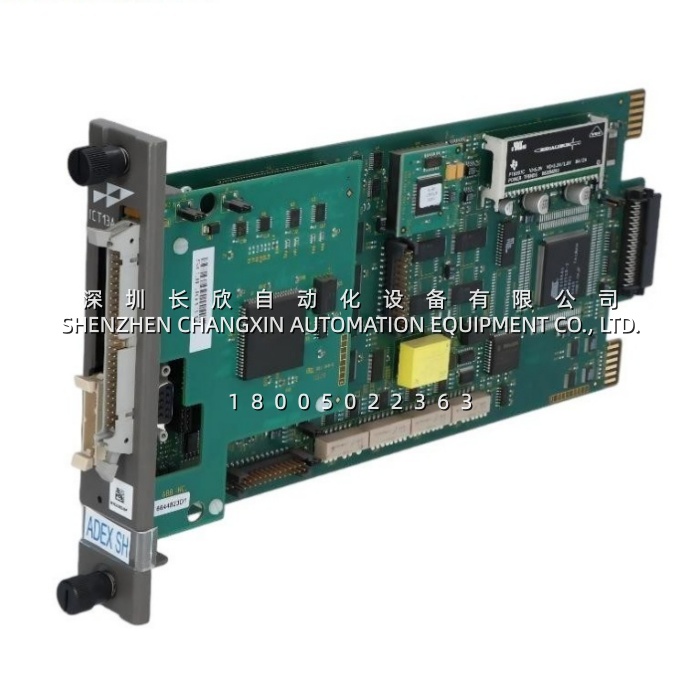
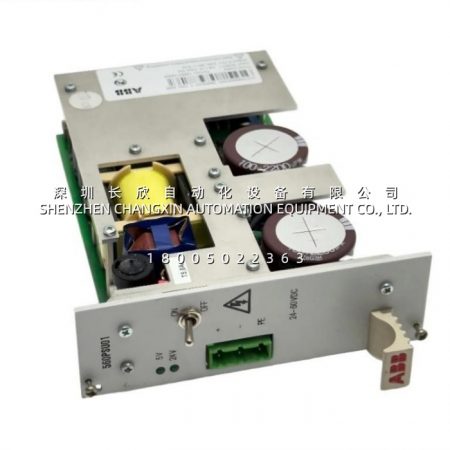
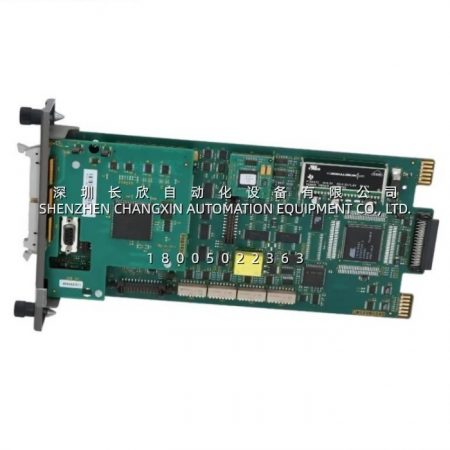
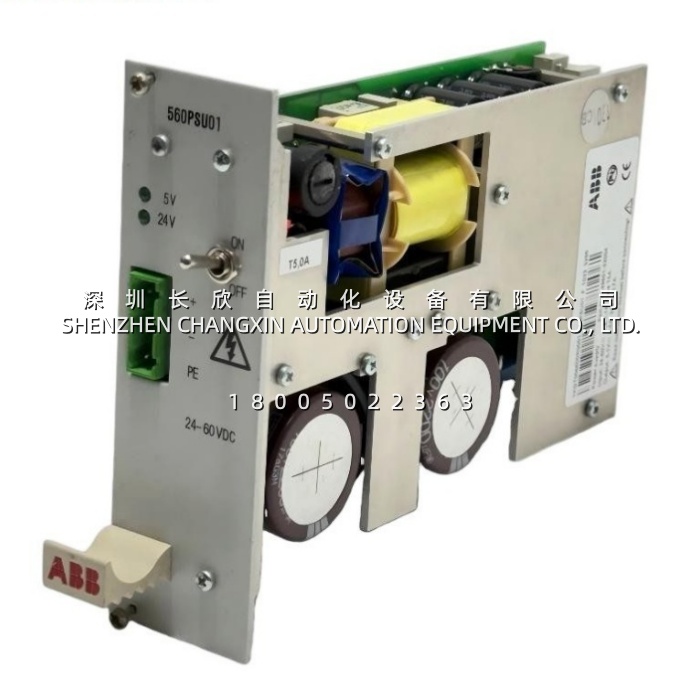
A transmission utility faced a familiar retrofit problem. Its 132 kV ring-main substation ran an RTU560 that was still reading its binary and analog inputs correctly, but the utility’s new DMS required IEC 60870-5-104 over corporate Ethernet, while the legacy bay-level protection IEDs spoke only RS-485 Modbus and a few IEC 60870-5-101 links. Replacing the entire RTU would have meant new wiring, a new cabinet, a new factory acceptance test, and a shutdown window nobody could promise.The answer was a 560CMR01 R0001. The existing rack, backplane, and I/O modules stayed exactly where they were; the new card went into the same slot, the SD card was loaded with the station configuration and the required protocol licenses, and the two Ethernet ports were split—E1 to the operational SCADA network, E2 to the local maintenance and HMI segment. CP1 kept the RS-485 IED poll running, and CP2 stayed as the RS-232 local console for the days the network was deliberately isolated. When the 560RTC01 pushed time onto the backplane, the sequence-of-events stamps on the binary inputs aligned across every bay instead of drifting seconds apart. On the first warm restart the SCADA saw the full point list and the old IEDs never noticed a thing. The utility gained its 104 uplink, kept its field-side investment, and the only outage was the half-hour it took to swap the card.
Parameter
| Main Parameters | Value/Description |
|---|---|
| Product Model | 560CMR01 R0001 |
| Ordering / Article Number | 1KGT036200R0001 (commercial alias 560CMR01 R0001) |
| Manufacturer | ABB, Grid Automation & Communication (RTU560 product line; post-2020 Hitachi Energy) |
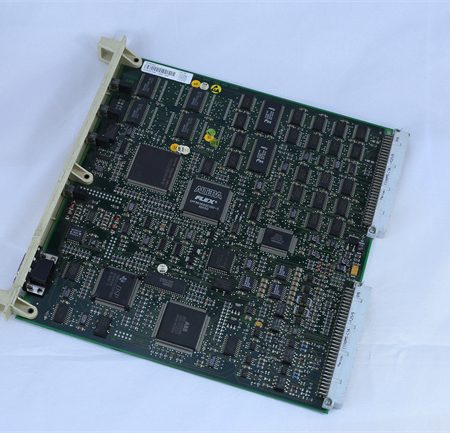
| Product Category | RTU560 Communication Unit (CMU) – central processor and communications module, not an I/O module |
| Processor | 32-bit ARM Cortex-A8, TI AM3352 @ 800 MHz with real-time operating system |
| Memory | 128 MByte RAM; 8 MByte boot Flash |
| Configuration Storage | Removable SD card (SD 2.0, Class 2, up to 4 GByte) – site configuration travels with the card, not the silicon |
| Serial Ports (CP1, CP2) | RS-232C or RS-485, independently software-selectable, RJ45, 200 bit/s to 38.4 kbit/s |
| Ethernet Ports (E1, E2) | 10/100BaseT per IEEE 802.3, RJ45, Auto-MDI/MDI-X – two independent MAC paths |
| USB Service Port | 1 × Micro-USB Type AB, USB 2.0 device, up to 480 Mbit/s – webserver diagnostics and event/log retrieval |
| Internal I/O Bus | SPB (Serial Peripheral Bus) master via rear backplane – the CMU is bus master to all 560xx I/O slaves |
| Real-Time Clock | Battery-buffered RTC, CR2032 3 V lithium, quoted >10 year life at ambient |
| Power Consumption | 5 V DC @ 500 mA; 24 V DC @ 3 mA (typical, backplane supply) |
| Operating Temperature | –25 to +70 °C; start-up capability to –40 °C; short-term exposure to +85 °C for up to 96 hours |
| Humidity | 5–95 % non-condensing |
| Form Factor | 3HE Eurocard; rack dimensions vary by subrack (verify against the specific RTU560 mechanical drawing) |
| Weight | Approx. 0.14 kg (module only) |
| Backplane Connector | 48-pole Type F DIN 41612 |
| Cybersecurity | R0001: standard cybersecurity functions; R0002 variant adds a security chip for advanced cybersecurity |
| Supported Protocols | IEC 60870-5-101, IEC 60870-5-104, DNP 3.0, Modbus (protocol licenses generally ordered separately) |
| Replaces | Earlier RTU560 CMU article 1KGT012600R0002 |

Reviews
There are no reviews yet.