
Technical Specifications
| Parameter Name | Parameter Value |
|---|---|
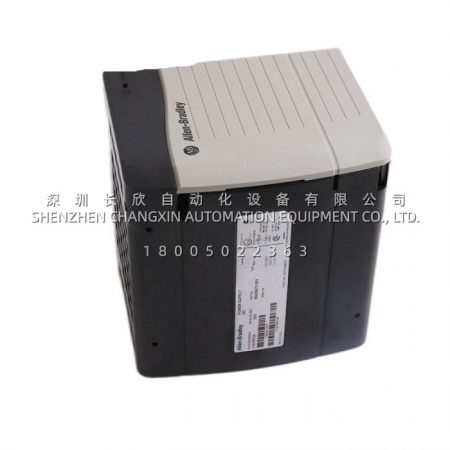
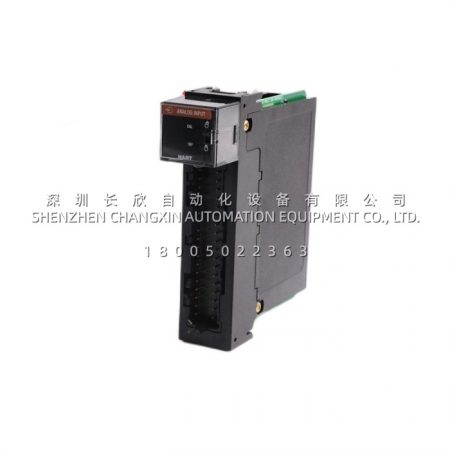
| Product Model | 1756-L55M12 |
| Manufacturer | Allen-Bradley (Rockwell Automation) |
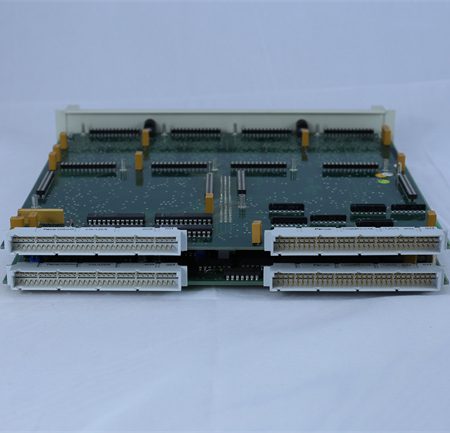
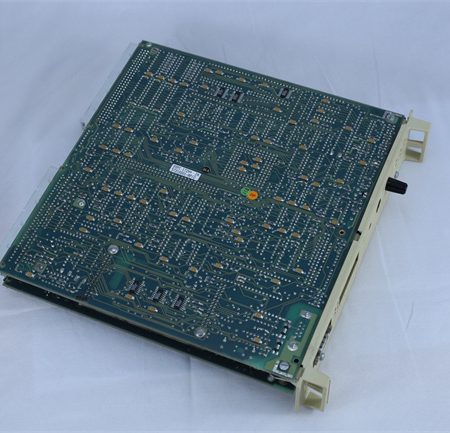
| Product Type | ControlLogix 5555 Processor Module (Logix5555 Controller) |
| User Memory | 750 KBytes (via integrated 1756-M12 memory board) |
| I/O Memory | 208 KBytes |
| Maximum I/O Capacity | 128,000 total I/O; 4,000 analog inputs; 2,000 analog outputs |
| Program Scan Time | 0.08 ms (typical, per KWord) |
| Backplane Current Draw | 1.23 A at 5.1 V DC; 14 mA at 24 V DC |
| Communication Support | EtherNet/IP, ControlNet, DeviceNet, DH+, Remote I/O, RS-232 serial (via bridge modules) |
| Programming Software | RSLogix 5000 (version 10.x or later required) |
| Programming Interface | 1756-CP3 serial cable or Ethernet via 1756-ENBT/E |
| Memory Backup Battery | 1756-BA2 lithium battery (extended life); 1756-BA1 also supported |
| Operating Temperature | 0 °C to +60 °C (32 °F to 140 °F) |
| Relative Humidity | 5% to 95% non-condensing |
| Vibration / Shock | 2 g at 10–500 Hz operating; 30 g operating shock |
| Dimensions (approx.) | 92 × 145 × 139 mm (3.6 × 5.7 × 5.5 in), single ControlLogix slot |
| Weight (approx.) | 0.65 kg (1.43 lb) |
| Mounting | 1756 ControlLogix chassis (1756-A4, -A7, -A10, -A13, -A17) |
Main Features and Advantages
Balanced Memory and Performance: The Allen-Bradley 1756-L55M12 delivers 750 KBytes of user memory alongside 208 KBytes of dedicated I/O memory, providing sufficient headroom for mid-sized applications that involve substantial tag databases, recipe management, and multi-step sequence logic without requiring the larger — and more costly — L55M13 or L55M14 variants. Combined with the 0.08 ms program scan time, the controller achieves a strong balance between program capacity and execution speed, making it suitable for high-speed sorting, packaging, and coordinated multi-axis motion control in addition to conventional continuous process logic.
True Multi-Network Integration: A defining advantage of the 1756-L55M12 is its native ability to operate across multiple industrial networks simultaneously. By populating adjacent ControlLogix chassis slots with bridge modules such as the 1756-ENBT (EtherNet/IP), 1756-CNB (ControlNet), and 1756-DNB (DeviceNet), the 1756-L55M12 acts as a protocol hub that bridges legacy Remote I/O and DH+ installations with modern EtherNet/IP architectures — dramatically simplifying migration projects and eliminating the need for standalone protocol gateways.
Redundancy-Ready Architecture: The 1756-L55M12 is fully compatible with the ControlLogix redundancy framework over ControlNet, allowing two identical processors to be paired with the 1756-RM redundancy module for high-availability configurations. This makes the controller a strong candidate for critical process applications where loss of control is unacceptable and automatic switchover must occur without process interruption.
Open Logix Programming Environment: Programming and configuration are handled through RSLogix 5000 software (version 10.x or later), providing access to the full suite of Logix development tools — tag-based addressing, ladder, structured text, function block, and sequential function chart editors, as well as integrated trend and diagnostic views. Connectivity is established either through the traditional 1756-CP3 serial cable or via an Ethernet interface, giving engineers flexibility in how they access controllers mounted in remote or hazardous locations.
Familiar Spare and Upgrade Path: Because the 1756-L55M12 was produced in large volumes and remains a frequent spare for legacy ControlLogix installations, sourcing units with matching Series and firmware revisions is straightforward. The integrated 1756-M12 memory board is field-replaceable, the 1756-BA2 lithium battery provides extended program retention, and the standard single-slot form factor means replacement into an existing chassis requires no mechanical or power-supply modification.
Rugged Industrial Construction: With an operating envelope of 0 °C to +60 °C, tolerance of 2 g vibration, and 5% to 95% non-condensing humidity, the 1756-L55M12 is engineered for continuous operation inside electrical rooms, MCC cabinets, and remote field enclosures typical of process industries worldwide.
Application Field
The Allen-Bradley 1756-L55M12 ControlLogix processor is deployed as the supervisory and control CPU in a broad range of continuous, batch, and discrete manufacturing environments where reliable multi-network communication and moderate program capacity are required. In manufacturing and assembly operations, the 1756-L55M12 coordinates assembly line sequencing, robotic cell integration, conveying systems, packaging machinery, and material handling — often managing simultaneous EtherNet/IP connections to HMI terminals, drives, and distributed I/O across multiple ControlLogix chassis within a single plant.
In the oil and gas sector, the controller is applied to pipeline monitoring, compressor station control, wellhead automation, tank farm management, and terminal loading operations, where the multi-network capability of the 1756-L55M12 allows integration of legacy DeviceNet field devices with modern EtherNet/IP supervisory layers. Water and wastewater utilities employ the processor for pump station control, filtration sequencing, and SCADA communication, while power generation facilities use it for balance-of-plant control, ash handling, and auxiliary system coordination.
The 1756-L55M12 is also well suited to batch process applications in food and beverage, pharmaceutical, and chemical manufacturing, where its 750 KB user memory accommodates recipe storage, phase logic, and batch sequencing while the Logix5555 architecture interfaces cleanly with Rockwell’s FactoryTalk batch environment. Redundant installations using the 1756-RM module over ControlNet are common in critical continuous processes where controller failover must be transparent to the running process.
Because the ControlLogix 5555 family shares a common programming environment, I/O ecosystem, and network interface with the rest of the 1756 platform, the 1756-L55M12 frequently serves as the primary controller in mixed-processor plants where larger L55M23 or L55M24 units handle heavy load areas while the 1756-L55M12 addresses supporting process units, providing a consistent engineering and maintenance experience across the entire automation infrastructure.
Reviews
There are no reviews yet.