
Application Scenarios
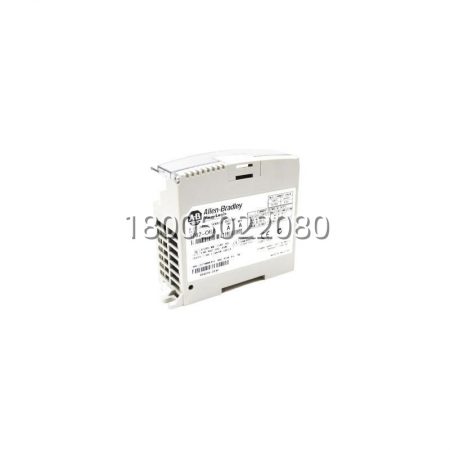
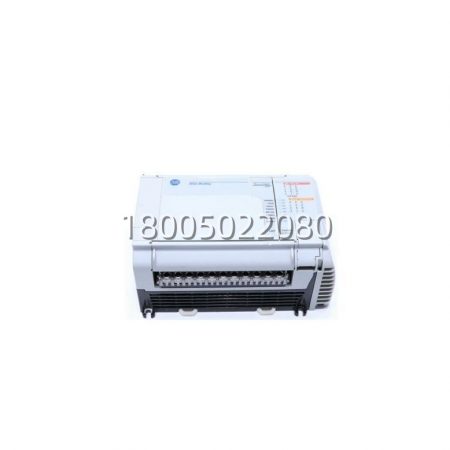
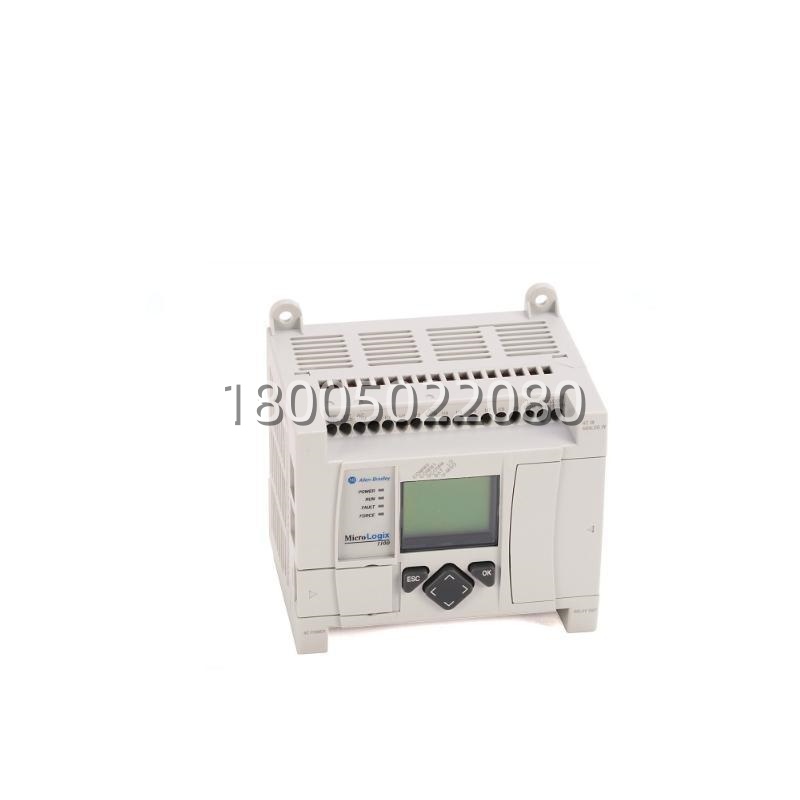
On a regional beverage contract-packaging line in Ohio, the integrator needed to retrofit three aging piston-fillers originally controlled by a mix of hard-wired relays and a failed SLC 500 mini. Space inside the stainless enclosure was severely limited, and the maintenance team wanted to keep 120 VAC discrete sensing (proximity switches on the conveyor) plus a couple of 0–10 V analog channels for filling-pressure transducers—without adding a separate analog card. The 1763-L16AWA slotted straight onto the existing DIN rail: ten 120 VAC digital inputs mapped to prox sensors and E-stops, two 0–10 V analog inputs reading head-pressure, and six relay outputs driving the filler clutch/brake and diverter solenoids. The built-in LCD let the line lead troubleshoot “no-fill” faults on graveyard shift without a laptop, and the Ethernet port tied the three fillers into the plant network for remote recipe downloads. The pain point—spare-parts scarcity after the MicroLogix 1100 discontinuation—was solved by sourcing refurbished 1763-L16AWA units with functional test reports, keeping the line running at <0.5% unplanned downtime for 18 months post-retrofit.
Parameter
| Main Parameters | Value/Description |
|---|---|
| Product Model | 1763-L16AWA |
| Manufacturer | Allen-Bradley / Rockwell Automation |
| Product Category | Compact PLC (MicroLogix 1100 Series) |
| Power Supply | 120/240 V AC, 47–63 Hz, 46 VA typ. |
| Digital Inputs | 10 × 120 V AC discrete (79–132 V AC range) |
| Analog Inputs | 2 × 0–10 V DC, 10-bit resolution |
| Outputs | 6 × relay, independently isolated, 10 A rated |
| Memory | 8 KB user program/data |
| Communication | Ethernet (EtherNet/IP, Modbus TCP), Isolated RS-232/RS-485 (DF1, DH-485, Modbus RTU, ASCII) |
| Expansion | Up to 4 × 1762 I/O modules |
| Display | Built-in LCD with keypad (I/O force, fault view, param set) |
| Mounting / Rating | DIN rail or panel, IP20, –20 to +65 °C |
Technical Principles and Innovative Values
- Innovation Point 1: Integrated AC-Powered I/O with Embedded Analog. Most compact PLCs in this class either run on 24 V DC and need external AC→DC supplies, or they omit analog entirely. The 1763-L16AWA accepts 120/240 V AC mains directly, hosts ten 120 V AC discretes natively, and still carves out two 0–10 V analog voltage inputs—all in a 90 × 110 × 87 mm envelope. This eliminates a separate analog card for simple pressure/temperature transducer loops.
- Innovation Point 2: Dual-Port Comms in a Nano Footprint. The 1763-L16AWA was among the first nano-PLCs to ship with a 10/100 Mbps EtherNet/IP port andan isolated RS-232/485 combo port out of the box. RS-485 supports multi-drop Modbus RTU to VFDs and scales; Ethernet enables plant-level HMI/SCADA integration and embedded Web server access—no add-on comms module required.
- Innovation Point 3: Built-In LCD + Online Editing. The front-panel LCD/keypad on the 1763-L16AWA lets technicians force I/O, view fault codes, and tweak timer/counter presets without RSLogix Micro disconnected. Combined with online editing (change logic while the processor stays in RUN), this cuts commissioning time dramatically compared to bullkier Micrologix 1000 predecessors.
Application Cases and Industry Value
Case 1 – Water Treatment Lift Station (Municipal). A mid-size municipality retrofitted four remote lift stations previously on pager-based alarm dialers. The 1763-L16AWA was chosen because the station already had 120 VAC float-switch wiring and a 0–10 V ultrasonic level transmitter—matching the controller’s native I/O 1:1. The Ethernet port pushed alarm and level data to the city SCADA over existing fiber; the relay outputs drove the duty/standby pump contactors and a beacon. Two years in, the public-works supervisor reported zero controller-related failures and estimated a 35% reduction in “truck-roll” false-alarm dispatches thanks to the LCD letting local staff distinguish float-stuck vs. pump-fault on-site.Case 2 – Pharmaceutical Conveyor / Diverter (Food & Bev). A contract packer used the 1763-L16AWA to control a 3-way divert gate on a bottle conveyor. Six relay outputs handled the gate solenoid, reject striker, and stack-light; the analog input monitored a downstream backlog photocell array via a custom 0–10 V conditioning board. When Rockwell discontinued the MicroLogix 1100 line, the OEM switched new skids to Micro800, but kept 1763-L16AWA spares for the 27 existing machines—extending the line’s service life by an estimated 6–8 years without a full rewire.
Related Product Combination Solutions
- 1763-L16BWA – Same 120/240 V AC powered MicroLogix 1100, but with (6) relay + (4) sinking DC outputs instead of pure relays; useful when you need mixed AC/DС load switching alongside the 1763-L16AWA on parallel machines.
- 1763-L16BBB – 24 V DC powered variant with 12 DC inputs and 6 DC outputs; often stocked alongside 1763-L16AWA for mixed-voltage plants.
- 1763-L16DWD – 24 V DC powered, (8) DC in + (4) analog in, (6) relay out; the DC-sensor sibling to the 1763-L16AWA.
- 1763-MM1 – Memory module for MicroLogix 1100; stores the application program and retains it during 1763-L16AWA replacement—critical for fast swap-out in MRO scenarios.
- 1763-NC01 – Programming cable (RS-232) for direct PC connection to the 1763-L16AWA during bench commissioning.
- 1762-IF2OF2 – 2-in / 2-out analog expansion (1762 series); snaps onto the right-side expansion port of the 1763-L16AWA if you outgrow the two onboard analog inputs.
- 2080-LC50-24QBB (Micro850) – Rockwell’s formal migration path; 24 V DC, more memory, but note: different I/O mapping and 120 VAC sensors would need interposing relays if replacing 1763-L16AWA directly.

Reviews
There are no reviews yet.