
Application Scenarios
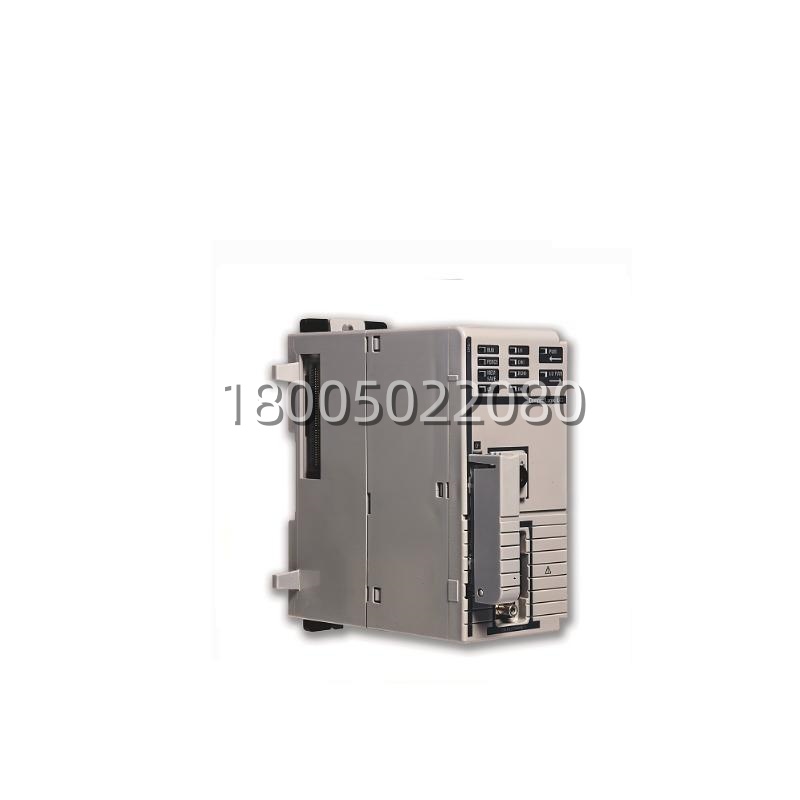
On a high-speed automotive press line in Germany, the engineering team was struggling with a legacy hard-wired safety relay system that required hours of rewiring every time a die change or guard configuration was modified. By retrofitting the cell with the 1768-L43S, the integrator consolidated light curtain monitoring, safety mat inputs, and Safe Torque Off (STO) for three servo presses into a single controller running both standard ladder logic and certified safety routines. When an operator broke the light curtain during a manual load, the 1768-L43S executed a controlled stop in under 120 ms while keeping non-safety axes online for diagnostics—something the old relay architecture could never achieve. Beyond compliance, the plant reduced changeover downtime by 35% because safety logic modifications were now software-driven rather than panel-rewired. This case illustrates how the 1768-L43S bridges the gap between “dumb” safety relays and oversized SIL-rated DCS platforms, delivering certified protection at machine-builder scale.
Parameter
| Main Parameters | Value/Description |
|---|---|
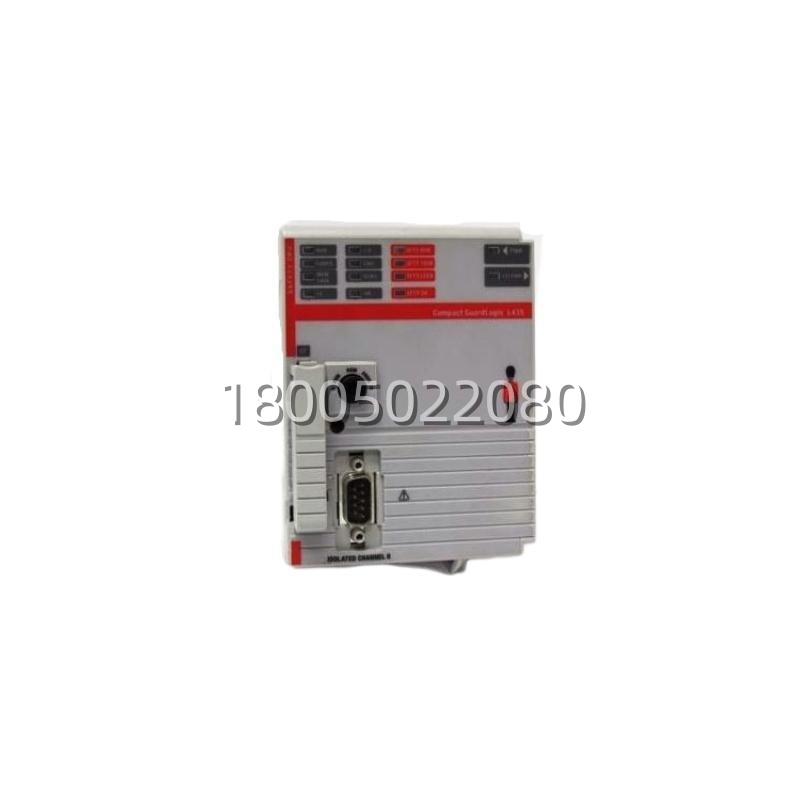
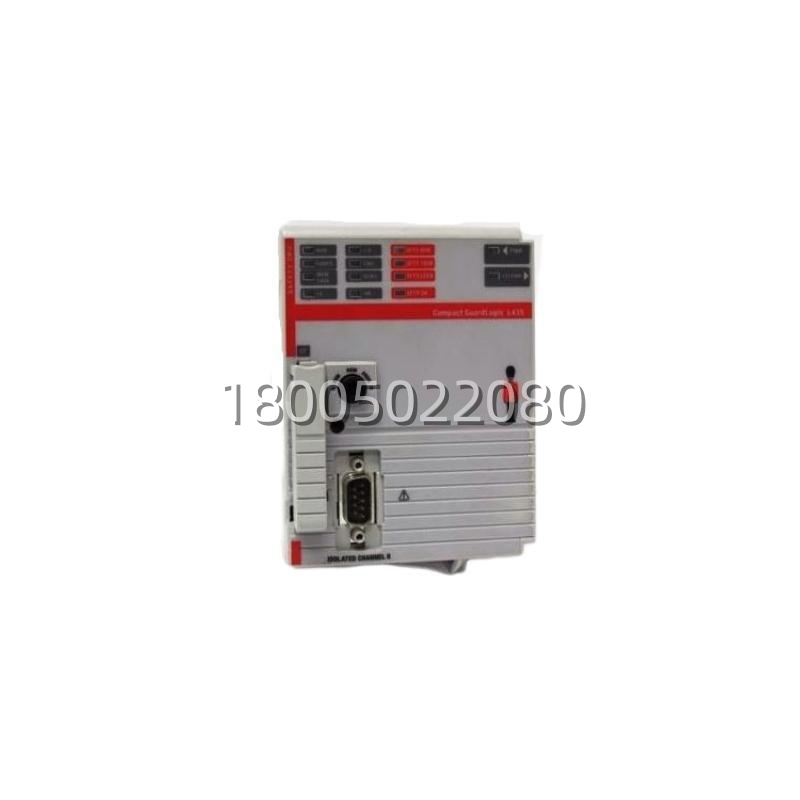
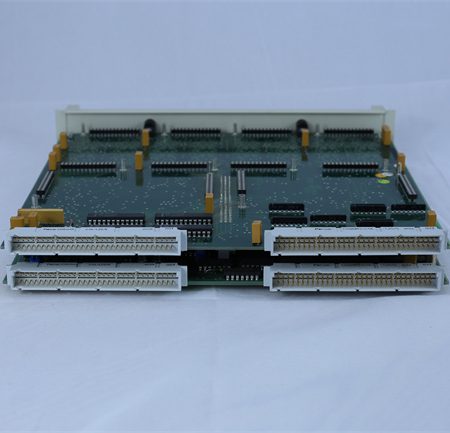
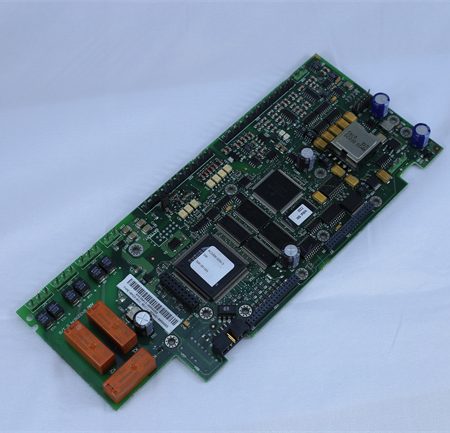
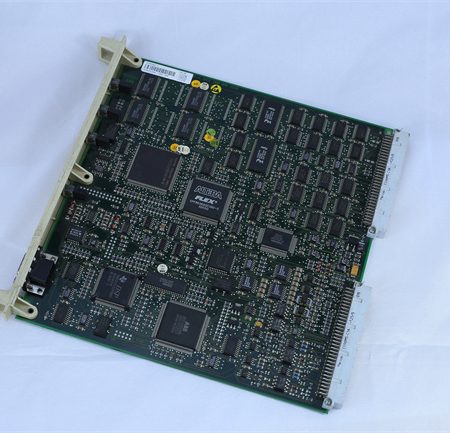
| Product Model | 1768-L43S |
| Manufacturer | Rockwell Automation (Allen-Bradley) |
| Product Category | Compact GuardLogix Safety Controller |
| User Memory | 2 MB (standard task) |
| Safety Memory | 0.5 MB (certified safety task) |
| Local Communication Port | 1 × RS-232, fully isolated, max 38.4 kbps |
| Max 1769 I/O Modules | 16 (up to 2 I/O groups) |
| Max 1768 Expansion Modules | 2 (ENBT / CNB / CNBR / EWEB) |
| Non-Volatile Storage | CompactFlash card slot |
| Backplane Current Load | 1.4 A @ 24V DC (1768), 2.0 A @ 5.2V (1769 out) |
| Power Dissipation | 7.5 W (module) / 33.6 W (system budget) |
| Safety Certification | IEC 61508 SIL 3 / ISO 13849-1 PLe |
| Operating Temperature | 0 °C to +60 °C |
| Mounting | DIN rail or panel mount, M4 / #8 screw, 1.16 N·m |
Technical Principles and Innovative Values
Innovation Point 1: Dual-Task Execution in a Single Controller. The 1768-L43S runs standard control tasks (ladder, FBD, SFC, ST) alongside a certified safety task (relay ladder only, with safety instruction set) on the same processor. Both share the same 1769 I/O backplane and the same Studio 5000 project, eliminating the need for a separate safety PLC and the cross-device handshaking that typically adds latency.Innovation Point 2: CIP Safety Readiness via 1768 Expansion. While the 1768-L43S itself carries only an RS-232 port, pairing it with a 1768-ENBT expansion unlocks CIP Safety over EtherNet/IP, allowing safety-rated comms to remote I/O or drives without extra wiring. This “single network, single controller” philosophy reduces panel space and cabling cost by up to 40% versus dual-network architectures.Innovation Point 3: CompactFlash-Based Project Resilience. The onboard CompactFlash slot lets the 1768-L43S store the entire application (standard + safety + tags) non-volatively. In the event of a CPU swap, the replacement boots from the card without requiring a laptop on the plant floor—critical for 24/7 lines where every minute of downtime carries five-figure cost.Innovation Point 4: Integrated Motion Capability. Through the EtherNet/IP or SERCOS expansion path, the 1768-L43S can coordinate up to 4 CIP Motion axes, letting safety-rated camming and electronic gearing live in the same rack that handles guard monitoring—a rare combination in the compact-controller tier.
Application Cases and Industry Value
A packaging OEM in the Midwest faced recurring OSHA citations because their stretch-wrapper cells used off-brand safety modules that couldn’t prove SIL 3 compliance during audits. They standardized on the Allen-Bradley 1768-L43S across 40+ SKUs, programming a reusable safety add-on instruction (AOI) for door interlock, E-stop, and guard logics that could be dropped into any machine’s Studio 5000 project. The result: audit preparation time dropped from weeks to days, and the OEM eliminated a $12k/year third-party safety validator retainer. More tangibly, one wrapper line in a frozen-food plant avoided a crush incident when a broken door latch triggered the 1768-L43S safety task; the controller logged the exact timestamp and I/O state to CompactFlash, giving the safety manager forensic data that satisfied corporate EHS without a line teardown. The 1768-L43S here acted not just as a controller, but as a compliance asset.
Related Product Combination Solutions
The 1768-L43S rarely works alone—it relies on a small ecosystem of 1768/1769 modules to become a complete GuardLogix cell:
- 1768-ENBT: Ethernet/IP bridge module; the most common companion to 1768-L43S for CIP Safety, HMI linking, and remote I/O.
- 1768-CNBR: ControlNet redundant bridge, preferred in process-adjacent machines that already run ControlNet backbone.
- 1768-PA3 / 1768-PB3: 24V DC / 110-240V AC power supplies sized for the 1768 backplane; the 1768-L43S draws 1.4 A @ 24V, so PA3 is the typical match.
- 1769-IQ32 / 1769-OG16: High-density digital input/output modules populating the 16-slot 1769 segment behind the 1768-L43S; the OG16 is often used for safety-rated outputs via external contactors.
- 1769-SIM: Simulation module for offline bench-testing safety logic before deploying to a live 1768-L43S rack.
- 1768-L45S: The higher-memory sibling (larger user/safety memory and 4× 1768 expansion slots vs. 2); recommended when the 1768-L43S I/O count or 1768-slot limit is exhausted.
- Studio 5000 Logix Designer + GuardLogix Safety Authorization: Not a hardware module, but the licensed software seat required to edit the safety task on the 1768-L43S—standard Studio 5000 can view but not modify safety routines without this add-on.

Reviews
There are no reviews yet.