
Application Scenarios
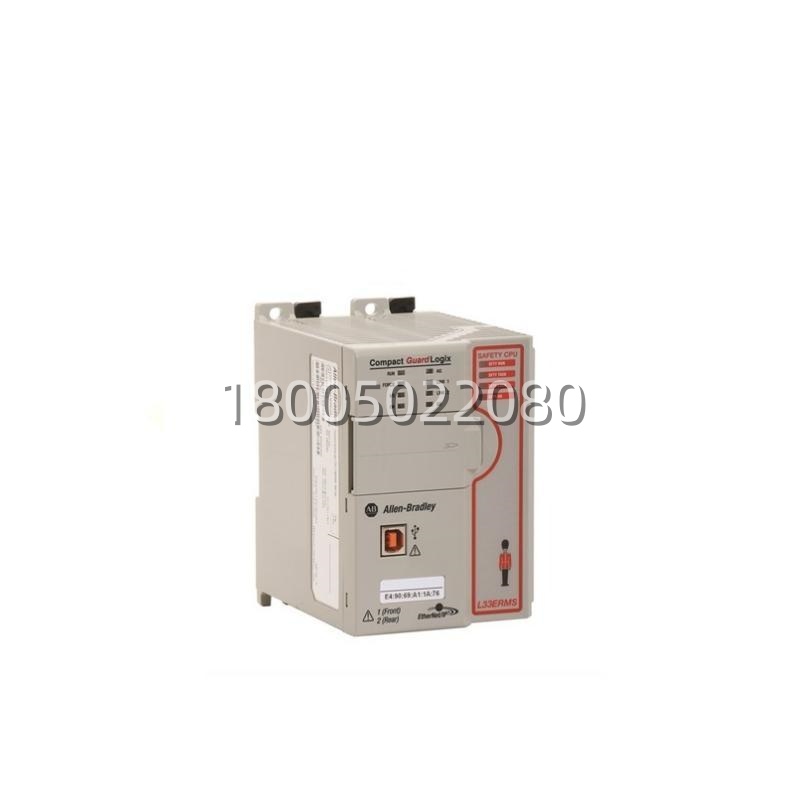
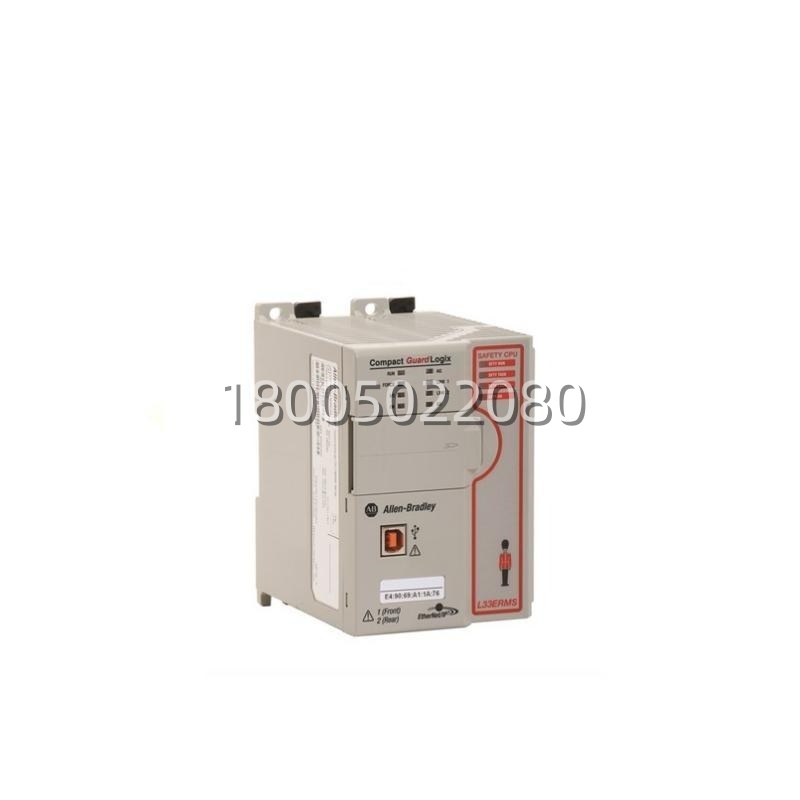
In a high‑speed automotive assembly line, robotic cells must operate with precision while ensuring human operator safety. The Allen‑Bradley 1769‑L37ERMS serves as the unified brain, controlling the sequential logic of conveyors and robots while simultaneously monitoring safety light curtains, emergency stops, and door interlocks. Its integrated safety function executes a Safe Torque Off (STO) command to drives in milliseconds upon breach detection, preventing accidents without unnecessarily halting the entire production line . This addresses the key pain points of system complexity, high wiring costs from separate controllers, and the risk of spurious trips common in non‑integrated safety systems.
The 1769‑L37ERMS excels in applications requiring both safety and motion precision—from packaging machinery with high‑speed servo axes to material handling systems with AGVs and robotic workcells. For OEMs designing complex machines, this controller reduces cabinet space, simplifies commissioning, and provides deterministic performance for time‑critical automation tasks .
Parameters
| Main Parameters | Value/Description |
|---|---|
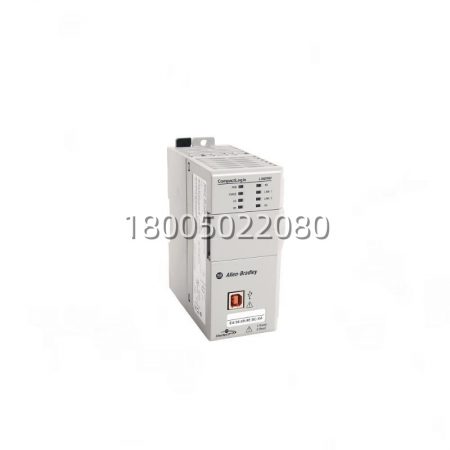
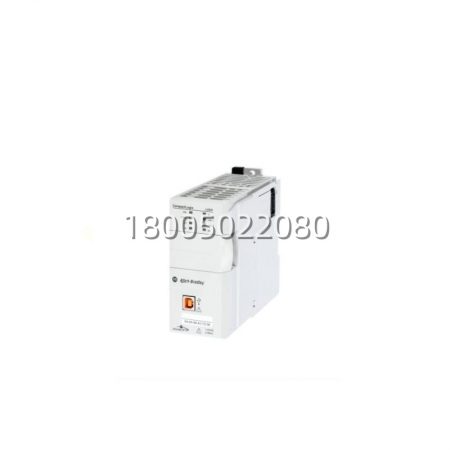
| Product Model | 1769‑L37ERMS |
| Manufacturer | Allen‑Bradley / Rockwell Automation |
| Product Category | Compact GuardLogix 5370 L3 Controller |
| Standard Memory | 4 MB user memory for standard logic and data |
| Safety Memory | 1.5 MB dedicated safety application memory |
| Safety Certification | SIL 3 (IEC 61508), PL e / Cat. 4 (ISO 13849‑1) |
| Communication Ports | 2x EtherNet/IP (10/100 Mbps, supports DLR), 1x USB for programming |
| Motion Control | Up to 16 axes CIP Motion with integrated kinematics support |
| I/O Expansion | Up to 30 local 1769 I/O modules |
| Network Nodes | Supports up to 64 EtherNet/IP connections |
| Non‑Volatile Storage | 1 GB SD card included; supports up to 2 GB |
| Power Supply | 24V DC (via 1769 power module) |
| Operating Temperature | 0 to 60°C (32 to 140°F) |
Technical Principles and Innovative Values
Innovation Point 1: Unified Safety and Standard Control Architecture
Unlike traditional setups requiring a separate safety relay or dedicated safety PLC, the 1769‑L37ERMS executes both standard logic and CIP Safety logic within the same chassis. A multi‑core processor physically separates safety‑critical tasks from standard control, enabling sophisticated safety interlocks tightly coupled with process logic while maintaining certified SIL 3 integrity . This unified approach reduces hardware footprint by up to 40% and simplifies wiring significantly.
Innovation Point 2: Deterministic Motion over EtherNet/IP
The 1769‑L37ERMS leverages CIP Sync and CIP Motion protocols to synchronize multi‑axis motion control directly over standard EtherNet/IP networks, eliminating proprietary motion networks. This built‑in capability—indicated by the “M” in the model suffix—supports complex kinematics for applications like flying shears and robotic pick‑and‑place without additional motion modules . The integrated approach reduces hardware costs while maintaining precision required for demanding motion applications.
Innovation Point 3: Device Level Ring (DLR) Network Resilience
The dual embedded Ethernet ports support DLR topology, allowing the 1769‑L37ERMS to form a redundant ring network. If a cable is severed, the network recovers in under 3 ms—a critical feature for safety‑critical applications where communication continuity is paramount . This cost‑effective redundancy eliminates the need for expensive controller‑level redundancy while maintaining 99.999% network availability.
Innovation Point 4: Dedicated Safety Memory with Task Separation
The 1769‑L37ERMS provides 1.5 MB of dedicated safety memory, physically segregated from the 4 MB standard user memory. This design ensures safety logic executes independently of standard tasks, with separate watchdog timers and cross‑checking mechanisms. The controller supports independent safety task execution, allowing safety routines to be locked and password‑protected separately from standard logic—a critical feature for regulatory compliance .
Application Cases and Industry Value
Case 1: High‑Speed Packaging Line Integration
A global food & beverage manufacturer upgraded their vertical form‑fill‑seal (VFFS) packaging machines using the 1769‑L37ERMS as the central controller. The system integrated 12 servo axes for film handling, sealing, and cutting, with 8 safety zones monitored via light curtains and safety gates. By consolidating motion, logic, and safety into one controller, the OEM reduced control panel footprint by 35% and cut commissioning time from 5 days to 2 days. End‑users reported a 60% reduction in downtime due to the controller’s diagnostic capabilities and DLR network resilience, which automatically rerouted communications around cable faults.
Case 2: Automotive Robotic Cell Safety Upgrade
An automotive tier‑1 supplier retrofitted their robotic welding cells with the 1769‑L37ERMS to replace an aging safety relay system. The controller simultaneously managed robot trajectory planning (8 axes), conveyor synchronization, and safety monitoring of 12 interlock zones. The integrated safety function reduced response time to safety breaches from 50ms to under 5ms, meeting new ISO 13849‑1 requirements without adding hardware. Maintenance teams reported that the Studio 5000 unified programming environment reduced troubleshooting time by 40%, while the built‑in SD card backup simplified system recovery after unplanned power outages.
Reviews
There are no reviews yet.