
Application Scenarios:
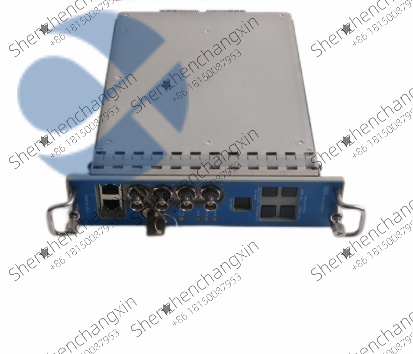
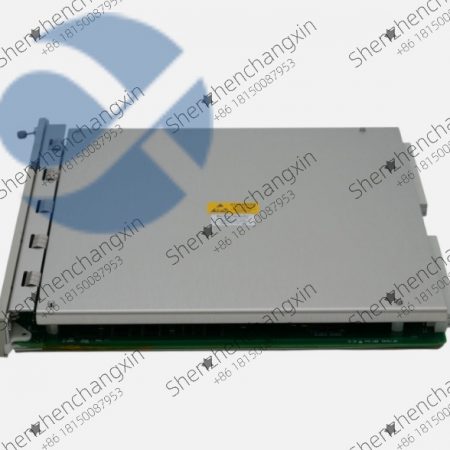
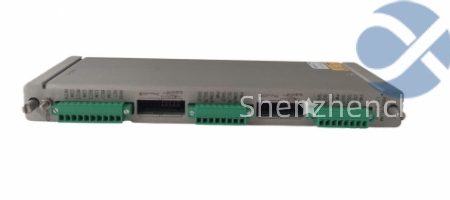
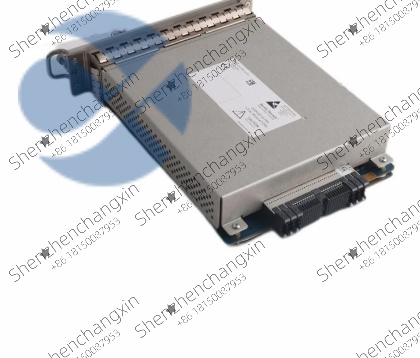
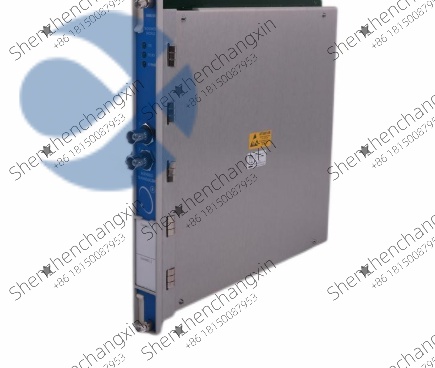
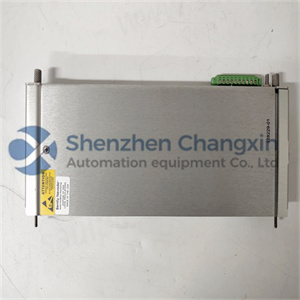
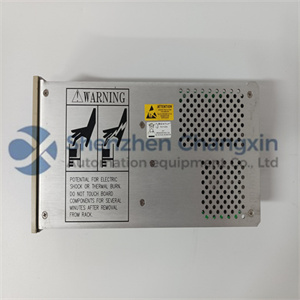
In a large natural gas compressor station, a BENTLY 3500/33-01-00 Relay Module is a key component of the machinery protection scheme. The station’s centrifugal compressor is monitored by 3500/42 vibration monitors and a 3500/25 Keyphasor module. If the radial vibration on the compressor’s drive-end bearing exceeds a pre-set “Danger” level, the 3500/42 module communicates this status internally to the 3500/33 module. The 3500/33 instantly energizes the specific relay channel assigned to that “Danger” signal. This relay’s contacts close, completing a circuit to the compressor’s emergency shutdown (ESD) valve, causing it to close and safely isolate the compressor. Simultaneously, other relay channels on the same 3500/33 module might activate alarm horns and dashboard lights, alerting operators to the trip cause. This scenario highlights the module’s role as the decisive “final action” element, converting electronic alerts into physical, safety-critical actions.
Technical Principles and Innovative Values:
The BENTLY 3500/33-01-00 translates digital safety logic into reliable physical control, embodying the principle of redundant, fault-tolerant action.
Innovation Point 1: High-Density, Configurable Relay Interface. Its primary value lies in consolidating 16 fully independent relay channels in a single module slot. This high density reduces the footprint and complexity compared to using external relay cabinets. Each channel is individually and flexibly configurable via software to be assigned to any alarm or danger signal from any other module in the same rack (e.g., from a 3500/42. 3500/40. or 3500/25), allowing for highly customized shutdown and alerting logic.
Innovation Point 2: Software-Based Logic Assignment and Voting. Unlike hardwired relay systems, the association between a sensor fault and a relay action is not fixed by wiring but programmed in software. This allows for sophisticated logic, such as having a relay activate only if two out of three vibration probes are in alarm (2oo3 voting), significantly reducing the chance of a nuisance trip. The logic is executed by the monitoring modules, and the 3500/33 acts as the fast and reliable output engine for that logic.
Innovation Point 3: Enhanced Diagnostics and Safe State Indication. The module provides clear per-channel LED status indication, showing whether a relay is commanded to be energized (pulled in) or in its safe de-energized state. More importantly, the system can perform a relay test by briefly pulsing the coil and verifying the contact action, ensuring the relay has not welded shut—a critical diagnostic for safety systems. The default safe state (de-energized) is a fail-safe design, meaning loss of power to the module or rack will cause the relays to de-energize, typically initiating a safe shutdown.
Application Cases and Industry Value:
Case Study: Implementing a Reliable Trip Matrix for a Steam Turbine-Generator Set.
A power plant’s 100 MW steam turbine required a comprehensive protection system with multiple trip functions (overspeed, high vibration, low lube oil pressure, etc.) and sequential permissives for startup. The plant used a 3500 system with a BENTLY 3500/33-01-00 module as the central trip relay interface. Each protection point (e.g., from a 3500/53 overspeed monitor, multiple 3500/42 vibration monitors, and external pressure switches) was logically configured in software. The 3500/33’s 16 channels were assigned: some to directly trip the turbine’s emergency stop valves (ESVs), others to trip the generator breaker, and others to activate specific alarm annunciators. During a scheduled functional test, a simulated low oil pressure signal was injected. The logic solver (a separate module) processed this and sent the command. The designated relay on the 3500/33 energized within milliseconds, successfully testing the trip circuit. The plant’s I&C engineer noted, “The 3500/33 gives us incredible flexibility. We can reconfigure trip logic or reassign alarms in software without touching a single wire. Its reliability and the clear status lights have made troubleshooting trip circuits faster and safer. It’s the dependable workhorse that executes our protection strategy.”
Related Product Combination Solutions:
BENTLY 3500/42M: Vibration Monitor. The primary source of machinery alarm/danger signals that are executed by the 3500/33 relay outputs.
BENTLY 3500/53: Speed Monitor. Provides overspeed and underspeed signals that often drive critical trip relays on the 3500/33.
BENTLY 3500/32: 4-Channel Relay Module. A lower-density alternative to the 3500/33 for applications requiring fewer relay outputs.
BENTLY 3500/92: TMR (Triple Modular Redundant) Relay Module. Used in the highest-integrity applications where three independent relays are used per shutdown function, with voting performed externally.
BENTLY 3500/15: Power Supply. Provides clean, redundant power to the entire 3500 rack, which is essential for the reliable operation of the 3500/33 and all other modules.
BENTLY 3500/22: Transient Data Interface. Can be configured to start recording data when a relay on the 3500/33 is activated, capturing event-based data for analysis.
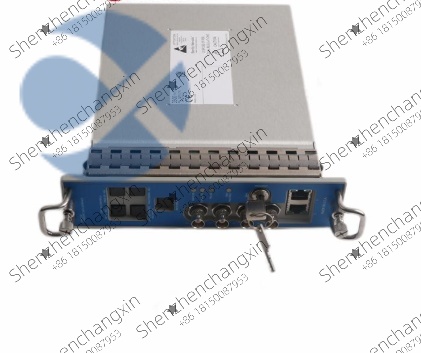
BENTLY 3500 Rack Interface Module (e.g., 3500/50): Provides the physical slot and backplane communication for the 3500/33 module.
BENTLY System 1® Software: The engineering and configuration software used to assign alarm/trip logic from monitoring modules to specific relay channels on the 3500/33.
Installation, Maintenance, and Full-Cycle Support:
Installation involves sliding the BENTLY 3500/33-01-00 module into an available slot in a 3500 series rack. The critical work is the external wiring: each relay channel’s Common (C), Normally Open (NO), and Normally Closed (NC) terminals must be wired to the field devices (solenoid valves, alarm lamps, PLC inputs, etc.) via the rack’s termination panel. The wiring must adhere to safety standards, often using separated and guarded circuits for critical shutdown functions. Configuration is performed entirely in software (using the 3500 Configuration Software or System 1), where each relay is mapped to the output of a specific alarm or danger setpoint from any other module.
Routine maintenance involves verifying the health of the relays. The system software can perform a “Relay Test” that briefly energizes each coil and monitors the contact state change. Visually, the front-panel LEDs should match the expected commanded state. The module is hot-swappable in racks with redundant power supplies, allowing for replacement without taking the monitoring system offline. Our full-cycle support ensures your protection outputs are always reliable. We provide detailed wiring and configuration guidance, assist with logic design for your safety functions, and supply genuine, factory-tested replacement modules. We are committed to supporting the integrity of your machine protection system from sensor to final action.
Contact us for a customized solution to implement a reliable and configurable relay interface for your machinery protection and shutdown system.

Reviews
There are no reviews yet.