
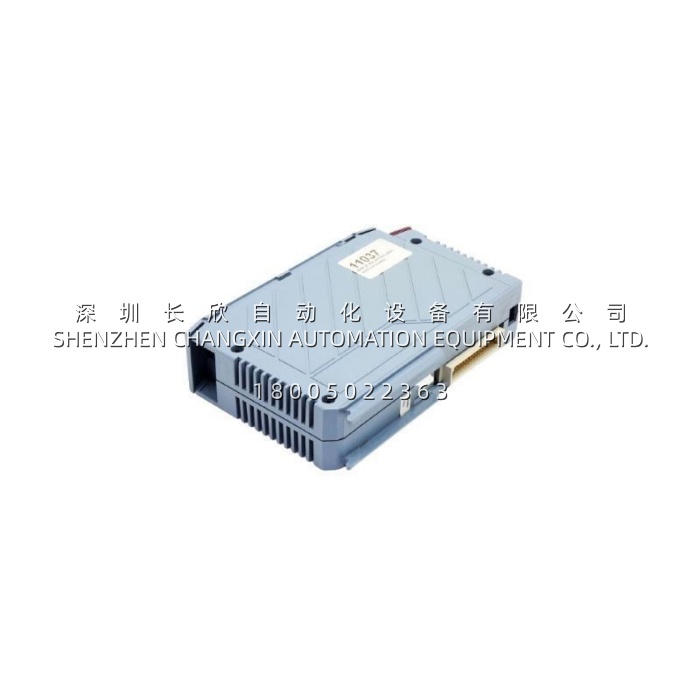
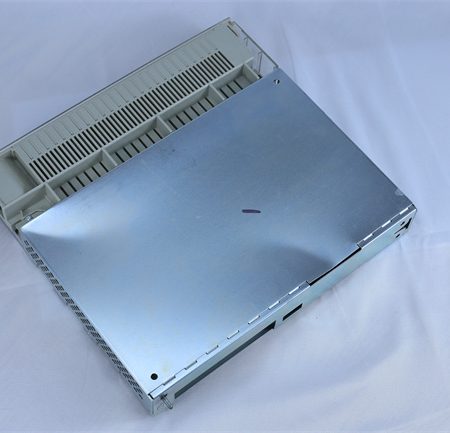
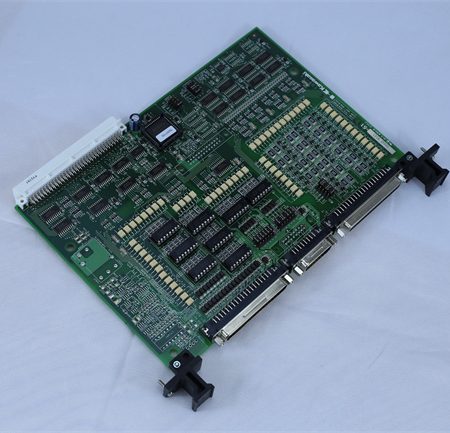
Application ScenariosA textile-converting plant running 14 B&R 2005 racks across two weave-prep lines was struggling with a cobbled-together “USB-to-RS485 dongle + unshielded cable” setup that linked the warp-beam tension controller (TTY protocol, 1980s vintage Siemens drive) to the main PLC. Every time the neighboring 7.5 kW spindle motor ramped, the dongle’s PC-side USB bus reset, losing 30–40 seconds of tension data and forcing a manual re-thread. The maintenance lead replaced the dongle chain with a 3IF050.6 slotted into the existing 2005 rack: TTY port → tension drive, RS485 port → DNC host for roll-tag download, RS232 port → handheld barcode gun for batch-ID entry. Because every port on the 3IF050.6 is galvanically isolated (and the module sits inside the rack’s own screened enclosure), the spindle EMI no longer walked up the serial line. Setup took one morning; the “comm loss” fault ticket count on that line went from 6 per week to zero over the next quarter. For a plant where one bad roll = €800 scrap, the €200-odd OEM module paid for itself before lunch.h2
Parameter
| Main Parameters | Value/Description |
|---|---|
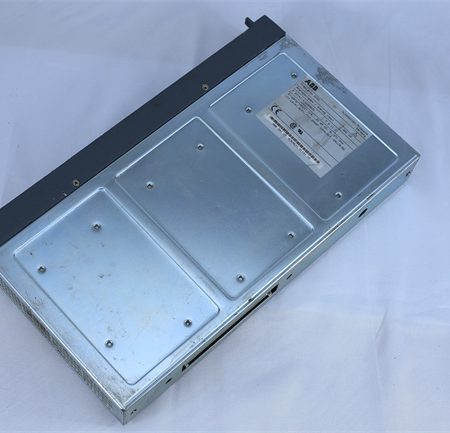
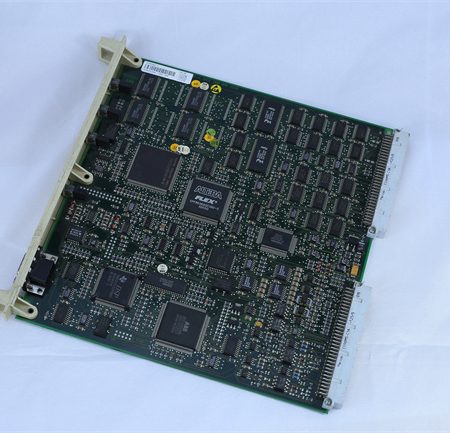
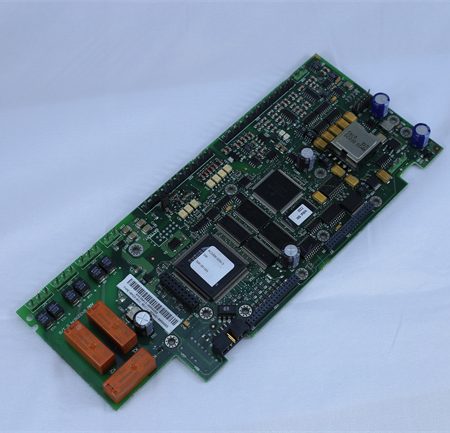
| Product Model | 3IF050.6 (B&R / ABB Group) |
| Manufacturer | B&R Industrial Automation (ABB) |
| Product Category | Serial Communication Interface Module (2005 series) |
| Port 1 | 1 × RS232 (9-pin D-sub typical, configurable baud) |
| Port 2 | 1 × RS485 / RS422, network-capable (daisy-chain multidrop) |
| Port 3 | 1 × RS232 / TTY (legacy drive / terminal head protocol) |
| Isolation | All interfaces galvanically isolated from backplane & each other |
| Backplane Bus | B&R 2005 system bus (plugs into 2005 rack slot) |
| Supply / Power | Via 2005 backplane (typical 24 VDC rack supply) |
| Mounting | 2005 rack module / DIN rail (via carrier) |
| Operating Temp. | 0 °C to +55 °C (standard 2005 rating) |
| Certification | CE, UKCA, UL / cULus E115267 |
| Status Indication | Per-port Rx/Tx LEDs on front fascia |
h2 Technical Principles and Innovative ValuesInnovation Point 1: Triple-Port, Fully Isolated Architecture. Most “multi-serial” cards share a ground and rely on software to weed out noise. The 3IF050.6 gives each port its own isolation barrier, so a ground-loop from a 1980s TTY drive on Port 3 cannot corrupt the RS485 DNC download on Port 2. That’s why this module survives in retrofits where three different generations of field gear coexist on one machine.Innovation Point 2: 2005 Backplane Integration + No External Power Brick. The 3IF050.6 draws from the 2005 rack’s 24 VDC backplane and maps each port into the B&R I/O image via standard Function Blocks (FBs) in Automation Studio. No extra PSU, no PCI-slot worries, no driver hunting on a Windows IPC — it’s configured in the same project as your digital I/O and motion axes.Innovation Point 3: RS485 Port Is “Network-Capable.” Unlike a bare point-to-point RS232, the 3IF050.6‘s RS485/RS422 port supports multidrop (up to 32 nodes typical for RS485), making it the natural bridge when you need one 2005 CPU to poll a string of weigh scales, barcode guns, or remote I/O drops along a conveyor — all on one twisted pair.h2 Application Cases and Industry ValueCase 1 – Packaging Line DNC Upgrade (Central Europe, FMCG). A flow-wrapper line running a B&R 2005 CPU needed to pull recipe + batch-ID files from a central DNC server and push OEE counters back, while still talking TTY to a 1990s vintage checkweigher that the plant wasn’t ready to replace. The integrator spec’d a 3IF050.6: Port 1 = DNC (RS232, 38.4 kbps), Port 2 = future scale ring (RS485, reserved), Port 3 = checkweigher TTY (9.6 kbps). Three protocols, one module, zero extra cabinet space. Two years post-retrofit, the plant reported zero serial-comm-related line stops — the previous “PC + 2×USB dongles” setup had been averaging one lockup per 10 shifts.Case 2 – CNC Shopfloor Consolidation. A contract machinist with eight 3-axis mills (mixed Fanuc / Siemens controls, all RS232 DNC capable) used a 3IF050.6 in an X20 rack (via 2005-X20 gateway) to aggregate DNC push to all eight machines over a single RS232 port via a simple A/B switch tree, while the second port handled a shopfloor barcode scanner for job-card ID. The third port was left spare for a future vision-inspection station. The module’s isolation was cited by the integrator as “the reason we stopped getting corrupted NC blocks when the chip conveyor motor kicked in.”

Reviews
There are no reviews yet.