
Product Overview
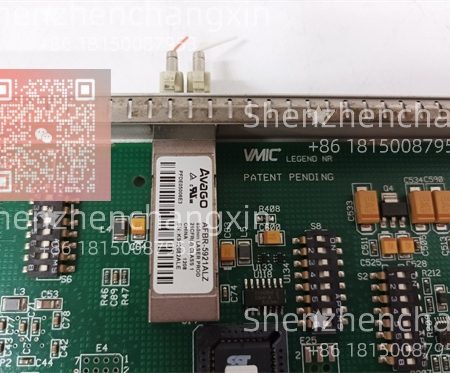
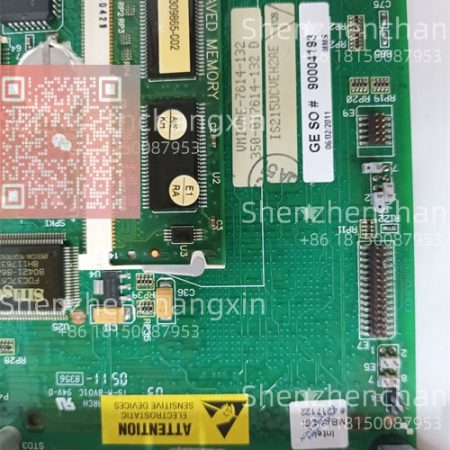
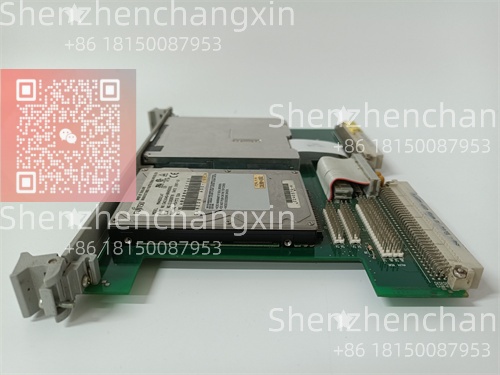
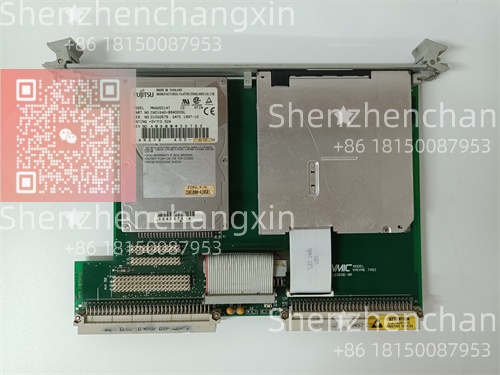
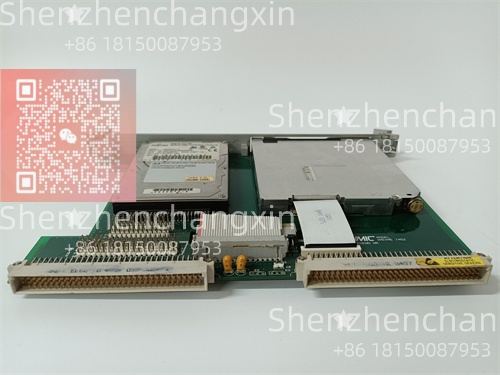
The GE VMIVME-7452 is a high-performance 6U VMEbus single-board computer, part of the GE Intelligent Platforms (formerly GE Fanuc) VMIVME series. It is designed for embedded real-time computing and industrial control applications with demanding requirements for performance, reliability, and scalability. This board typically features a powerful PowerPC processor and integrates a wide range of peripheral interfaces, serving as the core computing engine for building complex, high-determinism control systems.
Core Features and Value
The core value of this board lies in providing superior central processing capabilities for robust and scalable VME system architectures. It integrates high-performance computing, large-capacity memory, and flexible networking and local I/O options on a single board. Users can leverage this platform to seamlessly expand various dedicated I/O and communication modules via the VME backplane, building customized solutions for applications ranging from factory automation and test and measurement to defense and transportation. Its rugged design ensures stable operation in harsh industrial environments. Technical Specifications
Parameter Category
Specific Description
Product Model
VMIVME-7452
Manufacturer
GE Intelligent Platforms
Product Line
VMIVME Series
Board Specifications
6U VMEbus standard, single slot
Processor
Typically equipped with a high-performance PowerPC processor (e.g., Freescale/IBM series), with a clock speed of 1GHz or higher
Memory
Onboard SDRAM/DDR SDRAM, capacity up to 1GB or higher
Storage
Onboard flash memory for bootloader and firmware, typically expandable with large-capacity storage via PMC or SCSI/SATA interfaces
Communication Interfaces
• Dual 10/100/1000 Mbps Ethernet ports
• Multiple serial ports (RS-232/422/485)
• Typically supports USB 2.0 interface
Expansion Interfaces
One or more PCI Mezzanine Card (PMC) sites for functional expansion (e.g., additional I/O, specific networking, motion control)
VMEbus Interface
System controller functionality, supporting VME64 or VME64x expansion for high-bandwidth backplane data transfer
Real-Time Clock
Real-time clock (RTC) with battery backup
Watchdog Timer
Hardware watchdog timer to ensure system reliability
Operating Temperature
Typically available in commercial grade (0°C ~ +60°C) and extended industrial grade (-40°C ~ +70°C) options
Power Supply
Powered via VME backplane (+5V, +/-12V)
Certifications
Complies with CE, FCC, and other electromagnetic compatibility standards, and can meet specific industry certification requirements (e.g., railway, military)
Application Scenarios
Scenario: High-Speed Rail Train Control and Diagnostic System
In next-generation high-speed trains, a core computing platform is needed to process large amounts of sensor data in real time (such as speed, acceleration, bearing temperature, braking pressure) and execute critical control logic. The GE VMIVME-7452 is used as the main processor for the train control unit. Its powerful PowerPC processor runs a real-time operating system, processing control algorithms with millisecond precision. Dedicated communication cards are loaded via its PMC expansion slots to enable protocol conversion between train buses (such as MVB and CAN) and Ethernet. Dual Ethernet ports are used for the in-car equipment network and the control network to the driver’s display. All critical data is recorded in real time and automatically uploaded to the ground analysis center via a wireless network upon arrival at the station. Its robust design withstands the continuous vibration and wide temperature variations during train operation, ensuring the absolute reliability and safety of the control system and addressing the core challenge of high-reliability computing in harsh mobile environments.
Technical Advantages and Innovative Value
Modular High-Performance Computing and Expansion Capabilities
The core innovation of the GE VMIVME-7452 lies in its “core computing + flexible expansion” architecture. It integrates one or more high-performance PowerPC processors, large-capacity memory, and high-speed cache on a single board, providing powerful local computing capabilities. Simultaneously, through one or more PMC expansion slots, users can “tailor” the system to specific applications by adding components such as high-speed data acquisition cards, fiber channel cards, reflective memory cards, or additional fieldbus interfaces. This design decouples general-purpose computing from dedicated I/O, ensuring the advanced performance of the core platform while providing unparalleled flexibility and adaptability to future needs through standardized expansion interfaces (PMC), protecting users’ long-term investments.
Rugged Design Optimized for Harsh Environments
Unlike commercial server boards, this board is designed from the outset for industrial and harsh environments. It uses industrial-grade and even military-grade components and supports a wide operating temperature range. Its PCB layout, power supply design, and signal integrity are specially optimized to withstand strong electromagnetic interference, mechanical vibration, and shock. The on-board hardware watchdog timer automatically resets the system if the software malfunctions, which is crucial for ensuring uninterrupted system operation. This “ruggedized computing” concept allows systems built on this board to be deployed in a variety of challenging environments, from factory floors to mobile vehicles, from outdoor sites to aerospace testing platforms. Deterministic Real-Time Performance and Open Ecosystem
This board is deeply integrated with mainstream real-time operating systems. Its hardware architecture and drivers provide predictable, deterministic low-latency responses for real-time tasks. Interrupt handling, memory access, and bus transfers are optimized to ensure highly stable cycle times for critical control loops. At the same time, it leverages the mature VMEbus open standard ecosystem, allowing users to obtain thousands of different functional VME boards from GE and numerous third-party vendors, easily building systems ranging from simple data acquisition to complex multi-processor clusters. This combination of “deterministic core + open ecosystem” provides users with a solid foundation for building high-performance dedicated systems.
Industry Application Case
Case: Upgrading a Large Wind Tunnel Measurement and Control System
A national-level aerodynamic research institution’s large transonic wind tunnel had an outdated measurement and control system based on obsolete VME equipment, suffering from insufficient computing power, outdated interfaces, and maintenance difficulties. The upgrade project selected a new generation measurement and control system centered around the GE VMIVME-7452.
Implementation and Value:
Performance Leap: The new PowerPC processor provides ten times the computing power of the old system, enabling real-time execution of more complex flow field calculation models, making active control of airfoils possible.
Flexible Integration: High-precision synchronous acquisition cards and Gigabit fiber optic communication cards were added via PMC slots, enabling microsecond-level synchronous acquisition of signals from thousands of pressure and temperature sensors, and real-time transmission of massive experimental data to the back-end storage cluster.
Improved Reliability: The robust design ensures that the system remains stable and fault-free under the strong vibrations and electromagnetic interference generated during wind tunnel operation. Hardware watchdog prevents any unexpected crashes, ensuring the smooth completion of each expensive wind tunnel experiment.
Results: The new system reduced the data preparation and processing time for a single experiment by 60%, significantly improving experimental accuracy and repeatability, and laying the foundation for future more complex active flow control experiments, greatly enhancing the research capabilities of the wind tunnel.
Supporting Solutions
VME Chassis and Power Supply: Such as the VMIVME-5577 series 6U VME chassis, providing a robust mechanical structure, high-power density power supply, and cooling system, providing a “home” for the VMIVME-7452 and expansion cards. PMC Expansion Modules: Such as the PMC-5565 reflective memory card, used to build ultra-low latency, deterministic real-time networks; or various analog/digital I/O PMC cards for connecting field sensors and actuators.
Real-time Operating System: Wind River VxWorks or QNX Neutrino RTOS, providing a hard real-time, highly reliable software operating environment for the VMIVME-7452.
VME Interface and I/O Cards: Various dedicated cards in VME bus format, such as high-speed data acquisition cards, multi-channel communication cards, motion control cards, etc., communicate with the VMIVME-7452 at high speed via the backplane.
Development and Debugging Tools: Integrated development environment, compiler, debugger, and board support package corresponding to the RTOS, used for application development and system integration.
System Monitoring and Management Software: Tool software for remotely monitoring board health status, temperature, load, etc.
Installation, Debugging and Maintenance Support
Installation and Debugging
System Planning: Plan the VME chassis slots according to application requirements, usually placing the VMIVME-7452 in the system controller slot (e.g., Slot 1). Select the required PMC expansion cards and VME function cards.
Hardware Installation: With the power off, accurately insert each board into the corresponding slot in the chassis, ensuring it is fully seated and locked. Connect external power, network, serial control lines, etc.
Software Environment Setup: Install the RTOS integrated development environment on the host computer. Connect the VMIVME-7452’s serial port or Ethernet port for debugging. Compile and download the board support package and bootloader.
System Configuration and Testing: Configure the VME bus address space and interrupt allocation. Load the RTOS kernel. Write or port the application, generate target code using the cross-compilation toolchain, and download it to the onboard memory or flash memory for execution. Conduct comprehensive functional and stress testing.
Maintenance and Support
Health Monitoring: Utilize the monitoring functions provided by the board and operating system to monitor key indicators such as CPU load, memory usage, and temperature. Regularly check the fan filter and chassis airflow.
Software Maintenance: Regularly back up applications and configuration files. Pay attention to official updates and security patches for the RTOS and drivers.
Fault Diagnosis: The board usually provides status indicator lights. System logs can be viewed via the serial console or network login. For complex faults, an online emulator or logic analyzer may be required. We provide professional troubleshooting and repair services.
Lifecycle Management: The VME platform is a mature technology with a long product lifecycle. We provide long-term product supply assurance, spare parts services, and technical consulting. When a product is eventually discontinued, we can assist in developing upgrade and migration plans to ensure a smooth transition to the next-generation platform.

Reviews
There are no reviews yet.