
Technical Specifications
| Parameter | Value |
|---|---|
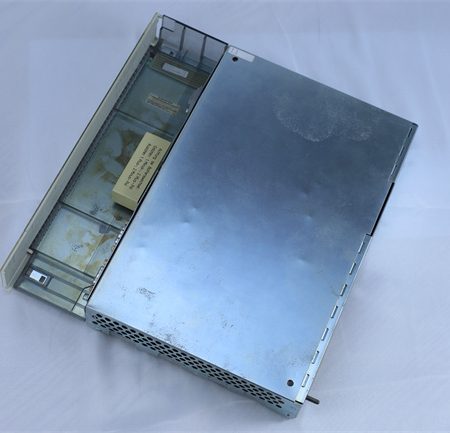
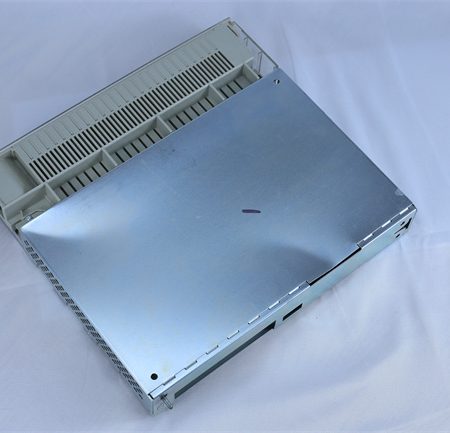
| Product Model | 6DS1300-8AB |
| Manufacturer | Siemens (SICOMP industrial PC family) |
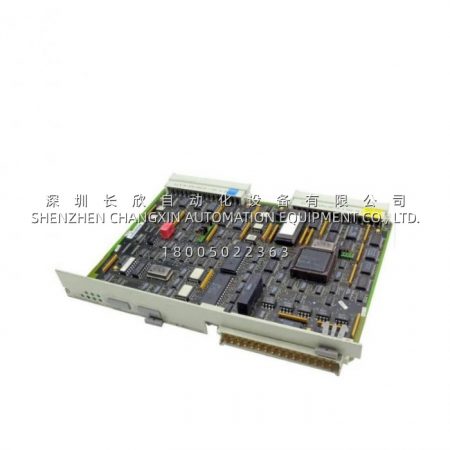
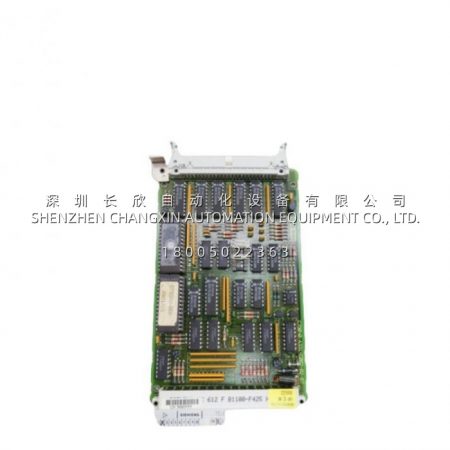
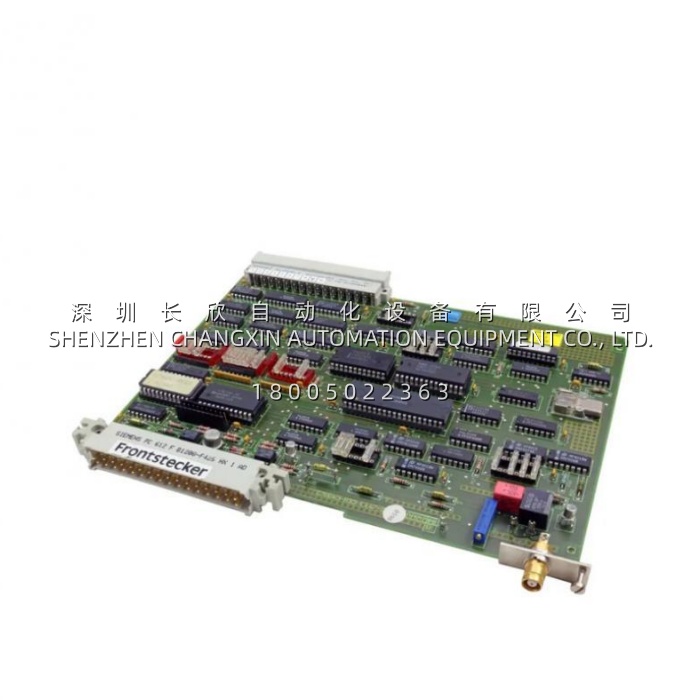
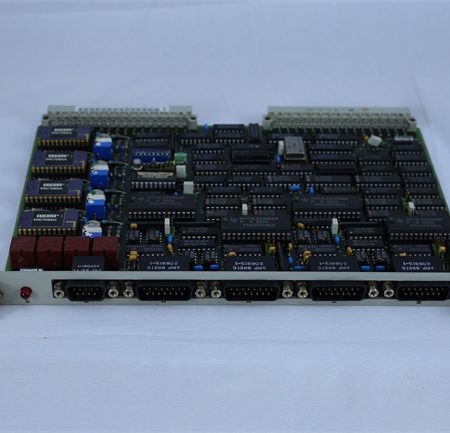
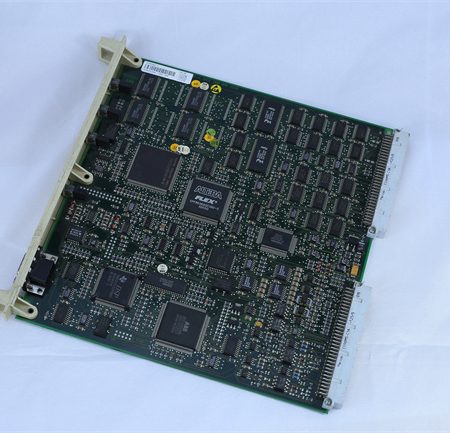
| Product Type | Monitor/Keyboard Interface Module (MKI) |
| Compatible System | SICOMP C30 / C35 operator stations; PCA 500 / PCA 700 racks |
| Video Output | 1 × VGA (DB15 female) |
| Keyboard Port | 1 × PS/2 (mini-DIN 6-pin) |
| Mouse Port | 1 × PS/2 (mini-DIN 6-pin) |
| Backplane Bus | SICOMP proprietary (graphics + KBC traffic) |
| Supply Voltage | +5 V DC (from SICOMP rack backplane) |
| Power Dissipation | ~2 W typical |
| Mounting | Single-slot Eurocard (PCA 500 / PCA 700) |
| Dimensions (approx.) | 100 × 160 mm (single-width) |
| Operating Temperature | 0 °C to +55 °C |
| Storage Temperature | –25 °C to +70 °C |
| Relative Humidity | 5 % to 95 % (non-condensing) |
Main Features and Advantages
COTS-peripheral bridge in a proprietary rack. The core value of the Siemens 6DS1300-8AB is that it ends the proprietary-terminal dependency. SICOMP C30/C35 consoles were originally sold with Siemens-branded CRT operator terminals—low resolution by modern standards, expensive when they failed, and long since discontinued. The MKI card intercepts the CPU’s graphics and keyboard streams on the backplane and re-presents them on standard connectors, so a plant can spec a commodity 1280×1024 LCD and a tactile PS/2 keyboard from any office supplier. For a control room with six to twelve operator seats, that substitution pays for the Siemens 6DS1300-8AB cards many times over across a refurbishment cycle.Passive, zero-configuration drop-in. Unlike an active graphics adapter that needs driver validation, EDID handshakes, and firmware alignment, the Siemens 6DS1300-8AB is essentially a buffered PHY-level passthrough. There is no firmware for the OS to load and no jumper block to set. Seat the card in the PCA 500/700 slot that the SICOMP hardware configuration reserves for “MKI,” connect the VGA cable and PS/2 keyboard (and mouse, if the OS image supports it), and the existing Teleperm/SICOMP OS boots exactly as before. This matters during unplanned failures—an operator-station monitor goes dark on a weekend, the tech swaps in a Siemens 6DS1300-8AB and a new LCD, and the console is live again inside the next reboot without touching DCS downloads.Shielded, noise-immune signal path. Control-room console cabinets share space with relay panels, printer loads, and occasionally VFD-fed motor feeders for roller-shutter doors or local ventilators—all sources of conducted and radiated noise that can turn into “snow” on video or ghost-key repeats on cheap interface cards. The Siemens 6DS1300-8AB uses shielded internal routing and industrial-grade buffering on both the VGA RGBHV lines and the PS/2 bidirectional data/clock pairs, so the picture stays flicker-free and keystrokes arrive deterministic even in an uncorrected electrical environment. For plants that kept C30/C35 consoles close to turbine-deck MCC rows, this shielding is the difference between a usable console and a technician complaining about “the keyboard is acting up again.”Single-slot, low-power economy. At ~2 W drawn from the +5 V backplane rail, the Siemens 6DS1300-8AB adds almost nothing to the rack’s 24 V / 5 V distribution budget. It occupies exactly one Eurocard position in the PCA 500/700, leaving the rest of the slot budget for CPU, memory, disk, and communications modules. In C30/C35 configurations where slot count is already tight (typical build: CPU + RAM + MKI + floppy/hard-disk interface + possibly a PROFIBUS or 20 mA current-loop card), that single-slot footprint matters.Legacy continuity for deferred-migration plants. Many fossil and combined-cycle units commissioned in the late 1990s to early 2000s still run Teleperm M or early SPPA-T3000 with SICOMP C30/C35 desks in the unit cabin. A full DCS-and-operator-station migration is a multimillion-euro, multi-week outage project. Until budget and schedule align, the Siemens 6DS1300-8AB is the sanctioned way to keep those desks viable—swap failing proprietary monitors for LCDs, keep PS/2 keyboards in stock (they are still manufactured for industrial POS use), and defer the HMI rebuild by another five to eight years without compromising control-room operability.

Reviews
There are no reviews yet.