
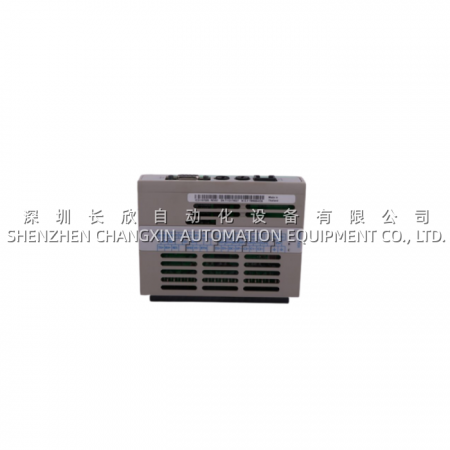
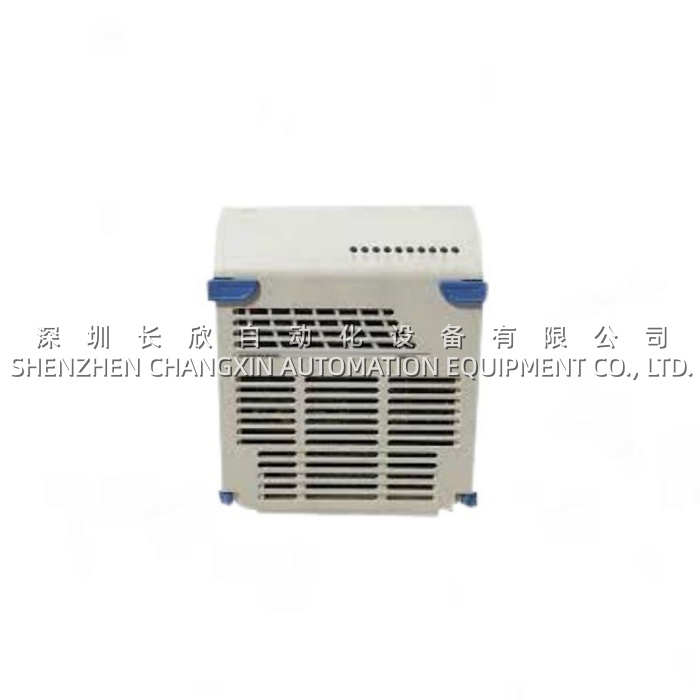
Application ScenariosAt a 1000 MW supercritical coal-fired power plant in East Asia, the central control room was located nearly 1.8 km away from the boiler auxiliary island. Running individual copper cables for every valve limit switch, motor feedback contact, and thermocouple would have meant over 12,000 cable runs and an estimated $2.3 million in wiring costs alone. The engineering team instead deployed a network of remote I/O cabinets, each anchored by a Westinghouse 1C31203G01 RNC. Using multi-mode fiber links, each 1C31203G01 gathered data from dozens of local I/O modules and transmitted it back to the central Ovation controller at 100 Mbps, with less than 5 ms of added latency. The single biggest pain point — unplanned boiler trips caused by signal degradation over long copper runs — vanished completely. Plant maintenance records show that the Westinghouse 1C31203G01 nodes have operated continuously for over 6 years with zero communication-related shutdowns, proving that smart remote I/O architecture is not just a cost-saving measure, but a reliability imperative.Parameter
| Main Parameters | Value/Description |
|---|---|
| Product Model | 1C31203G01 |
| Manufacturer | Westinghouse Electric Corporation (now an Emerson brand) |
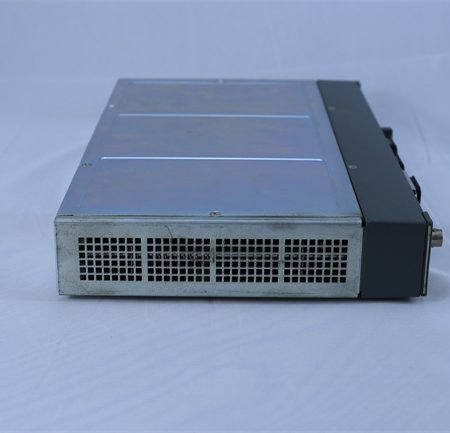
| Product Category | Remote Node Controller (RNC) for DCS |
| Compatible System | Emerson Ovation DCS |
| Processor | Embedded high-reliability industrial processor |
| Communication Interface | Fiber-optic or copper Ethernet port (redundant configuration supported) |
| Communication Protocol | Ovation proprietary high-speed bus |
| Communication Rate | 100 Mbps (typical) |
| Transmission Media | 75 Ω coaxial cable or multi-mode fiber (configuration dependent) |
| Max. Communication Distance | Coaxial ≤ 500 m, fiber-optic ≤ 2 km |
| Supported I/O Modules | 1C311xx (DI/DO), 1C312xx (AI/AO), 1C313xx (RTD/TC) families |
| Local Intelligence | Independent execution of local logic and data preprocessing |
| Redundancy | 1:1 hot-standby (requires paired units) |
| Hot-Swap | Supported (when system configuration permits) |
| Power Supply | 24 V DC (supplied via Ovation rack backplane) |
| Diagnostic Indicators | LED status lights: Power, Run, Fault, Bus OK |
| Operating Temperature | 0 °C to +60 °C |
| Storage Temperature | -40 °C to +85 °C |
| Relative Humidity | 5% to 95% non-condensing |
| Installation Location | Inside remote I/O cabinet |
| Mounting Method | Ovation dedicated rail base / backplane |
| Protection Rating | IP20 (intended for control cabinet installation) |
| Weight | Approx. 1.5 kg |
Technical Principles and Innovative Values
- Innovation Point 1: Edge-Level Data Preprocessing. The Westinghouse 1C31203G01 is not merely a protocol converter — its embedded processor performs local logic execution and data preprocessing at the cabinet edge. For example, in vibration monitoring applications, the RNC can execute FFT pre-analysis and upload only the characteristic values rather than raw waveforms, drastically reducing backbone network load and improving overall system responsiveness.
- Innovation Point 2: Seamless 1:1 Hot-Standby Redundancy. The 1C31203G01 supports true redundant hot-standby pairing. When the primary RNC fails, the standby unit takes over instantaneously; field valves, motors, and annunciators remain completely unaware of the transition. This capability is decisive in supercritical generating units and ethylene cracking furnaces, where a momentary communication gap could trigger a full plant emergency shutdown (ESD).
- Innovation Point 3: Flexible Media with Long-Distance Reach. The Westinghouse 1C31203G01 accommodates both 75 Ω coaxial cable (≤ 500 m) and multi-mode fiber (≤ 2 km) within the Ovation proprietary high-speed bus architecture. This allows plant designers to match the transmission medium to site geometry — fiber for inter-building links across large campuses, coax for shorter intra-cabinet connections — without changing the controller hardware.
- Innovation Point 4: Deep Integration with Ovation Engineering Environment. All logic for the 1C31203G01 is configured centrally within Ovation Station / Composer engineering tools. There is no separate programming environment for the RNC; configurations are downloaded and automatically distributed to each node. This unified engineering approach minimizes configuration errors and accelerates project commissioning timelines.
- Innovation Point 5: Comprehensive Built-In Self-Diagnostics. The Westinghouse 1C31203G01 continuously monitors power health, communication link integrity, and I/O subsystem status. Fault conditions are surfaced both via front-panel LED indicators (Power, Run, Fault, Bus OK) and through the Ovation Station HMI, giving maintenance teams immediate, actionable visibility into node-level health.
Application Cases and Industry ValueBeyond the East Asian power plant described above, the Westinghouse 1C31203G01 has delivered measurable value in numerous heavy-process installations. At a Middle Eastern desalination complex, the distributed layout of pumping stations, pretreatment units, and membrane trains spanned over 3 km of plant footprint. By deploying 1C31203G01-anchored remote I/O cabinets at each process island, the project engineering team eliminated an estimated 8,000 meters of copper tray cable, reducing both material cost and installation labor by roughly 35%. More importantly, the fiber-based backbone proved immune to the severe electromagnetic interference generated by the plant’s large variable-frequency pump drives. Over a 3-year observation window, the desalination complex reported zero communication faults attributable to the RNC layer, and mean-time-to-repair (MTTR) for I/O issues dropped from hours to minutes thanks to the hot-swap capability of the Westinghouse 1C31203G01.In a North American petrochemical facility, the 1C31203G01 played a pivotal role in a furnace safety retrofit. The plant’s existing burner management system (BMS) relied on long analog cable runs that were susceptible to ground-loop-induced drift, causing nuisance burner trips. After re-architecting the BMS around remote I/O cabinets managed by Westinghouse 1C31203G01 controllers, false trip frequency fell by 72% within the first year. The plant’s control systems engineer commented: “The 1C31203G01 gave us a clean, noise-immune path from the burners to the controller. Our BMS availability went from 96% to 99.4% — that difference translates directly into millions of dollars of avoided flaring and restart costs.”

Reviews
There are no reviews yet.