
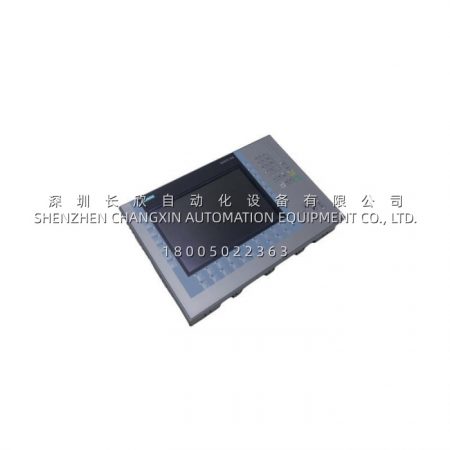
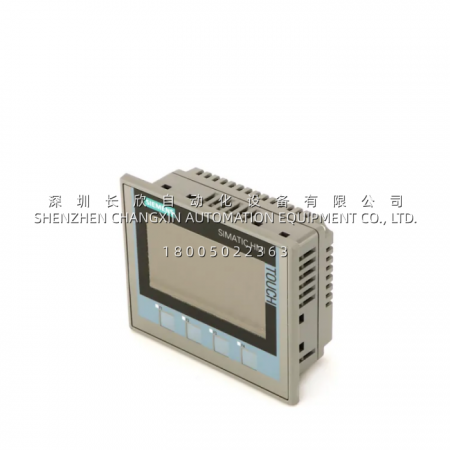
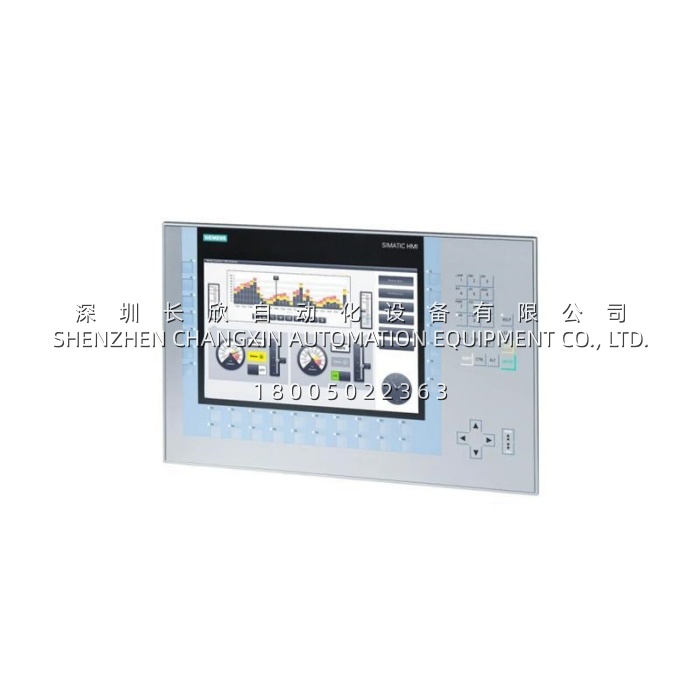
Application ScenariosOn the finishing line of a heavy-plate steel mill in Northern China, shift operators previously relied on a TP1200 Comfort touch panel to jog the roller table drives and acknowledge shear alarms. The problem: in winter, operators wore thick leather gloves and the resistive touch layer repeatedly misregistered jogs, causing occasional double-feeds that dented the plate edges. After swapping the terminal for a Siemens 6AV2124-1MC01-0AX0, the same SCADA project ran unchanged—but now the critical “jog forward / jog reverse / emergency acknowledgment” commands lived on dedicated F-keys with tactile click and LED confirmation. The plant’s HMI downtime tickets dropped from six per month to zero over the next quarter, and the maintenance chief noted that “the keys don’t care if your gloves are oily.” The 6AV2124-1MC01-0AX0 slotted straight into the existing 22 mm cutout, reused the same PROFINET device name, and required no re-engineering—just a different way of reaching for the controls.h2
Parameter
| Main Parameters | Value/Description |
|---|---|
| Product Model | 6AV2124-1MC01-0AX0 |
| Manufacturer | Siemens |
| Product Category | SIMATIC HMI KP1200 Comfort – Key-Operation Panel |
| Display | 12.1″ widescreen TFT, 1280 × 800 (16.7M colors) |
| Operation Type | 34 function keys + system keys, LED per F-key (no touch layer) |
| Configuration Memory | 12 MB (flash-backed) |
| Interfaces | 2 × PROFINET (integrated switch), 1 × MPI/PROFIBUS DP (up to 12 Mbit/s), 2 × USB 2.0, 1 × RS-422/485, 2 × SD card slots |
| Supply Voltage | 24 V DC (19.2–28.8 V range) |
| Power Consumption | Typ. 20 W |
| Front Protection | IP65 (front) / IP20 (rear) |
| OS / Engineering | Windows CE 6.0 / Configurable from WinCC Comfort V11+ |
| Lifecycle Status | Phase-Out Announced (Successor: 6AV2128-3MB06-0AX1) |
h2 Technical Principles and Innovative Values
- Innovation Point 1: Hybrid Key-Screen Architecture. The 6AV2124-1MC01-0AX0 keeps a high-res 12″ TFT for trend curves, alarm lists, and P&ID overlays, but moves safety-critical and repetitive commands onto 34 mechanical F-keys with LED state reflection. Each key can be mapped directly to S7 PLC inputs/outputs (DP direct keys/LEDs), meaning an “F1 → motor start” command travels the PROFINET bus as an I/O transaction—no script, no delay, no misinterpretation by a gloved thumb on glass.
- Innovation Point 2: Dual-Port PROFINET Switch Onboard. Most 12″ HMIs need an external unmanaged switch to daisy-chain two PLC racks or a remote I/O drop. The 6AV2124-1MC01-0AX0 bakes a 2-port switch into the PROFINET interface, supporting MRP (Media Redundancy Protocol) from WinCC V12 upward. This lets the panel sit in the middle of a ring topology without consuming cabinet DIN-rail space.
- Innovation Point 3: Legacy-to-Modern Bus Convergence. The rear still carries an MPI/PROFIBUS DP 12 Mbit/s port alongside the modern Ethernet fabric. The 6AV2124-1MC01-0AX0 can therefore talk to a vintage S7-300 MPI rack on one side and a new S7-1500 PROFINET rack on the other—an invaluable bridge during multi-year retrofit programmes where old and new PLC generations share the same operator desk.
h2 Application Cases and Industry ValueCase 1 – Cement Finish Mill (Southeast Asia). A 5,000 tpd dry-process line retrofitted three operator desks with the Siemens 6AV2124-1MC01-0AX0 to replace aging OP270 keypad panels. The cement environment—high alkalinity dust, 45°C ambient near the mill, and compressors vibrating the MCC room—had killed two previous touch panels within 18 months (dust ingress behind the bezel + false touches from spray-down washing). The KP1200’s IP65 front bezel and physical keys shrugged off both issues. The integrator cloned the old ProTool project into WinCC Comfort V15, remapped the OP270 F-key assignments 1:1 to the 6AV2124-1MC01-0AX0 LED keys, and the plant was back online in a single weekend stop. Two years later, the panels have zero touch-related tickets—because there is no touch layer to fail.Case 2 – Rotogravure Printing Press (Central Europe). A packaging printer deployed the 6AV2124-1MC01-0AX0 at each press deck for recipe recall and tension-zone acknowledgement. The 34 F-keys were colour-coded: white for navigation, yellow for recipe-load, red for fault ack. Press operators—who routinely have ink on their hands—reported that “the screen stays clean because we barely touch it.” The dual PROFINET ports let each deck panel sit on the machine ring while a second cable ran to the MES switch, eliminating a separate compact switch node per deck.

Reviews
There are no reviews yet.