
Technical Specifications
| Parameter | Value |
|---|---|
| Product Model | 1KHJ044010R0001 |
| Short Designation | P4LG |
| Manufacturer | ABB |
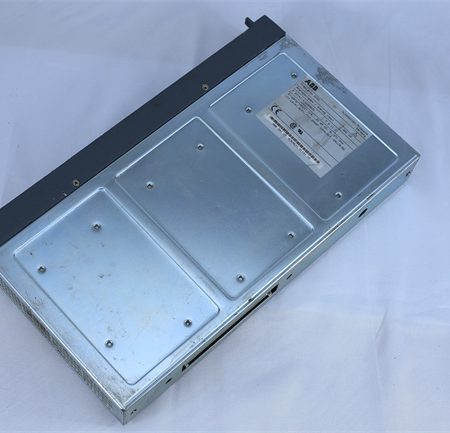
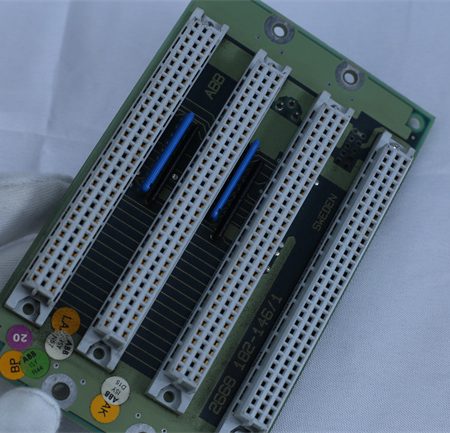
| Product Type | Carrier Board / Motherboard (Sub-module Backplane) |
| Substrate Material | Industrial-grade FR-4 PCB |
| Contact Finish | Gold-plated pins / edge fingers |
| Dimensions (H × W × D) | 3 cm × 25.4 cm × 26.1 cm |
| Weight | 0.7 kg |
| Mounting | Rack / cabinet backplane (screw-fixed) |
| Operating Temperature | 0°C to +60°C |
| Typical Backplane Supply | 24 V DC (via rack) |
| Compatible Systems | ABB Advant OCS, DCS stations, selected AC450/AC410/MP nodes |
| Function | Sub-module mechanical & electrical interface to rack backplane |
| Packaging | Factory sealed (new surplus) |
Main Features and Advantages
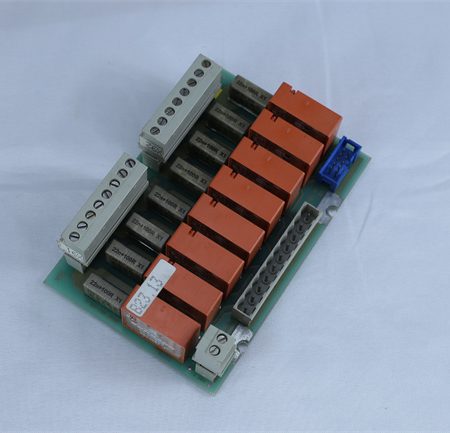
Purpose-built carrier, not a generic backplane: The ABB 1KHJ044010R0001 exists because ABB’s Advant/DCS architecture uses a two-tier insertion model—sub-module clips to carrier, carrier bolts to rack backplane. Generic VME or PCI backplanes will not fit the pinout, the mechanical keying, or the 24 V DC distribution pattern. The P4LG is the ABB-catalog answer, which means the daughtercard (processor, comm, or I/O module) seats without adapter hacks.FR-4 + gold contacts for contact reliability: In a DCS cabinet that has seen twenty summers, the failure mode is rarely the silicon—it is the oxide layer on a backplane finger that turns a solid 24 V DC into a flickering 21 V with ripple, which the sub-module interprets as “backplane fault” and drops off-bus. The gold finish on the ABB 1KHJ044010R0001 slows that oxidation curve dramatically compared to bare copper or tin, especially in coastal, pulp-mill, or high-humidity sites. For a plant engineer deciding whether to stock one cold 1KHJ044010R0001 or roll the dice on “the old carrier still looks okay,” the gold fingers are the argument that wins.Drop-in mechanical match to original Advant/DCS stations: The 3 × 25.4 × 26.1 cm envelope and screw-hole pattern align with the original carrier the cabinet was commissioned with—meaning a swap does not cascade into “now I need to drill the rack.” In retrofit or emergency-repair scenarios where the original carrier has cracked near a mounting boss or the header pins have loosened from repeated sub-module swaps, the ABB 1KHJ044010R0001 goes in with the same footprint and the same cable/header routing.Vibration-tolerant for cabinet-life reality: Control cabinets on paper machines, rolling mills, and compressor stations are not librarie-quiet. The FR-4 substrate thickness, the screw retention, and the clip mechanism for the daughtercard are all tuned so that a P4LG carrier does not work-loosen the way a thin protoboard would. That matters when the cabinet is three floors above a turbine deck.24 V DC backplane distribution: The carrier passes the rack’s 24 V DC rail and the bus signals (MasterBus 300, or the proprietary Advant inter-board bus depending on node generation) to the seated sub-module without voltage drop concerns—trace widths on the ABB 1KHJ044010R0001 are sized for the expected draw of a processor or comm daughtercard, not just a logic-level signal.Spare-strategy fit: Because the carrier is a passive-ish board (no firmware, no configuration), it is the ideal “keep two on the shelf” item. A failed 1KHJ044010R0001 does not require software reload, does not require firmware version matching, and does not require the OEM to still support the node—it is copper, fiberglass, and gold. That makes it one of the highest-ROI spares in an Advant/DCS life-extension project.
Application Field
The ABB 1KHJ044010R0001 (P4LG) belongs in any cabinet where an ABB Advant OCS station, AC450/AC410 controller node, or MasterPiece-adjacent DCS rack is still the active control backbone and the original carrier has exceeded its mechanical or contact-life budget.In pulp & paper DCS cabinets—especially those built around Advant OCS and MP200/MP200/1 nodes—the P4LG carrier typically hosts the processor daughtercard and one or two communication/interface sub-modules. Paper-machine control cabinets cycle temperature (dryer section heat soak, weekend cooldown) and pick up minor vibration from the machine hall floor; over a decade-plus, the original carrier’s header pins loosen and the gold thins. Swapping the ABB 1KHJ044010R0001 restores the seat without touching the strategy code or the I/O mapping.In power generation balance-of-plant DCS nodes—auxiliary boiler controls, turbine lube skid controllers, ash-handling sequencers—ABB Advant racks are common, and the carrier is the unseen layer under the AC450-class CPU and the S100/S400 I/O interface cards. When a “backplane fault” alarm appears but the backplane itself (the welded rack bus) tests clean, the carrier is the next suspect. A stock 1KHJ044010R0001 closes that diagnostic branch in one outage window.In cement, mining, and minerals—kiln drive auxiliaries, crusher lube skids, conveyor sequencers—ABB DCS footprints from the 1990s–2000s are still dominant. Dust ingress into cabinets (even IP54 enclosures leak over twenty years) accelerates contact oxidation on carriers. The P4LG gold-finger spec is the mitigation, and the FR-4 substrate shrugs off the thermal cycling of a cement plant electrics room.In oil & gas auxiliary and chemical batch skids supplied by OEMs who standardized on ABB Advant, the ABB 1KHJ044010R0001 appears as the carrier under comm processors that talk Modbus/Profibus up to the plant DCS. Skid-mounted packages get shipped, bolted down, and forgotten for years; when the OEM is called back for a “processor off-bus” fault, the carrier is often the root cause, and the 1KHJ044010R0001 is the fix.Across all these, the pattern is the same: the carrier does not fail loudly, it fails as intermittent contact faults that mimic sub-module death. Keeping a ABB 1KHJ044010R0001 on the shelf is cheaper than the first misdiagnosed sub-module swap.

Reviews
There are no reviews yet.