
Application Scenarios
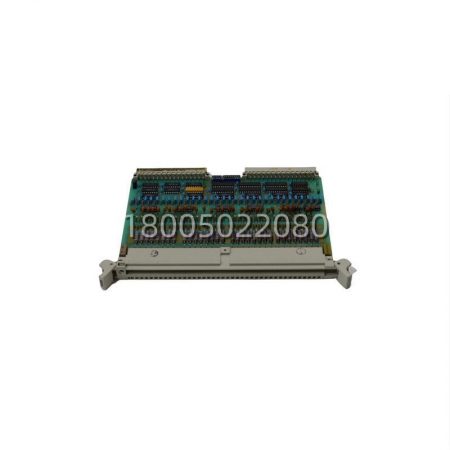
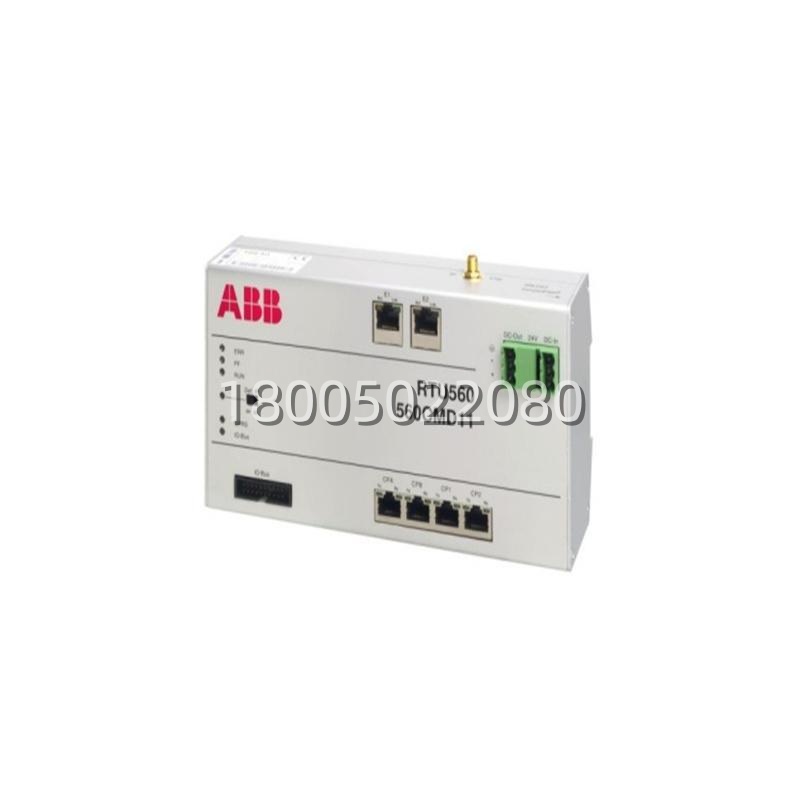
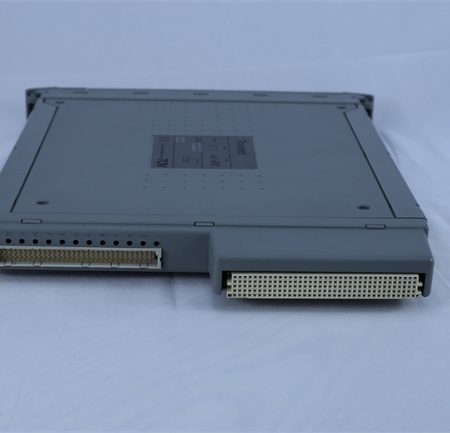
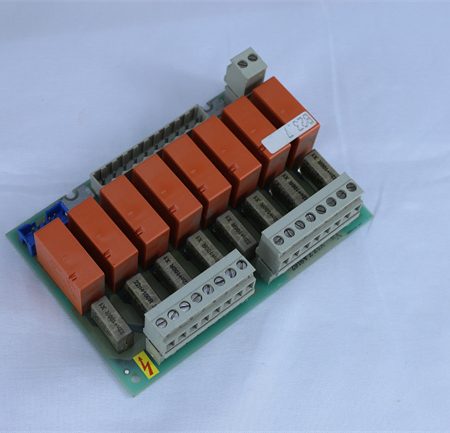
During a 132 kV utility substation retrofit from electromechanical protection relays to an ABB RTU560-based SCADA scheme, the project required bringing 64 breaker-position and 32 alarm dry-contact signals into the new RTU while keeping the marshalling cabinet footprint minimal . The engineer specified four ABB 1KGT030400R0001 (560CID11) modules, each providing 16 isolated digital inputs and 8 relay outputs, DIN-rail mounted in the existing auxiliary relay panel . The modules communicated with the RTU560 CPU via the internal backplane bus and reported all binary statuses to the control center over IEC 60870-5-104 . During commissioning, one input channel’s wire-break detection—a built-in feature of the ABB 1KGT030400R0001—flagged a loose terminal on a 52b auxiliary contact, catching the issue before energization . The station’s protection engineer noted: “Using the 560CID11 let us keep the original field wiring and add SCADA visibility in one move. The built-in contact supervision saved us a whole round of troubleshooting” . The substation went live with zero I/O-related punch-list items.
Parameter
| Main Parameters | Value/Description |
|---|---|
| Product Model | 560CID11 |
| Order / Article No. | 1KGT030400R0001 |
| Manufacturer | ABB (RTU560 Series — ABB Ability™ Power & Automation) |
| Product Category | RTU Communication Interface & Digital I/O Module |
| Power Supply | 24 V DC (18–36 V DC range), typical consumption ≈ 2.5 W |
| Digital Inputs (DI) | 16 channels, dry contact or 24 V DC active; 0–5 V = LOW, 15–36 V = HIGH; per-channel wire-break detection |
| Digital Outputs (DO) | 8 channels, relay outputs; 250 V AC / 5 A, 30 V DC / 5 A |
| Switch Capacity | 1250 VA / 150 W |
| Input Response Time | < 1 ms (programmable debounce/filter available) |
| Isolation | 500 V DC channel-to-ground & bus isolation; relay coils optically isolated |
| Communication | Interfaces with RTU560 CPU via internal bus; supports IEC 60870-5-101/104, Modbus RTU/ASCII via CPU’s serial port |
| Status Indication | Per-channel DI status LEDs + module RUN / COM / ERR LEDs |
| Operating Temperature | -40 °C to +70 °C (-40 °F to +158 °F) |
| Storage Temperature | -40 °C to +85 °C |
| Dimensions (approx.) | 45 mm (W) × 110 mm (H) × 120 mm (D) |
| Mounting | 35 mm DIN rail (EN 50022) |
| Protection | IP20 (when installed in cabinet) |
| Certifications | CE, UL recognized, IEC 61850 / IEC 60870 compliant environment |
Technical Principles and Innovative Values
Innovation Point 1: Integrated I/O + RTU Functionality in One Compact Unit
Unlike standalone I/O blocks that require a separate communications gateway, the ABB 1KGT030400R0001 (560CID11) plugs directly into an RTU560 node and shares the CPU’s protocol stack . This eliminates an extra device in the bill of materials and reduces panel wiring, configuration effort, and points of failure—a significant advantage for space-constrained substation retrofit projects.
Innovation Point 2: Supervised Digital Inputs with Configurable Filtering
Each DI channel on the ABB 1KGT030400R0001 can be enabled for wire-break/contact-supervision monitoring via an external resistor network, and features programmable debounce time . The module filters contact bounce in hardware/firmware, ensuring clean, glitch-free status reporting to the SCADA even on mechanically worn auxiliary contacts—a common pain point in aging substation equipment.
Innovation Point 3: Rugged Wide-Temperature & Galvanic Isolation Design
Qualified for -40 °C to +70 °C operation with 500 V DC isolation on all I/O channels, the ABB 1KGT030400R0001 withstands substation grounding transients, induced surges from switching events, and temperature extremes in outdoor kiosks . This robustness ensures that the module continues to perform reliably in conditions that would cause standard industrial I/O to fail.
Innovation Point 4: Hot-Swap / Module Replacement Without Re-configuration
When part of a configured RTU560 node, a replacement ABB 1KGT030400R0001 auto-synchronizes its I/O mapping and settings from the CPU upon insertion . No manual DIP-switch setting or re-download is required, minimizing mean time to repair (MTTR) during field maintenance—a critical feature for minimizing downtime in critical infrastructure.

Reviews
There are no reviews yet.