
Technical Specifications
| Parameter Name | Parameter Value |
|---|---|
| Product Model | 1KHL178025R0102P |
| Manufacturer | ABB |
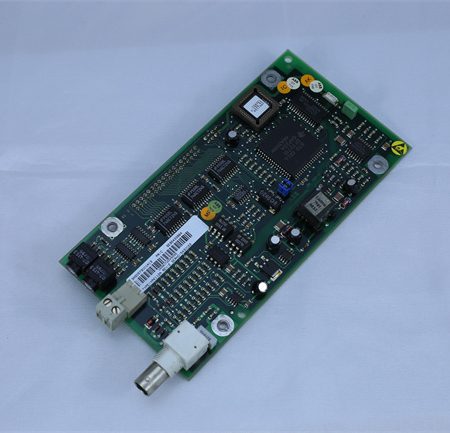
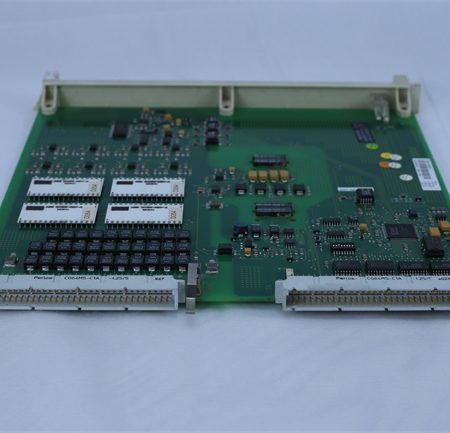
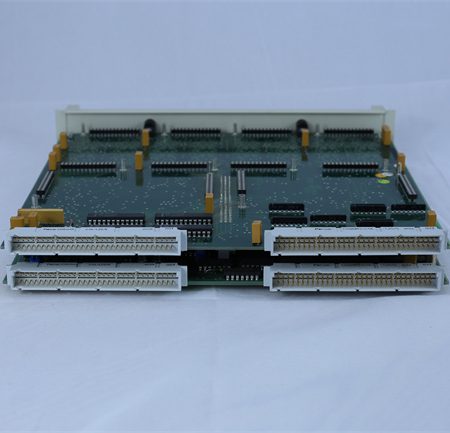
| Product Type | Communication Interface Circuit Board (COM02) |
| Platform Fit | ABB AC31 / Symphony Plus (Melody) DCS racks; 800xA-integrated legacy nodes |
| Supply Voltage | 5 V DC via DCS backplane (typical); some revisions accept external 24 V DC for field-side power |
| Power Dissipation | < 2 W |
| Serial Interfaces | RS-232 / RS-422 / RS-485 (port count and pinout revision-dependent) |
| Supported Protocols | Modbus RTU / ASCII (master or slave), ABB SNP, Profibus DP-V0 slave (fw variant) |
| Baud Rate Range | 300 bps to 115.2 kbps |
| Isolation | 1.5 kV channel-to-backplane (field side to system side) |
| Connectors | 9-pin D-sub (serial port), screw terminals (RS-485/422 shield + pair) |
| Operating Temperature | 0 °C to +60 °C (base); -40 °C to +85 °C (wide-temp revision) |
| Storage Temperature | -40 °C to +85 °C |
| Dimensions (L × W) | ~100 × 150 mm (some builds ~152 × 105 mm) |
| Weight | ~0.15–0.22 kg |
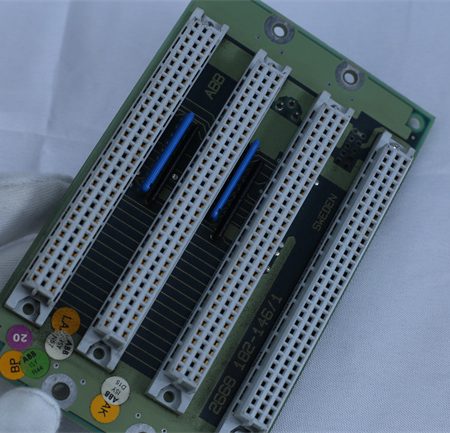
| Mounting | DCS rack backplane / daughter-card slot (panel or rail adapter per cabinet) |
Main Features and Advantages
Multi-protocol serial posture: The core reason plants keep the ABB 1KHL178025R0102P on the spare list is that one small card covers three distinct serial dialects. Modbus RTU master/slave handles the vast universe of third-party drives, flow computers, and power meters that expect a 2-wire RS-485 conversation. ABB SNP is the native serial network protocol that older AC31 drops and Symphony Plus I/O stations use among themselves, so the COM02 can also serve as the link that pulls a remote AC31 satellite rack’s I/O into the main controller’s scan. Profibus DP-V0 slave on firmware-capable revisions adds a third lane—less common on this card than on ABB’s CI-series Profibus masters, but useful when the COM02 needs to present itself as a Profibus slave to a higher-tier DCS or PLC. For a cabinet that still runs an AC31 CPU but needs to speak to both a modern SCADA (Modbus) and a legacy satellite rack (SNP), the 1KHL178025R0102P collapses what would otherwise be two gateway boxes into one slot.Backplane-powered, not PSU-hungry: Drawing < 2 W from the 5 V backplane, the ABB 1KHL178025R0102P does not need a dedicated 24 V feed, does not need a DIN-rail PSU, and does not add heat to a cabinet that may already be pushing its fan budget. In 5-slot AC31 racks where the power budget per slot is accounted, this matters—the COM02 slides in without nudging the rack’s power headroom calculation.Isolation that actually protects the rack: 1.5 kV channel-to-backplane isolation is the headline number, but the practical value is this—when an RS-485 run to a remote tank-farm flow computer takes a lightning-induced surge or a 50 V common-mode offset from a ground-looped shield, the 1KHL178025R0102P absorbs it on the field side and the AC31 backplane (and the rest of the DCS rack) stays alive. Plants that have learned this the hard way tend to keep one spare COM02 per rack precisely because the alternative is a backplane-voltage spike taking out the CPU next door.DIP + EEPROM discipline: Configuration on the ABB 1KHL178025R0102P is handled through a DIP switch block (baud, parity, echo on/off, node address range) plus an EEPROM that stores the module identity for the rack bus scan. The most common “ghost fault” on this card is echo left ON for half-duplex RS-485—TX collides with RX and the Modbus master sees garbled frames. Switch 3 OFF disables echo; it is a five-second fix once you know it, and the COM02’s DIP accessibility makes that possible without pulling the rack offline for firmware work. Because the 1KHL178025R0102P is detected by the rack at bus scan, a mismatched EEPROM shows up immediately as “module not recognized” rather than as a silent data corruption—again, faster root-cause than an external gateway would give you.Revision-awareness and 1KHL numbering: Like other ABB 1KHL-prefixed spares, the ABB 1KHL178025R0102P has seen component-spin updates across its production life. The R0102P suffix anchors the revision; swapping to a different R-suffix without checking DIP and EEPROM compatibility can produce a rack-detect mismatch on older AC31 firmware. Best practice—photograph the DIP block and the removed board’s label before ordering, and ask the supplier to cross-check the R-suffix against your rack’s AC31 CPU firmware level. It is a ten-minute email that prevents a “fits mechanically, rejected by bus scan” return.

Reviews
There are no reviews yet.