
Application Scenarios
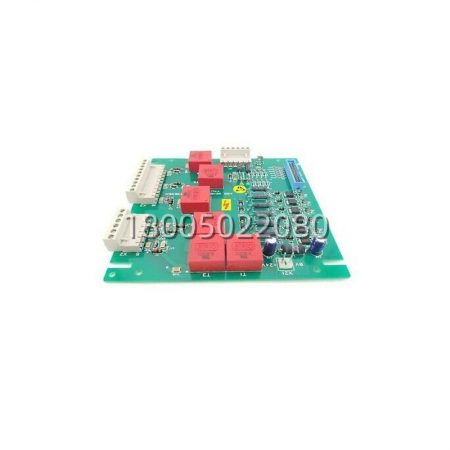
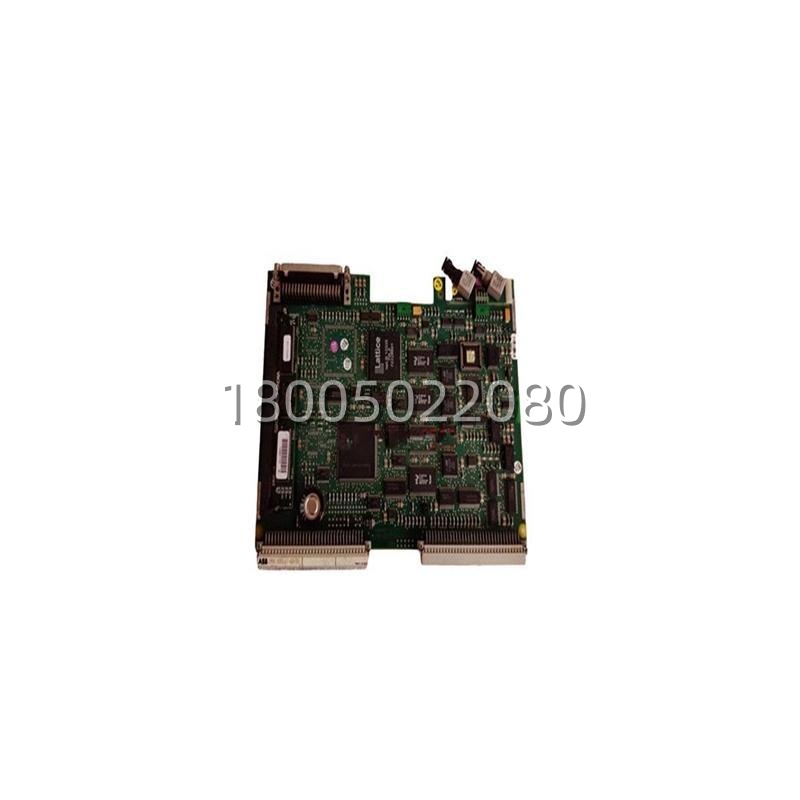
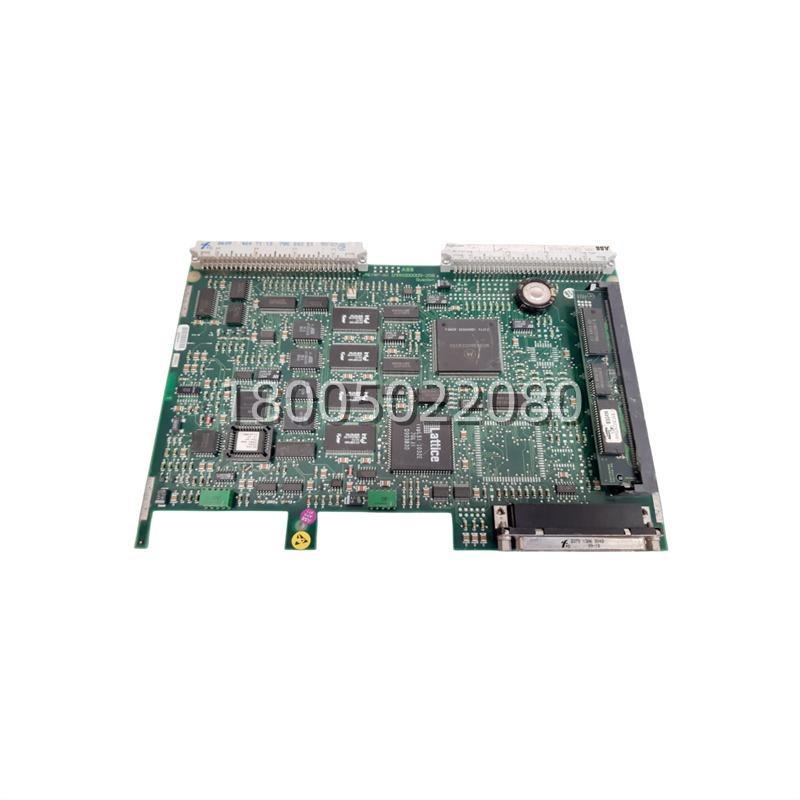
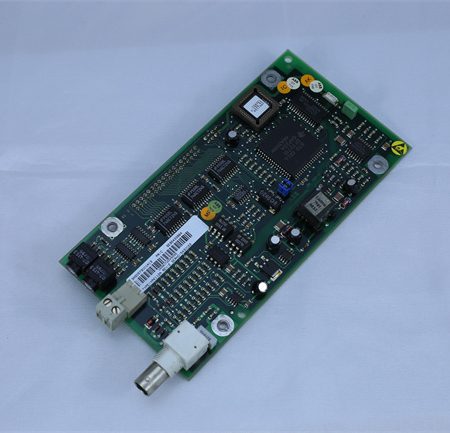
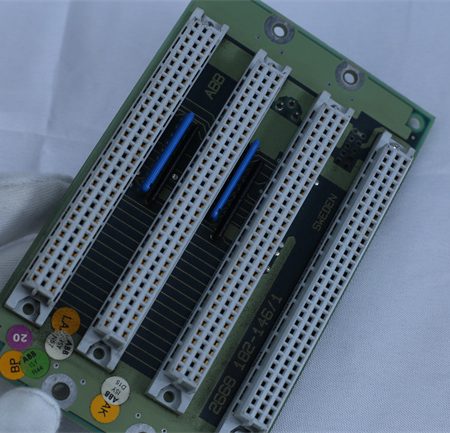
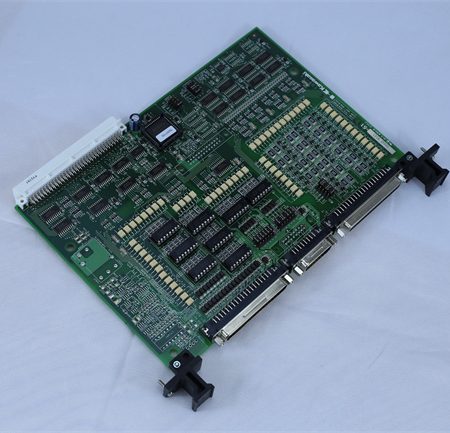
A 220 kV substation’s 33 kV feeder protection panel, built around an ABB numerical relay, suddenly displayed “Board Failure – Control Card” and refused to arm the trip circuit. The protection engineer identified the faulty internal PCB as the ABB 1MRK000167-GBR00, which serves as the relay’s main processing board—running the distance/protection algorithm, managing the HMI, and handling communications . A pre-verified spare ABB 1MRK000167-GBR00 was plugged into the same slot after backing up the configuration (or downloading from the engineering tool). The replacement board booted, validated the firmware version, and the relay returned to healthy status within minutes—restoring full primary protection without needing to change the entire relay unit . The site’s protection technician commented: “Having the correct ABB 1MRK000167-GBR00 on the shelf turned what could have been a multi-day relay change-out into a ten-minute board swap and a download. That’s why we keep this PCB as a critical spare for all our ABB bays” . For plant engineers facing aging ABB drives or protection panels, the ABB 1MRK000167-GBR00 represents the difference between a quick board-level repair and an expensive, disruptive system migration.
Parameters
| Main Parameters | Value/Description |
|---|---|
| Product Model | ABB 1MRK000167-GBR00 |
| Manufacturer | ABB (Industrial Automation / Power Protection) |
| Product Category | Internal Control PC Board / Microprocessor Logic Card |
| Processor | 32-bit ARM Cortex-M4 class (approx. 40–48 MHz) |
| Supply Voltage | 12 V DC or 24 V DC (derived from host unit backplane; ±10%) |
| Memory | 64 MB–128 MB Flash / RAM (stores firmware & parameters; version-dependent) |
| Communication Interfaces | Internal backplane bus + RS-485 (Modbus/Service) |
| Operating Temperature | -20°C to +70°C (industrial grade; some references -40°C to +70°C) |
| Storage Temperature | -40°C to +85°C |
| Dimensions (approx.) | 100–175 mm × 90–110 mm × 20–30 mm (varies by host equipment) |
| Weight (approx.) | 0.3 kg – 0.5 kg |
| Isolation | Channel-to-backplane isolation ≥1.5 kV AC (optical/transformer coupled) |
| Typical Host Units | ABB ACS drives, REF615/ RET650/ REB650 relays, bay controllers |
| Certifications | CE, UL (as part of host equipment assembly) |
Technical Principles and Innovative Values
The ABB 1MRK000167-GBR00 is the computational heart of its host device, distinguished by several core innovations:
Innovation Point 1: Real-Time Control & Protection Algorithm Engine. The onboard 32-bit processor runs deterministic firmware cycles—protection element evaluation, PWM setpoint calculation, or PID regulation—synchronized to the power-stage sampling clock . This architecture ensures sub-cycle response, critical for arc-flash mitigation and fast drive current limiting—a capability that surpasses generic PLC modules in latency-sensitive applications.
Innovation Point 2: Non-Volatile Parameter Retention & Clone Capability. Configuration data, setting groups, and commissioning parameters are stored in on-board Flash/EEPROM . The ABB 1MRK000167-GBR00 supports parameter upload/download via service port or engineering PC, enabling exact clone replacement—swap the PCB, download the saved file, and the system behaves identically with zero re-tuning .
Innovation Point 3: Multi-Layer Self-Diagnostics at Power-Up. At each boot, the ABB 1MRK000167-GBR00 performs checksum verification of firmware, RAM write/read tests, watchdog timer validation, and backplane link checks . Any anomaly lights the host’s “Board Fault” LED before the unit goes online, preventing operation with corrupted logic and reducing debugging time for maintenance teams.
Innovation Point 4: Host-Bus Optimized Architecture. Unlike generic Single Board Computers, the ABB 1MRK000167-GBR00 talks directly to the host’s analog-front-end and power-stage interface via a parallel/serial backplane bus . This achieves microsecond-level data exchange without external fieldbus overhead—essential for closed-loop drive control and high-speed protection tripping where every millisecond counts.

Reviews
There are no reviews yet.