
Technical Specifications
| Parameter Name | Parameter Value |
|---|---|
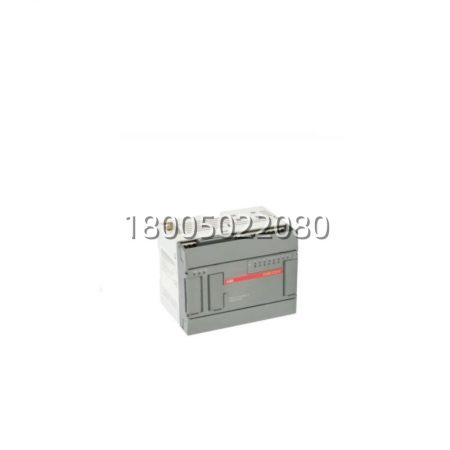
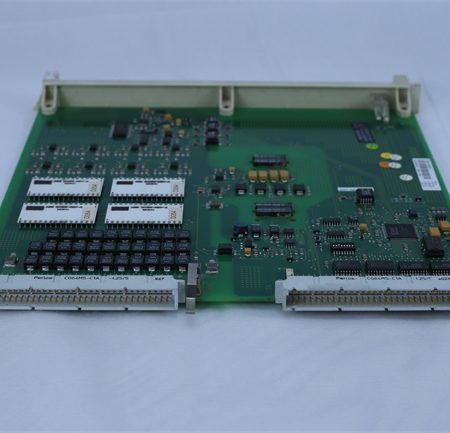
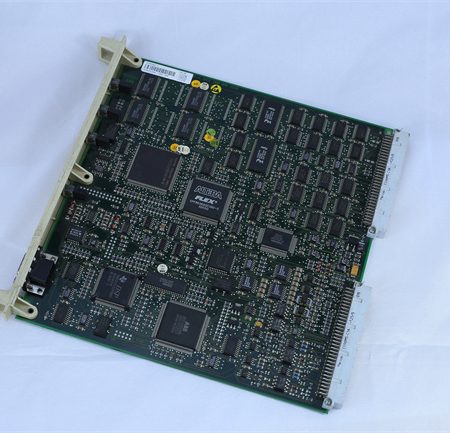
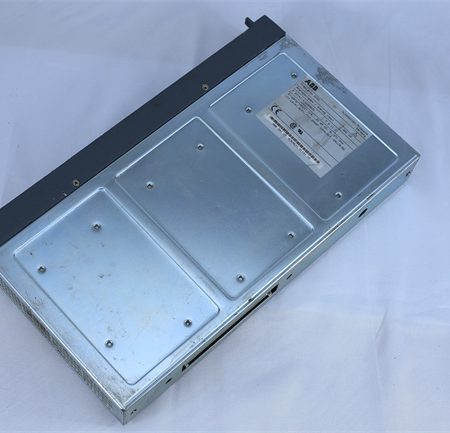
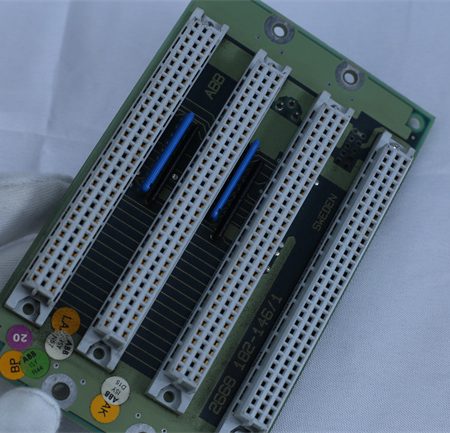
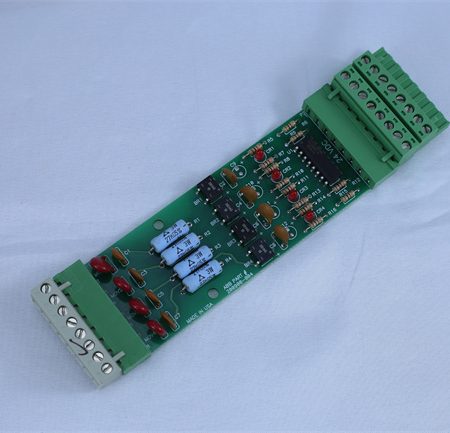
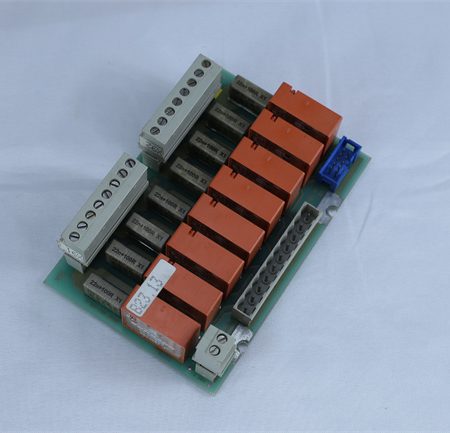
| Product Model | ABB 1SBP260056R1001 (ICMK-CS31) |
| Manufacturer | ABB Ltd. |
| Product Type | CS31 Bus Remote Communication Slave Unit |
| Compatible Platforms | ABB Advant AC31 40/50/60 series PLC, S500 I/O racks |
| Bus Protocol | ABB CS31 proprietary serial, 187.5 kbps |
| Max Bus Nodes | 32 per CS31 master segment |
| Max Bus Distance | 500 m per segment (repeater-extendable) |
| Supply Voltage | 24 V DC (±10%) |
| Power Consumption | < 3 W typical |
| Isolation | CS31 port opto-isolated, 500 V AC channel-to-system |
| Mounting | 35 mm DIN rail |
| Operating Temperature | 0 °C to +55 °C |
| Storage Temperature | -40 °C to +70 °C |
| Humidity | 5 % – 95 % RH, non-condensing |
| Protection Class | IP20 (cabinet/field enclosure internal) |
| Dimensions (W×H×D) | ≈ 22.5 × 99 × 114.5 mm |
| Weight | ≈ 0.12 kg |
| Status Indicators | PWR, BUS ACT, ERR LEDs |
Main Features and Advantages
CS31-native zero-conversion integration is the headline advantage of the ABB 1SBP260056R1001. For control engineers maintaining AC31 stacks, adding a remote station does not require learning a new bus protocol, buying a gateway, or rewriting I/O mapping logic: the ICMK-CS31 slave enumerates automatically to the AC31 master’s CS31 port (built-in on AC31 50/60, or added via a master ICMK-CS31 unit on AC31 40), node addressing is set via 4/8-way DIP switches on the unit’s face (no software config required for the slave itself, a rarity in modern buses that cuts commissioning time for legacy retrofit jobs), and remote S500 I/O appears in the AC31 Control Builder F programming environment as if it were local rack I/O. There is no latency penalty for small I/O counts, and the 187.5 kbps bus speed is more than adequate for the digital and slow analog signals that dominate remote station loads (float switches, pressure transmitters, VFD run/fault contacts, valve limit switches).Cost-effective distributed I/O rollout is the second killer use case for the ABB 1SBP260056R1001. Running 100 m of 12-core shielded I/O cable to a remote water pump station costs 5-10x more than running a single CS31 twisted pair, plus the labor to terminate 12 cores at both ends. With the ICMK-CS31 + S500 rack at the pump, you cut cabling cost by 70%, and bus diagnostics from the AC31 master let you pinpoint which remote node is down (e.g., “node 7 comms loss”) instead of truck-rolling to check 10 pump stations one by one. For municipal water utilities with 20+ lift stations per SCADA zone, the ABB 1SBP260056R1001 is the standard remote node, and spare pooling across zones cuts MRO cost.Noise immunity for harsh field environments rounds out the core advantages. The CS31 port on the ABB 1SBP260056R1001 is photocoupler-isolated to 500 V AC channel-to-system, so ground potential differences between the master MCC (grounded to building steel) and the remote pump station (grounded to local rod, which may float 5-10 V from building ground) do not cause comms drops, ground-loop hum on analog inputs, or damaged port electronics. Conformal coating on the PCB and IP20 DIN-rail rating mean the unit survives the humidity of wastewater lift stations, the grain dust of silo sites, and the vibration of conveyor transfer points without derating. For machine OEMs building extruder downstream cells or packaging line ancillaries, the ABB 1SBP260056R1001 is a drop-in remote node that adds 16-32 I/O points per slave with zero R&D, which is why AC31 + CS31 remains a common OEM stack 20 years post-launch.
Application Field
The ABB 1SBP260056R1001 ICMK-CS31 deploys exclusively in AC31-based automation stacks where distributed I/O is needed beyond the central control cabinet, spanning four core industry baskets:First, water and wastewater utilities: central AC31 master in the main MCC, ABB 1SBP260056R1001 + S500 rack at each remote lift station, raw water pump station, and sludge screening plant. The remote unit collects wet-well float switch status, discharge pressure transmitter readings, VFD run/fault/contactor feedback, and drives DO outputs for pump start/stop and screen rake actuation. A failed ICMK-CS31 at a lift station will drop the station off SCADA, trigger a high-well alarm, and require a truck roll — which is why most utilities stock 1 spare per 10-15 lift stations.Second, food & beverage and pharma packaging: AC31 masters in main line control panels, ABB 1SBP260056R1001 nodes at each remote machine cell (filler, capper, labeller, CIP skid, granulator skid). Remote I/O at each cell cuts cabling cost, and the CS31 bus’ noise immunity handles the VFD and motor EMI common in packaging halls. Legacy pharma lines built 2000-2010 still run AC31 for auxiliary loops, so the ICMK-CS31 remains on MRO lists for coating pan and tablet press skid spares.Third, machine OEM and plastics/woodworking: extruder downstream cooling tanks, woodworking sander dust collector cells, metal stamping press auxiliary conveyors — OEMs standardized on AC31 + CS31 for low BOM cost, and the ABB 1SBP260056R1001 is the remote node for each cell’s DI/DO (proximity switches, solenoid valves, motor contactor feedback).Fourth, agriculture and bulk handling: grain elevator silo level monitoring, bulk conveyor transfer points, feed mill mixer skids — remote CS31 nodes at each silo collect level switch and temperature probe inputs, with the AC31 master in the elevator control room.During AC31 lifecycle refurbishments (15-20 year mark), the ABB 1SBP260056R1001 is a common proactive swap alongside S500 I/O modules and the AC31 CPU backup battery, refreshing the remote comms chain without a full PLC replacement.
Reviews
There are no reviews yet.