
Technical Specifications
| Parameter Name | Parameter Value |
|---|---|
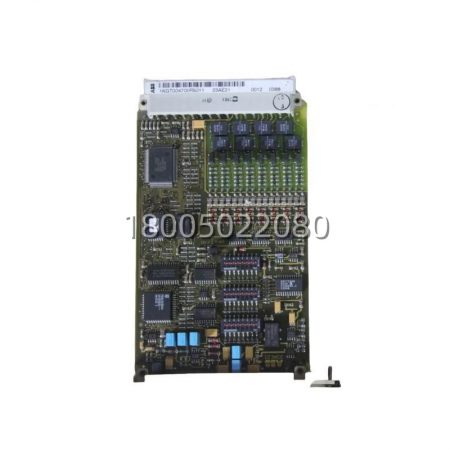
| Product Model | 1KGT013000R0001 |
| Manufacturer | ABB |
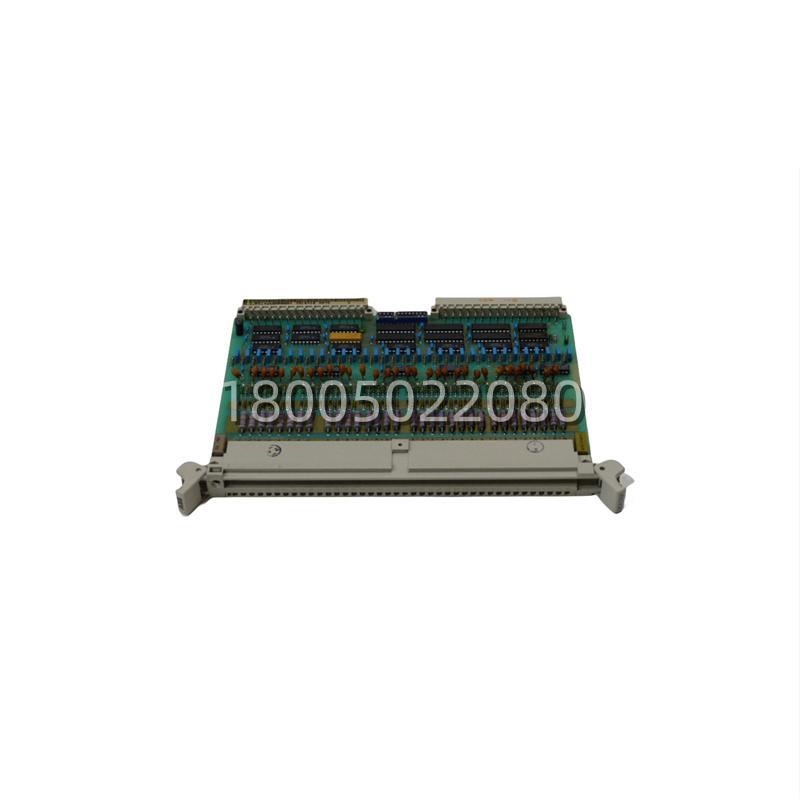
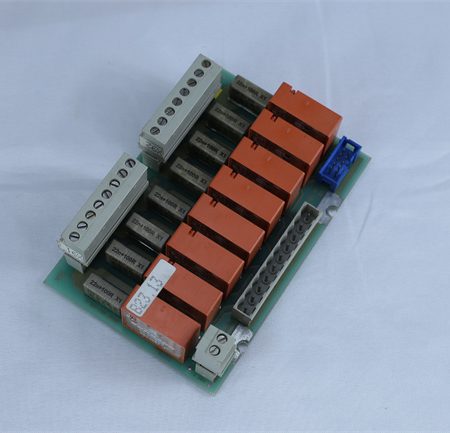
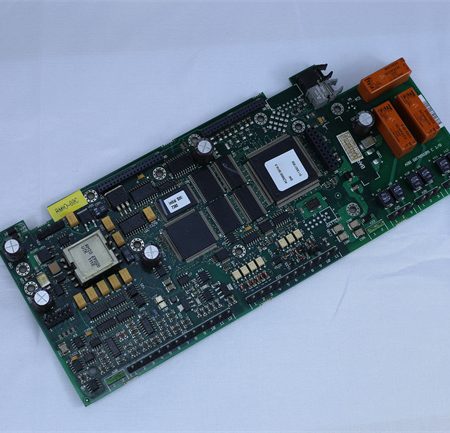
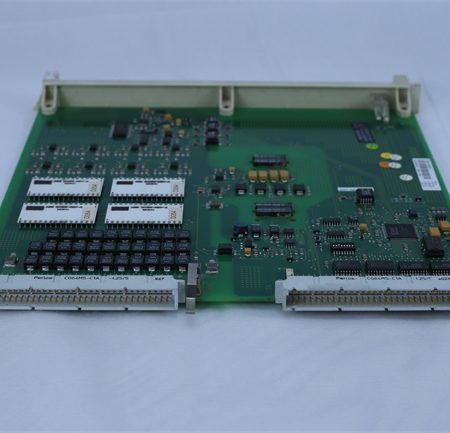
| Product Type | Circuit Board / Industrial Control Interface Module |
| Type Designation | 23TP22 (ABB 23 Series) |
| Operating Voltage | 12–24 V DC (24 V DC nominal) |
| Input Current | Max. 2 A (control side) |
| Relay Outputs | 8 (for contactor / alarm / local actuator drive) |
| Digital Inputs | 16 (24 V DC sink/source typical) |
| Analog Inputs | 4 (0–10 V / 4–20 mA typical, cabinet-local transducers) |
| Analog Outputs | 2 (0–10 V / 4–20 mA typical) |
| Communication | Modbus RTU, CANopen (RS-485 physical layer) |
| Operating Temperature | -20 °C to +60 °C |
| Storage Temperature | -40 °C to +85 °C |
| Humidity | 5%–95% (non-condensing) |
| Environmental Rating | IP20 (cabinet interior) |
| Dimensions (L × W × H) | ~200 × 140 × 25 mm (revision dependent) |
| Weight | ~0.5–0.8 kg |
| Certifications | CE, UL, ISO 9001 |
| Mounting | Cabinet subrack slot / screw-fixed / DIN-rail adapter per housing |
Main Features and Advantages
Cabinet-native, not rack-generic: The ABB 1KGT013000R0001 is purposely built for the 23-series cabinet ecosystem, which means the connector pinout, mounting points, and firmware handshake are aligned to the host unit (drive cubicle, Satt-based process station, or ABB specialty cabinet). This avoids the “universal I/O card” problem where a third-party board technically fits the DIN rail but needs custom wiring, custom parameter mapping, and a separate 24 V PSU. Slide the 1KGT013000R0001 into the vacated position, tighten the retaining screw, land the pre-labeled cabinet harness on the same headers, and the cabinet’s local I/O tree comes back exactly as the original electrical drawing shows.Mixed I/O in one footprint: Many cabinet-level faults trace to one domain—relay contacts welding on starter-alarm circuits, or analog input channels drifting on a cooled-bearing temperature loop—but swapping the whole I/O tier is expensive. The ABB 1KGT013000R0001 bundles 8 relay outputs + 16 DI + 4 AI + 2 AO on a single board, so one spare SKU covers several failure modes. For stores teams this is efficiency: one part instead of four different relay cards, DI cards, and analog cards scattered across vendors.Dual-fieldbus posture: Supporting both Modbus RTU and CANopen over the same RS-485 physical layer gives the 1KGT013000R0001 flexibility across ABB vintages. Older Satt/23-series cabinets tend to favor CANopen or proprietary serial; newer retrofits may want Modbus RTU up to an AC 800M or a third-party DCS. The board doesn’t force a choice at order time—the host cabinet firmware selects the protocol at commissioning, which means the same spare works across slightly different cabinet builds on the same site.Thermal and coating discipline: Rated -20 to +60 °C with industrial-grade PCB and conformal coating, the ABB 1KGT013000R0001 is specced for switchroom ambients where drive cabinets run warm and cleaning-chemical vapors or paper-mill humidity can accelerate bare-board corrosion. The relay section is the wear item here (mechanical life on the 8 outputs), but the semiconductor side—digital inputs, analog section, comms transceiver—is solid-state and ages slowly when the 24 V supply stays clean.Revision awareness: Like most ABB 23-series PCBs, the 1KGT013000R0001 has seen minor chip and connector-socket revisions across production years. The mechanical footprint and host-bus handshake stay constant, but ABB advises matching the replacement revision where possible—especially if the cabinet firmware is old and expects a particular analog-front-end gain map. This is why the ABB 1KGT013000R0001 is best ordered against the removed board’s photo and the cabinet’s type plate rather than off a SKU alone, a point worth emphasizing to procurement so they don’t get a “correct number, wrong spin” surprise.
Application Field
The ABB 1KGT013000R0001 (23TP22) is found wherever ABB “23 series” cabinet assemblies sit in the automation hierarchy—most visibly in drive-line auxiliary cubicles for DCS800 / ACS800-class DC and AC drive installations, where the main drive controller handles power-section regulation but delegates cabinet-door pushbuttons, local alarm contactors, bearing-temperature RTDs, and cabinet-upstream Modbus/CANopen Telegrams to a board like this. In pulp & paper, metals rolling, and mining hoist cells, it is common to see a DCS800 main cubicle flanked by a 23-series auxiliary cabinet that carries the 1KGT013000R0001 as the local I/O and comms bridge between drive-level logic and the plant DCS.Legacy Satt-based process units (still running in Scandinavian paper mills, Nordic power-plant auxiliaries, and some chemical dosing skids) also use the 23TP22 form factor for cabinet-local I/O where a full PLC rack would be overkill. Here the ABB 1KGT013000R0001 typically talks CANopen or proprietary serial to the Satt host and presents 24 V DC DI for local E-stop chains, relay outputs for local horn/pilot-lamp trees, and a handful of analog channels for cabinet-near transmitters (lube-oil temperature, cooler discharge, etc.).Retrofit scenarios form a third common use: when a 15–20-year-old ABB cabinet begins showing I/O-card fatigue (relay chatter, analog drift, comms drop on the cabinet bus), the plant often has two choices—rip and replace the entire cabinet I/O tier with a modern ABB S800 I/O rack (expensive, re-marshalling, re-certification), or swap the 1KGT013000R0001 for a fresh board and keep the existing drawings, terminal labels, and cabinet approvals intact. For single-sourced drive lines where downtime is measured in tonnes-per-hour, the latter is usually the first call.

Reviews
There are no reviews yet.