
Application Scenarios
On a municipal water-treatment lift station in Ohio, the controls integrator originally specified a standard 1769-IF4 to read four separate ultrasonic level transmitters mounted on wet wells fed by different substations. Almost immediately, the SCADA screens showed wandering level readings—±0.8 m drift that correlated with pump starts. The root cause: each substation had a slightly different earth potential, and the shared-return on the non-isolated IF4 turned those potential differences into ground-loop current on the analog commons. Swapping to the 1769-IF4I solved it in one panel visit. Because each channel on the 1769-IF4I floats independently, the 24 V loop supplies and signal returns no longer fought each other, and the level readings stabilized to within ±15 mm. The plant supervisor later commented that the 1769-IF4I “paid for itself in one storm event” by preventing a pump overfill alarm that would have triggered an EPA reportable. This scenario captures the module’s real-world value: it isn’t just “more specs,” it’s the difference between a system that fights its own wiring and one that just works.
Parameter
| Main Parameters | Value/Description |
|---|---|
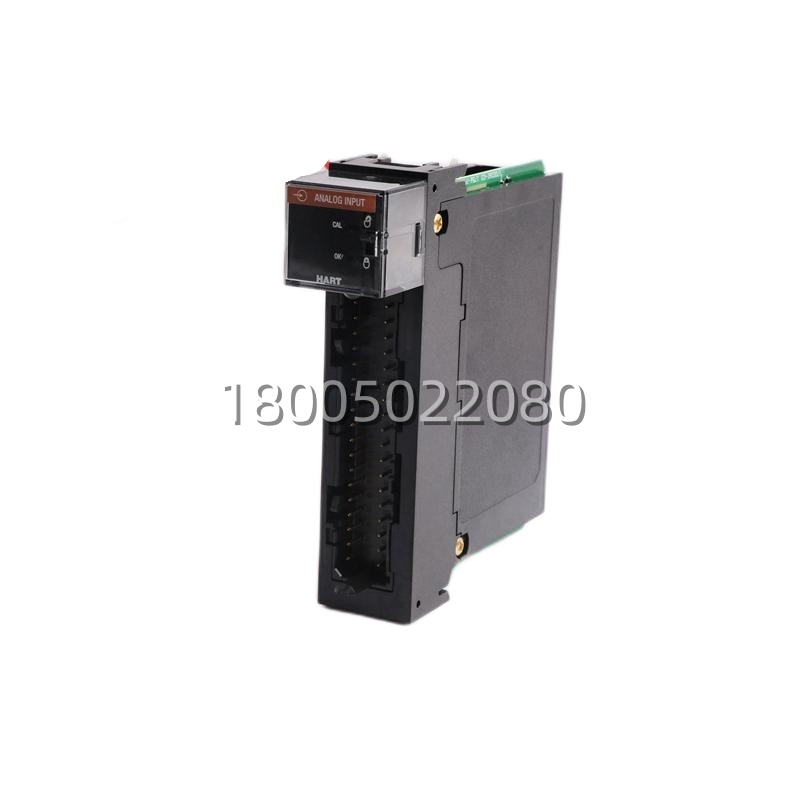
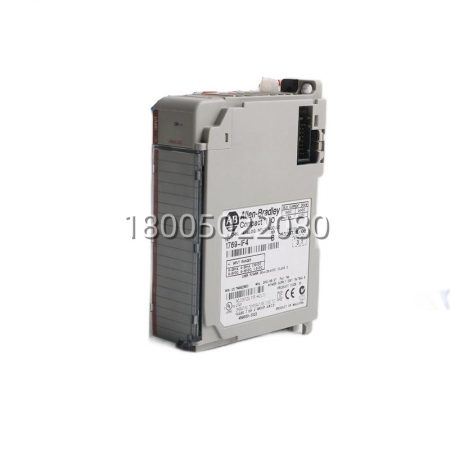
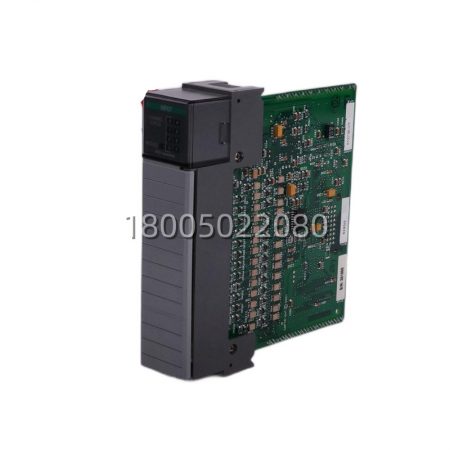
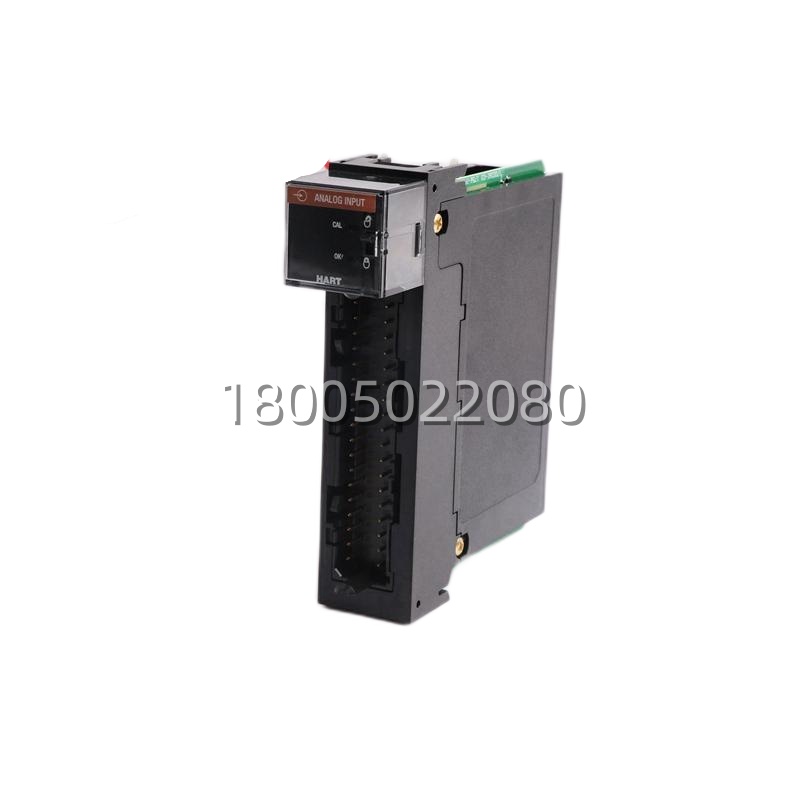
| Product Model | 1769-IF4I (Series A) |
| Manufacturer | Rockwell Automation (Allen-Bradley) |
| Product Category | Compact I/O Isolated Analog Input Module |
| Input Channels | 4 differential, individually galvanically isolated |
| Input Types | ±10 V, 0–10 V, 0–20 mA, 4–20 mA (per-channel software select) |
| Resolution | 15-bit + sign (voltage), 14-bit + sign (current ranges) |
| Conversion Type | Delta-sigma, updated every 1769 backplane scan |
| Isolation | 250 V continuous working voltage, ch-to-ch & ch-to-backplane |
| Backplane Current Load | 105 mA @ 5 V DC (drawn from 1769 bus) |
| External Supply | 24 V DC required on terminals (not from backplane) |
| Terminal Block | 1769-RTBN18 (removable, 18-position) |
| Operating Temp | 0 °C to +60 °C |
| Mounting | 35 mm DIN rail or panel, 1769 bus tongue connects left/right |
Technical Principles and Innovative Values
Innovation Point 1: True Per-Channel Galvanic Isolation. Most “isolated” analog modules isolate the block from the backplane but tie all channels to a common internal loop return. The 1769-IF4I takes it further—each of the four differential pairs is optically and capacitively isolated from its neighbors and from the 1769 backplane (250 V working). This makes it uniquely suited to multi-transmitter loops where ground references differ by volts, not millivolts.Innovation Point 2: Open-Wire Detection on 4–20 mA Ranges. When a field transmitter loses power or a wire breaks, the 1769-IF4I drives the input below 3.8 mA and sets a status bit that the controller can act on—no extra diode, no “watchdog” relay. In a chemical dosing skid, this bit can trigger a soft-stops sequence instead of letting the PID wind up on a phantom 0 mA reading.Innovation Point 3: Per-Channel Software Configuration. Through RSLogix 5000 / Studio 5000, each of the four channels on the 1769-IF4I can be independently set to voltage or current range without DIP switches or jumpers. That means Channel 0 can read a 4–20 mA pressure transmitter while Channel 1 reads a ±10 V position feedback from a different vendor—on the same module, same rack.Innovation Point 4: Removable Terminal Block with Channel Labeling. The 1769-RTBN18 TB lifts off with a screwdriver slot, letting the 1769-IF4I be swapped without de-terminating 16 wires—a small detail that saves 20 minutes in a live panel and prevents miswire on reassembly.
Application Cases and Industry Value
A food-and-beverage OEM building pasteurizer tunnels had a recurring headache: their 1769-IF4 (non-isolated) would occasionally saturate on Channel 2 whenever a 25 hp VFD on the same machine tripped. The VFD’s EMI was coupling back through the shared analog common, and the non-isolated architecture gave the noise nowhere to go but into the ADC. They redesigned the I/O slice to use the Allen-Bradley 1769-IF4I for the temperature and pressure analogs (PT100 transmitters via 1769-IRT8 handled RTDs; the 1769-IF4I took the 4–20 mA pressure and steam-valve position loops). Post-retrofit, the OEM ran a 72-hour EMC stress test—VFD start/stop every 30 seconds at full load—and the 1769-IF4I channel reads stayed within ±0.12% full scale. The OEM folded the 1769-IF4I into their standard BOM for any machine with >10 hp VFDs, citing “one less warranty call” as the ROI. In a segment where panel space is tight and margins tighter, the 1769-IF4I earned its keep by being the part you don’t have to explain to the customer—it just doesn’t fail.
Related Product Combination Solutions
The 1769-IF4I lives inside a 1769 backplane ecosystem; these companions are the ones you’ll typically see around it:
- 1769-IF4: The non-isolated 4-ch analog input, lower cost, same ranges—choose it when all transmitters share a clean ground (e.g., panel-mounted sensors on a single supply).
- 1769-OF4CI: 4-channel isolated analog output(current/voltage), the natural output counterpart when the 1769-IF4I is reading process variables and you need isolated analog outs for VFD speed or control-valve position.
- 1769-IRT8: 8-channel RTD/thermocouple input, often paired with 1769-IF4I on the same rack to cover both resistance-temperature and 4–20 mA loops on a process skid.
- 1769-ECR: Right-end cap that terminates the 1769 backplane; required at the far right of any 1769 slice that includes the 1769-IF4I.
- 1769-RTBN18: The removable terminal block specific to the 1769-IF4I (and several sibling modules); spares belong in every panel’s parts pouch.
- 1768-L43S / 1769-PA3: The host controller + 24 V power supply combo most commonly seen upstream of a 1769-IF4I rack—the L43S delivers the 5 V backplane power while the PA3 feeds both the L43S and the 1769-IF4I‘s external 24 V terminal.
- 1769-OW16: 16-point relay output, often downstream of 1769-IF4I alarms—when a low-level analog trips, the OW16 fires a beacon or escalates to the GuardLogix safety task.

Reviews
There are no reviews yet.